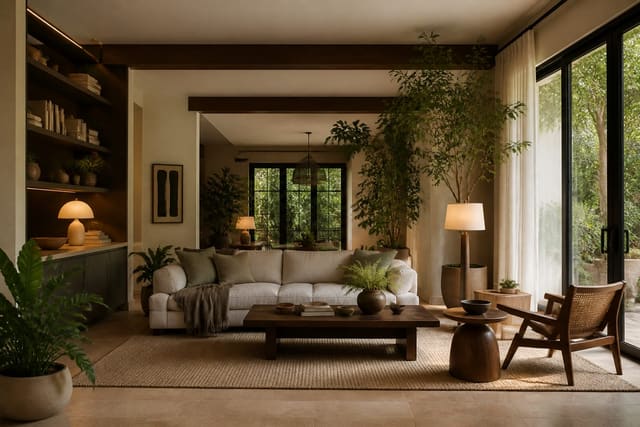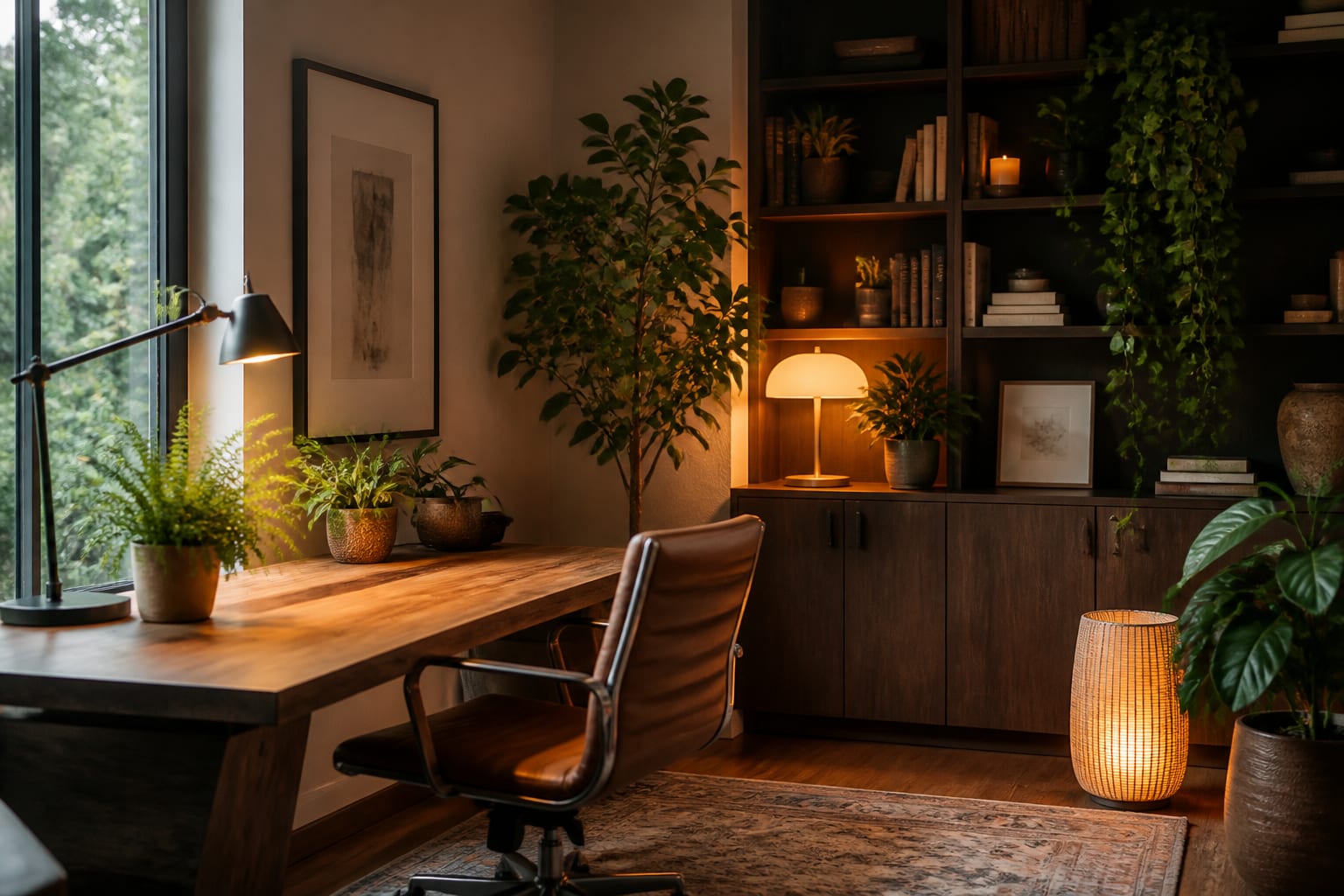
The best biophilic home office ideas start with desk placement: sit beside a window, then layer in greenery, natural materials, and warm light. This combination eases screen fatigue, gives your eyes somewhere restful to land, and keeps focus steadier through a long workday. Even a single desk plant and a wood surface deliver real relief in a small corner.
Where Should You Put Your Desk for Natural Light?
Position the desk beside a window, not facing a blank wall, so light falls across the surface without glaring on your screen. A side-on view also gives your eyes a natural place to rest, glancing at the sky or trees between tasks to relieve screen strain. Keep the sill clear and use a sheer panel instead of heavy drapes to diffuse harsh midday sun.
If your only window sits behind the desk, angle the setup so you catch daylight without backlighting video calls. In darker rooms, place a mirror perpendicular to the window to bounce light deeper into the space, and keep your leafiest plants near the glass where they'll thrive. Try glancing out the window every so often; resting your eyes on something distant is a small habit that meaningfully cuts screen fatigue.
See also our guide to Cottagecore Home Office Ideas for more biophilic setups.
How Many Plants Does a Biophilic Office Need?
Keep one compact, forgiving plant within arm's reach on the desk itself: a small pothos, succulent, or ZZ plant survives occasional neglect during busy weeks. Looking at greenery between tasks gives your eyes a focal distance away from the screen, which relieves close-focus strain. Build a second tier with a mid-height plant on a shelf and a taller floor plant in a corner to anchor the room vertically.
Match species to your actual light: dim offices do best with snake plants, cast-iron plants, or ZZ plants that tolerate low light without sulking. Cluster pots in odd numbers, vary containers between terracotta, stoneware, and woven baskets, and keep plants clear of cables and coffee spills. Watering a desk plant also builds a small ritual that breaks up long stretches of screen time.
For more on this style, read Industrial Home Office Ideas.
What Materials Keep a Home Office Grounded?
Favor wood, stone, and natural fiber over the plastic and laminate that dominate most desk setups. Choose a solid wood or butcher-block desk where you can read the grain, and add a wool or jute rug to warm the floor and absorb sound. Bring in woven texture through a rattan chair, cork board, or baskets for cables and supplies.
Stone earns a spot through a slate coaster, marble pen tray, or a small bowl of river rocks. Swap chrome and plastic accessories for brushed brass, wood, and ceramic pieces, and lean toward linen or wool upholstery over cold mesh where budget allows. The goal: most of what you touch through the day should have grain, weave, or weight.
How Do Lighting and Color Affect Focus?
Choose warm-leaning task bulbs around 2700K to 3000K, which echo late-day sun and reduce the fatigue that harsh blue-white lighting causes. Pair a soft overhead glow with a desk lamp angled to avoid screen glare, and put it on a dimmer so you can adjust brightness through the day.
Ground the palette in warm whites, sage, clay, or oatmeal so living plants stay the brightest element in the room. Treat green as an accent through the plants themselves, layer deeper tones like ochre or muted forest through a chair or cushion, and keep contrast soft. Avoid stark white-and-black or saturated primary schemes, both of which read as clinical during long focus blocks. Test samples against your actual office light, and switch to warmer, lower light in the final work hour to signal the day winding down.
- Place the desk with a window to one side to cut screen glare
- Keep a small pothos or succulent within arm's reach for eye breaks
- Choose a solid wood or butcher-block desk over glossy laminate
- Add a jute rug to warm the floor and absorb sound
- Trail ivy or pothos from a high shelf to soften boxy storage
- Use a warm-toned desk lamp on a dimmer to ease eye fatigue
- Swap plastic organizers for brass, ceramic, and woven baskets
Bring the Look Home with Re-Design
Open Re-Design, upload a photo of your office or desk corner, and preview a biophilic style on your real walls, window, and furniture. Test where a wood desk fits, judge a sage wall against your actual light, and see how plants at different heights reshape the room before buying anything. It turns these ideas into a concrete picture of your own space.
Frequently Asked Questions
What if my desk can't face a window?
Angle the desk so you still catch daylight from the side without backlighting your screen on video calls. In darker rooms, place a mirror perpendicular to the window to bounce light deeper into the space, and lean on low-light plants like snake plants or pothos to fill the greenery gap.
Do plants actually help productivity in a home office?
Greenery within view gives your eyes a restful focal point away from the screen and adds gentle movement a desk otherwise lacks. Nature-connected workspaces are linked to steadier focus and lower stress, so even one or two well-placed plants support a more comfortable workday.
Which plants suit a low-light home office?
Snake plants, ZZ plants, cast-iron plants, and pothos all tolerate dim corners without struggling, making them ideal for offices set away from windows. Keep one on the desk for eye breaks and a taller specimen in a corner to anchor the room vertically.
How do I make a small or shared office biophilic?
Prioritize daylight by keeping the window clear, add one desktop plant and a trailing plant on a shelf, and choose a wood desk surface. Ground the palette in earthy neutrals and use a warm desk lamp, since biophilic design scales down to a single corner easily.