Curved furniture is the fastest way to make a room feel softer and more grown-up, and it is the single biggest shift in living-room design over the past few years. The mistake is treating curves as a trend to sprinkle on everywhere, ending up with a room full of competing blobs. The better move is to use one generous curved anchor, then let everything else stay quiet and largely rectilinear so the curve has room to breathe. A serpentine sofa or a round-back chair introduces flow, eases the eye around the space, and quietly removes the sharp corners that make small rooms feel boxy.
Why curves change how a room feels
Straight lines and right angles read as formal and static; curves read as relaxed and human. A rounded arm or a barrel back removes the visual hard stops that make a space feel rigid, and the eye glides along the contour instead of catching on a corner. That is why a single curved sofa can make an entire living room feel calmer, even when nothing else changed. Curves also photograph beautifully, which is part of why they spread so quickly across design feeds.
There is a practical payoff too. In a tight or high-traffic room, rounded furniture is genuinely easier to move around. No sharp corner juts into a walkway, no shin meets a square coffee-table edge in the dark. Curved pieces are especially kind in homes with kids, where a round ottoman or an oval table removes the exact corners that cause bumps.
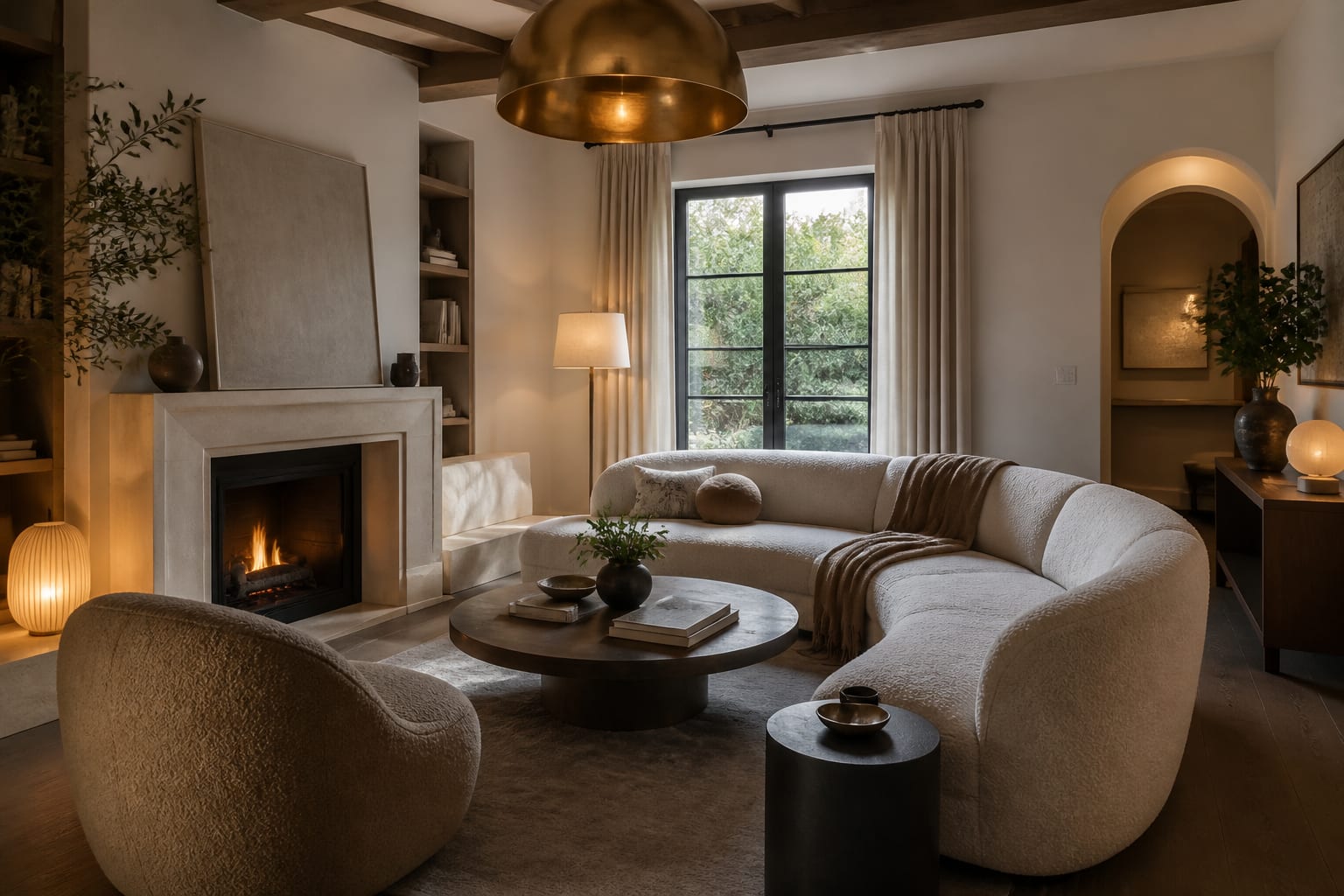
Curves also encourage conversation in a way straight seating does not. A C-shaped or serpentine sofa gently angles the people sitting at each end toward one another, so a group naturally faces inward rather than lining up shoulder to shoulder staring at a television. That is why hotel lobbies and restaurant lounges lean on curved banquettes; the shape pulls a room together socially. In a home, a curved sofa paired with one or two swivel chairs creates a circular conversation pit on a small footprint, with the swivels letting people turn toward the group or the view as the moment calls for it. The softness is not only visual, it changes how the room is used.
Curved pieces that anchor a room
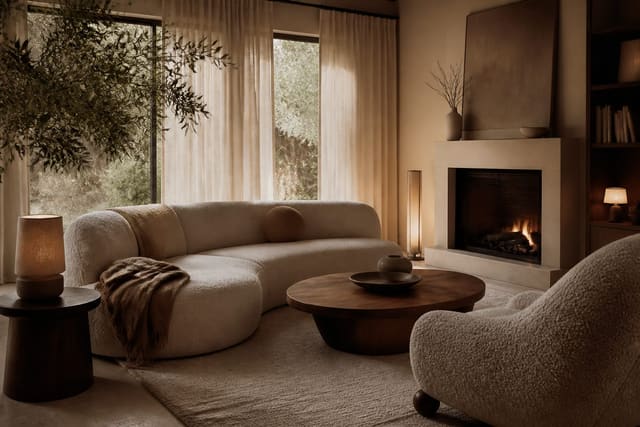
The curved sofa is the headline act. A serpentine or kidney-shaped sofa from 90 to 110 inches long becomes a sculptural centerpiece, best floated so you can see the sweep of the back rather than shoved flat against a wall. Expect $2,000 to $5,000 for a quality curved sofa, since the frame is harder to build than a straight one. If that is too much commitment, a curved-back accent chair or a pair of round swivel chairs at 30 to 34 inches wide brings the same softness at a fraction of the cost.
Tables benefit hugely from curves. A round dining table at 48 to 54 inches in diameter seats four to five with no corners to dodge, ideal for a tight dining room. An oval or kidney coffee table keeps walkways clear in a busy living room. Curved pieces also play beautifully against the arches and rounded niches that define moroccan interior design ideas, where the architecture itself echoes the furniture. For upholstery, the relationship between curve and fabric matters, which our boucle fabric guide covers in detail.
Styling curves so the room stays balanced
A room of nothing but curves turns mushy and loses structure. The fix is contrast. Anchor with one big curve and keep supporting pieces crisp. Concrete ways to strike that balance:
- Float a 100-inch serpentine sofa on a rectangular rug so the straight rug edges frame the curved silhouette.
- Pair a round 48-inch dining table with straight-backed chairs to keep the setting from feeling shapeless.
- Set a curved-back swivel chair against a bold geometric accent wall so hard pattern offsets soft form.
- Use a round ottoman, around 36 inches across, as a coffee table in a kid-friendly room to lose the sharp corners.
- Hang a large round mirror, 32 to 40 inches in diameter, over a straight console to repeat the curve overhead.
- Choose an arched floor lamp that sweeps over a curved sofa, echoing its line without adding another bulky shape.
Limit yourself to two or three curved gestures per room. One sofa, one round table, and one circular mirror is plenty; add a curved console, a kidney rug, and a round chair on top and the room loses all its edges and starts to feel like a lava lamp.
Materials and upholstery for curved frames
Curved frames demand fabrics that stretch and wrap. Soft, slightly elastic materials like boucle, velvet, and chenille mold around compound curves without puckering at the seams, which is why you see them on nearly every curved sofa. Stiff, flat-woven fabrics and leather fight a tight curve and can wrinkle or pull, so they suit gentler arcs rather than dramatic serpentine backs. When you shop, run a hand along the inside of the curve and check that the fabric lies smooth without bunching.
Wood and stone curves bring a different, more architectural softness. A round pedestal table in white oak or travertine, roughly 48 inches across, grounds a room with mass while still easing traffic. Curved built-in elements, like a rounded plaster fireplace surround or a softened wall return, carry the theme into the architecture itself. Mixing one upholstered curve with one hard-material curve, say a boucle sofa and a travertine coffee table, gives the room both softness and weight.
Quality is harder to judge on a curved frame than a straight one, so a few checks pay off. A well-built curved sofa uses a kiln-dried hardwood frame that has been laminated and bent rather than cut from short, weak segments glued end to end; ask the maker how the curve is formed before you spend $2,000 or more. Sit in the center and at each end, since a poorly engineered curve can feel firm in one spot and saggy in another. Check that the seat depth stays consistent around the arc, because some budget curved sofas pinch to a shallow, uncomfortable seat where the back tightens. A solid frame and an even seat are what separate a curved sofa that holds its shape for a decade from one that twists and softens within a couple of years.
Preview curved furniture in your room first
Curved pieces are notoriously hard to judge from a catalog, because their footprint and the way the back sweeps into the room depend entirely on your floor plan. Re-Design lets you see it before you spend. Upload a photo of your living or dining room, then re-design it with a serpentine sofa, a round pedestal table, or a pair of swivel chairs and watch how the curve flows against your walls and walkways. You can test whether a 100-inch curved sofa floats comfortably or eats the whole room, and compare it against a straight sofa in the same spot, so you commit to a shape that actually fits.
Frequently Asked Questions
Does curved furniture work in small rooms?
Often better than straight furniture. Round and oval tables remove the corners that block tight walkways, and a curved chair or small round ottoman eases traffic flow. The key is scale: choose one appropriately sized curved piece rather than a giant serpentine sofa that swallows a small room. A 48-inch round table or a 32-inch swivel chair brings softness without crowding.
What fabrics are best for curved sofas?
Soft, stretchy fabrics that wrap compound curves cleanly. Boucle, velvet, and chenille mold around rounded backs and arms without puckering at the seams, which is why they dominate curved upholstery. Stiff flat weaves and leather resist tight curves and can wrinkle, so reserve them for gentle arcs. Always check that the fabric lies smooth along the inside of the curve.
How do I keep a room with curves from looking too soft?
Balance the curves with straight lines. Anchor with one curved piece, then keep the rug, shelving, or table rectilinear so the eye has structure to rest on. Limit yourself to two or three curved gestures per room. A serpentine sofa on a rectangular rug, framed by straight bookcases, reads intentional rather than shapeless.