Moroccan interior design ideas reward boldness, so leave restraint at the door. This is a style built on layered pattern, saturated color, and obsessive craftsmanship, where a single room might hold zellige tile, a carved-plaster arch, pierced-metal lanterns, and a stack of handwoven rugs. The mistake most people make is treating it as a few decorative add-ons rather than a full sensory experience. Done well, a Moroccan room feels immersive and warm, glowing with lamplight and rich with texture. It is maximalism with deep roots and genuine artisan heritage behind every detail.
Layer Pattern Through Zellige and Carved Detail
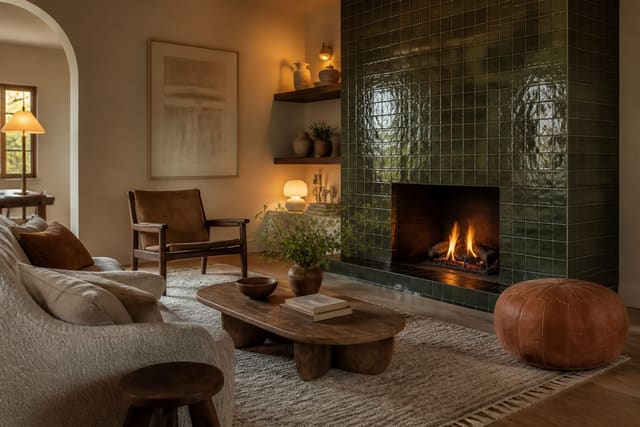
Pattern is the language of Moroccan design, and it appears at every scale. Zellige, the hand-cut mosaic tile assembled into intricate geometric stars and interlocking shapes, is the signature surface. Use it on a fountain, a fireplace surround, a kitchen backsplash, or a full feature wall, where its slightly uneven glaze catches light and makes the geometry shimmer. The labor behind true zellige is part of its beauty and its value, and each chipped edge is cut and set by hand.
Carved detail deepens the effect. Plaster fretwork, known as gebs, traces lacy patterns around arches, niches, and ceilings, while carved cedar adds warmth overhead and on doors and screens. A pierced wood screen, or mashrabiya, filters light and creates moving shadow patterns across the room as the sun shifts through the day. These carved elements reward a closer look in a way that printed pattern never does, and they bring a sculptural quality that flat tile alone cannot.
The key to layering all this pattern without chaos is a shared color story and plenty of plain surface between the busy moments. Let a zellige wall breathe against smooth plaster, or frame a carved arch with a simple painted reveal. When the patterns relate in palette and the eye gets places to rest, the layers read as rich and intentional rather than overwhelming, building the immersive, handcrafted depth that defines a genuinely Moroccan room.
See also our guide to Zellige Tile Ideas for more on moroccan interior design ideas.
Saturate the Room in Jewel Tones
Color in Moroccan interiors is fearless. The palette pulls from the landscape and the souk: the cobalt blue of Chefchaouen, the terracotta and saffron of the desert, the deep green of mint tea, and the rich reds and purples of dyed textiles. Rather than a single accent wall, color saturates the room through tile, paint, fabric, and ceramics until the whole space hums with warmth. The effect is enveloping, the opposite of a cool, pared-back neutral scheme.
You can approach this two ways. For a bold scheme, paint walls in a deep tone, midnight blue, oxblood, or emerald, and let metallics and lighter textiles pop against them. For a softer take, keep the walls in warm plaster and let the jewel tones arrive through rugs, cushions, poufs, and tile, which lets you dial the intensity up or down over time as your confidence grows.
Metallics are essential to the palette. Brass, copper, and gold in lanterns, trays, mirror frames, and tabletops catch the lamplight and add a glow that warms every other color in the room. Mix the warm metals freely, since a little tarnish only adds character. The combination of saturated jewel tones and shimmering metal is what gives Moroccan interiors their famous depth and richness, a sense that every surface has been considered, dyed, hammered, or glazed by hand. Repeating one or two metals throughout keeps the boldness from tipping into clutter.
For a related angle on moroccan interior design ideas, read Travertine Interior Design Ideas.
Lower the Seating and Pile on the Textiles
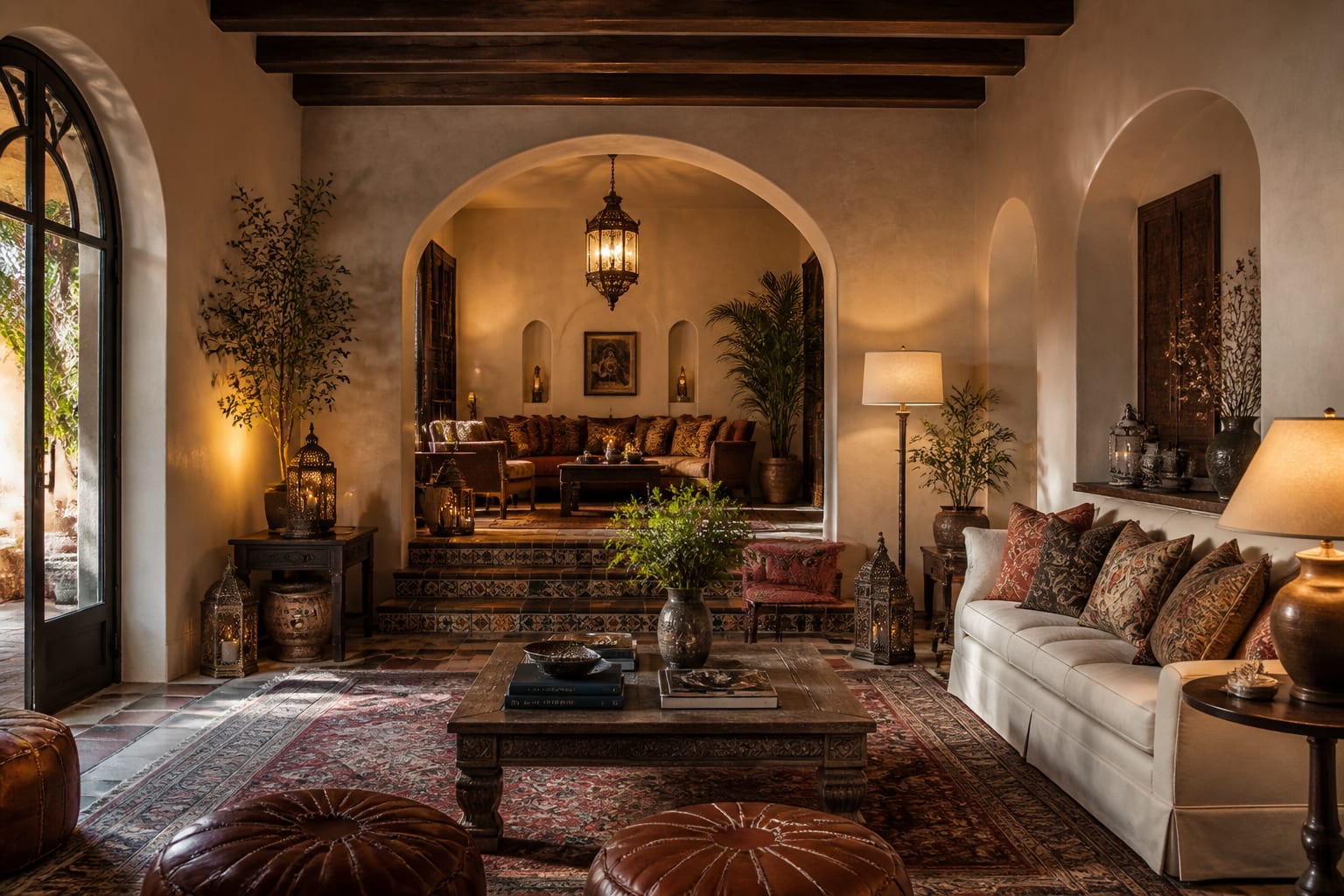
Comfort in a Moroccan room sits close to the floor. Traditional seating centers on low banquettes lining the walls, piled with bolsters and cushions to create a communal, lounge-like space for conversation and tea. Leather poufs, floor cushions, and a low carved table complete a relaxed arrangement that invites people to settle in and stay for hours. Arranging the seating around the perimeter also opens up the center of the room for gathering.
Textiles do enormous work here, and the more layered the better. Stack handwoven rugs, a Beni Ourain with its plush cream pile and charcoal pattern, a flat-weave kilim in bold color, atop one another so the floor feels soft and rich underfoot. Drape a striped Moroccan blanket over a banquette, scatter embroidered and tasseled cushions, and hang a textile or two on the walls for warmth and acoustic softness.
Mix the fabrics in texture and weight: nubby wool, smooth silk, woven cotton, and tactile leather all belong together. Fringe, pom-poms, and hand-stitched detail reward a closer look and reinforce the handmade spirit of the room. The goal is a space that feels enveloping and generous, where guests sink into cushions surrounded by pattern and warmth. This grounded, textile-rich comfort is exactly what separates an authentic Moroccan interior from a room that merely borrows a lantern or two. Buying rugs and cushions slowly, one trip or find at a time, gives the collection a genuine, gathered soul.
Glow With Lanterns and Filtered Light
Lighting may be the most magical element of Moroccan design. Pierced-metal lanterns in brass and copper, perforated with intricate patterns, cast lacy shadows across walls and ceilings when lit. A cluster of lanterns hung at varying heights, or a single large fixture over a seating area, turns ordinary illumination into living, patterned atmosphere. The filtered, dappled quality of the light is central to the whole mood and impossible to fake with a bare bulb.
Keep the light warm and layered rather than bright and even. Combine overhead lanterns with table lamps featuring colored-glass or pierced-metal shades, candles in glass holders, and the soft glow of a few sconces. The aim is a golden, intimate ambience that flatters the rich colors and makes the metallics shimmer, the kind of light that signals you have stepped somewhere special. A dimmer on the main fixtures lets you shift the room from afternoon tea to late-night lounging.
Stained or colored glass deepens the effect. Lanterns and lamps fitted with jewel-toned glass throw pools of red, amber, and blue across the room, echoing the palette of the tile and textiles. Position a few light sources low, on a side table or the floor, so the glow rises and casts shadow upward through carved screens. When the lanterns are lit and the patterns dance across the plaster, a Moroccan room reveals its full character: immersive, warm, and quietly transporting after dark.
- Cover a feature wall in hand-cut zellige mosaic so the geometry shimmers under warm lamplight
- Cluster pierced-brass lanterns at staggered heights to throw lacy shadows across the ceiling
- Line a wall with a low banquette piled high with bolsters and tasseled cushions
- Stack a plush Beni Ourain over a bold flat-weave kilim for layered, rich underfoot texture
- Paint walls deep oxblood or emerald and let brass trays and mirrors glow against them
- Frame a niche or arch with lacy carved-plaster gebs fretwork for handcrafted detail
- Scatter leather poufs and floor cushions around a low carved table for communal seating
- Fit lamps with jewel-toned colored glass to cast pools of amber, red, and blue light
Bring the look home with Re-Design
Curious whether a zellige feature wall or an oxblood paint will overwhelm your space? With Re-Design, you upload a photo of your room and preview Moroccan interior design ideas instantly, layering in pierced-brass lanterns, a Beni Ourain rug, carved-plaster arches, and jewel-toned cushions. Compare emerald against cobalt walls and test a low banquette arrangement so you can gauge the richness before buying tile, lanterns, or textiles.
Frequently Asked Questions
How do I use bold Moroccan pattern without it feeling chaotic?
Tie everything to a shared color story and leave plain surfaces between busy moments. Let a zellige wall breathe against smooth plaster, and repeat a few key hues across tile, textiles, and metal so the layers feel intentional rather than random.
What lighting creates an authentic Moroccan atmosphere?
Pierced-metal lanterns in brass or copper are essential, casting lacy shadows and a warm glow. Layer them with colored-glass lamps and candles, keep bulbs warm-toned, and place some sources low so light rises and dances across walls and ceilings.
Can Moroccan style work in a small apartment?
Yes. Small rooms actually suit the enveloping, cozy quality of the style. Use one zellige accent, a single statement lantern, a stack of rugs, and a few jewel-toned cushions to capture the richness without cramming in every possible element.