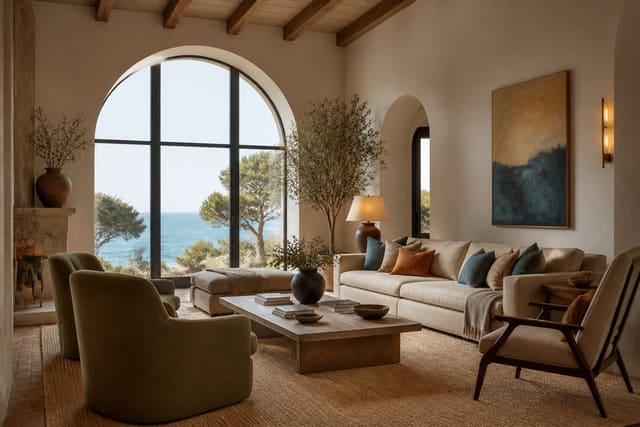
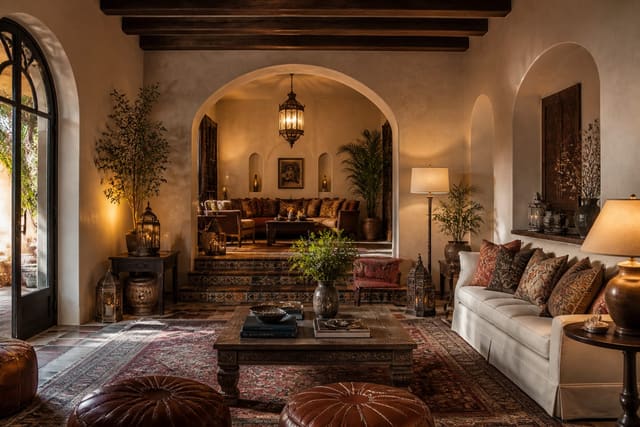
Mediterranean design is a sun-washed interior and garden style shaped by the countries around the Mediterranean Sea, especially Spain, Italy, Greece, and Morocco. It combines plaster walls, terracotta tile, limestone, wrought iron, and earthen or cobalt color into a warm, architectural look built from climate and craft, not souvenirs.
What is Mediterranean interior design?
Mediterranean interior design uses natural materials, thick-feeling walls, handmade surfaces, arched openings, and landscape-based color to keep rooms cool by day and warm after dark. The strongest versions start with the envelope: whitewashed or lime-plaster walls, stone or terracotta floors, exposed beams, and arched transitions do more for the look than a shelf of blue ceramics.
The style is broad because the region is broad. Greek island rooms feel spare and bright — whitewash, cobalt, stone, simple wood. Moroccan rooms bring pattern and saturated color through zellige, brass lanterns, carved cedar, and layered textiles. Spanish Colonial adds dark beams, Saltillo tile, wrought iron, and arched arcades. Italian Mediterranean leans formal, with stone, fresco color, and garden symmetry.
The shared thread is climate logic: materials are mineral and porous, color comes from sea, clay, sand, and olive trees, and rooms are built to handle glare and outdoor living. That's why the style reads best near a patio, courtyard, or a window with strong daylight.
What elements make the style read correctly?
Start with one architectural cue — an arched mirror, plaster fireplace, cased opening, or exposed beam — to set the language before decorating. If the architecture is plain, use furniture to create the same weight: a chunky wood table, a low linen sofa, a stone lamp, or a hand-troweled wall finish.
Then choose a material base:
- Terracotta tile, limestone, travertine, or tumbled stone for floors
- Limewash or plaster for walls
- Rough oak, walnut, or rattan for furniture
- Aged brass or wrought iron for hardware and lighting
- Zellige or cement tile as one high-impact surface (backsplash, fireplace, shower wall, stair riser)
Color should be warm before it is bright. Sand, warm white, ochre, clay, rust, olive, and tobacco form the body of the room; cobalt, turquoise, emerald, saffron, or deep red work as accents. For exact combinations, see Mediterranean color palette before buying paint or tile.
Which regional direction should I choose?
| Direction | Signature materials | Best for |
|---|---|---|
| Greek | Whitewash, cobalt, pale stone, weathered wood | Small rooms, minimal upkeep |
| Moroccan | Zellige, lanterns, carved wood, saturated textiles | Rooms wanting pattern and atmosphere |
| Spanish Colonial | Terracotta, dark beams, stucco, iron hardware | Homes with existing arches or fireplaces |
| Italian | Travertine, limestone, aged wood, urns | Classic, garden-connected spaces |
Moroccan direction works best when one strong patterned surface leads and nearby materials stay quiet; Moroccan interior design ideas shows how to layer that mood without overusing motifs.
What should I know before renovating?
- Terracotta means "baked earth" in Italian — unglazed clay fired at 1,800–2,100°F, porous, and must be sealed before use.
- Moorish Spain (711–1492) introduced the horseshoe arch, zellige tilework, and geometric arabesque patterns still seen in Spanish Colonial design.
- Cobalt blue was traditionally made from smalt or copper pigments on whitewash; the Santorini blue most designers reference is a post-WWII tourism-era aesthetic.
- Traditional lime plaster is a two-coat system: a sand-and-lime base coat (arriccio) followed by a fine lime-putty finish (intonaco).
Don't treat the style as a theme. A room with one terracotta pot, one blue pillow, and a faux-vine garland reads less authentic than plain plaster walls, a woven rug, real wood, warm lamps, and one serious tile moment. Weight, light, and material honesty matter more than symbols.
For a new-build room, apply the style as a mood layer: add limewash or warm white paint, swap in aged brass or wrought iron lighting, bring in terracotta or stone through lamps and planters, and test one arch reference through a mirror or cabinet detail before making permanent changes.
Use Re-Design before you commit
Upload a straight-on photo of the room and test a Mediterranean direction before buying tile, limewash, rugs, or lighting. Keep the floor, ceiling height, windows, doors, and largest furniture visible so the preview solves the real room instead of inventing a villa.
Frequently Asked Questions
What countries influence Mediterranean design?
Spain, Italy, Greece, and Morocco are the primary influences, each contributing distinct materials and color: Spanish arches and iron, Italian stone and fresco tones, Greek whitewash and cobalt, and Moroccan tile and pattern.
What materials are essential to the style?
Terracotta, limestone, plaster, rough-hewn wood, and handmade tile such as zellige, encaustic, or Talavera form the material base. Wrought iron and aged brass typically carry the hardware and lighting.
What's the difference between Greek and Moroccan Mediterranean style?
Greek Mediterranean is spare and bright, built from whitewash, cobalt, and stone with minimal clutter. Moroccan style is pattern-rich and saturated, using zellige tile, lanterns, carved wood, and layered textiles.
Can I add Mediterranean style to a modern home?
Yes — treat it as a mood layer rather than a full renovation. Limewash walls, aged-brass lighting, terracotta or stone accents, and one arch detail can bring the look into contemporary architecture without structural changes.
What colors define Mediterranean design?
Sand, warm white, ochre, clay, rust, olive, and tobacco form the main palette, with cobalt, turquoise, emerald, saffron, or deep red used as accents. Color choices come from regional landscape and sea references.