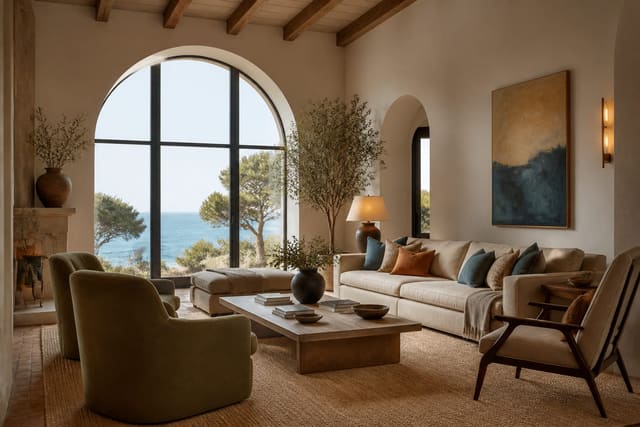
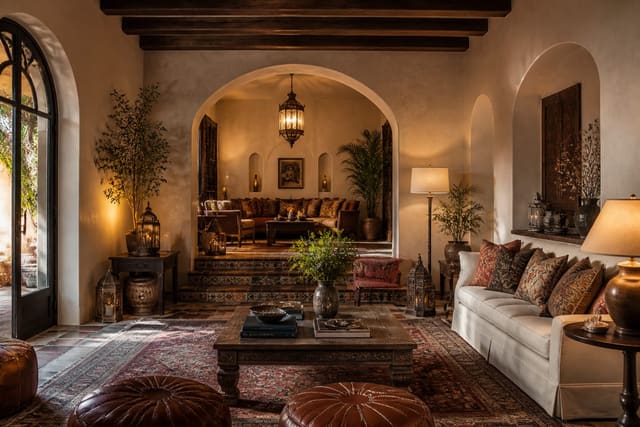
A Mediterranean living room combines lime-washed or plastered walls, terracotta and blue-tile accents, low linen-covered furniture, and warm, glowing light to create a sun-baked, lived-in feel. The style borrows from Spain, Italy, Greece, and southern France, favoring natural materials and gentle imperfection over polish. The ideas below show how to build that warmth layer by layer.
How Do I Get the Wall Finish Right?
Lime wash and Venetian plaster create a soft, cloudy depth that flat paint can't match, shifting with the daylight throughout the day. Choose a warm off-white, pale putty, or dusty terracotta, applied in loose, crisscrossing strokes for a handcrafted rather than uniform look. Keep the finish matte since any sheen breaks the rustic effect. Textured walls also hide hairline cracks and uneven patches in older homes, adding instant age and authenticity to the room.
See also our guide to Cottagecore Living Room Ideas for more on Mediterranean living room ideas.
What Textures and Materials Should I Layer In?
Build texture using materials that feel honest to the hand. Start with a jute or sisal rug, then add a hand-knotted wool runner or vintage kilim on top. Choose linen or cotton slipcovers you can toss in the wash, since this style is never meant to feel precious.
- Carved or turned wood: coffee table, spindle chair, olive-wood bowl
- Wrought iron: lighting, curtain rods, small accent tables
- Clay and ceramic: lamp bases, unglazed pots, bowls
- Woven baskets: storage for throws and magazines
The goal is variety within a tight, earthy palette so nothing competes for attention. When rough stone meets smooth plaster and nubby linen meets cool ceramic, the room gains genuine tactile depth.
For a related angle, read Maximalist Living Room Ideas.
What Colors Belong in a Mediterranean Palette?
Start with creamy whites and soft sand on the largest surfaces, then add earthy accents pulled from the landscape.
| Color role | Shades | Where to use |
|---|---|---|
| Base | Cream, sand, off-white | Walls, large upholstery |
| Warm accent | Terracotta, ochre, burnt sienna | Pillows, pottery, accent chair |
| Cool accent | Olive, sage green | Textiles, plants, ceramics |
| Grounding | Navy, charcoal, rust | Small furniture, books, trim |
Keep saturated color in supporting roles so the room stays calm rather than busy. Avoid bright synthetic hues and high-gloss finishes, which read as modern and break the sun-baked illusion; favor shades that look slightly faded instead.
How Do I Finish the Room With Authentic Details?
Introduce curves wherever possible: an arched doorway, a rounded mirror, a wall niche, or furniture with softened edges. These shapes echo whitewashed villages and counter the rigidity of a typical box-shaped room. Greenery is non-negotiable, so cluster potted olive trees, trailing rosemary, or fig branches in a tall urn. Choose iron lanterns, woven pendants, and candles for warm, flickering light rather than glare.
- Drape a worn vintage kilim over a low linen sofa
- Cluster unglazed terracotta pots beside an arched window
- Hang a hand-forged iron lantern above the seating area
- Frame a wall niche around hand-thrown ceramic bowls
- Layer jute, wool, and sheepskin underfoot for warmth
- Pot an olive tree in a glazed earthenware planter
Bring the Look Home With Re-Design
Upload a photo of your current living room to Re-Design and see it reimagined with lime-washed walls, earthy color, arched details, and layered natural textures. Test a sun-baked palette against your real furniture and explore several warm directions in minutes before committing to plaster or terracotta.
Frequently Asked Questions
What furniture defines a Mediterranean living room?
Look for low wooden tables in dark walnut or olive, deep sofas dressed in linen or cotton, and woven rattan accent chairs. Wrought-iron details on lamps and table legs add weight, and carved chests work well as coffee tables. Aim for sturdy, slightly rustic pieces that feel sun-worn rather than glossy or modern.
How do I add warmth to a Mediterranean living space?
Layer terracotta tile or warm-toned rugs underfoot, then add textiles like a knotted kilim and embroidered throw pillows. Exposed wooden ceiling beams deepen the mood, and candlelight or amber-toned lamps soften evenings. A few clay pots filled with olive branches or rosemary near windows ties the room to its outdoor inspiration.
Should walls be textured or smooth in this style?
Textured plaster suits the look better than flat paint because Venetian or lime-washed finishes catch light unevenly, mimicking old villa walls. Keep the base tone creamy white or soft sand so artwork and textiles stand out. A limewash paint applied in loose strokes recreates that handmade surface without a full replastering job.
What lighting works best for a Mediterranean room?
Choose warm bulbs around 2700K and avoid harsh overhead fixtures. Wrought-iron lanterns, pierced metal pendants, and ceramic table lamps cast soft, patterned shadows. Position lamps at several heights and use sheer linen curtains during the day so the space stays bright without glare.