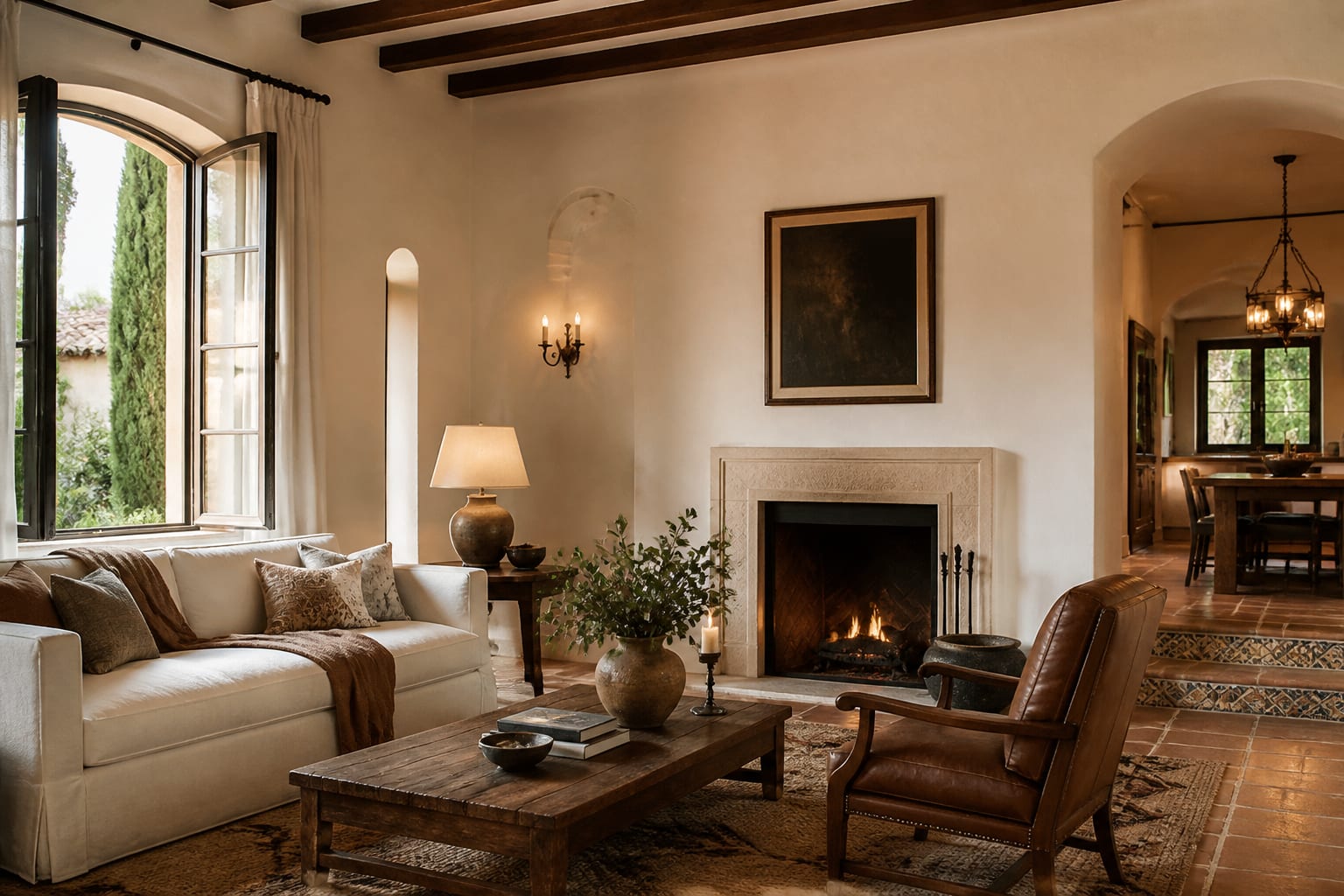
Spanish colonial interior design is often reduced to a few clichés, terracotta tile and a wrought-iron chandelier, but the real style runs far deeper. It grew from thick-walled missions and haciendas built to stay cool under a blazing sun, which is why texture, mass, and shadow matter as much as color. Get the bones right, plaster walls, arched openings, dark carved wood, and the decorative flourishes fall into place naturally. This guide walks through the materials, proportions, and details that make a room feel genuinely Spanish colonial rather than merely themed.
Start With Plaster Walls and Arched Openings
The foundation of Spanish colonial interior design is the wall itself. Original homes used thick adobe or stucco finished in hand-troweled plaster, and that mass is central to the feeling. Recreate it with limewash or plaster in warm white, cream, or pale sand, troweled to show gentle texture and soft shadow. Avoid flat, perfectly even paint, since the slight irregularity is what makes the surface read as authentic rather than applied. Even a deep, rounded windowsill hints at the thick walls that defined the original houses.
Arches are the other signature. Doorways, hallway transitions, and wall niches all soften with a rounded or gently pointed arch. Where a full structural arch isn't possible, an arched plaster reveal around a doorway carries much of the same effect. Aim for generous proportions; an arch that springs from roughly 7 feet keeps the opening graceful rather than squat, and a span of about 3 feet wide reads as inviting.
Niches carved into thick walls are a beloved detail, used to display a piece of pottery, a candle, or a small carving. Even a faux niche built into a deep wall adds the kind of sculptural shadow the style thrives on. Keep the palette of the walls quiet so the architecture and the darker wood and iron elements stand out. When the plaster and arches are right, a room already feels solidly Spanish colonial before a single piece of furniture arrives.
See also our guide to Cement Tile Guide for more on spanish colonial interior design.
Layer in Dark Wood, Beams, and Wrought Iron
Contrast is the engine of this style, and it comes from heavy, dark elements set against pale plaster. Exposed ceiling beams in walnut-toned or weathered timber are perhaps the most recognizable feature. Space them evenly, roughly 18 inches to 24 inches apart for a tightly beamed ceiling, or wider for larger rooms, and let their dark mass anchor the space overhead. A ceiling that sits at 9 feet or higher gives those beams the breathing room they need to feel dramatic rather than oppressive.
Furniture should feel substantial and hand-crafted. Look for carved wood chests, trestle tables, and chairs with turned legs and leather seats. Pieces with visible joinery, iron strapping, and a bit of age suit the look far better than anything sleek or veneered. A single bold armoire or a carved door can become a room's centerpiece and set the tone for everything around it. Leather upholstery in a warm cognac or oxblood ages handsomely and stands up to daily use.
Wrought iron threads through everything. A forged chandelier with candle-style lights, iron sconces, a stair railing, window grilles, and even cabinet hardware add the dark linear accents the style depends on. Hand-hammered finishes feel more authentic than smooth machined iron. Keep the metalwork consistent in tone so it reads as a deliberate language across the room. The interplay of rough plaster, deep timber, and black iron is exactly what gives Spanish colonial interiors their dramatic, grounded, sun-and-shadow character.
For a related angle on spanish colonial interior design, read Moroccan Interior Design Ideas.
Ground the Space in Handmade Tile
Tile is where Spanish colonial interiors turn playful and colorful. Terracotta, often called saltillo, is the classic floor, laid in warm clay tones that develop a rich patina with age. The pavers are frequently set in a simple grid or a more intricate pattern, and a sealed but matte finish keeps them looking earthy rather than shiny. A terracotta floor instantly warms a room and ties the architecture to its mission-era roots. Expect to reseal saltillo every few years, since the clay is porous and stains if left bare.
Patterned talavera tile provides the bright counterpoint. Hand-painted in blue, yellow, green, and white with geometric and floral motifs, these tiles shine on stair risers, fountain surrounds, kitchen backsplashes, and bathroom walls. A band of talavera against plaster delivers a jolt of color and craft without overwhelming the calm backdrop that surrounds it.
Use pattern with intention. Reserve the busiest tile for a feature, a stair, a niche, a single wall, and let plainer terracotta or plaster surround it so the eye has room to rest. A common ratio worth borrowing is a 60/30/10 split: roughly two thirds calm neutral surfaces, a third warm wood and terracotta, and a small share of vivid patterned tile and textiles. That balance keeps a Spanish colonial room lively yet grounded, colorful yet unmistakably serene, with each handmade surface adding to a layered, sunlit whole.
Finish With Warm Light, Color, and Textiles
Lighting in a Spanish colonial interior should preserve the cool, shadowed calm the thick walls were built to create. The original homes had small, deep-set windows to keep out heat, so resist the urge to flood the room with brightness. Use warm-toned bulbs around 2700K in iron fixtures, chandeliers, lanterns, and sconces, to cast a soft, candle-like glow that flatters the plaster and timber. Layering several sources at different heights beats one bright ceiling fixture every time.
Color builds on the warm neutral base. Draw accents from the regional palette: terracotta, ochre, deep red, cobalt blue, and forest green, applied through tile, pottery, and textiles rather than painted across whole walls. Hand-glazed ceramics, a colorful talavera lamp base, and a piece of Mexican or Spanish folk art add personality and craft without disturbing the architectural calm that the plaster establishes.
Textiles soften the hard surfaces and complete the room. Layer a Saltillo-stripe blanket over a leather chair, lay a wool kilim or Oushak rug over the terracotta floor, and add embroidered or fringed cushions in warm tones. Heavy linen or wool drapery frames the deep windows and helps temper the afternoon sun. Mix in leather, woven fiber, and hammered metal for textural depth. The combination of warm light, hand-crafted color, and tactile fabric turns the bones of plaster, wood, and tile into a room that feels rich, restful, and authentically Spanish colonial.
Here are the common mistakes to avoid: - Painting walls flat builder white instead of troweling warm, textured limewash plaster - Adding a token wrought-iron chandelier while ignoring the arches, beams, and mass that define the style - Choosing glossy machine-made tile that lacks the patina and irregularity of handmade saltillo - Over-applying bright talavera pattern everywhere until the calm plaster backdrop disappears entirely - Flooding rooms with cool, bright light that erases the cool, shadowed atmosphere the architecture intends
Bring the look home with Re-Design
Before you knock through an arch or order pallets of saltillo tile, see Spanish colonial details in your own home. With Re-Design, you upload a photo of your room and preview troweled plaster walls, dark exposed beams, an arched niche, talavera accents, and a forged-iron chandelier in seconds. Test terracotta floors against your existing layout and judge how the warm, shadowed mood reads before you commit to any costly construction.
Frequently Asked Questions
What is the difference between Spanish colonial and Mediterranean style?
They overlap heavily, but Spanish colonial leans more rustic and architectural, with heavier dark wood, wrought iron, and mission-era mass. Mediterranean tends lighter and more coastal, emphasizing breezy plaster, glazed tile, and sun-washed color over the weighty, hand-carved timber pieces.
Do I need real adobe walls for the look?
No. Limewash or troweled plaster over standard drywall convincingly recreates the textured, hand-finished surface. Arched plaster reveals and deep niches add the sculptural mass that adobe once provided, giving you the authentic feeling without rebuilding your home's structure.
How do I keep a Spanish colonial room from feeling dark?
Balance the heavy wood and iron with pale plaster walls, warm 2700K lighting, and reflective surfaces like glazed tile and metal. Layer several light sources at different heights rather than relying on one fixture, preserving atmosphere while keeping the space comfortably usable.


