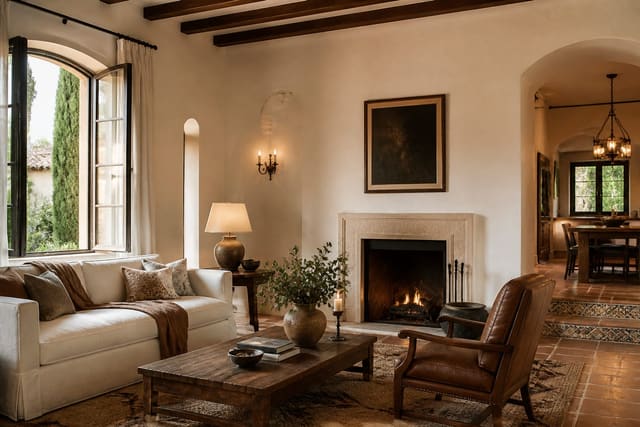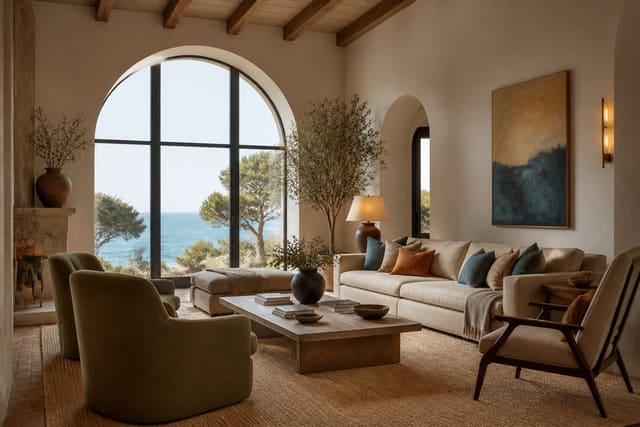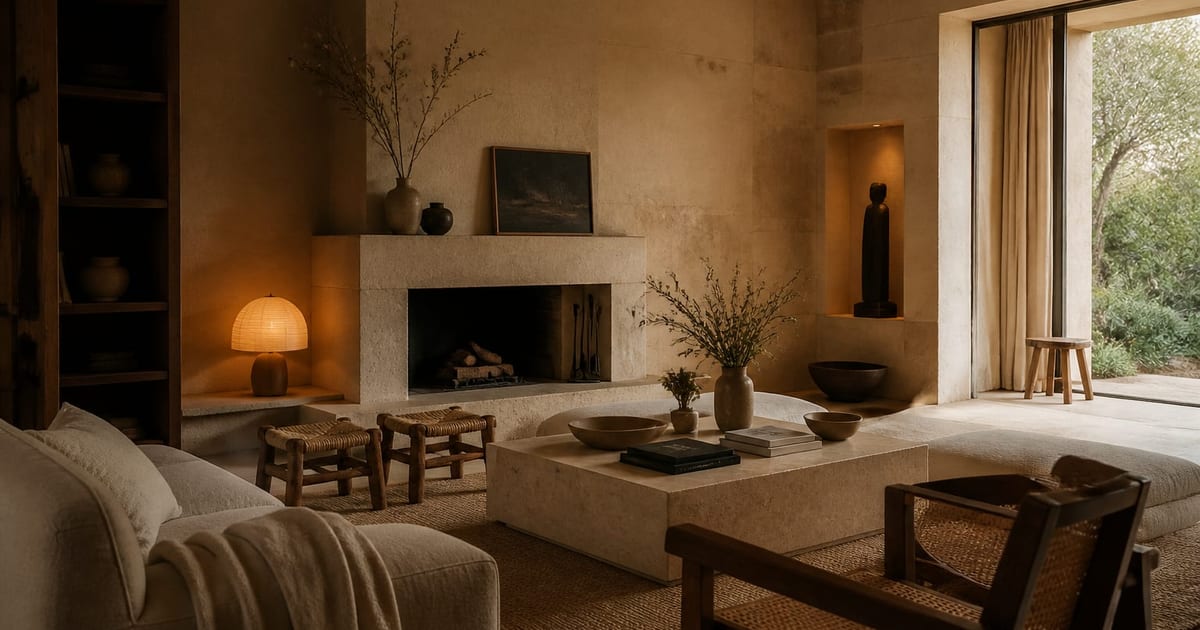
Desert modern interior design blends contemporary restraint with the materials and climate logic of arid landscapes. It borrows from adobe, Pueblo Revival, Southwest architecture, and Mediterranean earthiness, then edits the room down to cleaner lines: plaster, terracotta, raw wood, stone, leather, woven fiber, desert plants, and warm neutrals that look better in strong sun.
What is desert modern interior design?
Desert modern design is not traditional Southwestern decor with every motif turned up. It is a quieter mix of modern architecture and desert material character. The room can have a low-profile sofa, clean-lined cabinetry, and contemporary lighting, but the surfaces should feel grounded: adobe-colored plaster, terracotta tile, honed stone, raw wood, clay, linen, wool, and leather.
The best rooms use contrast between smooth modern forms and ancient-feeling materials. A square plaster fireplace can sit beside a handwoven rug. Polished concrete can meet a rough wood beam. A minimal dining table can sit under a woven pendant. That tension is what keeps the style from becoming either too rustic or too sterile.
Desert modern overlaps with Spanish Colonial interior design and Mediterranean style, but it is more minimal. It likes arches, thick walls, terracotta, and dark wood, yet it avoids heavy ornament. The landscape is the decoration: clay color, shadow, stone, agave, olive, cactus, and evening light.
Materials that make the room feel real
Start with the wall finish. Smooth white drywall rarely gives desert modern enough depth on its own. Limewash, clay plaster, microcement, Roman clay, or a warm matte paint can create the soft mineral surface the style needs. If you cannot change every wall, choose one fireplace wall, entry wall, or dining wall and keep the rest quiet.
Flooring should feel cool and grounded. Terracotta tile, Saltillo, limestone, travertine, warm concrete, or a sand-colored large-format tile all fit. Wood can work, especially oak or walnut, but it should be balanced by clay, stone, or plaster so the room does not drift into generic warm minimalism.
Furniture should be simple and tactile. Low linen sofas, sling chairs, leather ottomans, chunky wood tables, stone side tables, woven benches, and matte ceramic lamps all carry the mood. Avoid shiny chrome, cool gray upholstery, glossy white cabinetry, and busy printed fabrics unless there is enough earth texture to absorb them.
The palette: adobe, sand, terracotta, and shadow
A desert modern palette should look like it belongs outside the window. Start with warm white, sand, clay, mushroom, stone, camel, tobacco, and raw wood. Add terracotta, rust, ochre, olive, or muted black for weight. One sharper note, such as deep blue tile or a blackened metal fixture, can work when the room has enough warm material around it.
The style fails when everything becomes beige. Use texture and value shifts instead of collecting ten similar neutrals. A pale plaster wall, medium terracotta floor, dark wood beam, black iron sconce, and olive tree will feel more dimensional than a room of identical sand upholstery.
Practical rules before you build
- Adobe construction: traditional adobe blocks are sun-dried mud bricks (earth, sand, straw) approximately 10x4x14 inches; structural adobe walls are typically 10–14 inches thick providing thermal mass.
- Thermal mass benefit of adobe: adobe walls absorb daytime heat and release it at night, moderating interior temperature swings by 10–15°F versus frame construction in desert climates.
- Kiva fireplace: rounded beehive form, typically 24–36 inches wide, using traditional stucco or plaster finish; historically associated with Pueblo Native American ceremonial and domestic use.
- Desert paint palette: SW Accessible Beige (SW 7036), SW Antique White (SW 6119), BM Navajo White — paired with terracotta and raw wood for a desert modern interior.
If your room has ordinary drywall and no desert architecture, introduce the style through fewer, stronger choices. A plaster-look fireplace, terracotta tile entry, woven pendant, large clay vessel, leather chair, and warm landscape art can do more than scattering small Southwest accessories around the room.
For outdoor connection, repeat the interior palette on the patio. Terracotta pots, gravel, rammed-earth color, olive trees, agave, linen shade, and warm string or sconce light make the transition feel intentional. If the outdoor room is the priority, compare this guide with Mediterranean outdoor patio ideas before selecting pavers or planters.
Use Re-Design before you commit
Photograph the room from the main doorway or patio connection and test adobe plaster, terracotta floors, wood beams, leather, olive plants, and warmer lighting on the actual space. The preview should preserve ceiling height, windows, flooring, and fixed openings so the result stays buildable.