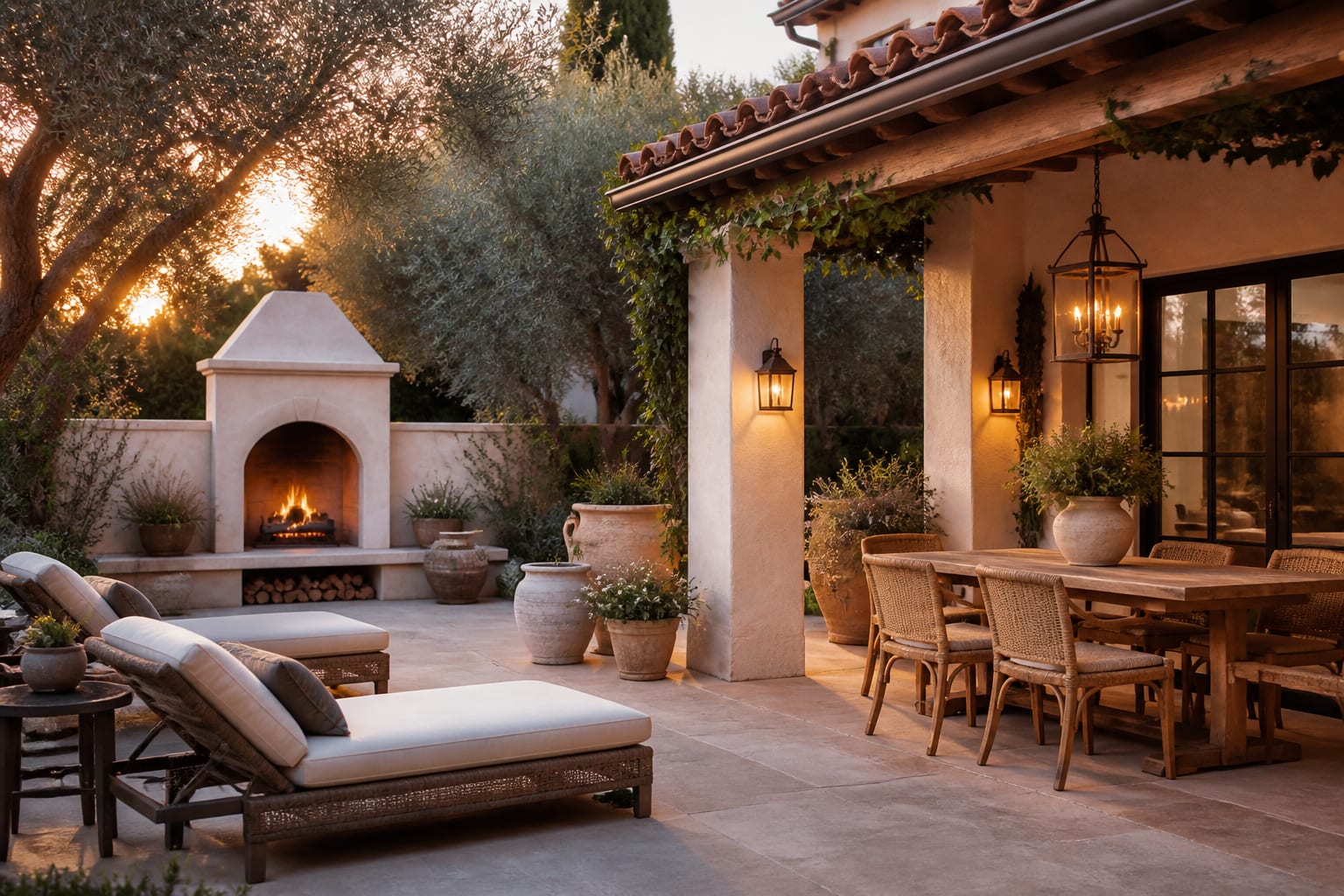
An outdoor patio is where Mediterranean style truly comes alive. This look was born for open air, dappled shade, and long meals that stretch past sunset, so your backyard is the perfect canvas. Think terracotta underfoot, a vine-draped pergola overhead, and the soft glow of lanterns as evening settles. Drawing from Spanish courtyards, Greek terraces, and Italian gardens, the style turns even a modest slab into a destination. The ideas below help you layer texture, shade, and warmth so your patio feels like a coastal escape just steps from the kitchen door.
Define the Space With a Pergola and Shade
Shade is the backbone of any Mediterranean patio, since the whole style assumes a generous, often relentless sun. A pergola gives you that shelter while doubling as architecture, framing the area and drawing the eye upward. Build it from weathered timber or stucco-clad posts to match the region's rustic-meets-elegant character, then let nature finish the job. Train grapevine, wisteria, bougainvillea, or star jasmine along the beams so the canopy fills in over a season or two, casting dappled light and releasing fragrance on warm afternoons. If a permanent structure is not in the cards, a simple set of posts with a stretched canvas sail or loosely draped linen achieves a similar softness. Position the pergola to shade your primary seating or dining zone during peak hours, ideally over the spot you will use most at midday. Add hanging lanterns or a few potted climbers at the base to reinforce the lush, layered feeling. With overhead cover in place, the patio instantly becomes usable for far more of the day, and the play of light through leaves brings the romantic Mediterranean mood you are after.
See also our guide to Boho Outdoor Space Ideas for more on mediterranean outdoor patio ideas.
Choose Earthy Flooring and Tile
The ground plane sets the tone before you place a single chair. Terracotta pavers are the classic choice, their warm clay color radiating the sunbaked feeling at the heart of this style. Natural stone such as travertine, limestone, or rough flagstone offers a cooler, more textured alternative that ages beautifully and stays comfortable underfoot. For smaller patios or courtyards, consider laying pebble mosaics or simple poured concrete softened with scattered rugs and plants. Wherever you can, introduce glazed ceramic tile as an accent rather than the main surface; a band of patterned tile around a fountain, along stair risers, or set into a tabletop brings the blue, green, and ochre color that defines Spanish and Moroccan influence. Keep the overall flooring tone earthy and muted so the tile pops without overwhelming. Mixing materials, say terracotta with a stone border, adds depth and signals that the space evolved over time rather than arriving all at once. Whatever you select, favor matte, slightly irregular finishes over slick modern surfaces. The right flooring grounds every other element and gives the patio that authentic, well-traveled foundation good Mediterranean spaces always share.
For a related angle on mediterranean outdoor patio ideas, read Maximalist Outdoor Space Ideas.
Furnish for Long, Relaxed Meals
Mediterranean culture revolves around gathering, so furnish your patio to encourage people to linger. A sturdy dining table sits at the heart of the scheme; choose reclaimed wood, wrought iron, or a stone-topped base that can weather the seasons and host a crowd. Surround it with comfortable chairs softened by washable cushions in linen or canvas, layering in a bench or two for casual overflow. Nearby, carve out a lounge zone with a low daybed, deep armchairs, or built-in masonry seating topped with thick pads where guests can retreat with a drink. Keep upholstery in natural, sun-friendly tones of cream, terracotta, and faded indigo so it blends with the architecture. Scatter a few weather-resistant outdoor rugs to define each area and add warmth underfoot. Side tables in iron or carved wood hold candles, books, and glasses within easy reach. The aim is a setting that feels collected and unhurried, never matchy or showroom-stiff. When the furniture invites you to stay for hours, the patio fulfills its true Mediterranean purpose, becoming an open-air room for slow dinners, afternoon reading, and easy conversation.
Layer Lighting, Water, and Greenery
The final layer is what turns a nice patio into a magical one after the sun drops. Lighting should be warm and low, never harsh, so combine several soft sources rather than one bright fixture. String lights woven through the pergola, iron lanterns on the table, candles in glass hurricanes, and a few uplit trees create a gentle, romantic glow. A water feature deepens the sense of escape; even a small wall-mounted fountain or a glazed bowl with a bubbling spout adds soothing sound and helps cool the air. Greenery should feel abundant and slightly wild, mixing structured potted olive and citrus trees with trailing rosemary, lavender, and climbing vines. Cluster terracotta pots of varied sizes along edges and steps to soften every hard line. Fragrant herbs near seating mean you catch their scent each time a breeze passes. Finish with a few personal touches, a stack of ceramic bowls, a draped textile, a worn wooden tray, so the space feels lived-in and loved. Together, glowing light, moving water, and lush plantings give your patio the immersive, sensory richness that makes Mediterranean outdoor living so deeply restorative.
- Drape grapevine over a timber pergola for dappled shade
- Lay warm terracotta pavers across the main seating zone
- Set glazed mosaic tile around a small bubbling fountain
- String warm lights between pergola beams and house wall
- Pot olive, citrus, and lavender in clustered terracotta
- Build masonry bench seating topped with linen cushions
Bring the look home with Re-Design
Curious how your backyard would look as a Mediterranean patio retreat? Upload a photo of your current outdoor space to Re-Design and see it transformed with a vine-draped pergola, terracotta paving, glazed tile accents, and warm lantern lighting. You can preview different shade structures, test earthy flooring against your real layout, and experiment with lush potted greenery before buying a single plant, making it simple to plan a relaxed, sun-soaked patio with confidence.
Frequently Asked Questions
What flooring suits a Mediterranean patio?
Terracotta pavers remain the classic pick, their rusty tone radiating warmth and aging beautifully outdoors. Natural stone like travertine or limestone offers a cooler, paler alternative that resists summer heat underfoot. For pattern, set decorative cement tiles in a central panel framed by plainer paving. Seal porous materials so spilled wine and rain do not leave permanent marks.
How can I create shade on a Mediterranean patio?
A timber pergola draped with climbing grapevine or bougainvillea filters light while staying breathable. Retractable canvas sails in cream or ochre suit smaller terraces. Mature potted citrus and olive trees cast dappled shadow and reinforce the regional feel. Pair any structure with hanging lanterns so the shaded zone stays inviting once the sun drops below the rooftops.
What plants belong on a Mediterranean patio?
Fill glazed and terracotta pots with lavender, rosemary, thyme, and trailing geraniums for fragrance and color. Add structure with potted olive, fig, or lemon trees. Climbing jasmine perfumes evening air near seating. Choose drought-tolerant varieties that thrive in full sun and dry spells, then cluster pots in odd-numbered groups for a relaxed, lived-in arrangement.
How do I furnish a Mediterranean patio for dining?
Center the space around a generous table in weathered wood or wrought iron, sized for long, unhurried meals. Surround it with cushioned chairs covered in washable striped or solid fabric. A nearby bench softened with pillows adds casual overflow seating. Set out ceramic dishware, a few hurricane lanterns, and a jug of olive branches to complete the gathering spot.


