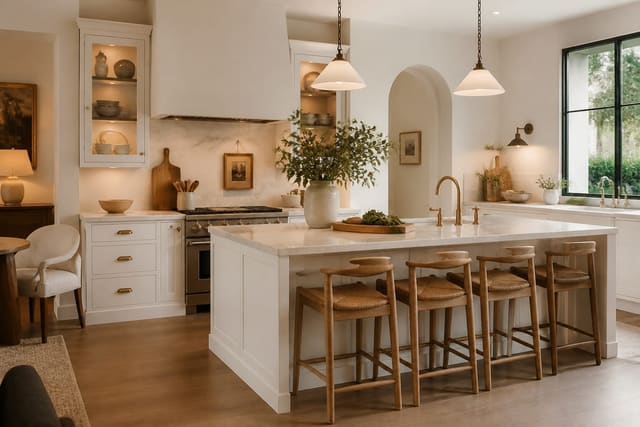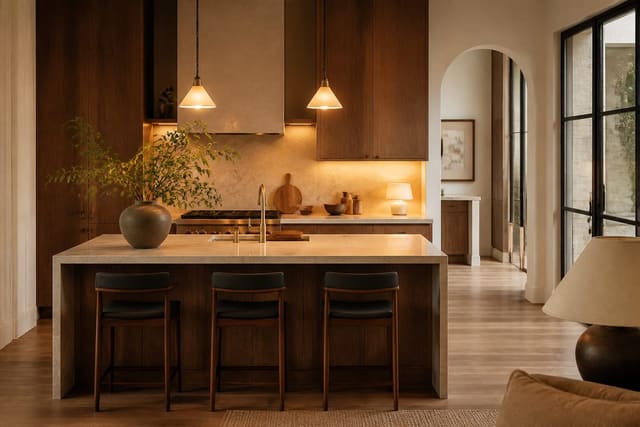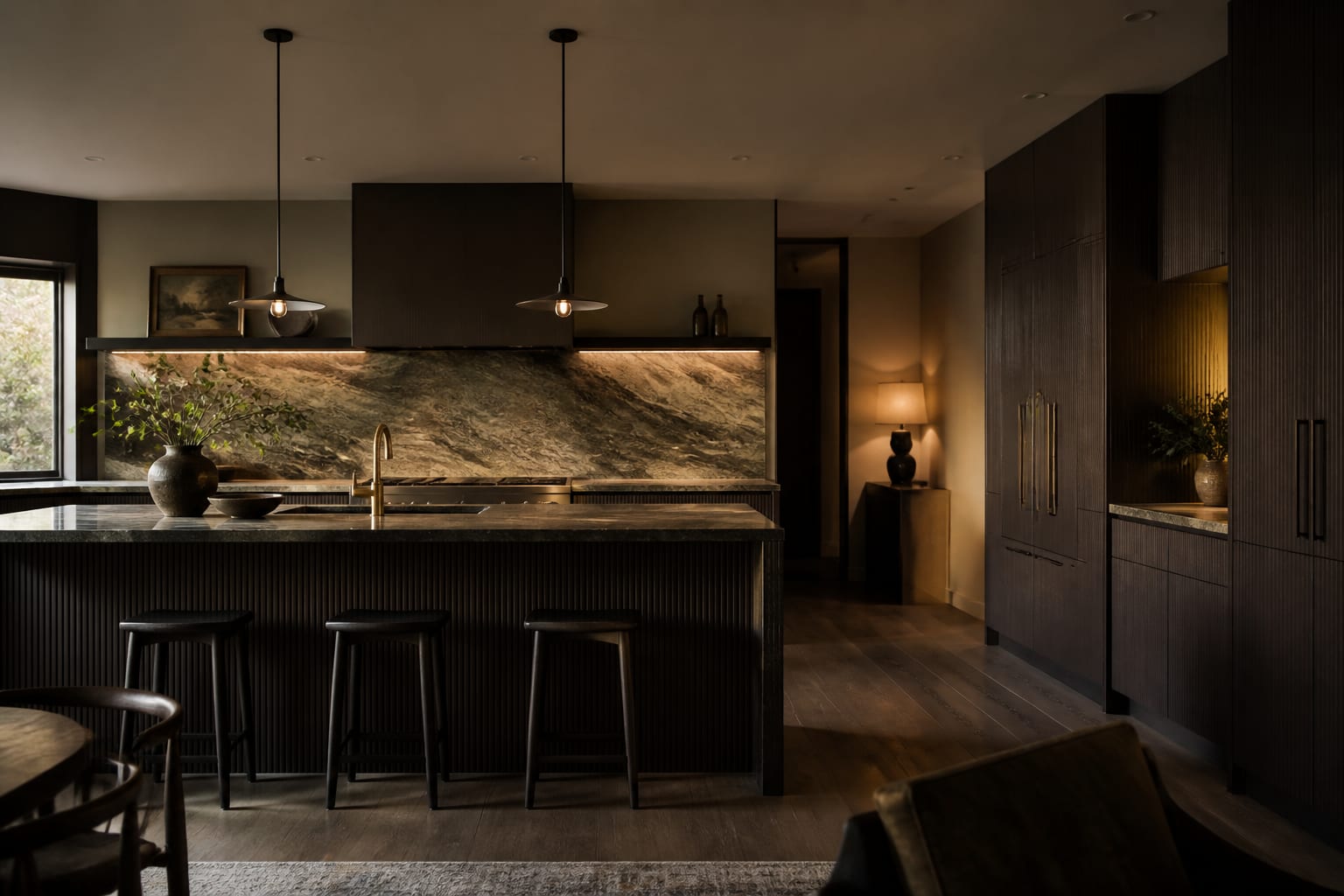
A dark kitchen is the boldest move on the menu and, counterintuitively, one of the most forgiving for hiding fingerprints and wear. Deep cabinet colors read as confident and expensive, but they punish carelessness with light. Where a white kitchen fails by feeling sterile, a dark kitchen fails by feeling like a cave, and the entire craft lies in balancing the gloom. These ideas cover the cabinet colors worth choosing, the finishes that flatter them, and the lighting strategy that keeps a dark kitchen feeling intentional and rich rather than dim and closed in.
Choosing the right dark cabinet color
Not all darks behave the same, and the color you choose sets the room's whole temperament. Charcoal and soft black are the most flexible, reading as neutral and pairing with almost any counter and metal, which makes them the safe entry into dark cabinetry. Navy is the friendliest of the saturated darks, warm enough to feel cozy yet crisp enough to stay current, and it flatters both brass and chrome. Forest and olive greens have surged because they connect a kitchen to the natural world and feel especially rich beside wood and brass, though they read best with plenty of warm light. True near-black, like a deep ink or off-black, is the most dramatic choice and the most demanding, since it shows dust and needs serious light to avoid feeling like a void. A useful tactic is to go dark on the lower cabinets and the island while keeping the uppers lighter or removing them for open shelving, which delivers the moody anchor without sealing the room in darkness from floor to ceiling. Test any dark color at full height before committing, because a shade that looks sophisticated on a small sample can overwhelm an entire wall of tall cabinets. Undertone matters here as much as in whites: a navy with a green undertone reads differently from one with a violet cast, so check it against your floor and counter in the actual room light before you order.
See also our guide to White Kitchen Ideas for more on dark kitchen ideas.
Balancing the dark so it never feels like a cave
The core challenge of a dark kitchen is keeping it from swallowing light, and the answer is calculated contrast. Pair deep cabinets with a light counter, since a white or pale stone worktop bouncing off dark fronts gives the eye relief and brightens the work surface where you actually need it. A pale backsplash does similar work, and running a light marble or a soft zellige up the wall behind a dark range stops the cooking zone from disappearing. Warm wood is the dark kitchen's best friend, so a butcher-block counter section, oak open shelves, or a wood floor introduces warmth and a mid-tone that bridges the dark cabinets and the light surfaces. Reflective surfaces multiply whatever light you have, so a polished counter, a glossy tile, or a mirrored splash behind shelves all push photons back into the room. Keep the ceiling and any upper walls light, because a dark ceiling over dark cabinets is how a kitchen turns claustrophobic. If the room has limited natural light to begin with, lean toward this lighter-upper, darker-lower split rather than going dark everywhere. The principle is balance: a dark kitchen should feel like a velvet jewel box, layered and rich, not like a basement. Every dark surface wants a lighter counterpoint nearby, and the more daylight the room loses, the harder those light elements have to work to keep it feeling open.
For a related angle on dark kitchen ideas, read Kitchen Island Ideas.
Finishes that flatter deep colors
Finish changes a dark color as much as the hue itself, and choosing wrong undermines the whole scheme. Matte and dead-flat finishes read the most sophisticated and modern, swallowing reflections so the color looks deep and velvety, and they hide fingerprints remarkably well, which matters enormously on dark fronts that show every smudge. The trade-off is that matte absorbs light rather than bouncing it, so a fully matte dark kitchen needs the strongest lighting plan of all. Satin and eggshell sheens strike a practical middle ground, giving a slight glow that helps the room feel less heavy while still hiding marks reasonably well, and they wipe clean more easily than dead-flat paint. High-gloss dark cabinets are the showstopper, lacquered to a mirror finish that throws light around the room and makes a small dark kitchen feel surprisingly bright and glamorous, but gloss shows every fingerprint, dust mote, and surface imperfection, so it demands flawless substrate and constant wiping. For most homeowners, a matte or satin finish on the bulk of the cabinets with one glossy or reflective accent surface delivers the richness without the maintenance headache. Consider texture too: a wood-grained dark stain shows the grain and feels warmer than a solid painted black, while a textured laminate or a fluted dark front adds shadow lines that keep the surface from reading as a flat black hole. The finish is where a dark kitchen earns its luxurious reputation or loses it.
Lighting and accent metals that bring it alive
A dark kitchen lives or dies by its lighting, and you should plan for noticeably more of it than a pale room would need, because dark surfaces absorb rather than reflect. Build the same three layers but turn each one up. Under-cabinet lighting becomes essential rather than optional, since dark uppers cast deep shadows on the counter; run continuous warm strips at around 2700K to keep the work surface usable. Add more recessed downlights than you think you need and put them on a dimmer so you can flood the room when cooking and dim it for atmosphere later. Accent lighting earns its keep here, so light inside glass cabinets, toe-kick strips that make dark bases appear to float, and a strong statement pendant or two over the island all add the sparkle a dark scheme craves. Now for the metals, which are where a dark kitchen comes alive. Warm metals glow against deep cabinets in a way they never can against white: brass, unlacquered or aged, looks molten beside charcoal and green, copper brings warmth to navy, and aged gold reads jewel-like throughout. These warm accents in the hardware, faucet, pot filler, and light fixtures prevent the dark scheme from feeling heavy and somber, adding the highlights that make the whole room read as deliberate luxury. Pick one warm metal and repeat it; against a dark backdrop, that consistent glint of brass or copper is what turns a moody kitchen from gloomy into genuinely glamorous.
- Choose charcoal or navy for an easy entry into dark cabinetry, or forest green for a richer, nature-linked feel.
- Go dark on the lower cabinets and island while keeping uppers light or open to avoid sealing the room in.
- Pair deep cabinets with a pale counter and a light backsplash so the work zone stays bright and usable.
- Choose matte or satin finishes to hide fingerprints, and reserve high-gloss for one reflective accent surface.
- Add a wood-grained stain or fluted fronts so dark cabinets show shadow and grain instead of flat black.
- Budget for extra under-cabinet, recessed, and accent lighting, since dark surfaces absorb rather than bounce light.
- Repeat one warm metal, like aged brass or copper, in hardware and fixtures to make the dark scheme glow.
- Keep the ceiling and upper walls light so a dark lower kitchen never tips into feeling claustrophobic.
Bring the look home with Re-Design
Dark colors are hard to judge from a paint chip, so preview the whole room before you commit. Upload a photo of your kitchen to Re-Design and test forest green against navy or charcoal on your actual cabinets, then check how a light counter, warm wood floor, and brass hardware balance the depth. Seeing the full moody scheme in your own light reveals whether the room reads as rich and layered or risks feeling too closed in.
Frequently Asked Questions
Will dark cabinets make my kitchen feel small or gloomy?
Not if you balance them. Pair deep cabinets with a light counter and backsplash, keep the ceiling and uppers pale, add plenty of warm wood, and over-light the room with layered sources. A glossy finish or a darker-lower, lighter-upper split also helps. Done with that balance, dark cabinets read as rich and cozy rather than cramped.
What is the best finish for dark kitchen cabinets?
Matte and satin finishes hide fingerprints best and look the most sophisticated, with satin offering a slight glow that lifts the room. High-gloss is dramatic and bounces light around, making a small dark kitchen feel brighter, but it shows every smudge. Most homeowners do best with matte or satin and one reflective accent surface.
Which metals look best with dark kitchen cabinets?
Warm metals win against dark cabinets. Aged or unlacquered brass looks molten beside charcoal and green, copper warms a navy scheme, and aged gold reads jewel-like throughout. These warm accents glow where cool chrome can fall flat. Choose one warm metal and repeat it across hardware, faucet, and lighting for a deliberate, luxurious result.