Sage green has become the default alternative to a white kitchen because it is soft enough to live with daily yet carries more character than another set of bone-white cabinets. The common error is reaching for a saturated, minty green that looks lively in the showroom and exhausting at home after a month. The smarter approach is a muted, grayed sage with a touch of brown in it, the color of dried herbs, which behaves almost like a neutral and pairs with wood, brass, and marble without a fight. Treated that way, sage anchors a kitchen that feels current but will not look dated in five years.
Why sage green works in a kitchen
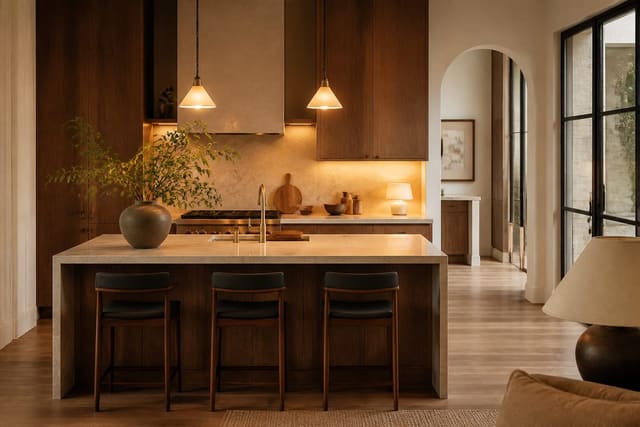
Sage sits in a useful middle ground. It has enough gray and brown to behave like a neutral, so it does not compete with the food, the dishes, or the daily traffic the way a strong color would, yet it still gives the room a point of view that flat white never does. Because the undertone is muted, sage flatters both warm and cool finishes, which is rare. You can run it next to honey-toned white oak and brass and it reads cozy and organic, or set it against marble and polished nickel and it reads crisp and a little formal. Few cabinet colors flex that widely.
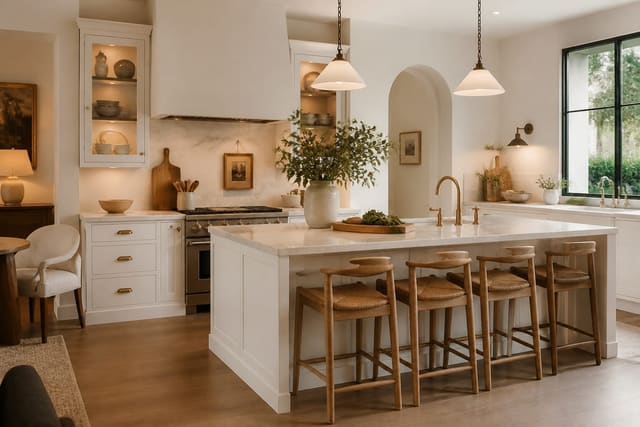
It also photographs and ages well, which matters in a kitchen you will not repaint casually. A full set of cabinets is a real investment, and refacing or repainting later runs $3,000 to $8,000 for an average kitchen, so the color needs staying power. Sage has it because it borrows from nature, where greens are constant rather than seasonal. That is also why it sits so comfortably next to plants, fresh herbs, and a window full of foliage, which most kitchens already have on the counter. If you are weighing it against the obvious safe choice, our guide to white kitchen ideas lays out where bone-white still wins, but sage gives you most of that brightness with a fraction of the sterility.
How to balance sage cabinets with counters and hardware
The counter is the decision that makes or breaks a sage kitchen. A warm-white quartz or a honed marble with soft gray veining is the classic partner, since it brightens the room and lets the sage stay the star. If you want more contrast, a creamy, slightly veined surface picks up the green without matching it. Avoid a stark, blue-white counter, which fights sage's warmth and leaves the cabinets looking dull. Run a 1.25-inch counter thickness for a substantial look, or a thinner 0.75-inch slab for a lighter, more modern feel.
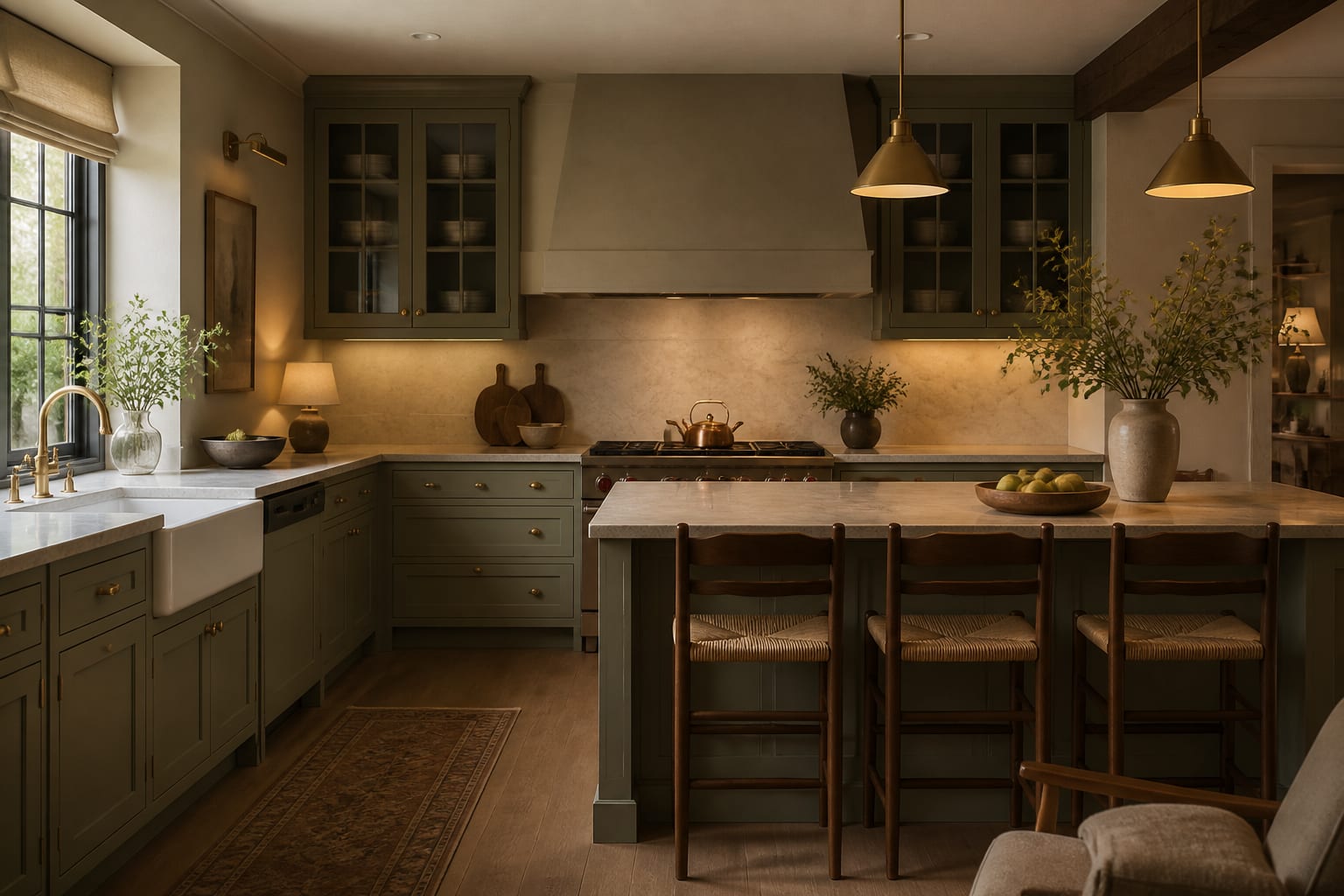
Hardware is where sage gets its personality. Brass and unlacquered bronze are the standout pairings, warming the green and giving it a slightly heritage feel; aim for pulls around 5 to 6 inches on standard 30- to 36-inch base cabinets and longer 8- to 12-inch pulls on wide drawers. Brushed nickel keeps things cooler and more contemporary if brass feels too warm for your taste. For lighting, install warm 2700K to 3000K LED strips under the wall cabinets, because cooler daylight bulbs can drag sage toward a flat, institutional gray after sunset. A sage kitchen island under two warm pendants is often the most flattering way to introduce the color if you are nervous about wrapping every cabinet in it.
Where to use sage, all-in or as an accent
You do not have to commit the whole kitchen to find out whether you love sage. The lowest-risk entry is a single sage element against an otherwise white or wood kitchen, most often the island or a run of lower cabinets. A two-tone scheme, sage on the base cabinets and warm white on the uppers, keeps a small or low-ceilinged kitchen feeling open while still delivering the color where you see it at counter level. This is also the most forgiving layout if your kitchen gets limited natural light, since the pale uppers keep the room from closing in.
For a bolder room, take sage floor to ceiling, including a sage range hood and a sage pantry wall, and let warm wood open shelving and brass break it up. Larger kitchens with good daylight carry full sage beautifully. In a north-facing room, lean toward the warmer, slightly olive end of the sage range, since a cooler gray-sage can drift flat and chilly where the light is weak. If you want the color without the cabinetry commitment, paint the walls or the island sage and keep the cabinets neutral. Compared with the drama of a dark kitchen in charcoal or navy, sage gives you a softer, more restful version of a colored kitchen, one that feels calm at breakfast and warm at dinner.
Sage green kitchen ideas to try
- Paint base cabinets sage and keep uppers warm white for a two-tone kitchen that stays bright and open.
- Run full sage cabinetry with unlacquered brass pulls and a honed-marble counter for a heritage-leaning look.
- Add a sage island under two warm 3000K pendants as a low-risk way to introduce the color.
- Pair sage cabinets with white oak floors and open wood shelving so the green reads organic and warm.
- Use a sage range hood as the single colored focal point in an otherwise white kitchen.
- Carry sage onto a pantry or scullery wall to extend the color past the main run without overwhelming it.
- Set sage against a zellige tile backsplash in warm white for a textured, hand-made counterpoint.
- Choose brushed nickel hardware and a cool quartz counter to push the same sage toward a crisper, modern feel.
See it first in Re-Design
Sage is one of those colors that looks different on a chip, in a showroom, and in your own kitchen at 6 p.m., so previewing it in your actual space saves an expensive mistake. Upload a photo of your kitchen into Re-Design and re-design the cabinets in a grayed sage, a deeper olive-sage, and a soft celadon to see which depth your light flatters. You can preview a full sage kitchen, a two-tone sage-and-white layout, or just a sage island, and swap brass for nickel and marble for quartz in seconds, so you settle every pairing before a painter or cabinetmaker quotes the job.
Frequently Asked Questions
Is sage green going out of style?
Sage is unlikely to date quickly because it functions as a muted neutral rather than a bold trend color. Greens drawn from nature have stayed in rotation for decades, and a grayed, herb-toned sage in particular reads timeless. The versions most at risk of looking dated are the bright, minty greens, which is why the softer, browner shades are the safer long-term choice.
What counter goes with sage green cabinets?
Warm-white quartz and honed marble with soft gray veining are the most reliable partners, since they brighten the room and let the sage stay the focal point. A creamy, lightly veined surface adds contrast without clashing. Steer clear of stark blue-white counters, which fight the green's warmth and can leave the cabinets looking flat.
Does sage make a small kitchen look smaller?
Not if you handle it well. A two-tone layout with sage on the lowers and warm white on the uppers keeps a small kitchen feeling open while still giving you the color. Pair that with warm 2700K to 3000K lighting and reflective brass hardware, and a modest sage kitchen feels cozy rather than cramped.
What hardware looks best with sage cabinets?
Brass and unlacquered bronze are the standout choices, warming the green and lending a heritage feel. Brushed nickel is the cooler, more contemporary option if brass feels too warm. Whichever you pick, scale the pulls to the doors, roughly 5 to 6 inches on standard base cabinets and 8 to 12 inches on wide drawers, for a balanced look.