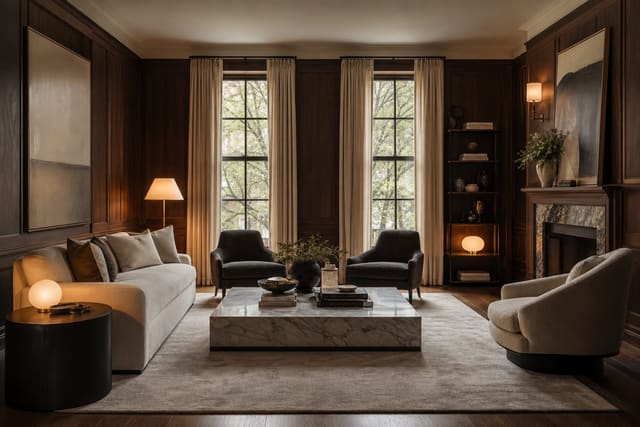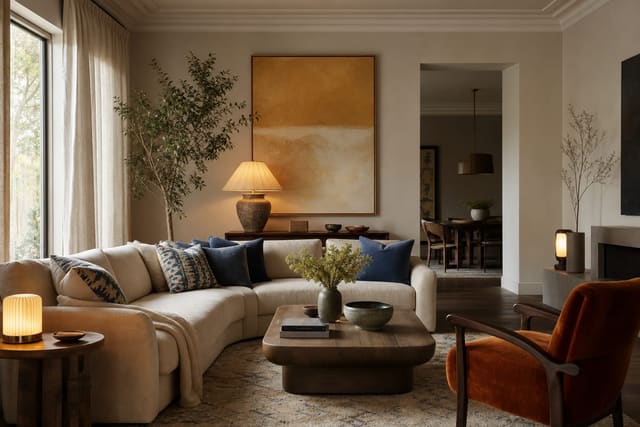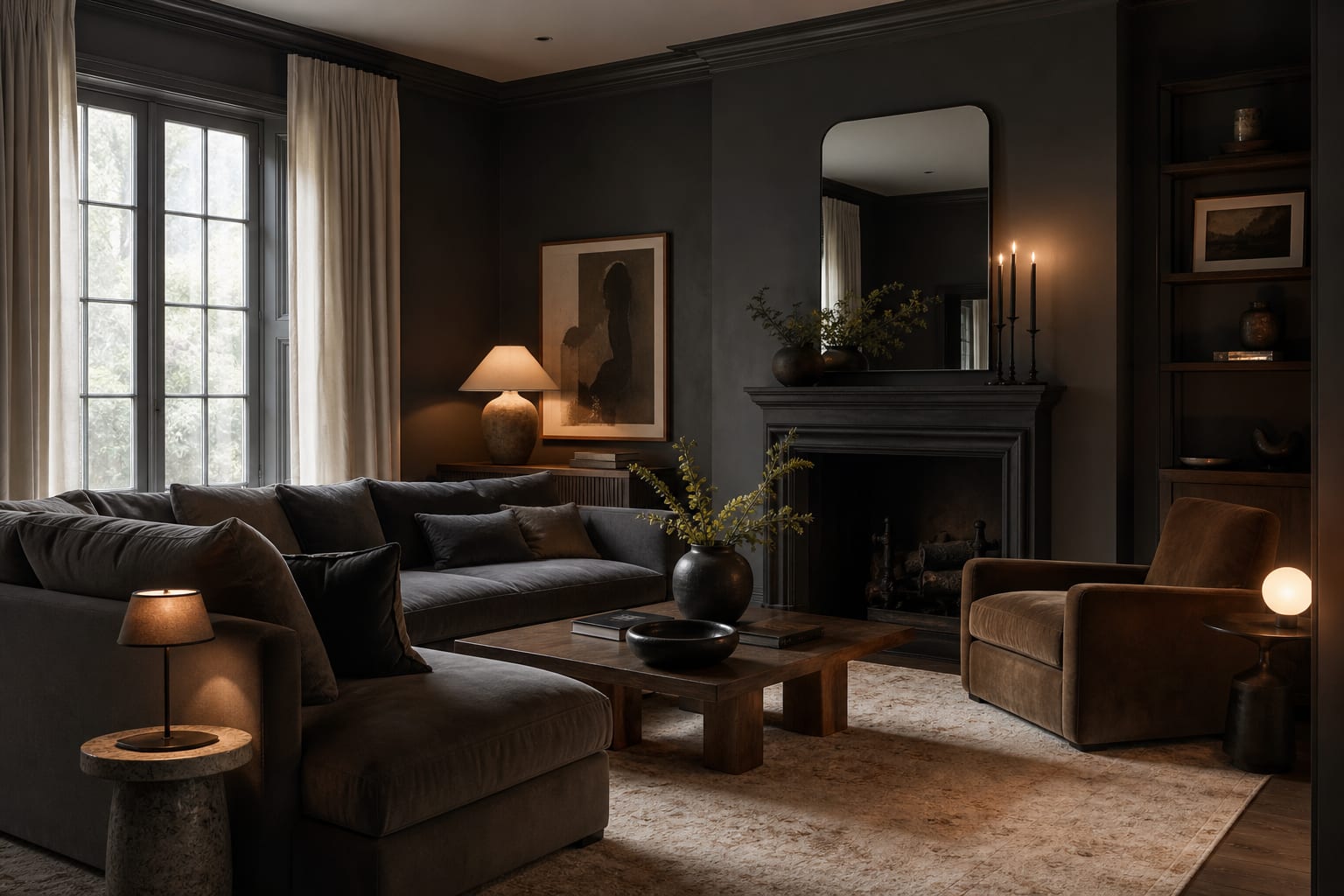
Dark moody rooms lighten without losing drama by keeping the wall color, sharpening trim contrast, adding a brighter rug, and pulling one mid-tone fabric into the upholstery—surgical lifts that hold the mood while opening the space. Most heavy rooms aren't too dark; they're too flat. When paint, sofa, rug, and lighting all sit in the same visual register, the eye has nowhere to rest, so the fix is contrast and relief, not automatically a white ceiling.
What keeps a dark room moody instead of heavy?
Pair the dark color with visible contrast, layered warm lighting, matte texture, and a few pale surfaces the eye can land on. The room stays dramatic; it just needs intervals of brightness so the darkness reads as atmosphere rather than pressure.
Start with the largest dark plane. If walls are navy, forest green, oxblood, or charcoal, don't let the rug, curtains, sofa, and lampshades all land at the same depth—choose one large relief surface: a cream rug, linen drapery, an oatmeal sofa, or art with wide mats. An 8x10 rug shifts a small seating area's balance more than six scattered pale accessories.
Keep the ceiling honest. Under 8 feet, test a softened white or pale plaster before committing to a fully dark lid; a dark ceiling in a low, dim room turns mood into compression. At 9 feet or taller, a dark ceiling can work if trim, art, or curtains add vertical brightness.
Plan lighting as part of the color scheme: overhead or architectural light, a table or floor lamp, and one accent source like a sconce or picture light. Bulbs at 2700K–3000K and 90+ CRI keep deep greens, blues, and browns nuanced instead of muddy. If the room gets little daylight, see creating fake natural light in any room before blaming the paint.
Which surfaces need relief first?
Fix the surfaces touching the darkness at the largest scale before buying decor—a small brass object can't compete with a black rug, brown sectional, and heavy curtains. Scale is the difference between moody and murky.
Check the floor first. Dark walls over a dark floor can work if furniture legs, rug pattern, or upholstery interrupt the mass; bring in a rug with a light ground or medium-scale pattern, and leave 12–18 inches of floor visible around it.
Then the window wall. Hang rods 6–10 inches above the casing, extend them 8–12 inches past the trim, and let panels clear the floor by about 1/2 inch. A flax, mushroom, or warm-white linen softens the room without breaking the palette.
Furniture needs contrast in silhouette, not just color. Visible legs, a lighter coffee table, or a cane cabinet introduce air into an otherwise blocky, low room. Mirrors help only when they reflect something brighter than the wall—a mirror doubling a dark bookcase makes the room heavier, not lighter, as covered in using mirrors to amplify light.
Test this on your own room photo with ReDesign — keep the doorway, walls, windows, and main furniture visible so the preview solves the room you actually have.
Common mistakes that make a dark room feel oppressive
- Painting before testing lighting. Add lamps before adding more dark paint; a single ceiling fixture leaves the room glowless at seated height.
- Using only shiny finishes. Gloss paint, polished stone, and glass create glare, not brightness. Choose matte or eggshell walls, linen, wool, jute, or raw wood instead.
- Stacking all-dark furniture. A charcoal wall, brown leather sofa, black console, and walnut shelves together become one visual slab—keep one or two dark anchors and lighten what sits beside them.
- Assuming white is the only fix. Bright white can look chalky next to deep paint; ivory, bone, oatmeal, mushroom, or pale oak give contrast without theatrics.
- Ignoring doorways. If several adjacent rooms are visible, keep those sightlines quieter, as in rooms with too many doorways, and let the moody room hold the strongest color.
How AI design helps you see the balance before repainting
The issue is relational: wall color reads differently as rug, bulbs, curtains, and adjacent rooms change. Upload a straight photo with the dark wall or main dark furniture in place so the preview tests balance instead of a fantasy renovation.
Shoot from a doorway or back corner to include the floor, ceiling line, windows, and at least two walls—once with curtains open in daylight, once with lamps on at night. Skip dramatic filters; they hide the exact heaviness you're diagnosing.
Run focused variations: a pale rug and lighter curtains, improved lamps and sconces with the same palette, warmer texture through linen or cane, and a lighter ceiling with dark walls left alone. If the best preview works from two or three realistic changes, that's your plan; if it only works after replacing everything, reject it.
What should you change first this weekend?
- Fix the light. Swap in warm 2700K–3000K bulbs and add one lamp to the room's dead corner; a 14–18 inch fabric shade spreads softer light than a small dark shade.
- Edit the clutter. Clear 25% of visible shelf or tabletop space, then bring back a pale bowl, linen box, or warm metal frame for contrast.
- Make one large relief move. Lighter bedding in a bedroom, a lighter rug or curtain in a living room, pale art or a runner in a dining room—the largest adjacent surface decides if dark reads rich or relentless.
- Check the room at the hour you use it. Turn on your usual lamps at night and look for dark depth, mid-tone texture, and one clear pale area—if you only see one dark mass, add contrast at a bigger scale, not more accessories.
A successful dark room still has shadow; it just gives that shadow edges, warmth, and room to breathe.
Frequently Asked Questions
Should I repaint a dark moody room to make it feel lighter?
Usually no. The wall color is doing its job; instead swap the trim from matching-dark to crisp white, change the rug to cream or a graphic pattern, and brighten one piece of upholstery.
What rug works in a dark moody room?
Cream or oat-toned wool rugs, or graphic black-and-white patterns, lift a dark room from the floor up. A rug that matches the dark walls only doubles the heaviness.
How does trim color change a dark room?
Crisp white trim (Chantilly Lace, Decorators White) against deep walls creates a high-contrast frame that reads as intentional and architectural rather than dim and unfinished.
Should I add metallic accents to a dark moody room?
Yes. Brass, brushed nickel, or polished chrome in lamps, hardware, and frames bounces light and reads as jewelry against dark walls; matte-black hardware doubles down on the heaviness instead.
Can AI preview lighting and rug changes before I buy?
Yes. Upload a photo of the dark room and preview trim swaps, rug changes, and accent additions before any purchase or paint job, so you commit only to changes that actually lighten the balance.
> Try this: Ready to see this on your own room? Open ReDesign and run the preview.
Three transformations to try
1. Dark walls with crisp white trim swap 2. Cream rug under dark moody seating 3. Brass accents in dark library room