You keep a home stylish with a baby by choosing adult-scale furniture, washable finishes, closed storage, and baby items that follow the room's existing palette instead of announcing a nursery in every corner. Safety and softness matter, but the room should keep its original point of view. A few smart constraints beat a full kid-themed makeover.
Which baby gear deserves space in the grown-up room?
Not every baby item deserves permanent visual real estate. Keep daily-use pieces close, but make them earn their spot by fitting the room's scale, color, and traffic pattern.
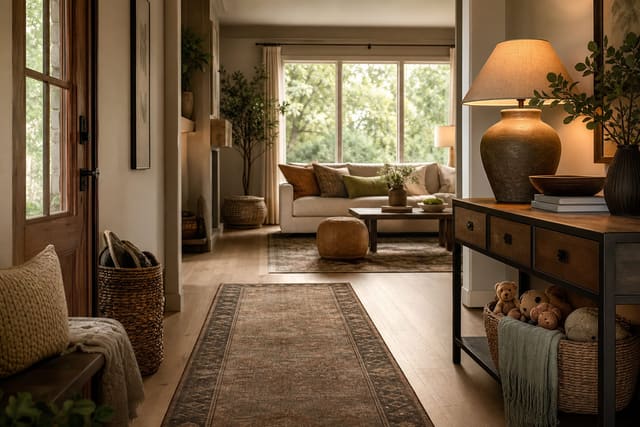
- Storage: one excellent piece beats five cheerful bins. A low cabinet, lidded ottoman, or credenza 15-20 inches deep holds diapers, toys, and books behind doors; leave one basket out for the day's rotation.
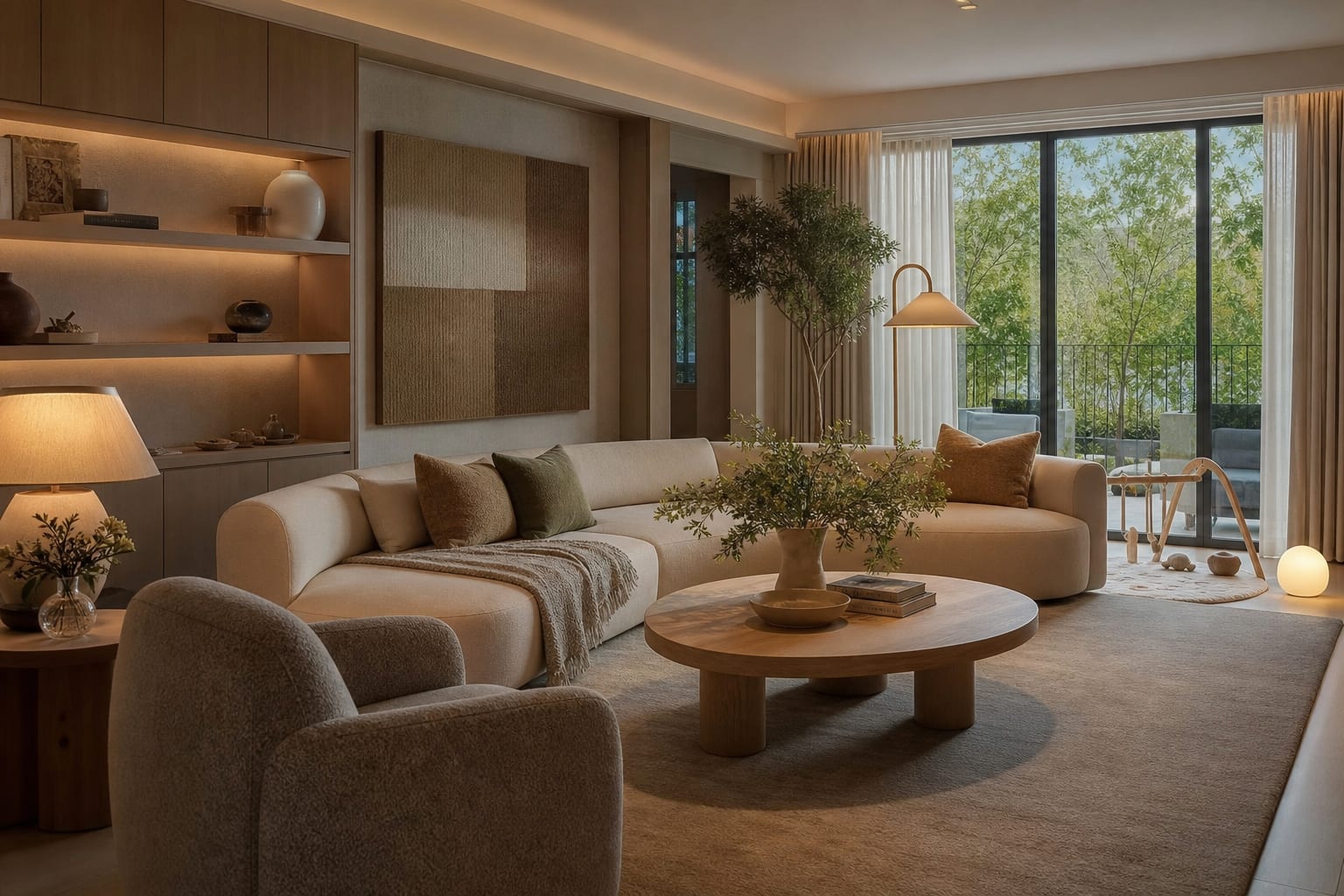
- Play mat: treat it like a rug decision. Choose wipeable cream, taupe, sage, clay, charcoal, or a quiet pattern over a high-contrast alphabet mat, and leave 30 inches of walkway around main seating.
- Feeding gear: a high chair in white, black, natural wood, or a muted color ages better than bright plastic. Repeat its finish nearby (black frames, oak stools, a white pendant) if the kitchen is visible from the sofa.
Stylish baby proofing is mostly subtraction: remove sharp, wobbly, fragile, and cord-heavy objects before adding a mountain of safety products. If your living room also serves older kids, the same discipline in a kid-friendly living room that still feels adult applies: let durable design lead, then give kids' items a defined place.
Test this on your own room photo with ReDesign before choosing a direction; keep the doorway, walls, windows, main furniture, and lighting visible so the preview solves the room you actually have.
How do you baby proof without making everything look temporary?
Baby proofing looks bad when every fix reads as an emergency patch, and better when it's folded into the design decision.
- Anchor tall furniture to studs, not just drywall, before crawling begins. If a mirror is part of your light plan, place it to reflect a window or pale wall — see using mirrors to amplify light for the logic.
- Replace the sharpest coffee table with a round or oval option, upholstered ottoman, or soft-edged wood piece instead of guarding a glass rectangle. Keep 16-18 inches between sofa and table.
- Control cords like styling elements. Clip lamp cords behind furniture, use channels matching the baseboard, and move wobbly floor lamps out of the pull zone. Warm 2700K-3000K bulbs at 90+ CRI keep evening routines from feeling harsh.
Common mistakes that let baby stuff take over
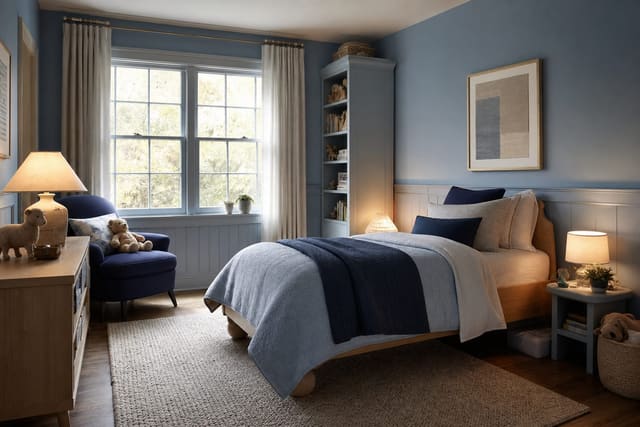
- Buying nursery versions of everything. A pastel hamper, animal lamp, printed foam mat, and cartoon blanket together make the main floor feel themed; choose canvas, wool, wood, leather, rattan, or wipeable performance fabric instead.
- Leaving items wherever they were last used. Give each high-use area a small landing zone — one entry drawer, one lidded basket by the sofa, one kitchen cabinet shelf — small enough to force editing.
- Going all-pale because "baby" feels soft. White fabric, cream rugs, and light wood together become anxiety furniture. Medium tones like camel, oatmeal, olive, denim, and warm gray hide more real life.
- Forgetting light. A dim room makes toys and folded blankets look like clutter even with a controlled palette; see creating fake natural light in any room for weak-window fixes.
Use AI design to preview the baby-friendly version before you buy
Baby gear changes scale fast: a bassinet, rocker, mat, and cabinet may each fit alone, then overwhelm the room together. Use a clear photo of the actual room and test versions that keep the sofa, rug, windows, and main storage in place, so you can judge whether the real room absorbs new functions without losing its adult shape.
Ask for focused previews: one with closed storage beside the sofa, one with a neutral mat replacing the rug zone, one with a softer coffee table, one with gear moved to a side wall. Keep the palette consistent across versions to judge placement and scale, not a total makeover.
Check the doorway view. If the first read is still sofa, lamps, art, and rug, the plan is working; if it's swing, caddy, and toy pile, the room needs stronger storage or a quieter gear palette.
What should you change first this weekend?
- Remove duplicate blankets, excess toys, packaging, and anything already outgrown.
- Choose one visible baby zone and one hidden zone per shared room — a 36-inch storage ottoman with one rotation basket in the living room, a changing basket with diapers hidden in the top drawer in the bedroom, shoulder-height entry hooks with a low shoe basket by the door.
- Strengthen the adult pieces: hang art with its center around 57-60 inches from the floor, size the rug so the sofa's front legs sit on it, and swap in fabric or paper lamp shades around 14-18 inches wide.
The baby will keep changing; the room needs a backbone that can change with them.
Frequently Asked Questions
Do I need to redo my living room when a baby arrives?
No. Targeted swaps — a performance fabric sofa cover, a rounded-edge coffee table, and a washable rug — handle most of the safety and durability concerns without losing the adult look.
What sofa material survives a baby and looks adult?
Performance microfiber, Crypton, or full-grain leather all clean up easily and read sophisticated. Light linen and velvet show every stain and tear within months.
Where should baby gear actually live?
Inside a closed storage piece such as a TV credenza, accent cabinet, or storage bench rather than out on the floor. This resets the room visually at the end of each day.
What rug should I get with a baby on the floor?
Washable performance rugs (Ruggable, Lorena Canals, or stain-treated wool blends) handle spills and crawling without losing texture. Loop-pile and high-traffic synthetics also hold up well.
Does AI help me preview baby-proof updates?
Yes. Upload a living room photo and AI previews performance sofa, rounded coffee table, and washable rug swaps against the room's existing palette before you buy anything.
> Try this: Ready to see this on your own room? Open ReDesign and run the preview.
Three transformations to try
1. Performance fabric sofa with washable rug 2. Rounded coffee table with storage cubes 3. TV credenza hiding baby gear