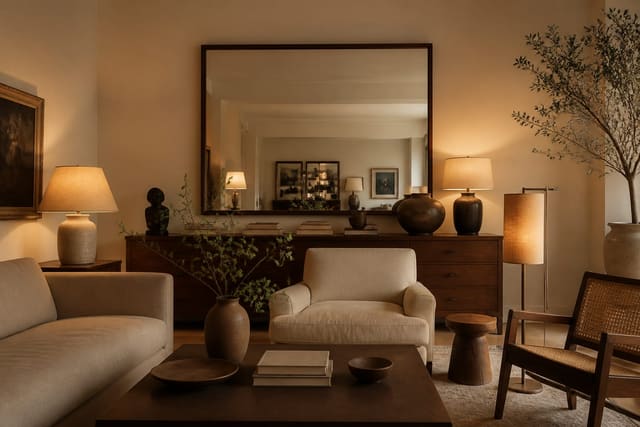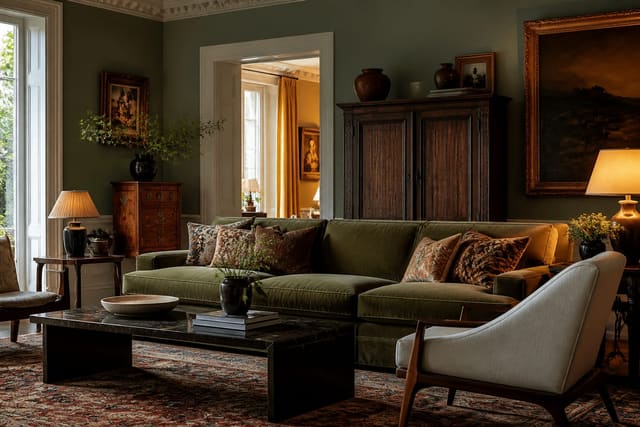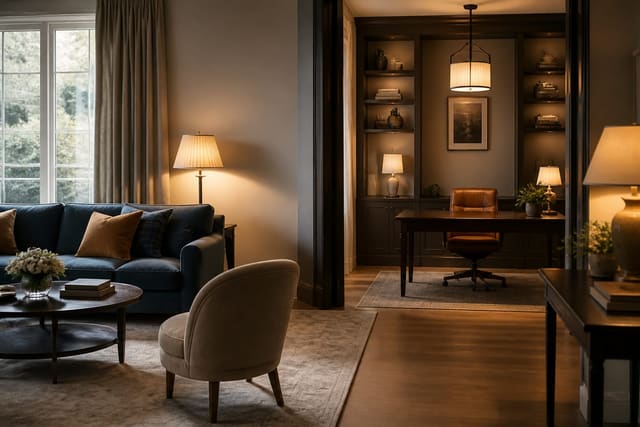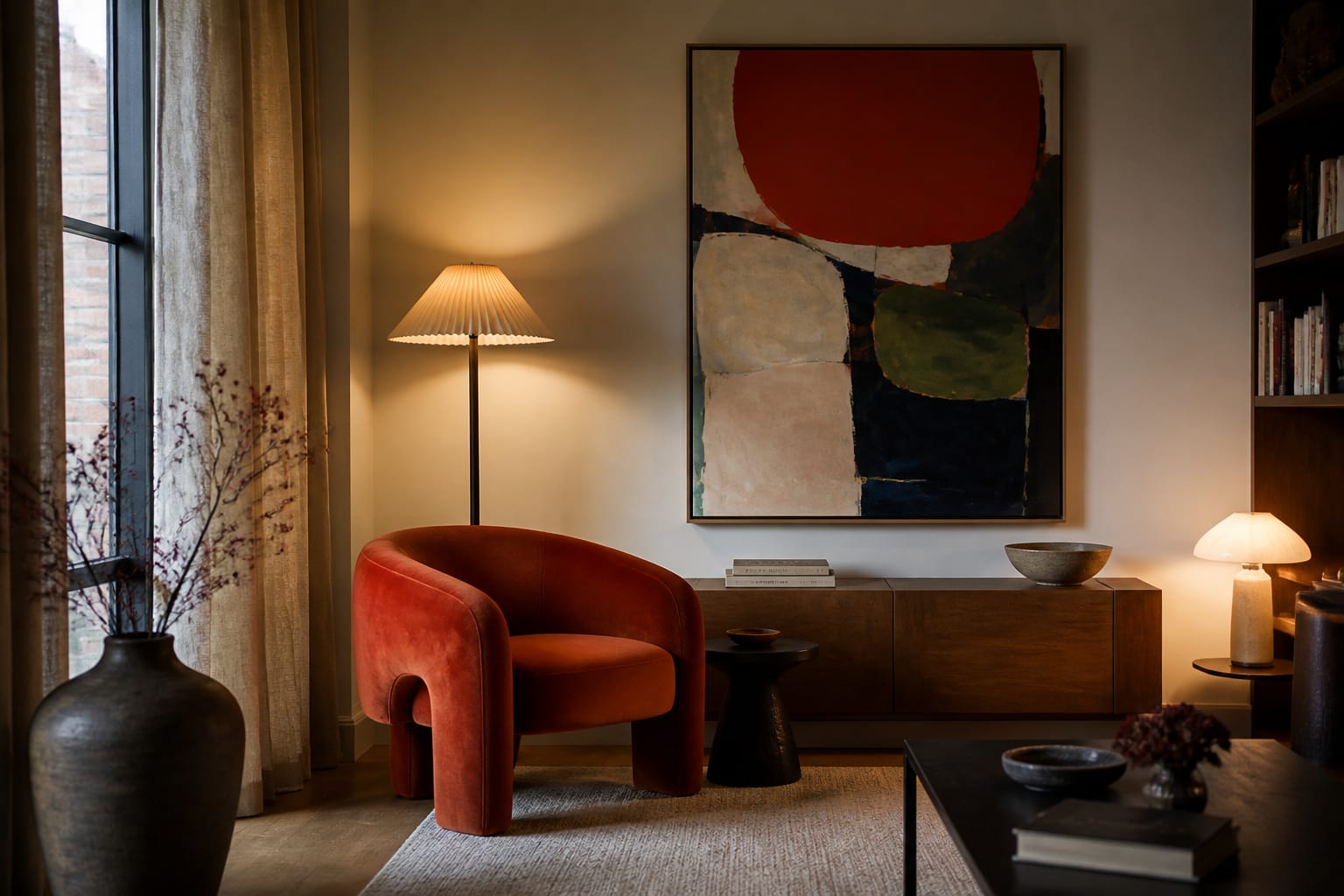
Starting a room from one piece you love is the easiest way to design, and I think it is also the most underused. When you have a great sofa, an oversized rug, or a piece of art that stops you, the hardest design decision is already made: that object is the hero, and everything else exists to serve it. The honest answer is that most stalled rooms stall because there is no anchor, so every choice feels arbitrary. A statement piece removes that paralysis.
The discipline is in restraint. One hero per room is the rule, because two competing focal points cancel each other out and the room reads as busy and confused. Once you accept that the statement piece leads, the rest of the process is a series of supporting decisions: pull the palette from it, set the scale to it, place it where the eye lands first, and keep the supporting cast quiet. Here is how I run that process from a single object.
Let the piece lead the palette
The fastest way to make a room cohere is to pull your colors directly from the statement piece. If the hero is a patterned rug, the dominant field color becomes your wall and large-furniture color, a secondary tone in the pattern becomes your textiles, and a small accent in the weave becomes your pops of color in pillows or art. The classic 60-30-10 split works perfectly here: 60% of the room in the dominant color, 30% in a secondary, 10% in the accent, all sampled from the one piece.
This keeps the room from fighting itself, since every color already lives in the hero. The supporting pieces should sit a notch quieter than the star. A bold velvet sofa wants calm walls and simple side tables, not a competing bold rug. If the hero is a particular material rather than a color, like a brass or wood piece, you can build the same way around its tone and finish; the texture-and-finish thinking in the mixing design styles guide helps you choose supporting pieces that complement rather than copy the hero.
Set the scale and the sightline
A statement piece only reads as a statement if the scale and placement back it up. Placement comes first: put the hero where the eye naturally lands, which is usually the wall directly opposite the main entrance or along the strongest sightline into the room. A dramatic artwork hidden on a side wall stops being a focal point. If the piece is large, like a sectional or a big rug, it often defines the seating zone itself, and you arrange everything else to face or frame it.
Scale is the other half. The hero should clearly be the largest or visually heaviest thing in its area, and the supporting cast should step down from it. A few checks keep that hierarchy intact:
- Keep supporting furniture lower or smaller in visual weight than the hero.
- Leave at least 12 inches of negative space around a statement piece so it is not crowded into ordinariness.
- Light the hero deliberately with a warm 2700K picture light, a sconce, or a lamp that draws the eye to it.
- Echo the hero's shape or line once elsewhere within about 6 feet, subtly, so it feels connected to the room.
If the room is dim and the statement piece is not getting the light it needs to be seen, the lighting and reflectance moves in the dark room solutions guide will make the hero actually read from across the room.
Build the supporting cast and use the room
Once the hero is placed and the palette is pulled, the supporting cast is mostly about restraint. Everything else should be useful and quiet: comfortable seating, surfaces where you need them, and storage that disappears. The supporting pieces can have personality, but they take a backseat in color and scale. Think of them as the rhythm section behind the soloist. When in doubt, choose the simpler option, because every loud supporting piece chips away at the hero's authority.
This is also where a statement piece can help a room do double duty without losing focus. If your space has to work as both a living area and a workspace, the hero anchors the main zone while the secondary function tucks into a quieter corner. The zoning logic in the dual-purpose room ideas guide pairs well with statement-piece design, since the hero defines the primary zone and makes the secondary one feel deliberately secondary. The result is a room with a clear point of view rather than a collection of equally-weighted objects competing for attention.
Common mistakes to avoid
The most common mistake is choosing two or more statement pieces and letting them fight. A bold sofa, a dramatic rug, and a huge piece of art in one room read as chaos, not drama; pick one and let the others calm down. A second frequent mistake is surrounding the hero with equally loud supporting pieces, which drowns it out and erases the hierarchy you were trying to build.
People also tend to hide the statement piece on a weak wall or in a poorly lit corner, where it simply cannot do its job. Put it on the strongest sightline and light it. Another mistake to avoid is matching everything too tightly to the hero, like buying pillows in the exact pattern of the rug, which turns a confident choice into a theme. Pull colors from it, do not clone it. Finally, do not crowd the piece; a statement object jammed between two other things loses the breathing room that made it feel special in the first place.
Use AI design to preview how to design a room around a statement piece before you commit
Building a room around one object is hard to picture because so much depends on how the supporting choices read next to the hero. With Re-Design you upload a photo of the room with your statement piece in place and test wall colors, supporting furniture, and placement, so you can see whether the palette you pulled actually lets the hero stay the focus. Trying the sofa on the wall opposite the door versus a side wall in the same render tells you immediately where it commands the room.
The AI design preview is also the safest way to test how quiet the supporting cast needs to be, since it is easy to over- or under-do it from imagination. Upload the space, generate versions with bolder and calmer supporting pieces, and watch how the hero gains or loses authority in each. Because your statement piece stays fixed in the shot at its true scale, every supporting choice gets judged against the real object you are designing around, which is exactly how you keep it the star.