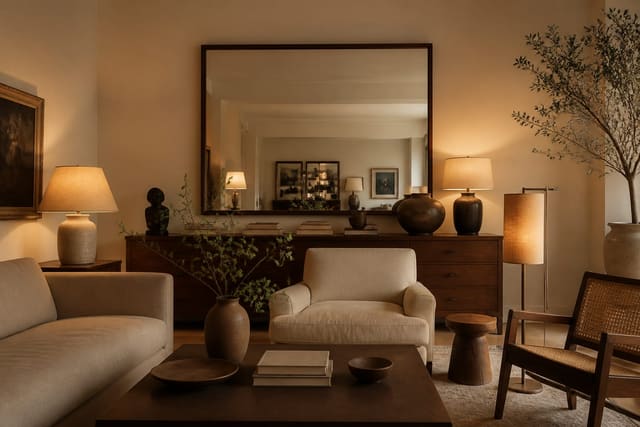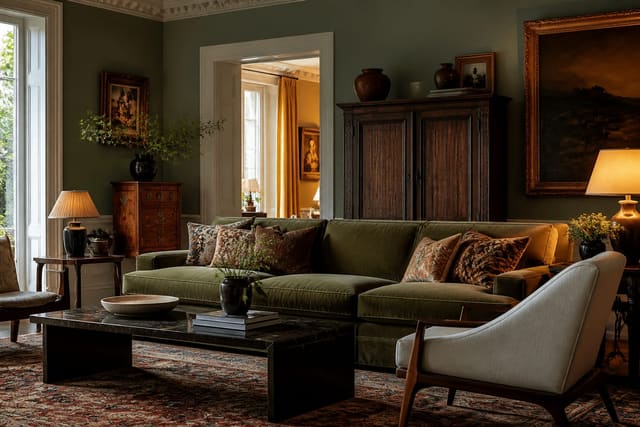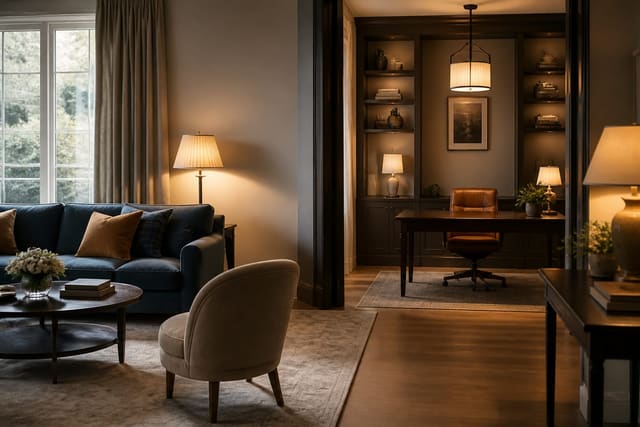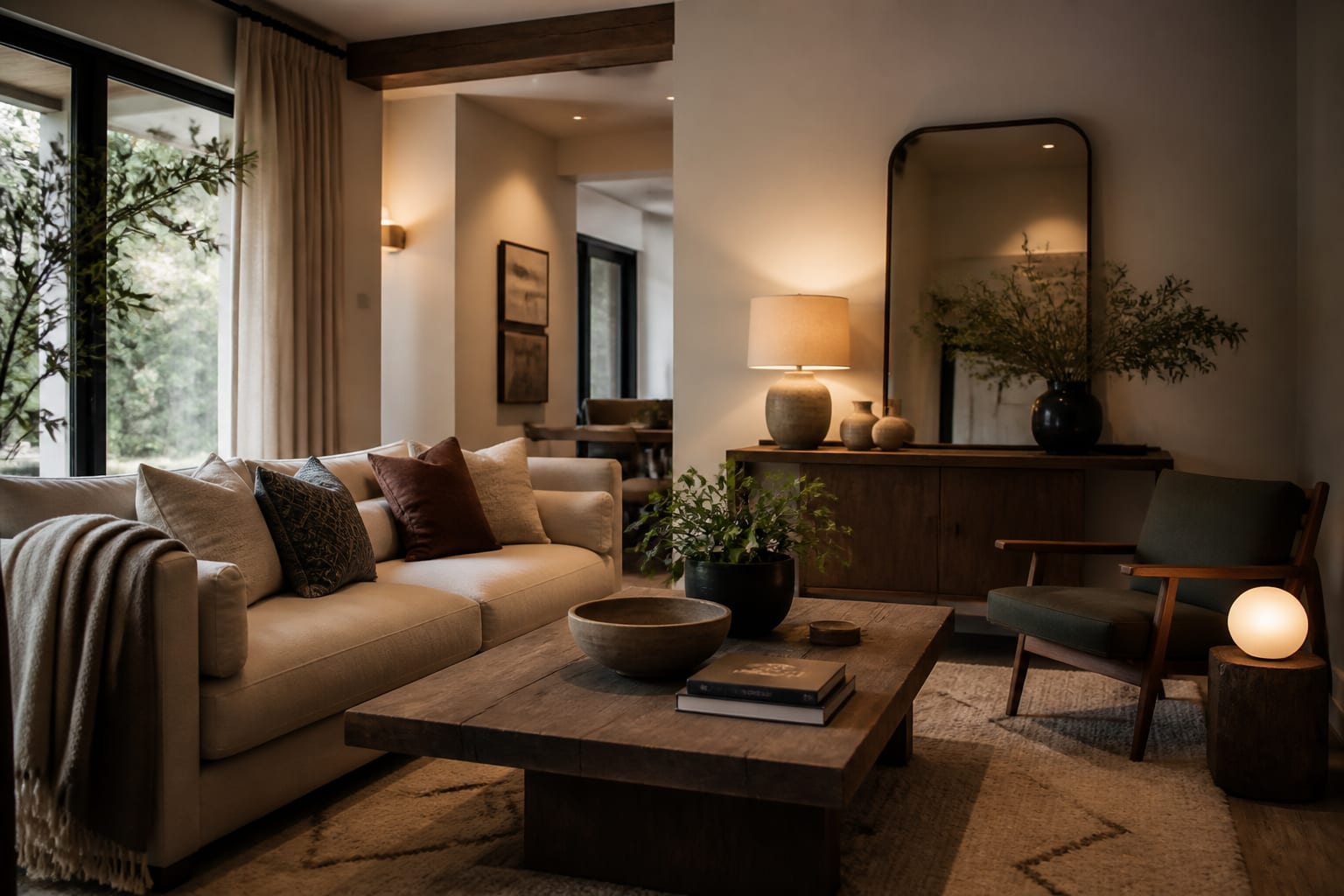
Harsh light is almost always a fixture problem, not a brightness problem. A single bare bulb or a tight downlight throws hard-edged shadows under cabinets, eyes, and furniture, and turning it up only makes the contrast worse. The fix is diffusion: spreading the same light across a larger surface so it arrives soft, even, and shadowless. You do not need fewer lumens, you need a bigger, gentler source. Frosted shades, bounced light, and layered fixtures all do the same job of taking a sharp point of light and turning it into a broad, flattering wash that makes a room feel calm.
Why does harsh light happen in the first place?
Shadow hardness comes down to the size of the light source relative to what it is lighting. A small, intense point like a bare bulb or a recessed downlight acts like the midday sun, throwing crisp, dark-edged shadows that make a room feel stark. A large, soft source like an overcast sky or a big frosted shade wraps light around objects so the shadows fade to a gentle gradient. That single principle, bigger source equals softer shadow, is the whole game of diffused lighting.
The second culprit is a lone fixture doing all the work. One ceiling light in the center of a room lights everything from a single direction, which means every object casts one hard shadow away from it and the corners go dim. The cure is multiplication and diffusion together: several softened sources placed around the room fill each other's shadows so nothing is harshly lit and nothing is left dark. This same layered approach rescues a dark room that feels both gloomy and harsh, because adding diffuse sources at different points solves the shadow problem and the dimness at once.
Which shades and fixtures actually diffuse light?
The shade is your first and cheapest diffuser. A frosted or opal glass globe spreads a 9-watt bulb's roughly 800 lumens across its whole 8-inch surface, turning a single hot point into a soft sphere of light. A 16-inch fabric drum shade does the same in fixtures and lamps, glowing across its full 50-inch circumference rather than letting a hot spot escape. Avoid clear glass shades with a visible filament bulb when softness is the goal; they look pretty switched off but throw the exact hard glare you are trying to lose. A simple swap from a clear shade to an opal one can transform a fixture for under $30.
Linen and paper lanterns are diffusers in their own right. A 24-inch paper or fabric pendant over a dining table spreads a wide, even pool with no glare into anyone's eyes, which is why they flatter a table so well. Translucent roller shades and sheer curtains diffuse daylight the same way, scattering a hard sunbeam into a soft glow across the room. When you are blending fixtures from different eras or finishes, the diffusion itself becomes a unifier; our notes on mixing design styles cover pairing a modern drum pendant with traditional sconces so the lighting feels collected rather than mismatched.
How do you use bounced and indirect light?
Bouncing light off a surface is the most powerful diffusion trick because it turns an entire wall or ceiling into the light source. Point a 150-watt-equivalent torchiere floor lamp at an 8-foot white ceiling and the whole plane glows, washing the room in soft, shadowless light with no visible bulb at all. Cove lighting and LED tape rated around 450 lumens per foot, hidden above a cabinet or behind a headboard, do the same on a smaller scale, grazing a surface so the light arrives indirect and gentle. A white ceiling near 85 percent reflectance bounces far more of that light than a dark one, so the lighter your bounce surface, the more efficient the effect.
Wall washing is the horizontal version. Aim adjustable fixtures or uplights at a matte wall and the surface spreads the light evenly across the room, which is why galleries light art this way. Keep the bounce surface matte rather than glossy; a satin or flat paint scatters light softly, while a high-gloss wall creates a bright hot spot that defeats the purpose. In a dual-purpose room where one space works as both an office and a guest room, indirect bounced light is especially useful because it gives flattering, even illumination for video calls and a soft ambient glow for relaxing, without swapping fixtures.
Common diffused-lighting mistakes to avoid
Softening light is mostly about avoiding a few traps that quietly reintroduce glare: - Leaving a bare bulb or a clear-glass fixture exposed, which keeps the small, hard source you were trying to eliminate. - Relying on a single overhead fixture, so every object casts one hard shadow and the corners stay dim no matter how bright the bulb. - Bouncing light off a dark or glossy ceiling, which absorbs the glow or creates a hot reflection instead of a soft wash. - Mixing color temperatures across sources, pairing a 2700K lamp with a 4000K downlight, so the diffused light reads uneven and cold. - Choosing bulbs with a CRI under 80, which makes even soft light render skin sallow and colors flat. - Aiming a downlight straight at a seating area, which drops a hard shadow under every face instead of filling it with side light.
Preview a softer glow in Re-Design
It is hard to picture how diffused light will change a room from a product description alone. Upload a photo of your space into Re-Design and preview the difference between a single harsh overhead and a layered scheme of shaded lamps, a torchiere bouncing off the ceiling, and a soft pendant over the table. You can re-design the same room with frosted globes instead of clear fixtures, or add wall-washing uplights, and watch the hard shadows give way to an even, gentle wash. Seeing that change against your real walls and furniture tells you which combination of sources delivers the soft, shadowless feel you want before you buy a single bulb.
Frequently Asked Questions
What makes light harsh versus soft?
Hardness comes from the size of the source. A small, intense point like a bare bulb or tight downlight casts crisp, dark-edged shadows, while a large, soft source like a frosted shade or a bounced ceiling wraps light around objects so shadows fade gently. To soften any room, make the effective source bigger through shades, diffusion, or bounced light, and add more sources so they fill each other's shadows.
What kind of shade diffuses light best?
Frosted glass, opal globes, and fabric drum shades diffuse best because they spread a bulb's output across their whole surface and glow evenly with no hot spot. Avoid clear glass with an exposed filament bulb, which lets the hard point of light escape. A paper or linen lantern over a table is one of the gentlest diffusers you can buy and costs very little.
How does bounced light reduce shadows?
Bouncing light off a white ceiling or wall turns that whole surface into the light source, so the glow arrives broad and indirect with no visible bulb and almost no hard shadow. A torchiere aimed up, cove lighting, and LED tape behind a headboard all work this way. Keep the bounce surface pale and matte, since dark or glossy surfaces absorb the light or create a hot reflection.
Does diffusing light make a room dimmer?
Not if you keep the same total lumens. Diffusion spreads light over a larger area rather than destroying it, so a frosted shade or a bounced source feels gentler without leaving the room dark. If a space does feel dim after softening, add another diffuse source rather than swapping back to a bare bulb, which only brings the harsh shadows back.