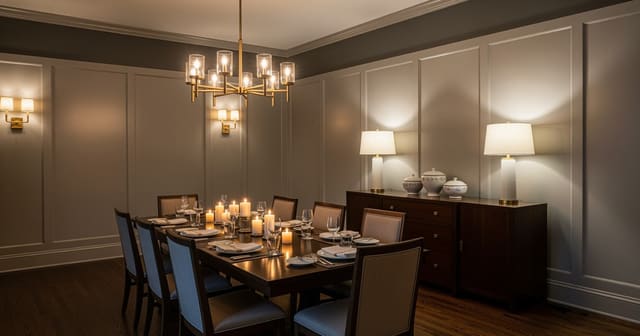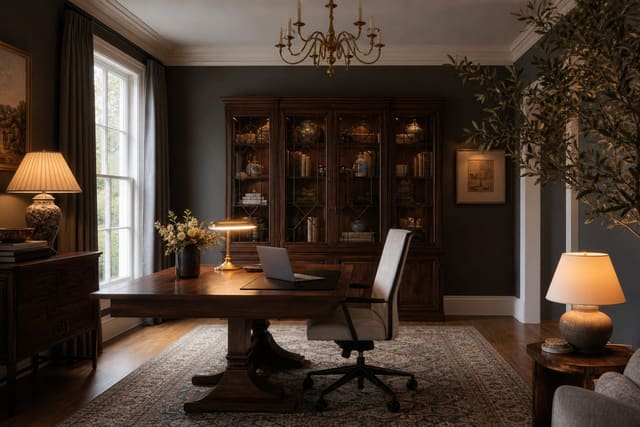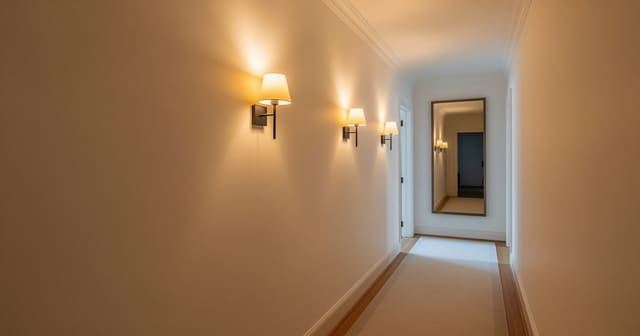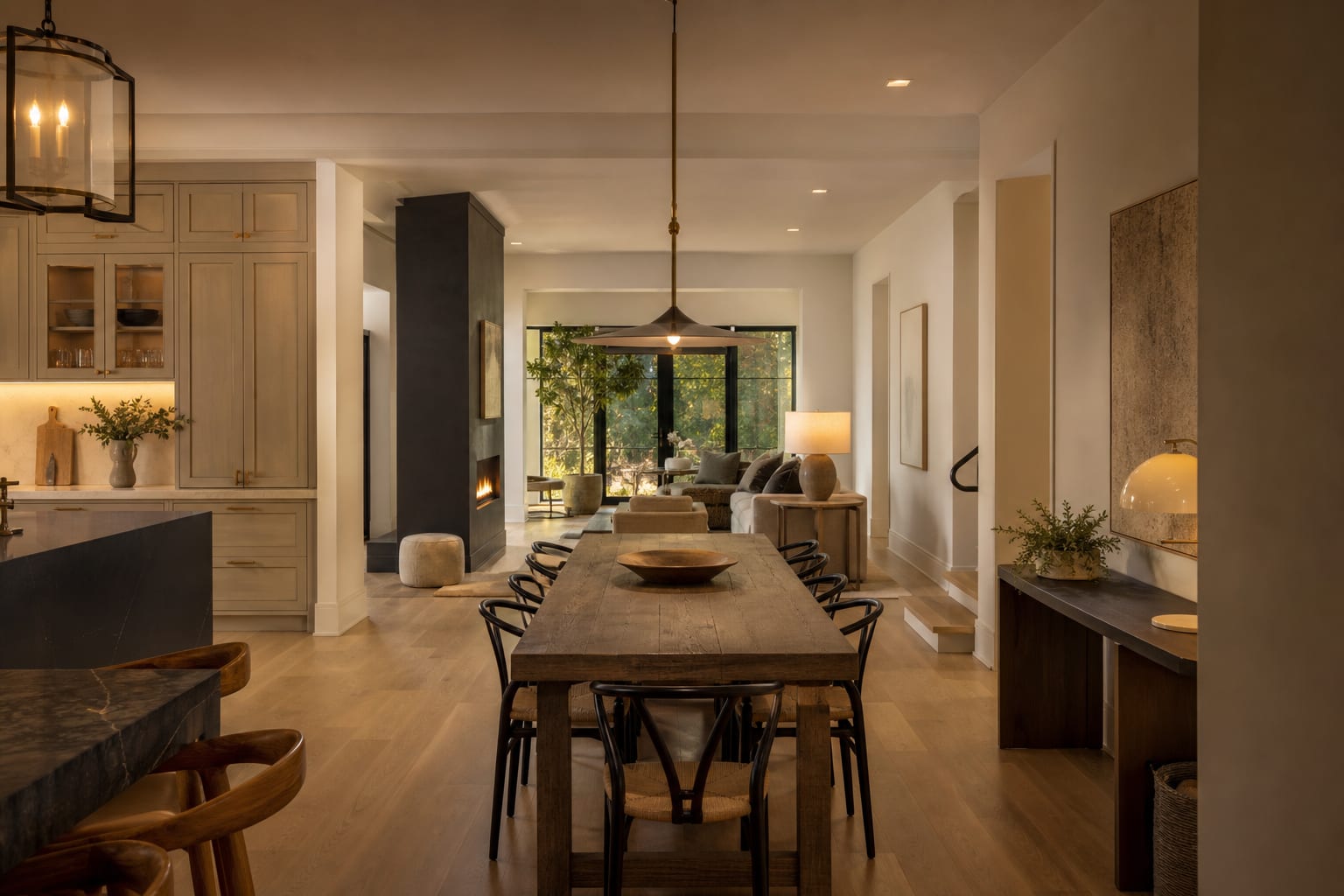
A dining room that doubles as a hallway works when the table sits parallel to traffic (not across it), the walking path stays at least 36in clear on both sides of pulled-out chairs, and lighting plus one anchor piece of furniture mark the room as a destination instead of a pass-through. Treat it as a traffic problem first, a decorating problem second.
What Makes a Dining Room Hallway Combo Work?
Reserve a continuous walking lane, choose a table that doesn't require chairs to sit in that lane, and use lighting, rug placement, and storage to separate dining from circulation. The room can still feel formal, but it can't behave like a closed room with doors on either end.
Name the traffic line first. It usually runs kitchen-to-living room, entry-to-back door, or stairs-to-bathroom. Keep that main route at least 36in wide for carrying dishes, bags, or a toddler; a secondary path can compress to about 30in. If every trip through the house means a sideways shuffle behind a chair, the layout is wrong.
Align the table with the path more often than across it. A table placed perpendicular to traffic forces people around chair backs and corners every time; a table aligned with the route lets circulation continue while the dining zone still reads as a deliberate long space.
If the room is also narrow, borrow discipline from a narrow dining room galley layout: long sightlines, shallow storage, fewer pieces doing more work. The same logic applies here even in a wider room.
Which Table Shape Works Best for a Through-Traffic Room?
Table shape is the controlling decision, since the wrong one turns every chair into a roadblock.
| Shape | Best use | Why |
|---|---|---|
| Narrow rectangle (30-34in wide) | One obvious long path | Frees inches the aisle needs; keep serving pieces on a sideboard |
| Oval | Table between two openings | Softens corners near doorways and sliders |
| Round (42in) | Room widens into a pocket | Seats four calmly but pushes chairs outward in every direction |
| Banquette | One side against a wall | Removes chair pullout, saving 18-24in on that side |
Standard 36in-wide rectangular tables feel generous but often steal inches straight from the aisle in a pass-through room. Ovals help most when guests approach from more than one side and keep clipping table corners. A round table only earns its footprint if the room genuinely widens; otherwise it creates more conflict than a slim rectangle against the least-important wall. A banquette bench, kept around 18in seat height, is the strongest space-saver when a wall is available.
Chair choice matters as much as the tabletop. Armless chairs 18-20in wide tuck into tight rooms far better than broad upholstered host chairs. Plan roughly 36in from table edge to wall if people walk behind a seated diner; 24in works if nobody does.
Test this on your own room photo with ReDesign before committing — keep doorways, walls, windows, and fixed features visible so the preview solves the room you actually have.
How Do You Protect Traffic Flow Without Making Dinner Feel Temporary?
Give the path its own space while giving the table its own signal, so it doesn't read as furniture parked in leftover floor area.
Lighting is the strongest signal. Hang a pendant centered over the table (not the room), about 30-36in above the tabletop. If hardwiring isn't possible, a plug-in swag pendant or wall sconce still creates a pool of dining light that marks the zone as intentional.
Rugs need caution here. A rug under the table should extend at least 24in beyond the table edge on the sides where chairs pull out, or legs will catch the border nightly. If the room can't support that size, skip the rug and lean on lighting, art, or a wall color shift instead — a too-small rug in a traffic lane becomes a trip hazard.
Storage should be shallow and specific. A 12-15in deep sideboard holds napkins, candles, and placemats without narrowing the route; a standard 20in buffet can make the whole room feel like furniture is leaning into the walkway.
Think in zones rather than a table floating in a hallway. The principles behind zoning an open plan room without walls apply directly: repeat one finish, use furniture backs as boundaries, let lighting separate functions without a literal wall.
What Mistakes Should You Avoid?
- Centering the table on the room instead of the usable zone. Symmetry looks right from the doorway but fails the moment someone carries dinner through; shift the table off-center to protect the main path.
- Buying chairs for photos, not pullout. Wingback and thick-armed chairs are charming until they live in the only route to the back door — keep slim daily chairs and store extras elsewhere.
- Placing the sideboard on the busiest wall. Storage near the kitchen is useful only if open drawers don't collide with chairs or traffic.
- Ignoring door swings. Tape door arcs on the floor before finalizing table length, then test with every weeknight chair pulled out.
- Letting the room go dim because it's transitional. A hallway fixture lights the route but leaves faces and food flat; use warm 2700-3000K bulbs and multiple sources, as covered in fixing dim dining room lighting.
How Do You Use AI to Preview the Layout First?
Upload one photo from the kitchen looking through the dining room, one from the opposite end, and one wider angle showing doorways, windows, and nearby furniture. Leave existing table and chairs in at least one photo — their awkwardness gives the preview useful evidence.
Run a few specific versions: a 32in rectangular table aligned with the path, four armless chairs, a 14in sideboard, and a 36in clear lane; then an oval table with bench seating, no rug, and wall sconces; then a round table in a widened pocket to test whether the room actually has the width.
Check the unglamorous details: does a chair back block the kitchen route, does the pendant anchor the table or hang in the lane, does the sideboard finish the room or create a bottleneck. AI won't confirm exact junction boxes or building clearances — tape the tabletop, chair pullout, and pendant centerline in the real room afterward, then walk it with plates in hand.
Frequently Asked Questions
How do I make a passage-style dining room feel like a real dining room?
Anchor it with a chandelier overhead, a rug under the table, and one substantial furniture piece — sideboard, console, or bench. Without those three anchors, the room reads as hallway no matter what table sits in it.
What table shape works best in a hallway dining room?
Rectangular or oval tables sit parallel to the traffic path so chairs pull back into the same axis as walking. Round tables block the passage in narrow plans and force diagonal traffic around the circle.
How wide does the walking path need to be?
36in minimum on both sides of a pulled-back chair, enough for two people to pass without touching. Below 30in, the passage feels like a squeeze and family traffic starts detouring through other rooms.
Should the dining table be smaller than usual in a passage room?
Yes. Pick a table that seats two or four daily and extends to six for occasions; oversized tables in passage rooms break traffic flow and become permanent obstacles rather than occasional guests.
What rug works in a passage dining room?
Size it to extend 24in past the chair pull-back on the long sides and 12in past the short ends. Running the rug lengthwise reinforces the path and makes the room read as intentional, not accidental.
> Try this: Ready to see this on your own room? Open ReDesign and run the preview.
Three transformations to try
1. Passage dining with parallel rectangular table and chandelier 2. Narrow dining with sideboard against one wall 3. Extendable table with traffic clearance both sides