An accent wall is the highest-impact weekend project in the house, dollar for dollar. My read is that most people overthink it, picturing power tools and permanence when the best options are reversible and cheap. You do not need to commit to anything you cannot undo, which is exactly why an accent wall is the right first move for renters and the commitment-shy.
I think the key is matching the project to your situation. A homeowner can paint, panel, and nail freely; a renter needs everything to come off cleanly at move-out. The good news is that the removable category has gotten genuinely good, so you no longer sacrifice looks for reversibility. Below are projects sorted roughly from easiest to most ambitious.
Pick the right wall and the right method
Not every wall wants to be the accent. Choose the one your eye hits first walking in, which is usually the wall behind the bed, the sofa, or whatever the room is organized around. A wall broken up by doors and windows fights you, so favor a large, mostly unbroken surface. Once the wall is chosen, match the method to whether you own or rent and how much effort you have in you.
Here are the DIY accent wall ideas I reach for, roughly easiest to hardest:
- Peel-and-stick wallpaper: a removable pattern across one wall, done in 2-3 hours, ideal for renters
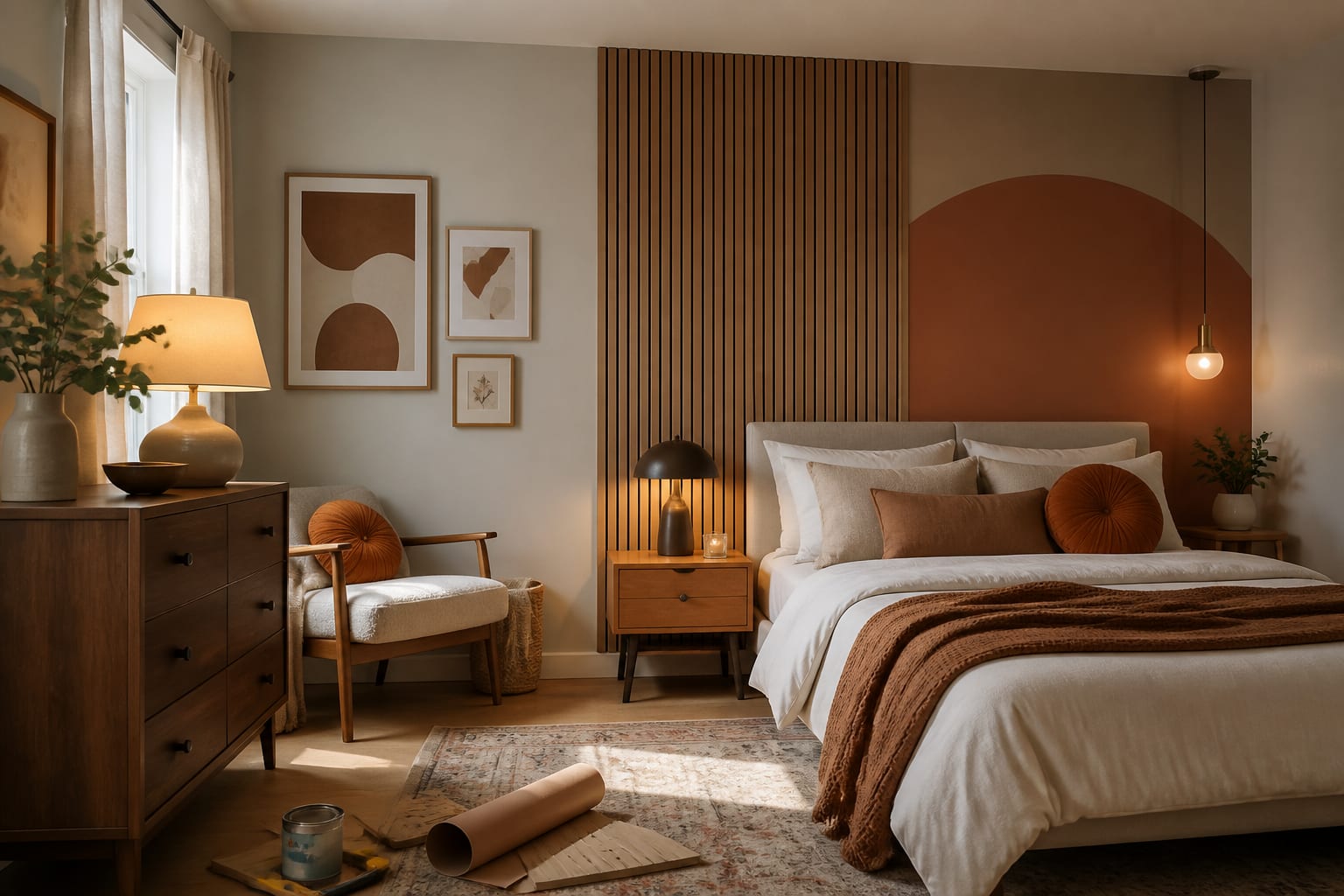
- Painted geometric shape: an arch, a half-wall color block, or a painted headboard outline for under $40 in paint
- Color drenching: paint the whole wall and its trim one bold tone for a richer, more deliberate effect
- Fabric panels: tension-mounted or stapled fabric on a frame, fully removable and sound-absorbing
- Wood slat wall: vertical slats over a painted backer for texture, the most involved option at a weekend of work
- Peel-and-stick tile: for a kitchen or bathroom accent without grout or a wet saw
Each of these lands differently in a room, so think about texture versus pattern versus pure color before buying anything.
The method also decides your weekend. Peel-and-stick wallpaper and a painted shape are genuinely a few-hours, one-person job with nothing more than a level, a pencil, and a craft knife. Fabric panels and slat walls cross into real-project territory, where you want a stud finder, a brad nailer or staple gun, and a free Saturday. Match your ambition to your tolerance for sawdust honestly, because a half-finished slat wall is worse than a clean coat of paint. If you are renting or simply unsure, start with the reversible end of that list and graduate to the permanent options once you trust the wall and the color.
Renter-friendly options that come off clean
If you rent, reversibility is the whole game, and the projects above include several that leave no trace. Peel-and-stick wallpaper is the workhorse: quality brands release without pulling paint when you remove them slowly and warm the adhesive with a hairdryer. Test a small corner first, since cheap versions and textured walls are where removal goes wrong. Fabric panels on a tension frame are even safer because nothing touches the wall with adhesive at all.
For renters who can paint but must return the wall to white, a painted shape is low risk because you are only repainting one wall, not the room. There are clever no-damage paths to a feature look too, and these overlap with broader DIY home decor ideas like large framed textiles or a leaning panel that reads as an accent without any wall work. If your accent idea is really about filling an awkward empty zone, how to decorate a corner covers framing a vignette that does similar work without committing the whole wall.
A few habits keep a renter's accent fully reversible. Buy a roll or two more wallpaper than the wall needs so a mismatched batch never forces you to redo the whole thing, and keep the leftover for patching. When you remove peel-and-stick, peel slowly at a low angle and run a hairdryer ahead of the edge to soften the glue, especially in cold weather when adhesive grips harder. For painted shapes, a coat of primer when you move out covers a dark color in one pass instead of three. None of this is difficult, but skipping it is how a deposit disappears, so it is worth the extra ten minutes at install and removal.
Match the accent to the room's job
An accent wall should reinforce what the room is for, not just decorate at random. Behind a bed, a soft textured option like grasscloth-look peel-and-stick or fabric panels calms the space and absorbs sound. Behind a sofa, a bolder pattern or a deep painted color holds up against the visual weight of the furniture. In a home office on camera, a slat wall or color-drenched wall reads beautifully on video calls without distracting.
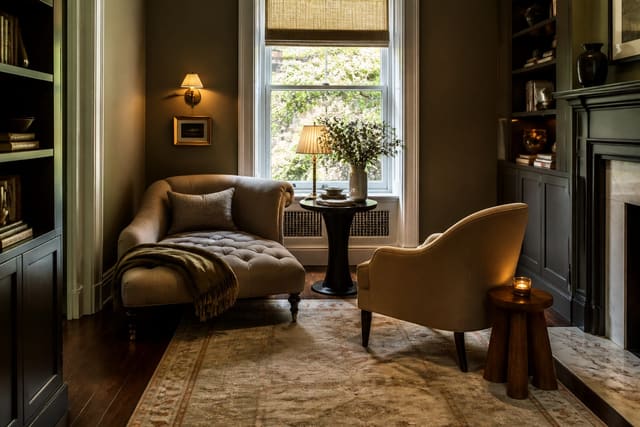
Think about how the wall pairs with the function in front of it. If you are building a quiet corner for reading, a warm, enveloping accent supports that mood, and reading nook ideas show how an accent wall and a chair turn dead space into a destination. Keep the accent color or material connected to at least one other element in the room, a cushion, a rug, or the curtains, so the wall belongs rather than shouting on its own.
Lighting decides whether the accent reads as intended or falls flat. A textured slat or fabric wall comes alive with a wash of light raking across it from a nearby lamp or a picture light, while flat top-down ceiling light kills the shadow that gives texture its drama. A bold dark color drinks light, so a wall that looks rich in the showroom can feel like a black hole in a dim room unless you add a lamp or two. Test your chosen option against the light you actually have at the times you use the room, not under a single bright bulb at noon. The accent and the lighting are a pair, and treating them separately is how a promising idea ends up looking accidental.
Use AI design to preview accent wall ideas before you commit
The hardest part of an accent wall is picturing the finished thing. A wallpaper swatch the size of a postcard tells you almost nothing about how a bold botanical reads across eight feet behind your actual bed. Re-Design closes that gap. Upload a photo of the wall as it is now and ask to see it in peel-and-stick wallpaper, a painted arch, vertical wood slats, or a deep color-drench, and the AI renders each option in your real room so you compare them side by side.
This saves the classic mistake of ordering three rolls of wallpaper that look wrong once they are up. I will upload the bedroom wall and run a moody slat version against a soft fabric-panel version, then judge which suits the light I actually have. Because the AI design preview uses your room's proportions and existing furniture, you see how the accent plays against the bed and lamps you own, not against a staged photo, which makes committing to a weekend project far less of a gamble.