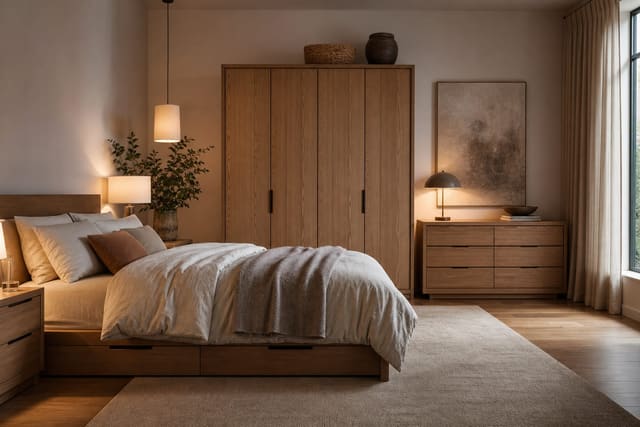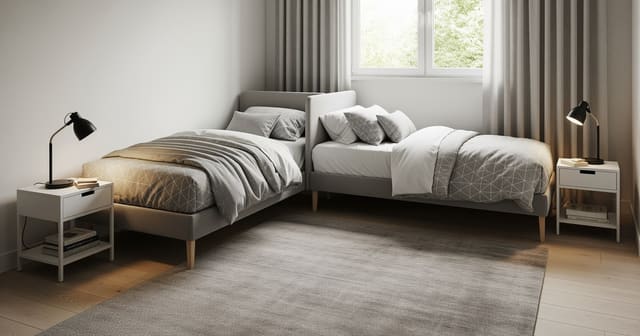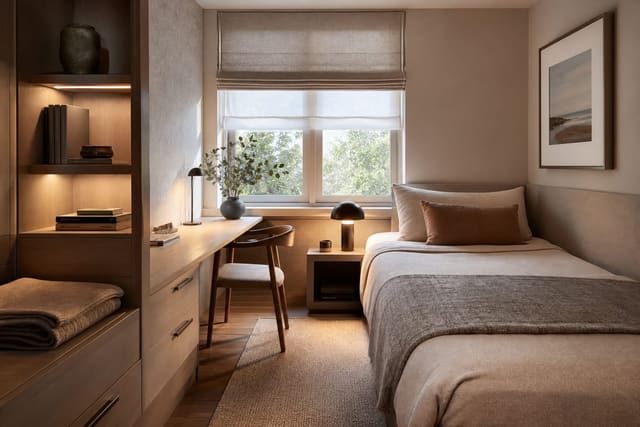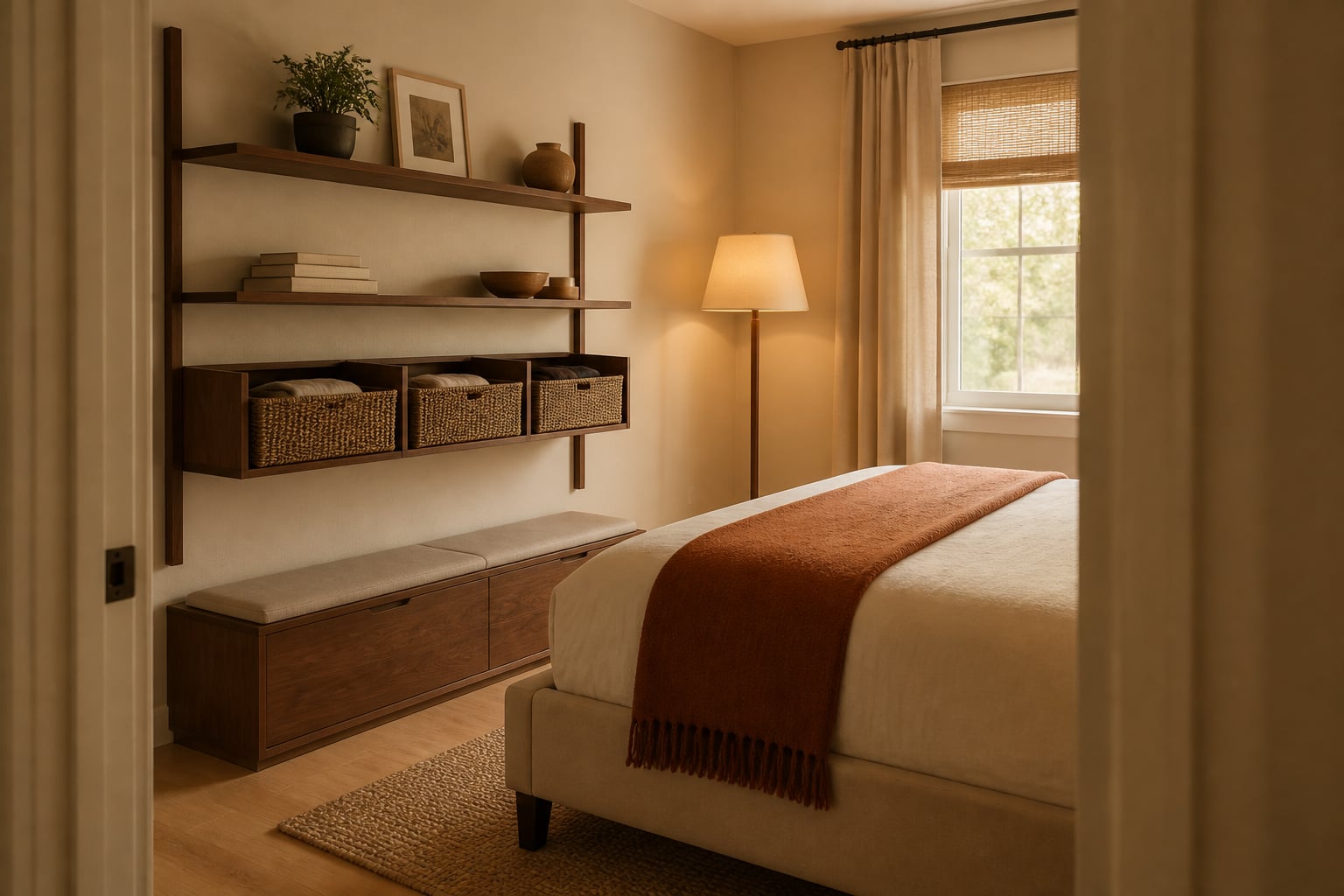
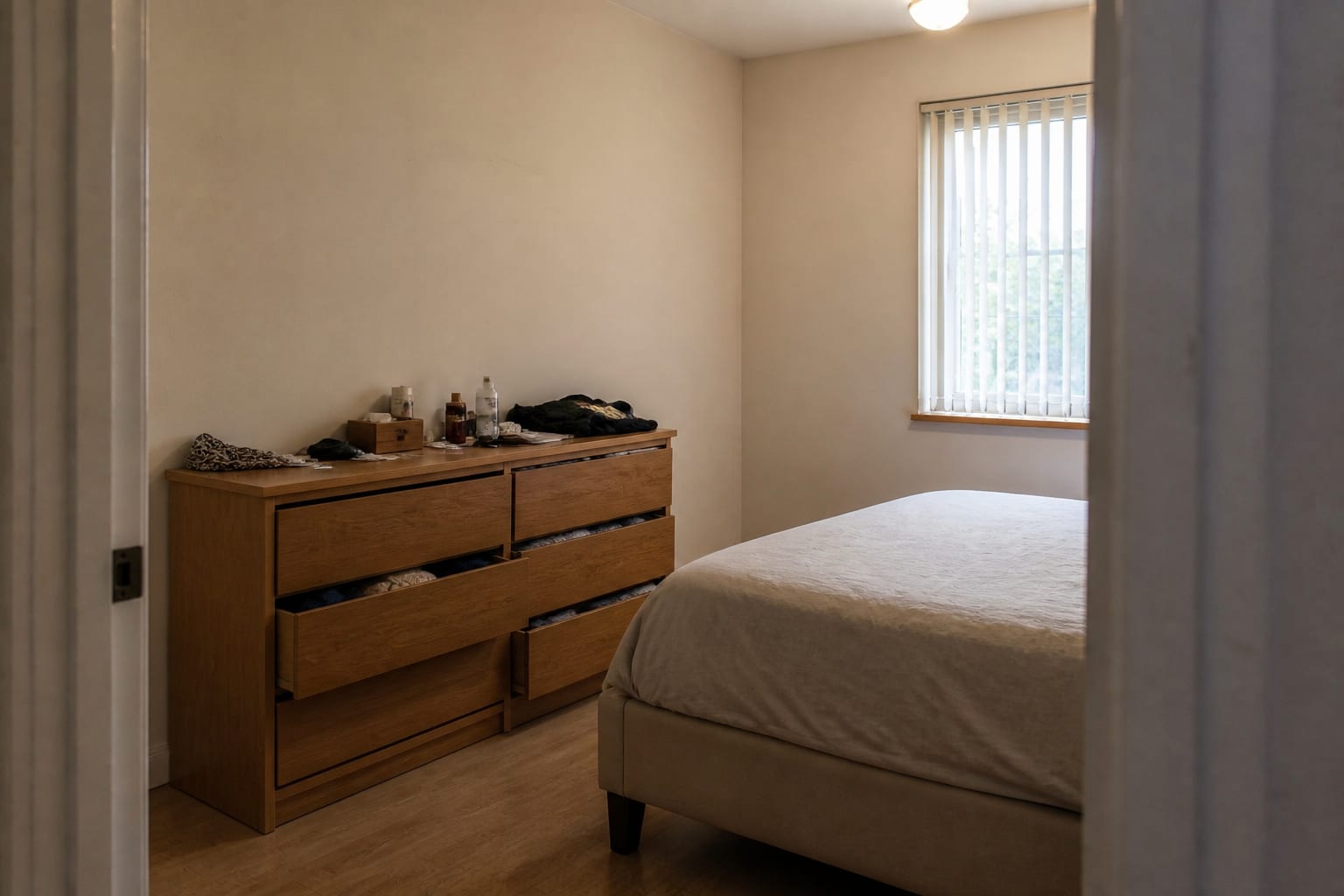
Dresser alternatives for a small bedroom that actually earn their floor are under-bed bins, a wall-mounted shelf, a freestanding wardrobe, a closet system, and a storage bench, because a dresser only justifies its 36 in. by 60 in. footprint when the room has floor to spare. Most small bedrooms don't, which is why the dresser often makes a room feel tighter than it needs to.
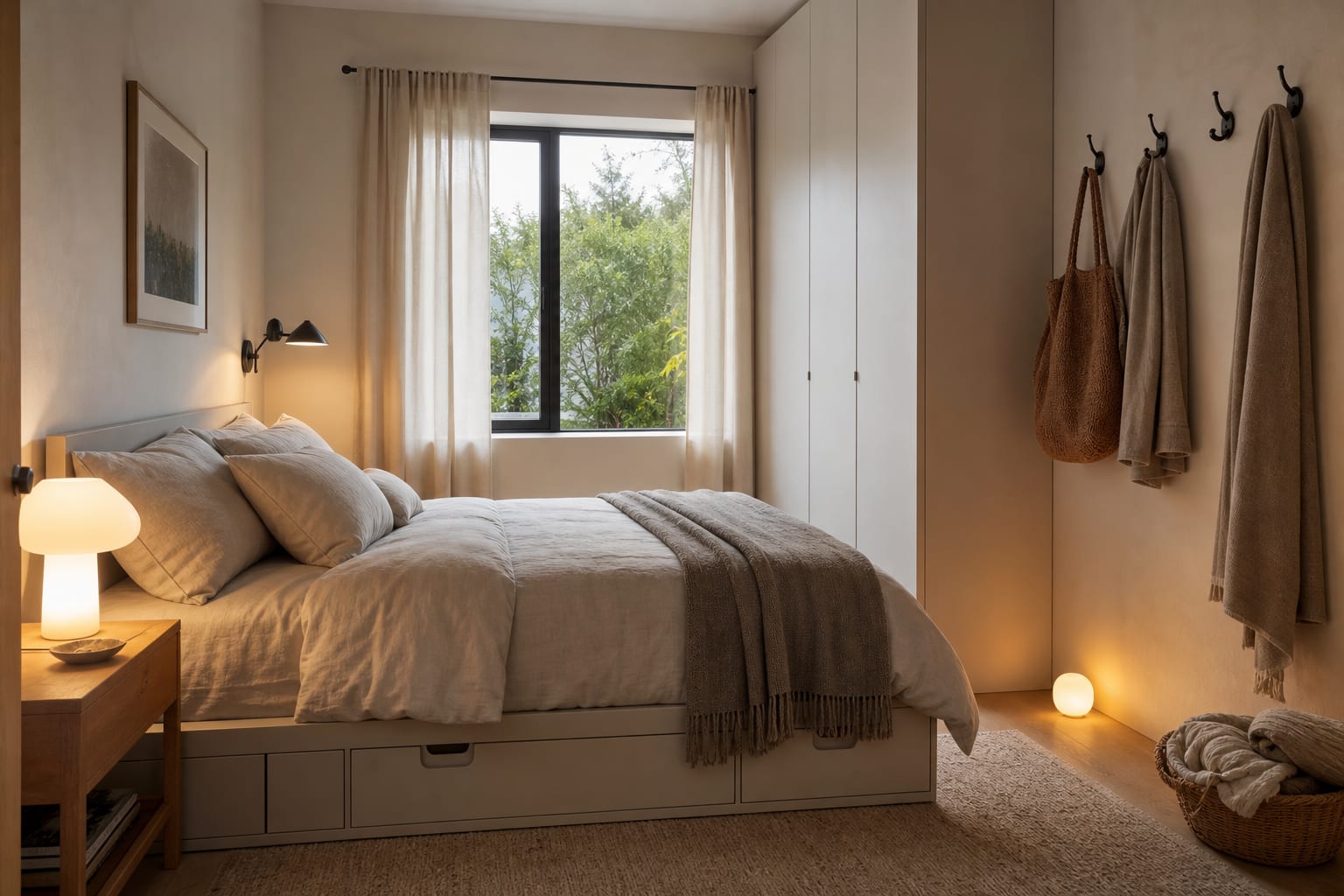
"A small bedroom does not need a dresser if the storage gives the floor back."
What can you use instead of a dresser?
Eight alternatives actually earn their floor: under-bed bins, a wall-mounted shelf, a freestanding wardrobe, a closet system, a storage bench, wall hooks, a tall narrow shelving tower, and an over-the-door rack. Each fixes a different failure, and most rooms need two or three rather than one. Storage moves up the walls or under the bed instead of out into the floor.
Under-bed storage is the highest-leverage move. A platform bed with 7-12 in. of clearance takes 6-8 standard bins (28 in. by 18 in. by 6 in.) or two rolling drawers (60 in. by 24 in. by 9 in.), holding 60-90% of a dresser's volume for zero new floor. If the bed sits flat on a box spring, swap it for a platform bed that gives back that cubic footage.
The second-highest leverage move is using the closet that already exists. A 24-36 in. closet with one rod and one shelf wastes 40-60% of its volume. A closet system (rod, drawer tower, double-hang section, top bins) reclaims that volume for $150-$600 and an afternoon. The bedroom without closet storage techniques apply in reverse: use an existing closet harder before buying furniture.
Eight dresser alternatives, compared
Combine two or three of these; the right mix depends on whether the room has a closet and which wall is most accessible.
| Alternative | Footprint / Size | What it holds |
|---|---|---|
| Under-bed bins | 7-12 in. clearance; 6-8 bins (28x18x6 in.) | 60-90% of a dresser's volume, zero new floor |
| Wall shelf | 36-48 in. wide at 60-66 in. high | 8-12 folded sweaters |
| Freestanding wardrobe | 30-40 in. wide, 24 in. deep, 80 in. tall | Full hanging + shelves in 4-6 sq ft |
| Closet system | Fits existing 24-36 in. closet | 40-60% more usable storage, $150-$600 |
| Storage bench | 48-60 in. long, 16-18 in. deep | Folded layers, linens, off-season clothes |
| Wall hooks | Row of 5-8, 4-6 in. apart, at 60 in. | Bags, robes, hats, tomorrow's outfit |
| Shelving tower | 12-16 in. deep, 72-84 in. tall | Books, baskets, hamper, folded basics |
| Over-the-door rack | 6-12 pockets on any door | Shoes, scarves, rolled items |
The storage bench is the most underused pick. In a guest room home office combo, it doubles as desk seating and a landing spot for a laptop bag, and it blocks the empty foot-of-bed zone that tends to collect clothes.
How to pick a combination for the actual room
The right combination depends on three measurements: floor area, linear feet of open wall, and whether an existing closet is at least 24 in. wide. Walk the room before buying anything; nearly every small bedroom fits two of the alternatives above without crowding.
Under 80 sq ft, use under-bed bins, a closet system, and wall hooks. Any freestanding piece costs more floor than it returns here. The bed becomes the dresser, the closet becomes the wardrobe, and the wall handles daily items — the default for studio alcoves and dorm rooms.
Between 80 and 120 sq ft, add a storage bench (for shared rooms) or a tall shelving tower (for one person needing visible storage) to the bins-plus-closet base. A freestanding wardrobe is overkill at this size unless there's no closet.
Over 120 sq ft, a freestanding wardrobe earns its 4-6 sq ft, especially with a small or shared closet. Pair it with under-bed bins for low-frequency items; weight stays on one wall so the room still reads open.
Test a dresser-free layout on your bedroom photo before buying anything.
Preview a dresser-free bedroom with AI
Bedrooms are easy to over-furnish because the bed sets a generous baseline that hides how little floor remains. Upload one photo from the doorway showing the bed, closet door, and a window. Test three combinations from the same angle: bins + closet system + hooks; bins + bench + corner shelf; and wardrobe + bins.
Be specific: ask for a platform bed with 9 in. of clearance, a 36 in. shelf at 60 in. high, a 60 in. bench at the foot of the bed, and a visible closet system. If a preview feels airier than today, the dresser is the piece to remove. If the wardrobe preview feels tighter than the dresser version, skip the wardrobe for this room.
Frequently Asked Questions
Can I use under-bed storage on a platform bed?
Yes, if the platform clears the floor by at least 7 in. Standard bins run 6 in. tall; rolling drawers run 7-9 in. Measure before ordering — some platform beds marketed with storage underneath leave only 4-5 in. once slat depth is counted, which fits almost no commercial bin.
What's the best rental-safe dresser alternative?
Under-bed bins, an over-the-door rack, and a freestanding wardrobe cover it, since none require drilling or closet modification. Wall hooks and a wall shelf can also work with rated no-damage adhesive hardware; check the load rating (most sit at 5-10 lbs each) before hanging anything heavy.
Wardrobe or closet system: which is better?
A closet system wins when an existing closet is at least 24 in. wide and deep, returning 40-60% more storage for $150-$600. A freestanding wardrobe wins when there's no closet, the closet is too narrow to subdivide, or the closet door is unreachable from the bed. Try the closet first.
How do I keep a wall of hooks from looking messy?
Use one row at one height, usually 60-66 in. up, in a single finish. Space 5-8 hooks 4-6 in. apart on a wood backer board and restrict them to four item types — bags, robes, hats, tomorrow's outfit. Anything else, like tools or leashes, breaks the intentional look fast.
Can a capsule wardrobe skip a dresser entirely?
Yes, once total wardrobe volume drops below roughly 60-80 items and most of it hangs. A 36 in. closet with one rod, two shelves, and a small bin tower holds that comfortably, with under-bed bins for off-season layers. Remove the dresser before adding any replacement piece.
How do I store folded clothes without buying furniture?
Use stackable canvas bins on a wall shelf at 60-66 in. high. A 36-48 in. shelf holds 6-9 bins, each fitting 8-12 folded items. Label bins by category — tees, sweaters, layers, swim, workout — and a second shelf at 78-84 in. handles seasonal overflow.