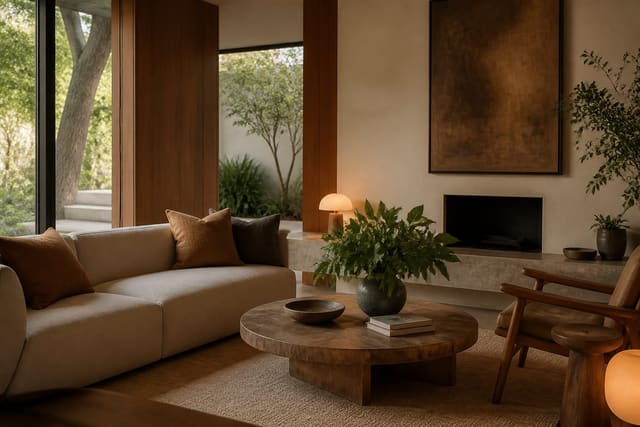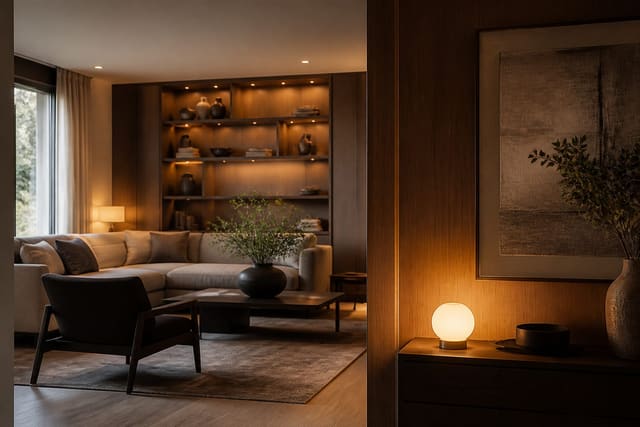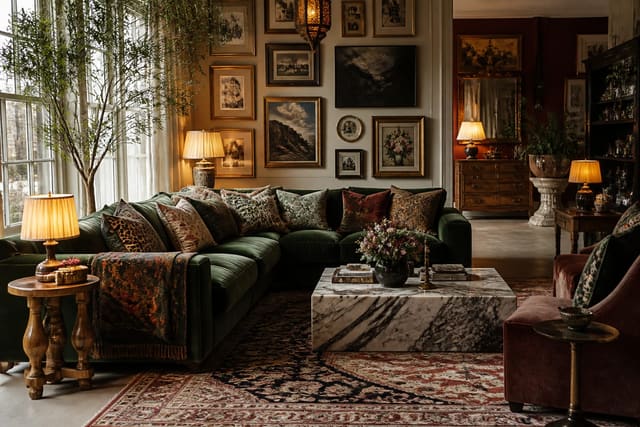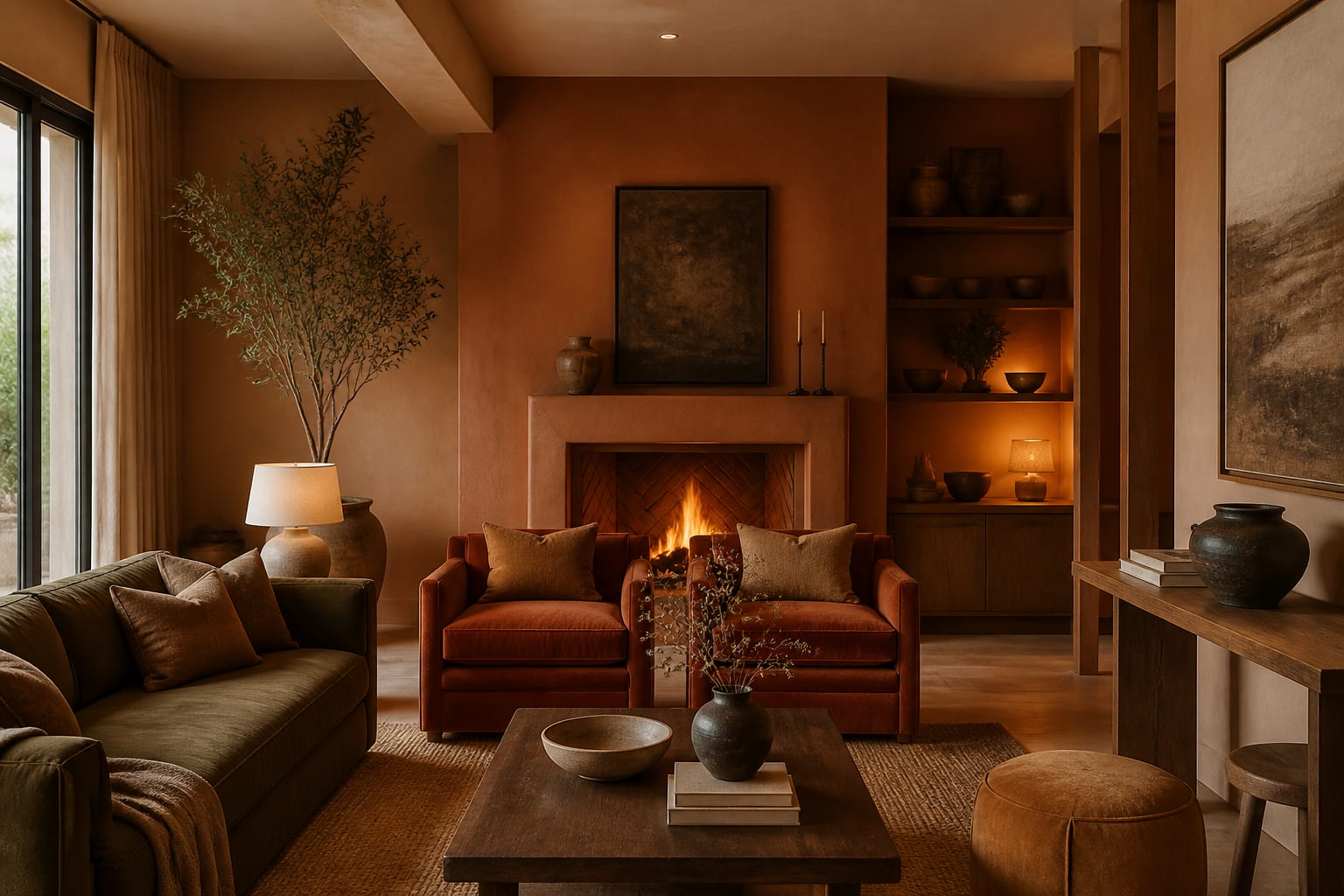
Gray is finally finished. The dominant color direction for 2026 is warm and grounded: terracotta, clay, ochre, mushroom, and deep chocolate brown, often layered in the same room. Earth tones are not a passing accent this year; they are the whole palette, and they read as warmer and more timeless than the cool grays they are replacing.
Are earthy tones still trending in 2026
Earthy tones are still trending in 2026, and arguably more than in any recent year, because the reaction against cool gray has fully set in. Homeowners who lived with greige walls for a decade now describe them as cold and corporate, and the market answered with a wave of warm, sun-baked color. The shift is visible in major forecasts, where terracotta-adjacent shades and warm browns keep landing as colors of the year.
The core of the palette is terracotta and clay, those orange-brown tones pulled straight from fired earth. Around them sit ochre, a golden mustard-brown; mushroom, a soft warm taupe; and a deep chocolate brown that grounds the whole scheme. These colors share a warm undertone, which is what lets them layer without clashing, unlike the cool palette where a single warm object looked out of place. A room can run terracotta walls, a mushroom sofa, and chocolate-brown shelving and still feel cohesive.
Earth tones also flatter natural materials, which is the other half of the 2026 story. Terracotta makes oak, jute, rattan, and unglazed pottery look intentional rather than accidental, because they all come from the same warm family. That synergy is why the trend feels durable; it is built on materials and hues that have read as comfortable for centuries, not a novelty color that ages in a season.
There is a regional logic to the revival as well. Earth tones reference the landscape directly, from Southwestern adobe to Mediterranean clay roofs to the rust of an autumn field, which is why they rarely feel trendy in a bad way. A clay wall borrows authority from places people already find beautiful. That borrowed permanence is the practical case for committing to the palette now: unlike a cool gray that will read as dated, a warm clay has looked at home in interiors for a very long time and is unlikely to suddenly stop.
A copyable earth-tone palette and pairings
- Walls: a true terracotta around a warm orange-brown, or clay for a softer read, applied in two coats for full depth.
- Large upholstery: a mushroom or oatmeal sofa to keep the biggest surface calm against the warm walls.
- Accents: ochre in throws, art, and ceramics, used in roughly three spots to repeat the note.
- Grounding: chocolate-brown wood for shelving, a coffee table, or window frames to anchor the lighter tones.
- Whites: warm whites with a yellow or red undertone for trim and ceilings, never a stark blue-white.
- Texture: jute, rattan, unglazed terracotta pots, and oak to reinforce the natural, earthy material story.
The pairing rule that prevents disaster is keeping every white warm. A terracotta wall against a cool, blue-leaning white trim looks dirty, because the eye reads the contrast as a mistake rather than a choice. Swap to a warm white and the same terracotta suddenly glows. This one decision separates an earthy room that feels rich from one that looks muddy.
Value contrast is the rule people miss most often. Because every earth tone is warm, a room can quietly turn into one flat brown soup unless you stretch the range from a pale oatmeal up to a near-black chocolate. Hold roughly three steps of value between your lightest and darkest surfaces, and the warmth gains depth instead of going murky. A pale plaster wall, a mid-tone clay sofa, and a deep walnut floor demonstrate the spread; pull them all to the middle and the room loses its legibility entirely.
Earth tones connect naturally to the year's other directions. The grounded, restorative quality of clay and brown overlaps with the calm-room goals of wellness-led design, where warm, low-contrast palettes are used deliberately to lower stress. And a saturated terracotta is a gift to a layered, pattern-rich scheme, which is why the 2026 maximalism revival so often builds its three-color palettes on an earth-tone base.
The cheapest way to test the palette is with a single woven element before any paint goes up. A jute rug, a rattan basket, or a stack of unglazed terracotta pots introduces the warm, natural note instantly and tells you whether the direction suits your floors and light. From there, a terracotta throw and a couple of ochre ceramics extend the story for under $100 total, long before you commit to wrapping a wall. Earth tones reward this slow build because each layer reads as collected rather than decorated all at once.
Common mistakes to avoid
The first mistake is pairing warm earth tones with cool whites or cool grays, which leaves the earth tones looking dirty rather than rich. Commit fully to a warm white for trim, ceilings, and adjacent surfaces. The second mistake is going monochrome brown, where terracotta, ochre, mushroom, and chocolate all blur into one flat smear; you need contrast in value, so set a deep brown against a pale oatmeal to keep depth.
The third mistake is treating terracotta as an accent-wall-only color. A single orange wall in an otherwise gray room reads as dated; the trend wants the warm tone to wrap the space or repeat across at least three surfaces. The fourth is forgetting lighting temperature, since a cool 4000K bulb drains the warmth out of clay and brown. Use 2700K bulbs to keep the palette glowing after dark.
The last mistake is over-saturating a small or dark room. A deep terracotta in a windowless powder room can feel oppressive; in low-light spaces, lean on the lighter clay and mushroom end of the family and save the deepest tones for rooms with good daylight. Tunable lighting helps here, which is part of why earth tones pair so naturally with the hide-the-tech smart home approach, where a warm 2700K scene keeps clay and brown glowing rather than draining them after dark.
Preview earth tones in Re-Design
Frequently Asked Questions
Are earthy tones still trending in 2026? Yes, and more strongly than in recent years, because the backlash against cool gray has fully arrived. Terracotta, clay, ochre, mushroom, and chocolate brown lead the year as warm, grounded colors that make rooms feel cozy. Major paint and color forecasts keep naming warm earth shades as colors of the year.
What colors go with terracotta? Terracotta pairs best with other warm earth tones such as mushroom, ochre, and chocolate brown, plus warm whites and natural materials like oak, jute, and rattan. Avoid cool grays and blue-leaning whites, which make terracotta look dirty. Keeping every white warm is the rule that makes the scheme cohere.
Is terracotta too bold for a small room? It can be in a dark or windowless space, where a deep terracotta may feel heavy. In low-light rooms, lean toward the lighter clay and mushroom end of the family and reserve the richest tones for spaces with good daylight. Warm 2700K bulbs help any earth-tone room stay glowing.