Wellness design has a credibility problem because too much of it is scented candles and a buzzword. The defensible version is grounded in research on light, nature, sound, and air, and it produces measurable effects on stress, sleep, and focus. A home tuned for wellbeing is not about looking calm; it is about removing the small daily friction that quietly taxes your nervous system. The best moves are physical and specific, not aspirational.
How design actually affects your mind
The link between space and mental health is not vague. Decades of environmental psychology and the WELL Building Standard point to the same levers: light, nature, acoustics, air, and a sense of control. Each one has a physiological pathway, which is why getting them right feels like more than decoration.
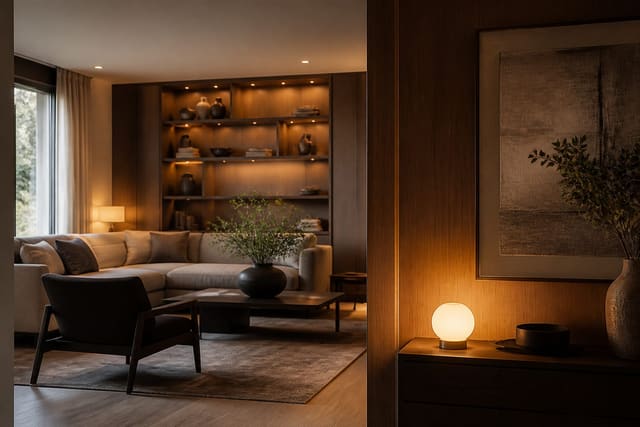
Light is the strongest. Your circadian rhythm responds to brightness and color temperature, so bright, cool, daylight-mimicking light in the morning supports alertness, while warm 2700K light dimmed in the evening signals the body to wind down. Homes lit by the same bright cool bulbs at 10 p.m. as at 10 a.m. fight the body's clock and degrade sleep, which is the foundation of mood. Putting main fixtures on dimmers and using tunable bulbs is one of the highest-leverage wellness moves available.
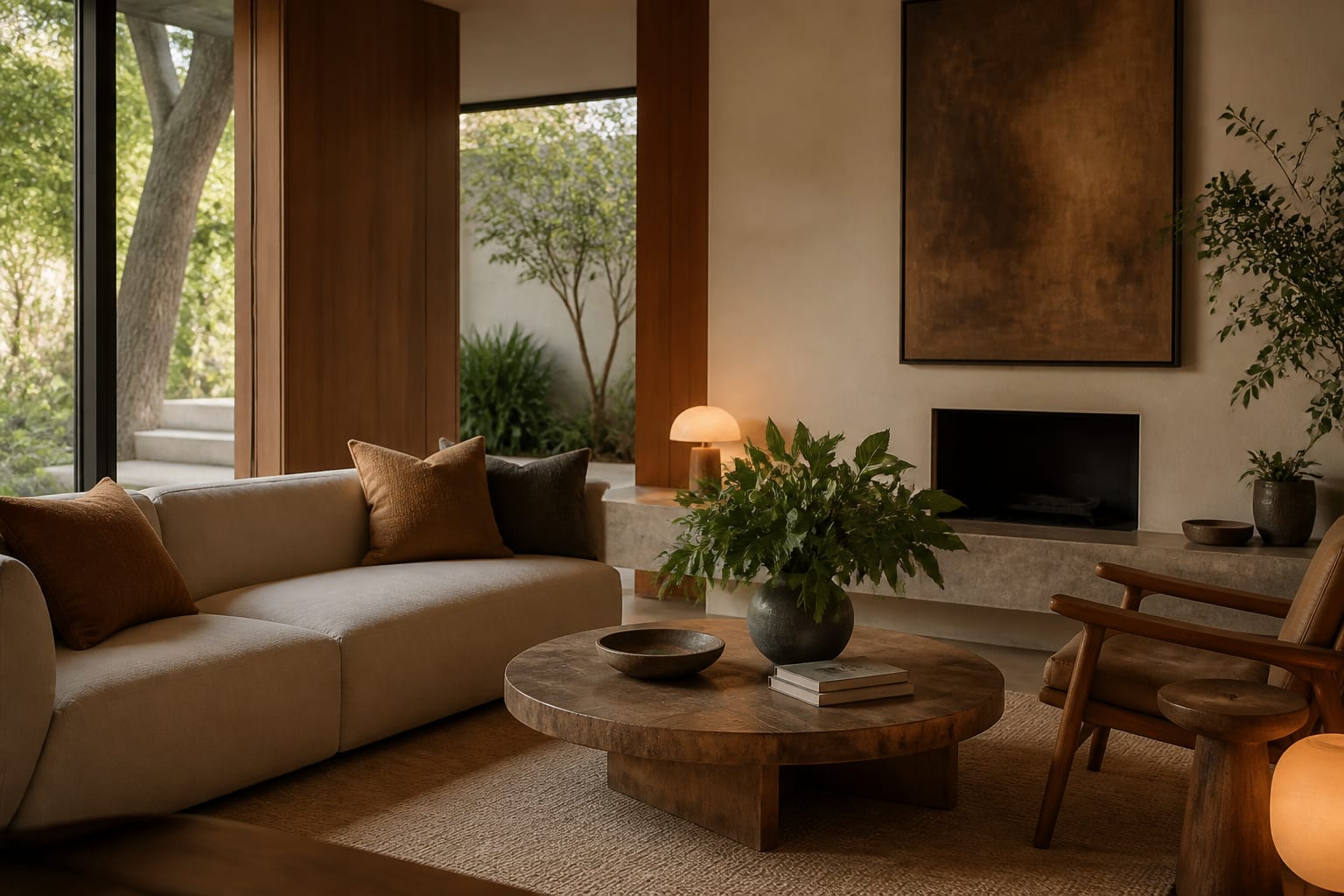
Nature is the second lever, and the effect is well documented: views of greenery and even indoor plants reduce measured stress and can improve attention. A study tradition going back decades shows hospital patients with a window view of trees recover faster than those facing a wall. You do not need a forest; a clustered group of plants, natural materials like wood and stone, and a clear sightline to a window deliver much of the benefit. For how these calming choices fit broader directions, our smart home design trends coverage shows where automated lighting and air control are heading.
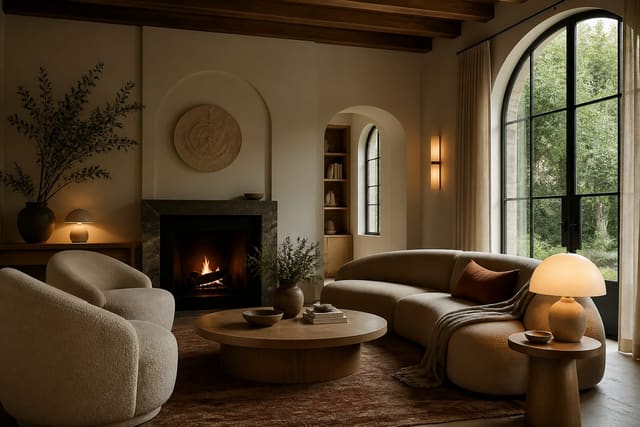
Form itself is a quieter wellness lever that designers are leaning into. Hard corners and sharp edges read as subtly aggressive, while rounded shapes feel safer and more soothing, an effect studies of visual preference have measured repeatedly. That is part of why softened furniture, arched doorways, and curved seating have surged in calming spaces. If you want to follow that thread, our curved shapes design trend 2026 guide shows how rounded forms reduce the visual tension in a room and make it feel more restful to occupy.
A sense of control is the lever people rarely name but feel constantly. When you can adjust your own light, temperature, sound, and privacy, your stress drops; when you cannot, it climbs. Dimmers, layered window treatments that let you choose between light and privacy, and zones you can close off all give you that control. A home that bends to your preferences in the moment feels safer than one you simply endure, and that feeling of agency is itself protective for mental health.
Wellness design moves that work
These are concrete, research-backed changes rather than mood-board language. Start with whichever pain point bothers you most:
- Install tunable or dimmable lighting and set evenings to warm 2700K below 30 percent brightness.
- Add three to five plants per room, prioritizing easy species like pothos, snake plant, and ZZ plant.
- Create one genuine retreat space, even a single chair by a window, with no screens and good light.
- Soften hard rooms with a thick rug, upholstered pieces, and curtains to cut echo and lower noise stress.
- Improve air with cross-ventilation, a HEPA purifier sized to the room, and low-VOC paints and finishes.
- Use a calming, low-contrast palette of muted greens, warm neutrals, and earth tones in rest areas.
- Keep at least one clutter-free surface in each room, since visual chaos measurably raises cortisol.
The goal is not a sterile spa but a home that lowers your baseline stress. Even adopting the lighting and nature changes alone shifts how a space feels within a day.
Common mistakes to avoid
The most common mistake is treating wellness as an aesthetic rather than a system. A beige minimalist room photographed for calm can still wreck your sleep if it is lit by bright cool light at night. The function of the space matters more than how serene it looks in a photo.
A second mistake is going so minimal that the home feels cold and under-stimulating. Wellbeing is not the absence of everything; humans need some warmth, texture, and personal meaning. Stripping a room bare can read as anxious and unwelcoming rather than restful. Aim for calm and grounded, not empty.
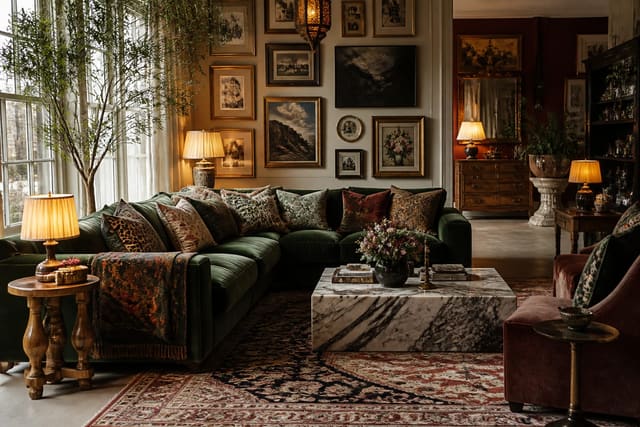
The third error is ignoring acoustics. People obsess over color and forget that constant low-grade noise, from appliances to street traffic to echo in a hard-surfaced room, keeps the nervous system mildly activated all day. Soft surfaces, rugs, and curtains are a wellness upgrade, not just a decorative one. For a more expressive, personality-forward take on warmth that still feels good to live in, our maximalism trend 2026 guide is a useful counterpoint.
A fourth mistake is buying wellness as a product category rather than a practice. A salt lamp, an essential-oil diffuser, and a meditation cushion do not make a home healthy if you still scroll a bright phone in bed at midnight. The space supports behavior; it does not replace it. The most powerful wellness designs make the healthy choice the easy one, like a charging station outside the bedroom so screens stay out, or a comfortable reading chair that competes with the couch and the feed.
Finally, do not design only for how a space looks when guests visit. A genuinely supportive home is tuned for your ordinary Tuesday: the morning light that wakes you gently, the corner where you actually decompress, the surfaces you keep clear because clutter spikes stress. Wellness design is personal by definition, so the right answer depends on what specifically drains you, whether that is noise, glare, mess, or the absence of anything green. Diagnose your own friction first, then design against it.
Preview your wellness space in Re-Design
Frequently Asked Questions
How does interior design affect mental health? Through measurable pathways: lighting affects your circadian rhythm and sleep, exposure to nature and views lowers stress, noise keeps the nervous system activated, and air quality affects cognition. Designing those elements deliberately can reduce daily stress and support better mood and focus, while ignoring them quietly works against you.
What is the most important wellness design change? Lighting that matches your body clock. Bright, cool light by day and warm, dimmed light in the evening protects sleep, which underpins nearly every aspect of mental health. Putting your main fixtures on dimmers and using tunable bulbs is the single highest-leverage move.
Do indoor plants really improve wellbeing? Yes. Research consistently links indoor greenery and natural views to lower measured stress and better attention. You do not need many; a few easy-care plants and a clear view to a window deliver much of the documented benefit.