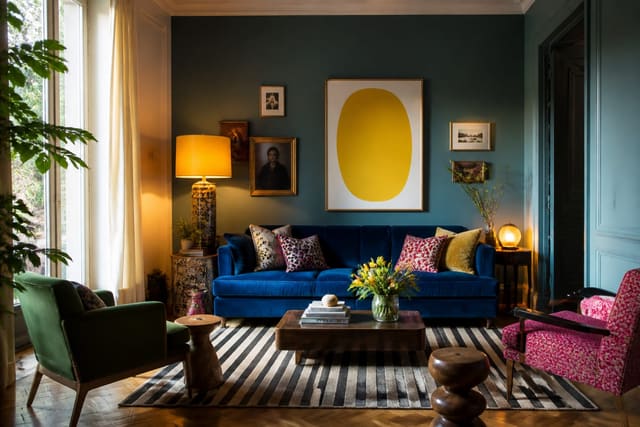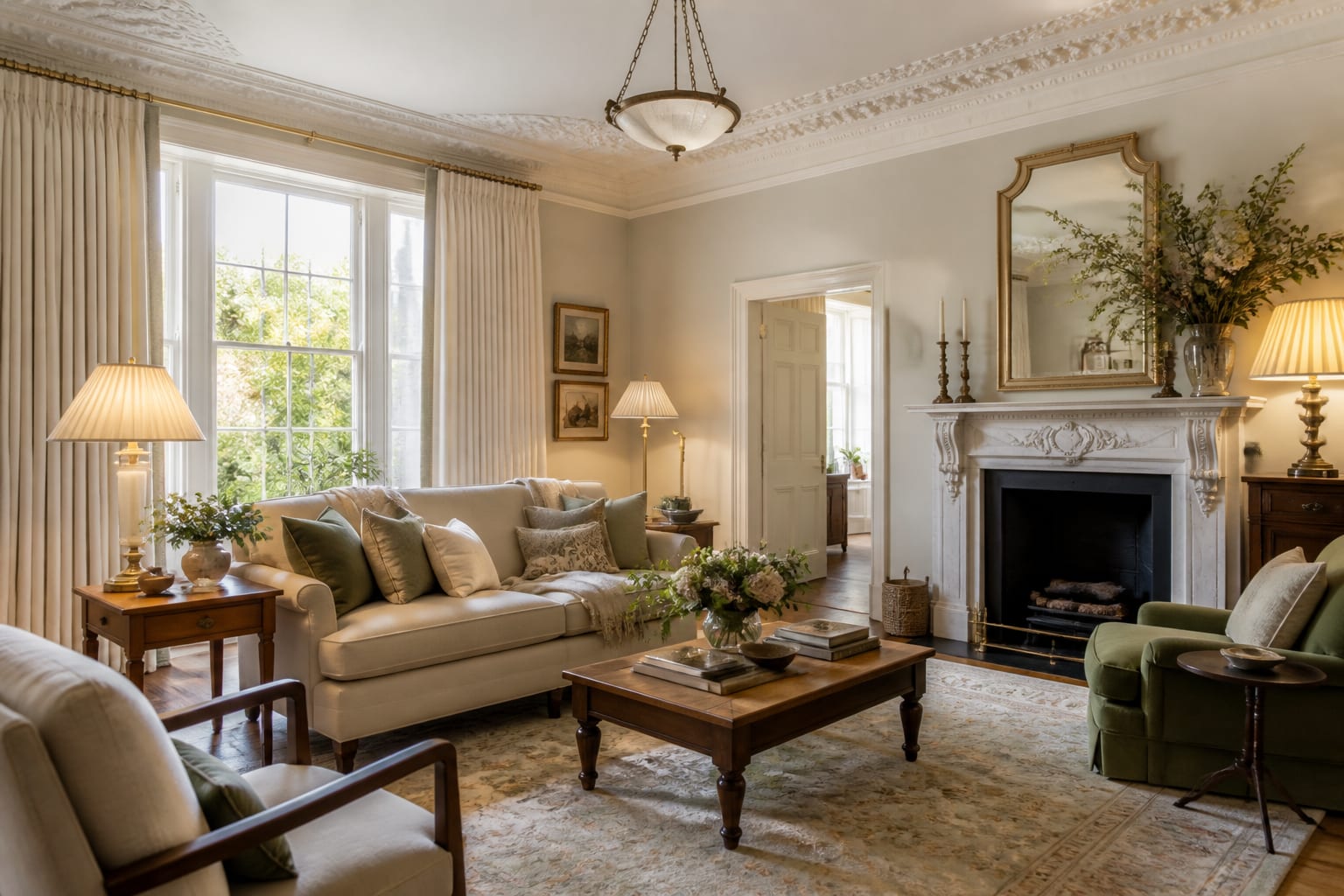
Edwardian rooms are the reset button after Victorian excess, and that is the whole point of the look. Built roughly between 1901 and 1910, these homes swapped dark mahogany gloom for pale walls, slimmer trim, and big bay windows that pulled in daylight. My read is that the single most useful Edwardian move is restraint: fewer patterns, lighter color, and a little breathing room around every piece of furniture.
The houses themselves help you out. Edwardian builders gave rooms taller, wider proportions than the cramped terraces before them, often with 9 to 10 foot ceilings on the main floor and generous hallways. Work with that volume instead of fighting it, and the elegance shows up almost on its own.
Start with the lighter Edwardian palette
The fastest way to read a room as Edwardian rather than Victorian is color. Where the 1880s leaned on deep reds, forest greens, and heavily varnished wood, the Edwardian decade pulled toward pale and clean: soft sage, duck-egg blue, primrose yellow, and warm whites that let the architecture do the talking. If you inherit dark Victorian-stained joinery, painting it a soft white or pale grey is the most authentic Edwardian update you can make, not a betrayal of the house.
Keep contrast gentle. A typical Edwardian scheme runs a pale wall, white-painted woodwork, and one slightly deeper accent on a feature like a fireplace surround or a single papered wall. Florals existed, but they were lighter and more open than Victorian damask, often trailing roses or wisteria on a cream ground rather than dense dark repeats. If your space feels flat once the walls go pale, a few saturated accents bring it back to life without dragging it back to Victorian heaviness, and the layered, joyful accent approach in my dopamine decor ideas guide pairs surprisingly well with an Edwardian shell.
A quick test before you commit a wall color: hold the sample beside the original picture rail and skirting in daylight from the bay window. Edwardian rooms were designed around that north-and-south light, so a color that looks chalky at noon will warm up by late afternoon, exactly as the builders intended. Paint a 24 by 24 inch swatch on two different walls and watch it for a full day before you order, because the same pale green can swing cool on a shaded wall and warm where the bay light lands.
Respect the woodwork and proportions
Edwardian joinery is lighter than what came before, and that distinction matters. Skirting boards typically run 6 to 7 inches rather than the chunky 9-inch Victorian profiles, and door architraves are simpler, often a clean ovolo or a plain bullnose rather than deep layered moldings. If you are replacing trim, match that slimmer profile; oversized modern skirting reads wrong against an Edwardian door.
The picture rail is the signature feature, and people remove it far too readily. Set it 12 to 18 inches below a 9 to 10 foot ceiling, paint the frieze band above it the same color as the ceiling, and a tall room instantly feels calmer and better proportioned. The rail is also practical: it lets you hang art on hooks without drilling into Edwardian plaster.
Here is the woodwork hierarchy I keep to in an Edwardian room:
- Skirting: slim 6 to 7 inch boards, painted rather than stained.
- Picture rail: set 12 to 18 inches down from the ceiling, painted to match the trim.
- Doors: four-panel internal doors, often with the top two panels glazed in hallways for borrowed light.
- Fireplace: a tiled cast-iron insert with a simpler wood or slate surround, not the heavy carved Victorian mantel.
Furnish with air, not clutter
The Edwardian middle class wanted lighter, more livable rooms, and the furniture followed. Pieces sat on slimmer turned or tapered legs, cane and rattan appeared in conservatories and bedrooms, and rooms were no longer packed edge to edge with occasional tables and what-nots. That restraint is your best friend in a modern home, because it means a faithful Edwardian look does not require filling the place with antiques.
Mix freely. One or two genuine period pieces, a glazed bookcase, a cane-back chair, a marble-topped washstand, anchor the era, while modern upholstered seating keeps the room usable. Leave at least 30 to 36 inches of clear walking space around the main furniture so the room keeps its airy quality. The same discipline of letting one or two pieces carry the story shows up in my soft industrial style ideas write-up, where editing matters more than buying.
Keep textiles light too. Where Victorians smothered windows in heavy swags and lace, Edwardians favored simpler curtains that let the bay window do its job. A single linen panel or a light Roman blind respects roughly a century of daylight design better than a heavy pelmet ever will.
Common mistakes to avoid
The most common mistake is treating Edwardian and Victorian as the same thing and drowning the room in dark wood and dense pattern. The Edwardian decade was a deliberate move toward light; honor it.
A second frequent mistake is ripping out the picture rail and the original four-panel doors to modernize, which strips the room of the proportions that make it work. Keep them and paint them. A third is over-furnishing: cramming in so many antiques that the airy quality vanishes. Edit hard, leave space, and let a few pieces speak. People also often pick oversized modern skirting and bulky architraves that overpower the slim Edwardian profiles, so match the lighter scale. The last common mistake is heavy, light-blocking window treatments on the bay windows, which fights the single best feature these 1901-1910 houses have.
Use AI design to test an Edwardian scheme before you commit
The tricky part of any period home is that you cannot tell whether painting the dark woodwork pale will read as elegant or as a mistake until the brush is already wet. Re-Design removes that gamble. Upload a photo of your actual Edwardian room, original picture rail, bay window, and all, and the AI design re-renders it in a lighter period palette so you can judge soft sage against your real daylight before you open a tin.
Because you upload your own space, the preview keeps your true ceiling height, your existing trim, and the angle your bay window throws light across the floor. Try a duck-egg wall with white-painted joinery, then test a warm off-white with one papered feature wall, and see which one honors the house before you spend a weekend painting.