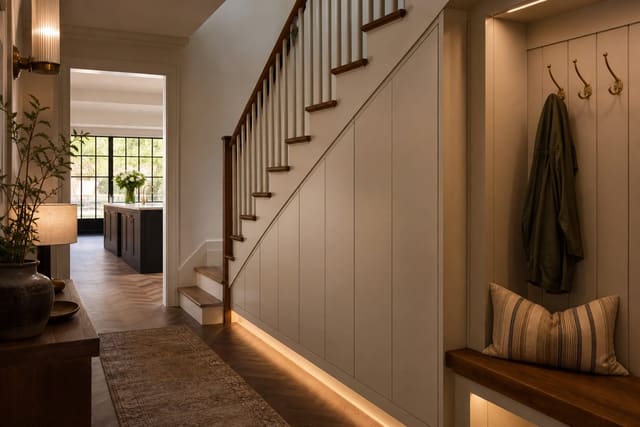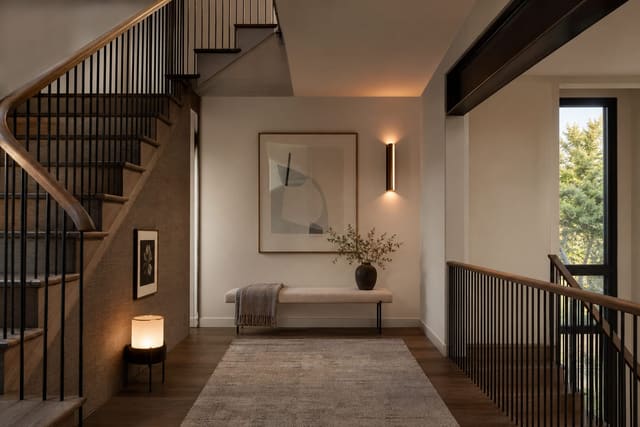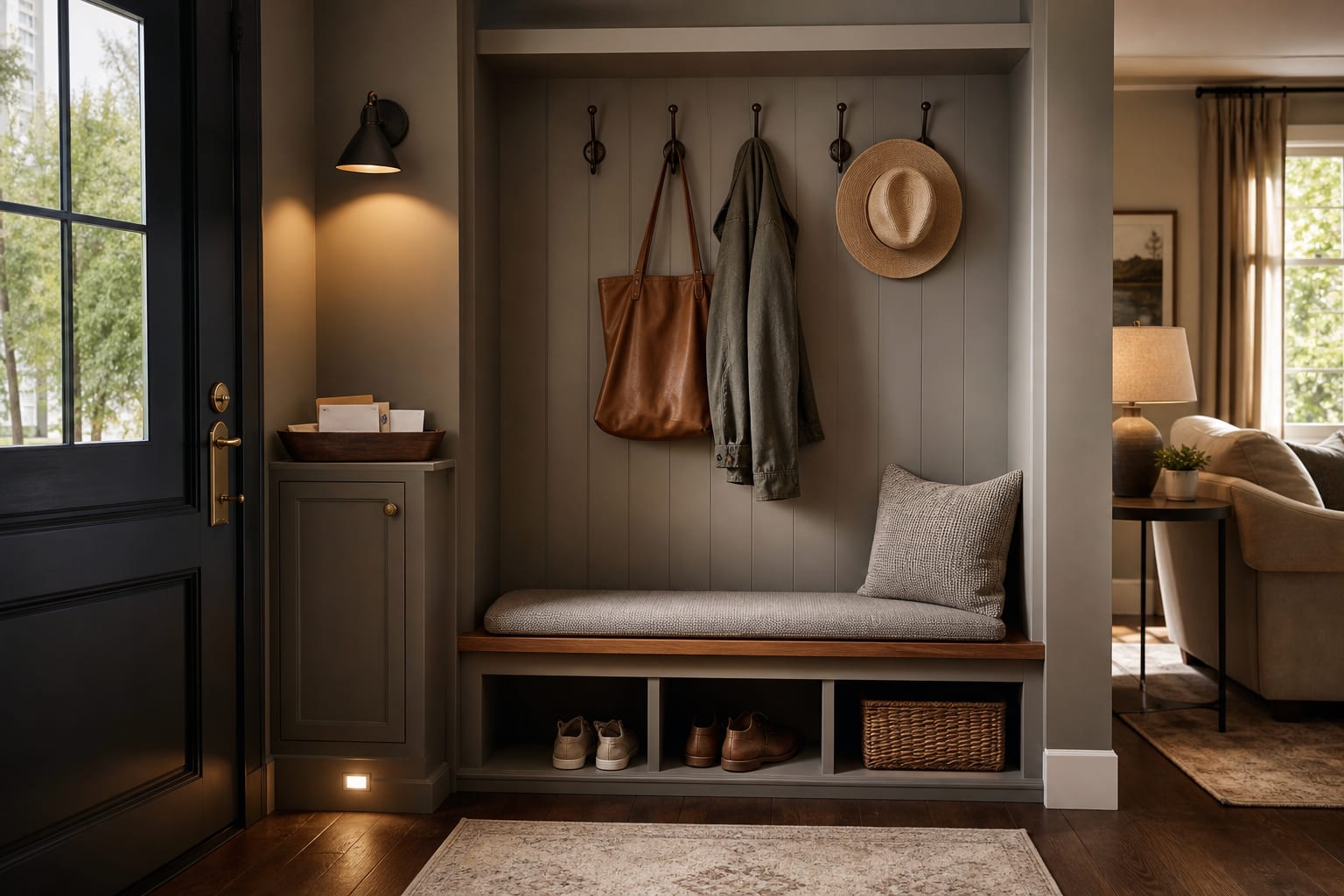
An entryway organization system works when one drop zone near the door gives bags, keys, mail, shoes, and coats assigned homes within arm's reach. The entry isn't cluttered because your family is careless — it has no landing instructions. Build hooks, a bench, a tray, and a mirror in one tight zone, and the rest of the house stops absorbing the mess.
What makes an entryway organization system work?
The system works only when the correct action is easier than dropping items on the floor, within the first 3 feet of the door. Treat the entry as a transfer station: anything arriving needs a landing spot before you walk further inside, and anything leaving needs to stay visible.
- Keys and sunglasses: hand height, not a decorative bowl across the room. A wall hook or lidded box 42"–48" off the floor keeps small items reachable without spreading.
- Mail: a narrow sorting lane instead of a pile. A vertical sorter or tray around 8" x 10" forces a weekly edit before it overflows.
- Shoes: store only the current rotation, roughly 2 pairs per person near the door; the rest belong in a closet or bin. If coats are the bigger problem, start with a coat closet organization plan before blaming the bench.
The drop-zone sequence that stops the doorway dump
A good drop zone isn't one product — it's a sequence: sit, hang, drop, sort, leave. Miss a step and clutter finds the floor.
- Sit-down point: a bench 16"–18" high for adults, or a 12"–14" shelf for kids' shoes, with at least 30" of walking clearance in front.
- Hooks before hangers: mount at 48"–54" for backpacks, leashes, and totes; add a lower row at 36"–42" so kids can hang their own gear.
- Closed storage for ugly categories: hats, sunscreen, and cables rarely look calm open. A 10"–12" deep cabinet or basket under the bench hides the noise.
- An outgoing lane: a marked tray or cubby, 14"–18" wide, for returns, forms, and packages, so the system supports leaving as much as arriving.
For whole-room planning, borrow the logic from this guide on designing an entryway from scratch: one focal point, one practical surface, one open route.
Test this on your own room photo with ReDesign before committing — keep the door, walls, windows, and fixed features visible so the preview solves the room you actually have.
How should the system fit your real doorway?
Measure the door swing first, then design around the leftover wall, not a fantasy mudroom. For a tiny entry, go vertical: a 24"–30" wide rail, an 8"–10" deep shelf, and a shoe tray underneath outperform a bulky bench blocking the threshold.
If the door opens directly into a living room, treat the drop zone as furniture — a 30" console with drawers, two hooks above, and a low basket below. For a family entry, separate people before objects: one hook and one cubby per person beats a shared basket where everything disappears.
Renters should skip drilling into questionable plaster; a freestanding rack, over-door hook, or rated adhesive strip solves the same problem. If the entry is barely wider than the door mat, apply the same thinking as tiny apartment entryway solutions: protect circulation first, then add the smallest surface that changes behavior.
Common entryway organization mistakes
- Buying furniture before deciding its job. A console with no drawer or hook rail becomes a display surface for receipts and clutter.
- Placing the system too far from the door. A mail sorter in the office does nothing; put the first landing zone where a hand naturally pauses.
- Using open baskets for everything. One basket for scarves reads charming; five baskets of mixed categories read as clutter with handles.
- Ignoring wet and dirty items. A 24" x 36" washable mat or boot tray with a raised lip protects floors and stops sideways shoe migration.
- Designing for the clean version of your life. If strollers, sports bags, and leashes come through daily, give them real storage instead of pretending they belong elsewhere.
Use AI to preview your entryway before you buy hooks
The usual entryway mistake is scale, not taste — a bench can look great and still block the door. Upload a straight-on photo with the floor, door swing, trim, closet, and current clutter visible; don't stage it clean if that's not real life.
Ask for three versions: a wall rail with shoe tray, a narrow bench with drawers, and a console with closed storage, plus one that uses the existing closet harder. Keep wall color, floor, and door location unchanged so the image judges organization, not a new room.
Pick the version that keeps the walking path open, gives every person a reachable hook, and contains paper before it reaches the kitchen. Note hook height, bench depth, and tray size — those notes become your shopping list.
A strong drop zone should feel almost boring after two weeks: keys land in the same spot, shoes stop spreading, mail has a limit. That's the win — not a perfect foyer, but a front door that no longer leaks clutter into the house.
Frequently Asked Questions
What is the minimum size for a functional entry drop zone?
A 36-inch wall section fits a bench, hooks above, and a small basket. Under 36 inches, use a wall-mounted hook rail with a basket below and skip the bench.
How many hooks should an entry have?
Plan one hook per household member plus two for guests — a 4-person home needs about 6 hooks, mounted 60–66 inches high so coats clear the bench.
Should an entry drop zone have closed storage?
Yes, when the entry opens directly into living space. A bench with lift-top storage or cubby boxes hides daily items so the room behind stays visually clean.
What flooring works under an entry drop zone?
Hardwood with a low-pile washable runner, sealed concrete, or porcelain tile hold up best. Carpet and high-pile wool show salt, mud, and grit within weeks.
Does AI preview entry drop zone layouts?
Yes. Upload an entry photo and AI previews bench-hook-mirror configurations against your actual wall width and door swing before you install anything.
> Try this: Ready to see this on your own room? Open ReDesign and run the preview.
Three transformations to try
1. Bench with hooks and basket for small entry 2. Wall hooks plus runner without bench 3. Cubby storage bench with shoe drawer