Feng shui gets dismissed as superstition, but strip away the mysticism and a lot of it is just sound spatial design: see the door, keep paths clear, balance the room. My take is that you can ignore the cosmology and still get a calmer, more usable living room from these principles.
To arrange your living room with feng shui, place the main sofa in the commanding position so it faces the room entrance with a solid wall behind it, then balance the seating, keep walkways at least 30 inches wide, and let energy move freely without clutter blocking the path. The goal is a space that feels open and protected at the same time.
Start with the commanding position
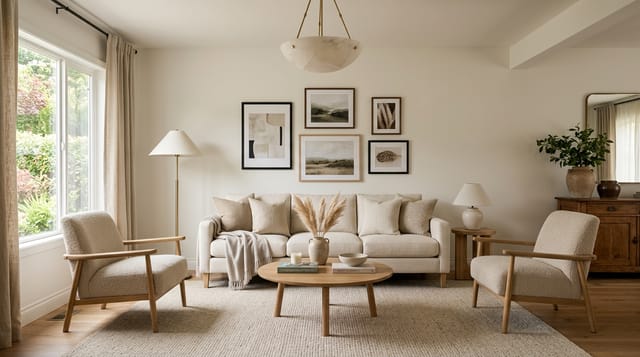
The commanding position is the cornerstone of feng shui in any room, and in the living room it belongs to your main sofa. Place it so you can see the entrance to the room without sitting directly in line with the door, and back it against a solid wall rather than a window. That wall gives a sense of support, while the clear view of the entry removes the low-grade unease of having your back to an opening. There is a practical logic underneath the tradition: people relax more when they can see who enters a room, and a sofa with a wall behind it simply feels steadier to sit in.
If a solid wall is not available and the sofa has to float, anchor its back with a console table or a row of plants so it does not feel exposed. Avoid placing the sofa so its back faces the main entrance directly, which feng shui treats as turning your back on incoming opportunity. A console roughly 30 inches high behind a floated sofa is the classic fix, tall enough to suggest a wall but low enough to keep the room open. For deeper layout inspiration that respects these ideas, AI living room design ideas shows arrangements that keep the commanding position intact while still looking modern.
The television complicates this in modern rooms, because everyone wants the sofa facing the screen and the screen often lands on a wall that fights the commanding position. My advice is to let the commanding position win for the sofa and treat the TV as secondary, mounting it where it serves the seating you already placed well. A room arranged around a screen tends to feel tense in a way that is hard to name until you fix the sofa first.
Balance the five elements and the bagua
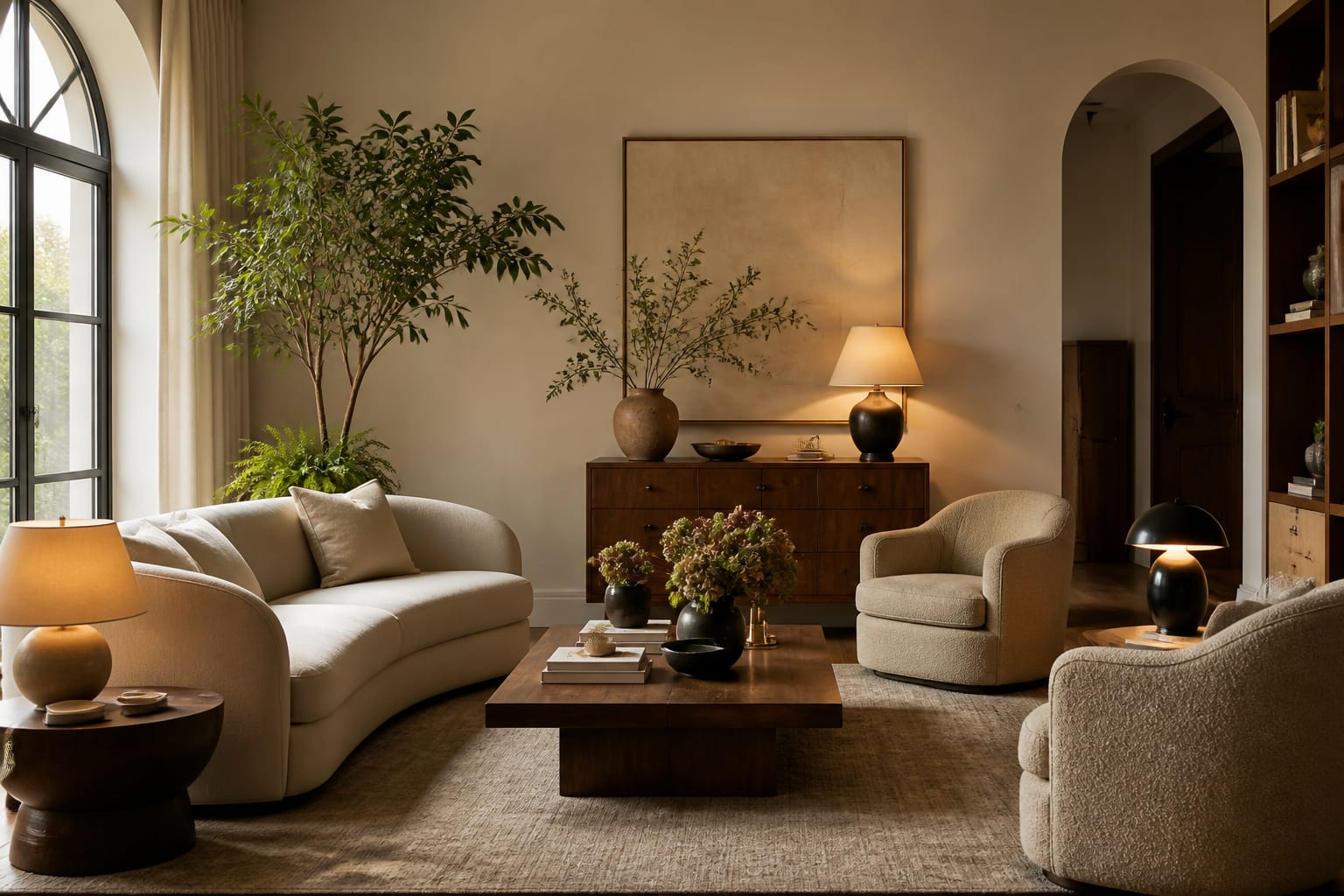
Feng shui works with five elements: wood, fire, earth, metal, and water, and a balanced living room nods to all of them without going literal. Wood arrives through plants and oak furniture, fire through warm lighting or a candle grouping, earth through ceramics and stone, metal through frames and hardware, and water through a mirror or a small fountain. You do not need a checklist on the wall; you need variety so no single element dominates. In practice this is just good decorating: a room with only metal and glass feels cold, and adding a leafy plant and a warm lamp is the element fix and the design fix at the same time.
The bagua map divides a space into nine zones tied to areas of life like wealth, relationships, and health. Overlay it loosely on your floor plan with the entrance wall as the bottom edge. When you are deciding what goes where, scan for these placement cues:
- The far-left corner from the entry, associated with abundance, suits a healthy plant or a meaningful object.
- The center, tied to health, stays open and uncluttered rather than crowded.
- Sharp furniture corners get softened with rounded pieces or foliage.
- Mirrors face something pleasant, never the front door, which is said to push energy back out.
- Pairs of objects in the relationship area reinforce balance.
Getting the underlying arrangement right matters more than any single cure, and living room layout ideas walks through floor plans that make these zones easy to honor.
A rug is one of the most useful tools for pulling a seating group together, and feng shui and ordinary design agree on this. Choose one large enough that at least the front legs of every seat sit on it, roughly an 8 by 10 foot rug for a standard living room, so the furniture reads as a single grounded cluster rather than islands drifting on bare floor. That visual anchor calms the room and gives the energy a defined place to settle, which is exactly the gentle, gathered feeling the whole approach is after.
Keep energy flowing
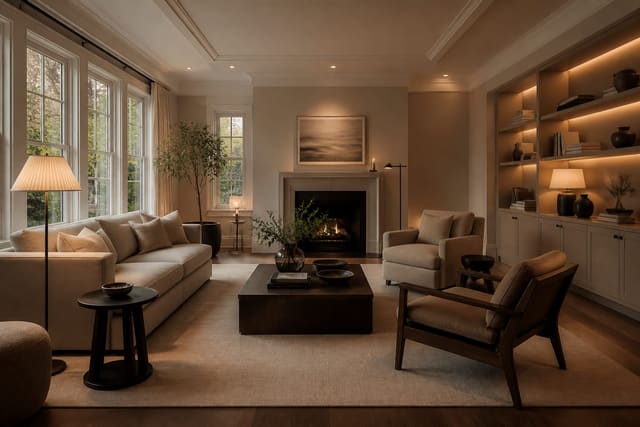
Chi, the energy feng shui cares about, is supposed to meander gently through a room, not race through or stagnate. Clutter is the enemy because it traps energy, so clear the floor under the coffee table and keep cords and stray items off main paths. Maintain at least 30 inches of clearance on primary walkways and around 14 to 18 inches between the sofa and coffee table so legs and energy both pass comfortably. Watch the line straight from the front door through the room to a back window, a path feng shui calls a rushing arrow; placing a plant, a rug, or a piece of furniture to interrupt it slows the energy so it lingers instead of shooting through.
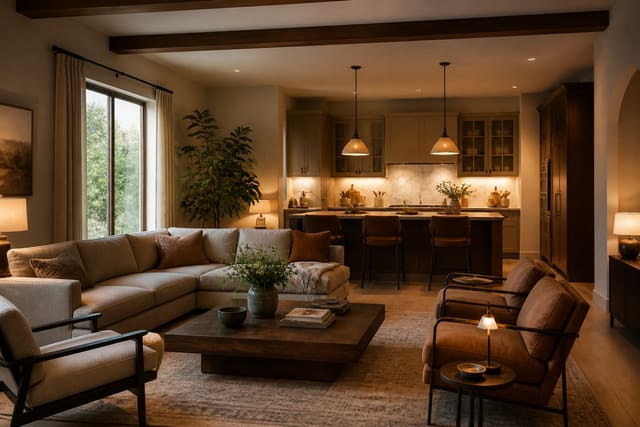
Lighting and air quality feed the flow too. Layer lighting at three heights, with ambient, table, and accent sources, and open windows regularly to refresh the air. Stagnant air and dim corners are the two things that make a room feel heavy, so a single well-placed floor lamp in a dark corner and a cracked window can shift the whole mood. In open-concept homes the living zone shares chi with the kitchen, which raises new questions; open-plan living kitchen ideas covers how to keep energy moving across a combined space without one zone overwhelming the other.
Common mistakes to avoid
The most common mistake is shoving every piece of furniture against the walls in the belief that it opens the room. It actually pushes energy to the perimeter and leaves a dead, echoing center. Pull seating inward into a cluster roughly 8 feet wide instead.
Another common mistake is hanging a large mirror directly facing the front door or the main entry, which feng shui says bounces incoming energy straight back out. Reposition it to reflect a plant or a view instead. The third mistake to avoid is letting a single element take over, like a wall of metal frames with no wood or plants to balance it; aim for at least three of the five elements represented so the room does not feel cold or static.
Use AI design to preview feng shui changes before you commit
Moving a heavy sofa to test the commanding position is a chore, and you may not love the result. With Re-Design you can upload a photo of your living room and re-render it with the furniture rearranged, so you can see the sofa in its supported, door-facing position before you lift a thing.
The preview lets you test the energy of a layout the easy way. Upload your current setup, try a version with floated seating and a plant softening the corner, and judge whether the room feels more open. Seeing a feng shui arrangement on your actual room beats imagining it, and it spares your back the trial-and-error of pushing furniture around all afternoon.