A floor lamp is the most underused tool in home lighting, and the most forgiving, because it adds a light source anywhere without an electrician. The mistake people make is treating a floor lamp as an afterthought, grabbing whatever is on sale and pointing it at the ceiling. The better move is to decide first what the lamp is for, ambient glow, task light, or a sculptural moment, and then choose the height, color temperature, and brightness to match. Get that right and one well-placed floor lamp fixes a dim corner, anchors a reading chair, or becomes the most striking object in the room.
Match the lamp to the job
Every good lighting plan starts with intent, and floor lamps split into three clear roles. An ambient lamp fills a corner with soft, indirect glow, often by bouncing light off the ceiling or through a fabric shade; this is the lamp that makes a room feel warm after dark. A task lamp delivers focused light exactly where you need it, over a reading chair or beside a desk, with an adjustable head or arm so you can aim it. A statement lamp is chosen first for its sculptural shape and second for its light, an arc lamp or an oversized tripod that doubles as art.
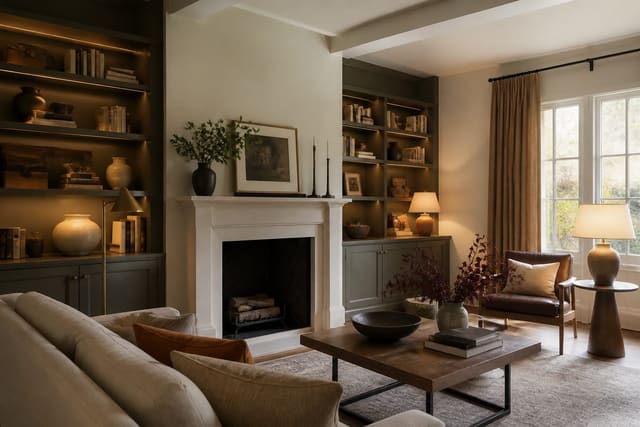
Knowing which role you are filling prevents the most common error: a delicate task-style swing-arm trying and failing to light a whole living room, or a giant arc lamp glaring into a quiet reading nook. Pick the job, then the form follows. Built-in lighting niches and shelving can carry some of this load, and our built-in shelving ideas cover how integrated lighting and floor lamps share the work in a layered room.
Getting height, brightness, and color right
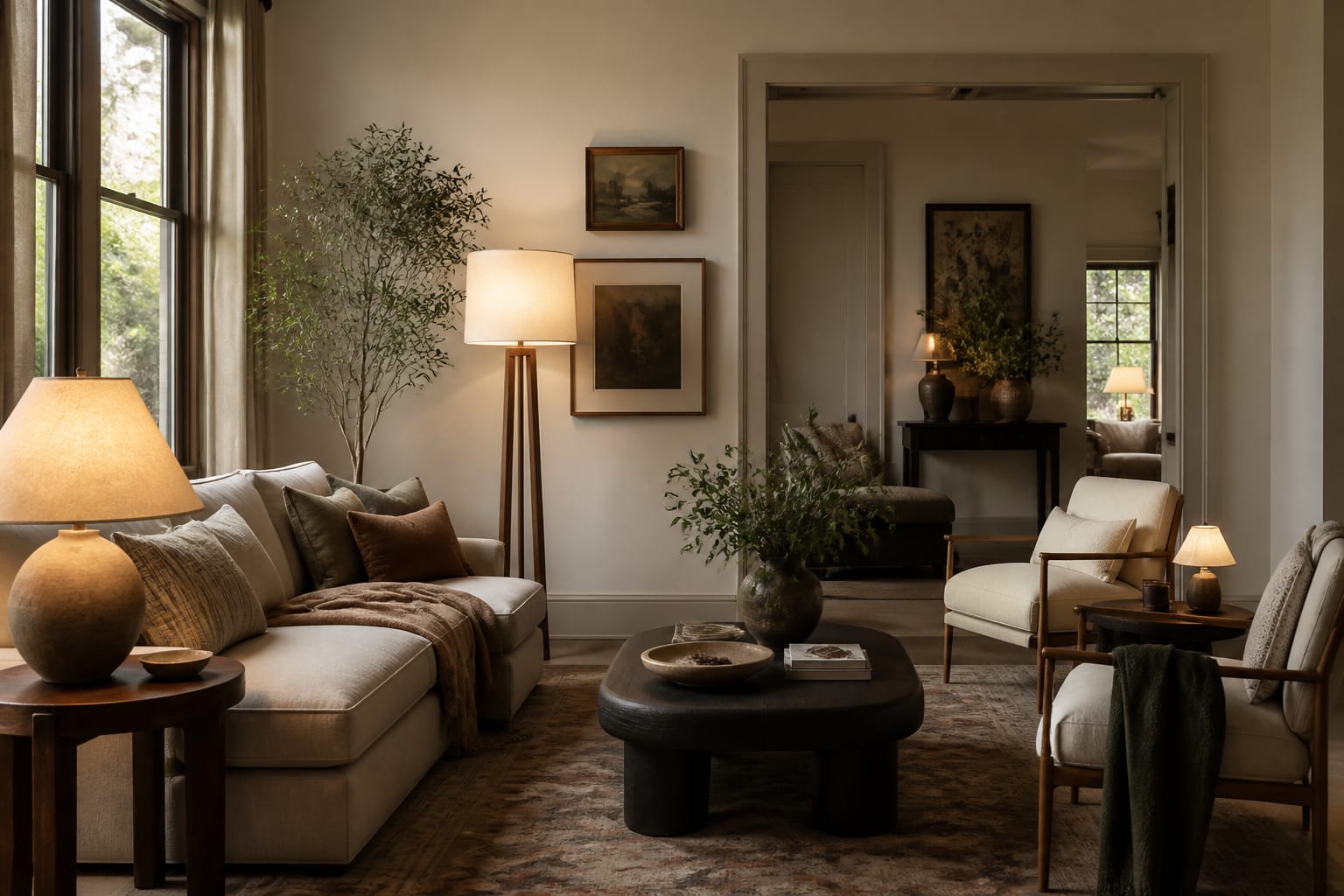
Height controls how a floor lamp behaves. For ambient fill, a 58- to 64-inch lamp with an upward or diffused shade spreads light across the room. For reading, the bulb should sit at 48 to 60 inches so the light clears your head and lands on the page over your shoulder; too low and it glares, too high and it lights your hair instead of your book. Beside a sofa, aim the shade bottom roughly at eye level when seated, around 40 inches, so you see light, not a bare bulb.
Brightness and color temperature do the rest. For general room lighting, look for 800 to 1,600 lumens; for focused task light, 450 to 800 lumens aimed tightly is plenty. Color temperature sets the mood: 2700K is the warm, golden tone that suits living rooms and bedrooms, while 3000K to 3500K reads crisper and helps with reading, crafts, and work. Put every floor lamp on a dimmer, either built in or a smart bulb, so a 1,600-lumen ambient lamp can drop to a soft evening wash. Aim for roughly 75 to 100 watts equivalent in a main living-room lamp and less in a bedroom.
One spec people overlook is color rendering, measured as CRI. A bulb with a CRI of 90 or higher shows the true color of your art, wood tones, and skin, while a cheap bulb in the 70s makes everything look slightly gray and lifeless no matter how many lumens it pushes. For a lamp meant to make a room feel warm and inviting, the CRI matters as much as the brightness. The shade material shapes the output too: a thick fabric or paper shade diffuses light into a soft pool, an open metal cone throws a sharper, directional beam, and a translucent glass globe glows in every direction at once. Match the shade to the job and the same bulb behaves like three different lamps.
Floor lamp ideas for every room
Floor lamps solve problems no ceiling fixture can. Here are specific moves worth stealing:
- Arc a 1,500-lumen arch lamp over a sofa to deliver overhead reading light with no ceiling wiring required.
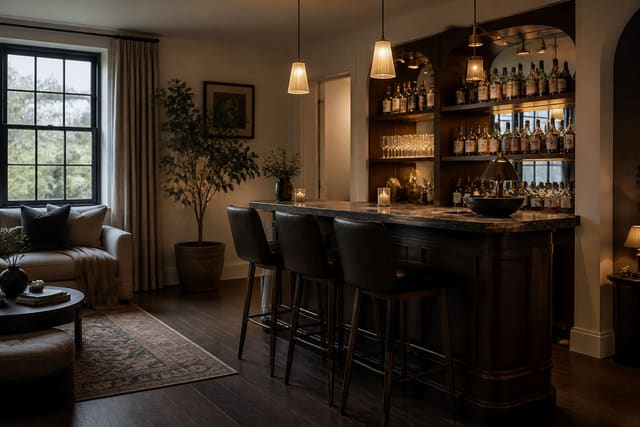
- Stand a slim 60-inch tripod lamp in a dim corner beside a home bar to light the display without glare.
- Place an adjustable task lamp beside a reading chair with the bulb at 50 inches and a 3000K bulb for crisp pages.
- Use a torchiere that throws 1,600 lumens up at the ceiling to brighten a room with low or no overhead lighting.
- Set a sculptural mushroom or globe lamp on a console as a glowing statement piece at 2700K for soft ambiance.
- Flank a bed with two matching floor lamps when nightstands are too small, putting the shades at 55 inches.
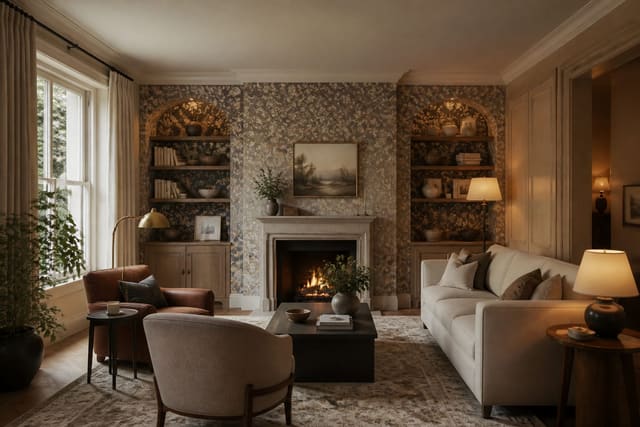
- Position an uplight floor can behind a large plant to cast dramatic leaf shadows up a wallpaper feature wall.
The throughline is layering. A single overhead light flattens a room; two or three floor and table lamps at different heights build the soft, dimensional glow that makes a space feel finished and inviting after sunset.
Choosing a lamp that fits the room
Scale keeps a floor lamp from looking lost or overbearing. In a large living room, a substantial arc or tripod lamp with a 16- to 20-inch shade holds its own; in a small bedroom or office, a slim 10- to 14-inch shade on a narrow base suits the footprint. Match the lamp's visual weight to its neighbors, so a heavy upholstered sofa pairs with a lamp that has presence rather than a spindly stick that disappears beside it.
Finish ties the lamp to the room. Warm brass and aged bronze flatter traditional and transitional spaces, matte black and gunmetal suit modern rooms, and a fabric or paper shade softens the light more than a metal or glass one. If the lamp sits near other metals, the eames-era rule of repeating a finish at least once elsewhere in the room keeps it from looking accidental. Budget runs wide: a solid ambient floor lamp starts around $80 to $150, while a designer arc or sculptural statement lamp climbs to $400 or well beyond.
Base style matters more than people expect in a tight room. A heavy round or marble base anchors a lamp visually but eats floor space and can crowd a narrow walkway, while a slim tripod or a thin cantilevered base tucks neatly beside a sofa arm or behind a chair. An arc lamp solves the placement puzzle entirely, since its weighted base can sit off to the side while the head reaches several feet over the seating, putting light where you want it without a side table underneath. Measure the footprint of the base, not just the height of the pole, before you buy, because a wide base that looks elegant in a showroom can become the thing everyone trips over in a small living room.
See the lighting before you buy
Lighting is the hardest thing to picture from a product page, because a lamp's glow depends entirely on your wall colors, ceiling height, and the corner you have in mind. Re-Design closes that gap. Upload a photo of the room, then re-design it with an arc lamp over the sofa, a tripod in the dim corner, or a pair of lamps flanking the bed, and see how the height and placement read against your actual furniture. You can compare a warm 2700K glow against a crisper tone, or test whether a tall arc overwhelms a low-ceilinged room, before you carry anything home.
Frequently Asked Questions
How bright should a floor lamp be?
It depends on the job. For general ambient room lighting, aim for 800 to 1,600 lumens. For focused task light over a reading chair or desk, 450 to 800 lumens aimed tightly is enough. A torchiere bouncing light off the ceiling to replace overhead lighting wants the higher end, around 1,500 to 1,600 lumens. Always add a dimmer so you can soften the output at night.
What color temperature is best for a floor lamp?
For living rooms and bedrooms, choose warm 2700K bulbs for a relaxed, golden glow. For reading, crafts, or a home office, step up to 3000K to 3500K, which reads crisper and reduces eye strain on detailed tasks. Keeping all the bulbs in one room within the same color range stops the lighting from looking mismatched.
How tall should a reading floor lamp be?
Position the bulb 48 to 60 inches off the floor so light clears your head and falls over your shoulder onto the page. The bottom of the shade should sit near eye level when you are seated, roughly 40 inches, so you see warm light rather than a bare bulb. An adjustable head or swing arm lets you fine-tune the angle for any chair.