A French country bathroom should feel like a quiet retreat carved out of an old farmhouse, not a glossy spa showroom. The look lives in soft contrasts: cool marble against warm aged brass, crisp white against dusty blue, antique wood beside honest stone. A freestanding clawfoot tub almost always serves as the heart of the room, with a repurposed antique vanity standing in for a builder-grade cabinet. The palette stays gentle, creams and pale blues washed with daylight, while toile accents and vintage fixtures carry the provincial charm. Done well, it reads serene, collected, and slightly worn in the best way. These ideas help you blend genuine character with everyday comfort and lasting calm.
Make the Clawfoot Tub the Centerpiece
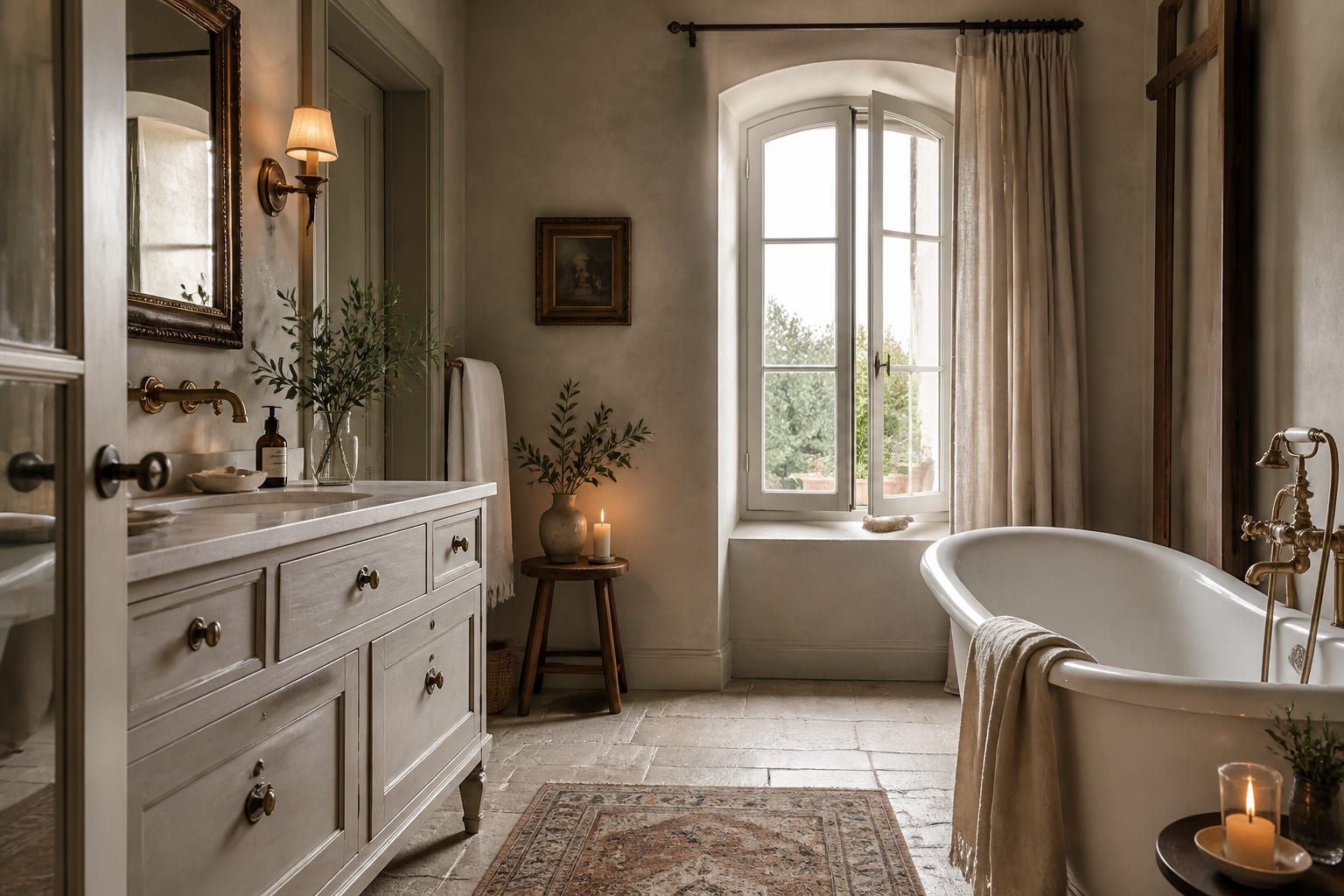
Nothing signals French country bathing quite like a freestanding clawfoot tub set proudly in the open. Where a built-in tub disappears into the wall, a clawfoot sits as sculpture, and that visual weight earns it the focal-point role. A classic roll-top or slipper shape in cast iron holds heat well and feels authentically old, though acrylic reproductions weigh far less and suit upstairs floors that cannot carry several hundred pounds of iron and water. Position the tub where it catches natural light if you can, beneath or beside a window, so afternoon sun warms the enamel and the view becomes part of the soak. Painting the exterior in a soft dusty blue, sage, or gentle gray instantly grounds it in the provincial palette and breaks up an all-white scheme. Pair it with a floor-mounted vintage-style filler and a telephone hand shower in aged brass or bronze, which reads far warmer than chrome against the tub's curves. Feet finished in the same metal tie the piece together. Leave breathing room around the tub, ideally fifteen to eighteen inches of clearance on accessible sides, so it feels like an object you walk around rather than a fixture wedged in place. A small aged stool or a folded linen towel draped over the rim adds lived-in softness. If a full clawfoot is impractical, a freestanding flat-bottom tub with a slightly traditional silhouette still captures the spirit. Underfoot, a worn cotton bath mat or a faded runner softens cool stone or tile. The tub should feel like a generous invitation to slow down, surrounded by light and warm metal, rather than a utilitarian box you climb into and forget.
See also our guide to Powder Room Design Tiny for more on french country bathroom ideas.
Repurpose an Antique Vanity
Skipping the standard bathroom cabinet for a repurposed antique is the single move that most transforms a French country bathroom. Hunt for an old dresser, washstand, or commode with character, turned legs, worn paint, original drawer pulls, and have a stone fabricator cut and seal a marble or limestone top to fit. A vessel sink or a traditional undermount basin then drops in, and you have a vanity that no big-box store can replicate. Carrara or Calacatta marble brings the cool veined elegance the style loves, while honed limestone or soapstone reads softer and more rustic if high polish feels too formal. Seal natural stone properly, since bathrooms invite water and the occasional spill of toothpaste or makeup. Paint the base in a chalky finish, dove gray, faded blue, soft sage, then lightly distress the edges so wear looks earned rather than applied. Fit the piece with vintage brass or bronze faucets in a bridge or widespread style, and swap any plastic hardware for aged metal knobs. Practically, plan for plumbing: an antique with shallow drawers may need the back cut for pipes, and you will sacrifice some storage, so add a nearby shelf, an armoire, or wall-mounted cabinetry for towels and toiletries. Mount an antique mirror above, gilt-framed, foxed, or a simple painted wood frame, rather than a frameless modern slab. If a true antique proves hard to source or too costly, many makers now build vanities styled to look reclaimed, and a coat of milk paint convinces the eye. The result is a working sink that looks like a treasured piece of furniture, which is exactly the impression French country interiors aim to give throughout the home.
For a related angle on french country bathroom ideas, read Cottagecore Bathroom Ideas.
Choose the Soft Palette and Surfaces
Color and material restraint keep a French country bathroom feeling airy and timeless rather than themed. Build the scheme around pale, gentle tones: soft cream, warm white, dusty blue, pale sage, and the natural grays of stone. These shades reflect light and make even a small bathroom feel calm and open. Walls take well to a matte or chalky paint, beadboard wainscoting painted soft white, or a limewash that lends subtle texture. For surfaces, lean on natural materials with honest variation. Marble suits floors and the vanity top, while a tumbled stone or terracotta tile grounds the floor with rustic warmth. Subway or zellige-style tile in cream or pale blue dresses a shower or backsplash without feeling sterile. Avoid large expanses of glossy, high-contrast tile, which pull the room toward contemporary. Pattern enters through soft accents rather than fixed surfaces: a toile de Jouy roman shade, a gingham skirt under a wall-hung sink, or a stack of striped ticking towels. Keep these patterns to a couple of touches so the room stays serene. Warm metals tie everything together, so repeat aged brass or bronze across the faucet, towel bars, hooks, and light fixtures rather than mixing finishes randomly. Natural fibers add the final softness underfoot and at the window: a cotton runner, a linen curtain, a woven basket for rolled towels. Bring in a little life with potted lavender, a sprig of eucalyptus, or fresh stems in an old ironstone jug. The palette should feel sun-bleached and gently faded, the surfaces should show natural grain and variation, and nothing should look freshly unwrapped. That quiet, slightly aged harmony is what separates genuine provincial charm from a stagey imitation.
Add Vintage Fixtures and Natural Light
The smallest details, fixtures, hardware, and how the room handles daylight, decide whether a French country bathroom feels authentic. Start with the metal: cross-handle or lever faucets in unlacquered brass or oil-rubbed bronze develop a living patina over time, which is precisely the point. Carry that finish through to a wall-mounted towel bar, robe hooks, a freestanding towel stand, and the tub filler so the room reads cohesive. A vintage-style exposed shower set, with a large rain head on a curved riser, suits a separate shower beautifully and avoids the sealed, all-glass look of modern enclosures. Lighting should feel warm and decorative rather than clinical. A small tole or wrought-iron chandelier over the tub, sconces with frosted or candle-style bulbs flanking the mirror, and warm bulbs near 2700 kelvin all flatter skin and stone. Skip rows of bright recessed cans where you can. Natural light is the style's secret ingredient, so keep windows as open as privacy allows. Linen cafe curtains, a wood shutter, or a simple gathered shade let daylight pour in while screening the lower pane. If a window sits near the tub, frosted or seeded glass preserves modesty without blocking the glow. Finish with the kind of small touches that suggest a real, lived-in country home: an old apothecary jar holding cotton, a wooden brush, a bar of milled soap on a stone dish, a faded oil painting safely away from splashes. A weathered ladder makes a charming towel rail. Group a few framed botanicals or vintage prints on one wall. None of this should look purchased as a set; the room should feel assembled over years, lit softly, and warmed by metal that has begun, gracefully, to age.
- Float a painted clawfoot tub near a window with an aged-brass floor filler.
- Turn an antique dresser into a vanity topped with sealed Carrara or limestone.
- Keep walls soft with limewash, beadboard, or chalky cream and dusty-blue paint.
- Ground the floor in tumbled stone, terracotta, or honed marble for rustic warmth.
- Repeat unlacquered brass or bronze across faucets, hooks, towel bars and lighting.
- Add toile or gingham through a roman shade, sink skirt, or stacked ticking towels.
- Hang a foxed gilt mirror and flank it with candle-style sconces above the vanity.
- Screen lower window panes with linen cafe curtains so daylight floods the room.
Bring the look home with Re-Design
Marble tops, painted clawfoot tubs, and antique vanities add up fast, so see the look before you spend. Upload a photo of your current bathroom to Re-Design and preview French country schemes against your real walls, window, and floor. Test a dusty-blue tub, a limestone vanity top, beadboard wainscoting, or aged-brass fixtures, and compare palettes side by side in your own light. Catch awkward proportions or clashing tones on screen instead of after a costly install. Once you have seen a combination working in your space, you can source the tub, stone, and hardware with real confidence.
Frequently Asked Questions
Is a clawfoot tub practical in a French country bathroom?
Yes, with planning. Cast iron holds heat and feels authentic but is heavy, so confirm your floor can bear it or choose a lighter acrylic reproduction. Leave fifteen to eighteen inches of clearance for cleaning and movement, and pair it with a vintage-style floor filler and hand shower. A painted exterior in dusty blue or sage grounds it firmly in the provincial palette.
How do I turn an antique dresser into a bathroom vanity?
Choose a sturdy dresser or washstand with good legs, then have a stone shop cut a sealed marble or limestone top to fit. Add a vessel or undermount basin, vintage brass faucet, and aged knobs. Plan for plumbing by cutting the back and accepting reduced drawer storage. Seal raw wood and stone against moisture, and add nearby shelving for towels.
What colors work best in a French country bathroom?
Soft, sun-faded tones suit the style best: warm cream, white, dusty blue, pale sage, and the natural grays of stone. These reflect light and keep small rooms calm. Use limewash, chalky paint, or painted beadboard on walls, and natural stone or terracotta underfoot. Add gentle pattern through toile or gingham accents, and avoid glossy, high-contrast tile that reads too modern.