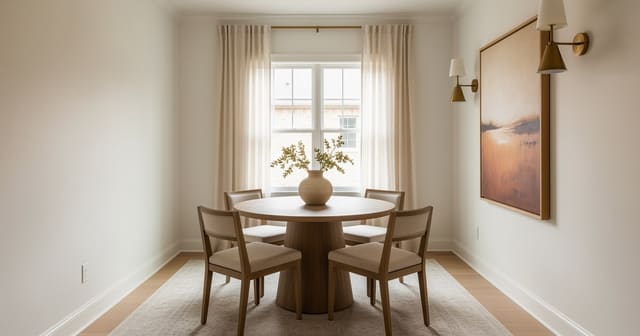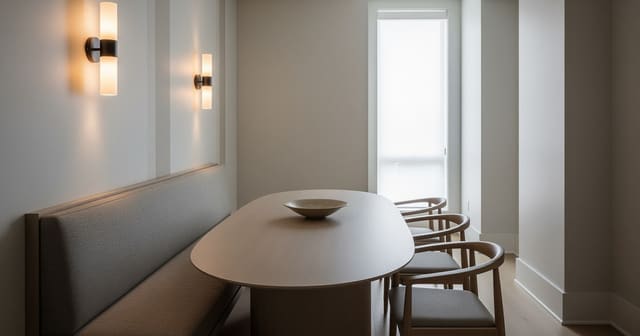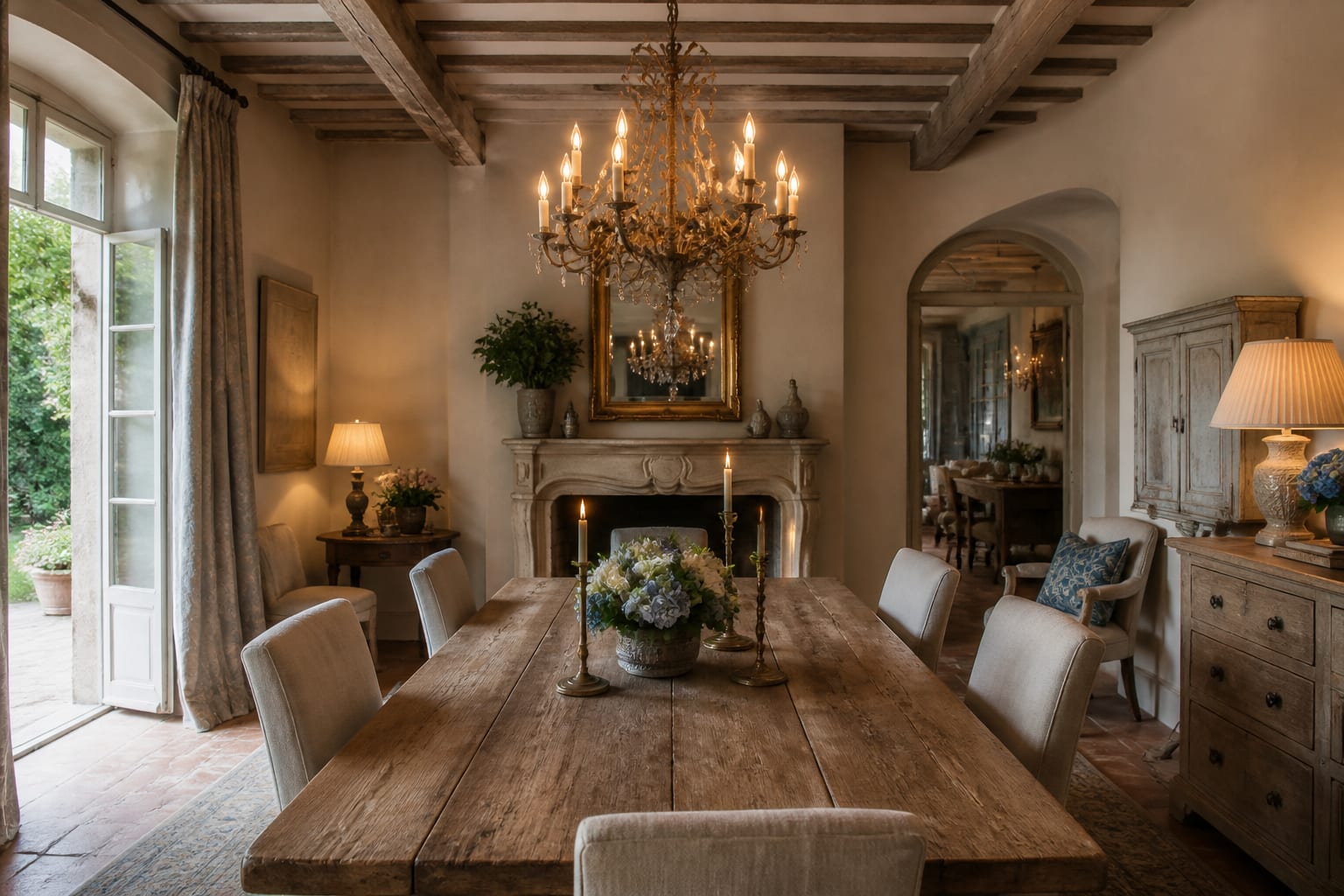
A French country dining room should look gathered over generations, never bought in a single afternoon. The whole style rests on honest materials and gentle imperfection rather than matched sets or glossy finishes. Picture a long oak trestle table scarred from real use, rush-seat chairs that creak softly, and limewashed walls catching late-day light. Color stays muted: ochre, sage, faded blue, soft cream. A wrought-iron chandelier hangs low over the table, and an antique buffet anchors one wall with weathered hardware. The room feels generous and unhurried, made for slow meals and long conversation. These ideas show how to build that provincial warmth without your dining room reading like a costume or a catalog.
Start With the Table and Seating
The table sets the tone for everything else, so choose mass and texture over polish. A trestle table in oak, elm, or chestnut, ideally six to eight feet long, gives the room its rural backbone. Look for a plank top with visible grain, breadboard ends, and a base that reads as joinery rather than veneer. Honest wear matters here; a few water rings and softened edges signal a piece that has fed people for years. If you cannot source an antique, a reclaimed-wood reproduction with a hand-rubbed wax finish reads convincingly once it settles into the room. Around it, rush-seat or cane ladder-back chairs bring the woven, slightly rustic note that defines provincial seating. Mixing chair styles slightly, rather than buying eight identical ones, reinforces the collected-over-time feeling. A pair of upholstered host chairs in faded linen at the table ends adds comfort without breaking character. For dimensions, allow at least twenty-four inches of width per diner and thirty-six inches of clearance behind chairs so people can rise and pass easily. A long bench on one side suits larger families and tucks neatly underneath when not in use, freeing floor space. Keep finishes warm rather than orange; a beeswax or matte oil treatment beats a high-gloss lacquer every time. If your existing table is too modern, a linen runner and a wax topcoat can soften it considerably before you commit to replacing anything. The goal throughout is a table that openly invites elbows, spilled wine, and slow lingering, rather than one you anxiously protect with coasters and constant worry. Let the seating feel slightly informal, and the rest of the room relaxes naturally around it from there.
See also our guide to Small Dining Room Under 100 Sqft for more on french country dining room ideas.
Build the Muted Provincial Palette
French country color comes from the landscape: lavender fields, wheat, weathered shutters, and stone. That means soft, sun-faded tones rather than saturated brights or stark white. Limewashed walls in warm cream, putty, or pale ochre give a chalky depth that flat paint cannot match, and the slight cloudiness catches changing daylight beautifully. If limewash feels like too much commitment, a matte clay-based paint in the same family approximates the look with less mess. Reserve color accents for textiles and a single painted piece. Toile de Jouy, with its pastoral scenes in faded blue, soft red, or sage on a cream ground, is the signature pattern; use it on seat cushions, a window treatment, or a single accent wall rather than everywhere at once. Gingham and ticking stripe work as quieter companions that keep toile from feeling fussy. An antique buffet or hutch painted in chalky sage, dove gray, or aged blue earns its place as the room's color anchor, especially with the original paint worn through at the edges. Bring in natural fibers throughout: a jute or seagrass rug underfoot, linen napkins, a rough-woven runner. Avoid pure black and high-contrast modern accents, which read too sharp against this softness. Metals should be warm and slightly tarnished, brass, bronze, or aged iron, never chrome. Layer in dried lavender, a bowl of lemons, or a pitcher of garden flowers to carry seasonal color without permanent commitment. The overall effect should feel sunlit and gently aged, as if the colors have mellowed over decades rather than arrived fresh from a tin. When in doubt, choose the dustier, softer, more weathered version of any shade you are considering for the space.
For a related angle on french country dining room ideas, read Narrow Dining Room Galley.
Light It Like a Country Farmhouse
Lighting carries enormous weight in a French country dining room because it sets the mood for every meal. The centerpiece is a wrought-iron chandelier, ideally hung so its lowest point sits about thirty to thirty-four inches above the tabletop. Choose a fixture with a hand-forged, slightly irregular frame and candle-style bulbs rather than anything sleek or symmetrical. Aged iron, bronze, or a tole finish in muted cream or sage all suit the style; gilded touches add a note of faded grandeur without tipping into formality. Put the chandelier on a dimmer so you can drop the room to a soft glow for dinner and lift it for daytime use. Supplement the overhead with warmer, lower sources rather than recessed downlights, which feel too contemporary. A pair of sconces flanking the buffet, table lamps on a sideboard, or even real candles in pewter holders build the layered, flickering quality that defines the look. Stick to warm bulb temperatures around 2700 kelvin so wood tones glow rather than flatten. Let natural light do real work too; keep window treatments light and unlined, like linen panels or simple cafe curtains in gingham, so morning sun pours across the table. Avoid heavy, blackout-style drapery that closes the room off from the garden. If your dining room runs dark, a mirror with a distressed gilt frame placed opposite a window bounces daylight and adds provincial sparkle. The aim is a room that feels candlelit and inviting after dark yet bright and airy by day. Lighting that gently flatters skin and food, and that you can tune by the hour to suit the meal, makes the whole space feel genuinely hospitable and warm.
Layer Antiques, Texture, and Tabletop
The finishing layer is where a French country dining room earns its soul, so collect slowly and edit honestly. An antique buffet or enfilade is the workhorse and the star: it stores linens and serveware while displaying a few well-chosen pieces on top. Look for worn paint, original wrought-iron pulls, and a low, generous profile. Above or beside it, lean an aged mirror or hang a small grouping of botanical prints, vintage plates, or a single oil painting in a chipped gilt frame. Open shelving or a glass-front hutch lets you display ironstone pitchers, faience plates, and a row of mismatched stemware that looks gathered from market stalls. Resist the urge to fill every surface; provincial style breathes. On the table, build texture with a rough linen cloth or runner, woven chargers, and simple white or cream dishware that lets the food and the wood show. A pitcher of lavender, sunflowers, or branches from the yard reads more authentic than a stiff floral arrangement. Bring in a few honest props that hint at country life: a ceramic confit pot, a wooden bread board, a bowl of fresh fruit. Underfoot, a worn jute rug or a faded vintage runner softens the floor and absorbs sound. Texture should come from natural materials, stone, terracotta, wood, linen, woven fiber, rather than shine. The trick is restraint: a handful of genuine pieces with real age beats a roomful of distressed reproductions. Let each object have a little story or function so the room feels collected by people, not staged by a store. Step back regularly as you arrange, and remove anything that looks like it is trying too hard to perform the style.
- Center the room on a long oak trestle table with honest wear and patina.
- Mix rush-seat ladder-back chairs with a pair of faded linen host chairs.
- Limewash the walls in warm cream, putty, or pale ochre for chalky depth.
- Use toile de Jouy on cushions or curtains, balanced by quiet gingham and ticking.
- Hang a wrought-iron chandelier on a dimmer, thirty-two inches above the tabletop.
- Anchor one wall with an antique buffet painted in chalky sage or aged blue.
- Display mismatched ironstone and faience behind a glass-front hutch for collected charm.
- Dress the table with rough linen, woven chargers, and a pitcher of garden lavender.
Bring the look home with Re-Design
Before you commit to a trestle table or a sage-painted buffet, test the whole scheme in your actual room. Upload a photo of your dining space to Re-Design and preview French country looks instantly, swapping wall colors, chandelier styles, chair textures, and palettes against your own light and proportions. Seeing limewashed cream beside your existing floor, or a wrought-iron fixture at the right height over your table, saves costly mistakes and returns. Try several muted directions, compare them side by side, and only then buy the pieces you have already seen working. It turns guesswork into a confident, money-saving plan.
Frequently Asked Questions
What table is best for a French country dining room?
A long trestle table in oak, elm, or chestnut is the classic choice. Aim for six to eight feet with a planked top, visible grain, and a waxed or oiled matte finish. Genuine antiques are ideal, but a reclaimed-wood reproduction works once it settles in. Honest wear and breadboard ends sell the rustic, provincial look far better than glossy lacquer.
What colors define French country dining rooms?
Soft, sun-faded tones drawn from the landscape define the palette: warm cream, putty, pale ochre, sage green, and faded blue. Limewashed or matte walls give chalky depth, while toile, gingham, and ticking add gentle pattern. Reserve stronger color for a single painted buffet. Avoid stark white, pure black, and saturated brights, which read too modern against this softness.
How do I light a French country dining room?
Hang a wrought-iron or tole chandelier about thirty to thirty-four inches above the table, on a dimmer for flexible mood. Use warm bulbs near 2700 kelvin so wood glows. Layer in sconces, lamps, or real candles rather than recessed downlights. Keep windows lightly dressed with linen or gingham so daylight floods the table and the room stays airy.