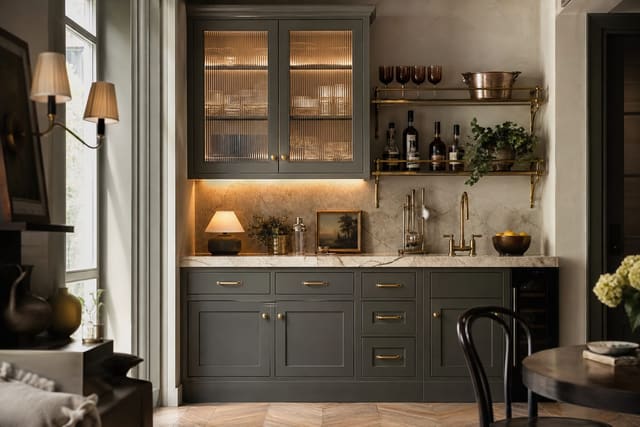
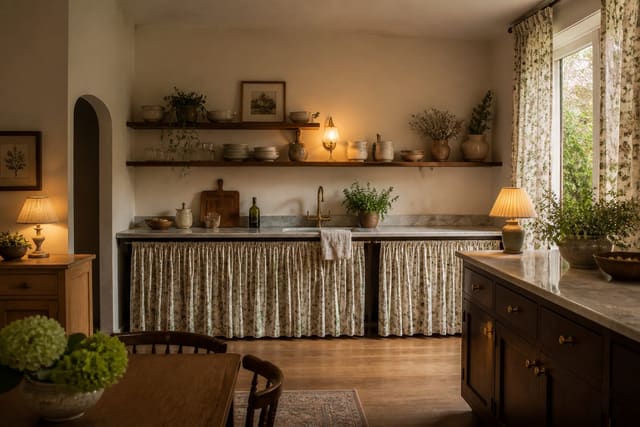
A French country kitchen gets its warm Provence look from creamy hand-finished cabinetry, an apron-front fireclay sink, aged brass hardware, and open shelving stocked with copper pots and ironstone. Counters in honed stone or butcher block age gracefully, and a farmhouse table anchors the room as a true gathering space.
What sink and countertops define the look?
A deep apron-front fireclay sink in cream or soft white glaze sets the tone before anything else. Pair it with a bridge faucet or swan-neck tap in unlacquered brass, which patinas over time; polished chrome feels too modern for this style. For counters, choose materials that age gracefully rather than resist wear. Honed marble, soapstone, and thick butcher block all develop the soft patina this look calls for, and a few water rings or knife marks only add character. Skip high-gloss engineered stone with uniform speckling, since its perfection fights the lived-in mood. Keep edges simple, an eased or pencil profile, so the material stays the focus.
How do I finish French country cabinetry?
Cabinets carry most of the room's color, so skip stark white for creamy off-whites, soft butter, muted sage, or dusty pale blue. A hand-painted or lightly distressed finish beats a flawless sprayed coat, since visible brushwork suggests age and craft. Inset or beadboard doors add texture, and a furniture-style island in a contrasting muted tone breaks up a long cabinet run. Glass-front uppers display stacked ironstone while lightening the visual weight of solid doors. Hardware should look forged, not machined: aged brass cup pulls, iron latches, simple turned knobs. Top uppers with a plate rack or plaster range hood, and leave one wall open for shelving instead of packing every inch with cabinetry.
What should I display on open shelves?
In a French country kitchen, the tools you use become the decoration. Hang copper pots where light can catch them; their warm glow brings the whole palette to life. Open shelves should hold dishes you actually reach for, stacked plates, mixing bowls, mismatched pitchers, rather than purely ornamental pieces. Keep dry goods in glass jars and woven baskets, and let dried herbs or garlic braids hang near the stove. A bowl of lemons or a pitcher of cut flowers adds living color. Edit out plastic packaging and modern gadgets that break the spell; a small chalkboard menu or vintage scale adds personality without clutter.
How do I style the kitchen table?
No French country kitchen feels complete without a table at its center. A long farmhouse table in scrubbed pine or oak, paired with rush-seat chairs and a bench, invites lingering meals far better than a tight breakfast nook. A round pedestal table near a window does the same work in less space. Mix seating rather than matching it, and hang a wrought-iron or tole chandelier on a dimmer overhead. Dress the table with a linen runner, ironstone bowls, and a jug of garden flowers. Stone, terracotta, or wide-plank wood flooring completes the rustic foundation underfoot.
Signature elements to combine: - Deep fireclay apron sink in a warm cream glaze - Hand-painted sage cabinetry with aged brass cup pulls - Copper pots hung beside a sunlit window - Honed marble or thick butcher-block counters - Scrubbed pine farmhouse table with rush-seat chairs - Plaster range hood above an open shelf of ironstone
Bring the look home with Re-Design
Upload a photo of your kitchen to Re-Design and preview creamy cabinetry, a fireclay apron sink, and copper accents on your actual layout. Test sage versus butter cabinet colors, swap counter materials, and judge how aged brass hardware reads against your light before spending anything on a real renovation.
Frequently Asked Questions
What cabinetry works best in a French Country kitchen?
Painted shaker or beadboard cabinets in soft sage, dove grey, or creamy off-white with a hand-rubbed finish work best. Open shelving displaying ironstone plates adds rustic charm, and glass-front uppers keep the room airy. Aged brass or wrought-iron hardware reinforces the era, and a freestanding hutch instead of wall-to-wall units gives the unfitted, collected look this style favors.
Which countertop materials fit the look?
Honed marble or limestone delivers classic European elegance and patinas over time. Butcher-block tops on an island warm the space and suit food prep, while soapstone offers a darker, durable alternative. Avoid high-gloss quartz, which reads too contemporary. A thick edge profile and a slightly imperfect surface help the stone feel quarried rather than factory-cut.
How do I style a French Country kitchen island?
Paint the island a contrasting tone, such as muted blue against cream cabinets, to make it a focal point. Top it with a marble slab and hang two or three lantern-style pendants above. Turned wooden legs or corbel detailing add craftsmanship, and a bowl of lemons or a stoneware crock of utensils finishes the surface without clutter.
What sink and faucet suit this style?
A deep fireclay farmhouse sink with an apron front is the signature choice and handles big pots easily. Pair it with a bridge faucet or gooseneck tap in unlacquered brass that patinas naturally, and consider a pot filler over the range. Skip sleek single-lever chrome taps in favor of these period-correct fixtures.