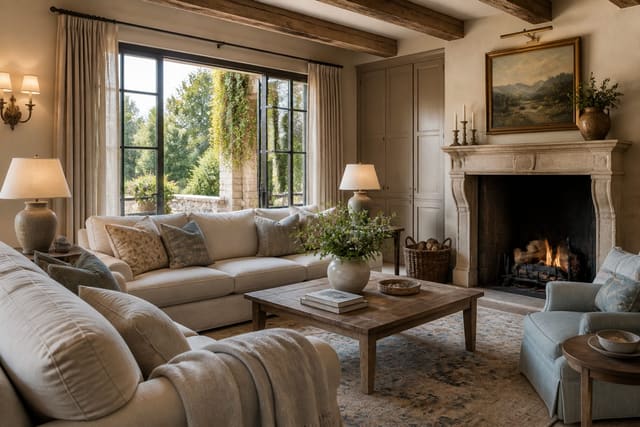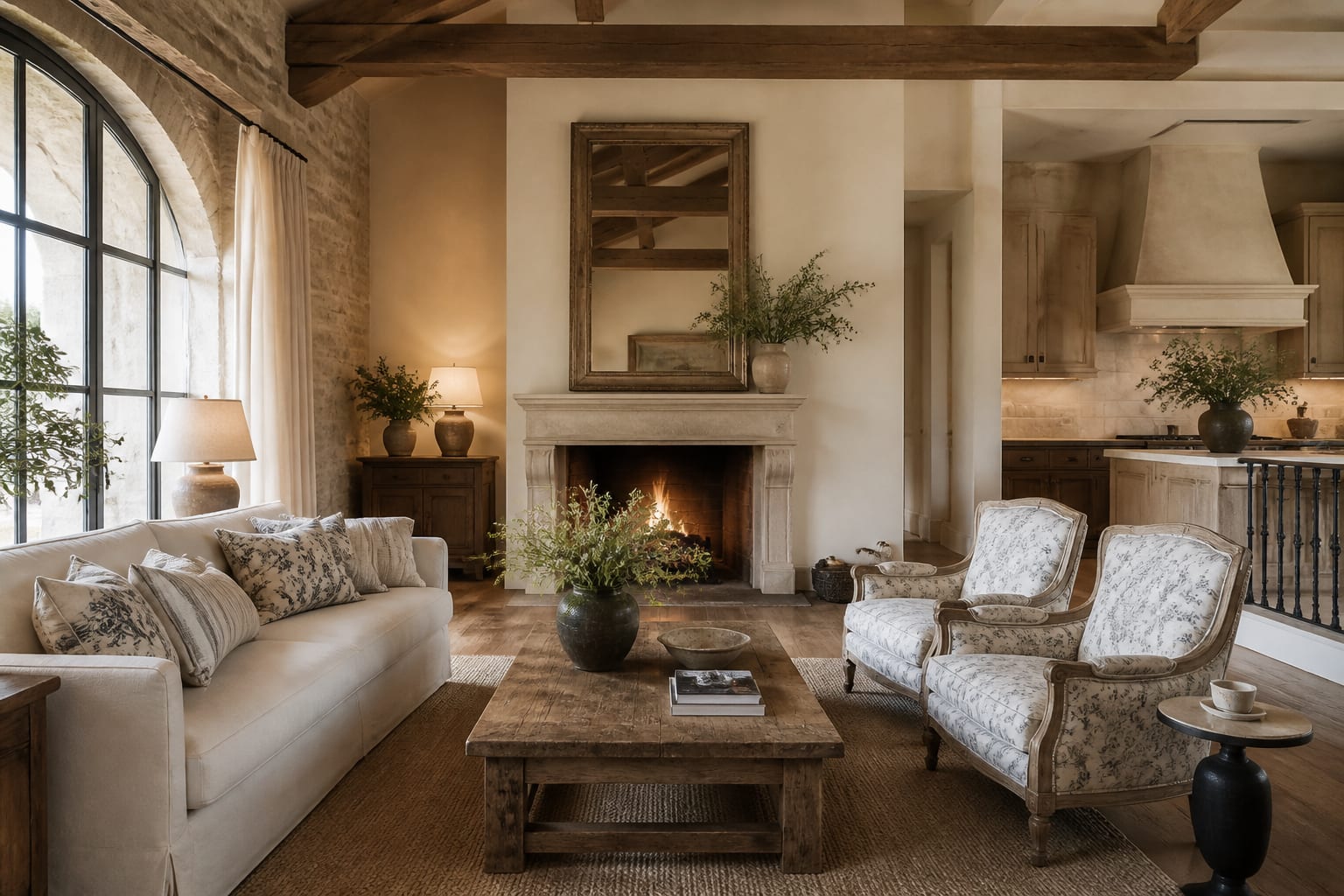
French country and farmhouse get lumped together far too often, yet they pull in genuinely different directions. Both celebrate rustic materials and unpretentious comfort, which is why people confuse them. The split shows up in refinement: French country carries a romantic, slightly formal grace from rural châteaux and Provençal homes, while farmhouse stays plainer, more utilitarian, and rooted in working American farms. One leans curved and ornamented, the other straight and practical. Understanding where they diverge helps you commit to a coherent room. This comparison breaks down the real differences so you can choose with confidence.
Shared Roots, Different Refinement
It helps to start with what these styles have in common before separating them. Both French country and farmhouse grew out of rural life, so each prizes natural materials, honest construction, and rooms that welcome daily use over precious display. You will find aged wood, linen, stone, and a collected-over-time sensibility in either one. The fork in the road is refinement. French country traces back to the countryside homes of France, where even modest farmhouses absorbed influence from grander châteaux, giving the style a romantic, slightly formal polish. Farmhouse, particularly the American version, stayed closer to pure utility, valuing function and simplicity above ornament. That single difference ripples through every decision that follows, from the shape of a chair leg to the pattern on a pillow. When you understand that French country reaches for gracious elegance while farmhouse reaches for plain comfort, the rest of the comparison clicks into place. Picking between them really comes down to how much romance and ornament you want softening the rustic foundation you both styles agree on, and how formal you want a fundamentally casual, lived-in room to ultimately feel.
See also our guide to French Country Color Palette for more on french country vs farmhouse.
Furniture and Silhouette Differences
Furniture reveals the divide most clearly the moment you look at silhouettes. French country leans into curves: cabriole legs, carved details, turned posts, bombe chests, and cane-back chairs all signal its romantic heritage. Pieces often wear painted finishes in chalky cream or pale blue, lightly distressed to suggest age, and an ornate armoire or a gilt mirror would feel right at home. Farmhouse furniture, by contrast, favors clean rectangular forms and sturdy practicality. Think a plain trestle table, square-legged chairs, simple shaker cabinetry, and pieces in raw or whitewashed wood that emphasize function over flourish. Where French country might add a scalloped edge or a curved apron, farmhouse keeps the line straight and the joinery visible. Both use reclaimed and aged wood, but French country dresses it up while farmhouse leaves it plain. Upholstery follows the same logic, with French country choosing curved, skirted, and tufted seating while farmhouse opts for boxy, slipcovered comfort. If you find yourself drawn to ornament and graceful curves, French country is calling. If you prefer honest, no-fuss forms, farmhouse will feel more like home to you.
For a related angle on french country vs farmhouse, read Redesign App VS Competitors.
Color, Pattern, and Texture
Color and pattern offer the quickest way to tell these styles apart from across a room. Farmhouse typically runs crisp and bright, built on clean whites, soft greys, and black accents, with the occasional pop from galvanized metal or a red enamel piece. Its patterns stay simple: buffalo check, ticking stripe, grain-sack lines, and plenty of plain weaves. French country goes warmer and more muted, layering creamy off-whites with faded sage, dusty blue, ochre, and lavender drawn from the Provençal landscape. Its signature patterns are softer and more decorative, with toile, faded florals, and damask appearing on cushions, curtains, and upholstery. Texture differs too: farmhouse leans on shiplap, galvanized steel, and rough-sawn wood, while French country favors limewashed plaster, gilt accents, and finely woven linen. Metals split along the same line, with farmhouse using matte black and galvanized finishes against French country's aged brass and pewter. Neither approach is busier than the other by default, but French country generally feels more romantic and layered while farmhouse feels cleaner and more graphic. Your instinct toward warm and ornamental versus crisp and simple points the way.
Pick based on these priorities: - Choose French country for romantic, gracious, ornamented rooms - Choose farmhouse for crisp, practical, low-fuss spaces - Choose French country when your home has formal bones
Mood and How to Choose
In the end, the choice comes down to the mood you want a room to hold. French country creates a romantic, gracious atmosphere, the sense of a sun-warmed home where elegance and comfort coexist and a little ornament feels welcome. Farmhouse creates a relaxed, practical mood, an easygoing space that feels honest, approachable, and built for everyday family life without fuss. Consider your home's architecture as well, since an older house with curved details or formal bones may carry French country naturally, while a simpler structure or a modern open plan often suits farmhouse better. Think about how you actually live too: if you love setting a pretty table and layering textiles, the romance of French country will reward you, whereas if you want durable, low-maintenance, kid-friendly comfort, farmhouse fits the bill. You can borrow gently across the line, perhaps softening a farmhouse room with one curved French piece, but committing to a primary direction keeps the result coherent. There is no wrong answer here, only the question of whether you want your rustic comfort delivered with a romantic accent or a plainspoken, practical one.
| Aspect | French Country | Farmhouse | | --- | --- | --- | | Overall mood | Romantic and gracious | Casual and practical | | Furniture silhouette | Curved and carved | Straight and sturdy | | Color palette | Warm muted Provençal tones | Crisp whites and greys | | Signature pattern | Toile and faded florals | Check and ticking stripe |
Bring the look home with Re-Design
Still torn between French country and farmhouse for your space? Upload a photo of your room to Re-Design and preview both directions side by side before you commit. You can test curved carved furniture and muted Provençal tones against crisp farmhouse whites and straight shaker lines, then see which mood actually suits your architecture and light without buying anything first.
Frequently Asked Questions
What is the main difference between French Country and Farmhouse?
French Country leans refined and romantic, blending rustic materials with ornate carving, curved silhouettes, and gilded accents inspired by rural France. Farmhouse, especially the American version, feels more pared-back and practical, favoring straight lines, shiplap, and utilitarian pieces. One whispers faded aristocratic elegance; the other celebrates honest, hardworking simplicity. Both share weathered wood and a love of comfort, but their finishing details diverge sharply.
How do I decide which style fits my home?
Consider your architecture and temperament first. If you love decorative molding, antique curves, and a touch of glamour, French Country rewards that instinct. If you prefer clean profiles, neutral palettes, and low-maintenance surfaces, Farmhouse will feel more natural. Older or ornate homes often suit the French approach, while open, casual floor plans pair well with Farmhouse. Choose the look you genuinely want to live with daily.
Can I blend French Country and Farmhouse together?
Yes, and many designers do exactly that. Keep the architectural backdrop simple with shiplap or plank walls, then introduce French elements like a carved armoire, a marble-topped console, or a crystal chandelier. Pair a rustic farmhouse table with curved cane-back chairs. Stick to one shared neutral palette so the mix reads cohesive. The trick is balancing rustic restraint against a few graceful, ornate flourishes.
Which style is better for a small budget?
Farmhouse is generally friendlier to a tight budget because its raw materials, painted finishes, and thrift-store finds suit the aesthetic by design. French Country can cost more once you add carved antiques, marble, and gilded accents, though patient flea-market hunting closes the gap. Start with paint and textiles in either style for the biggest impact. Save splurges for one standout statement piece per room.