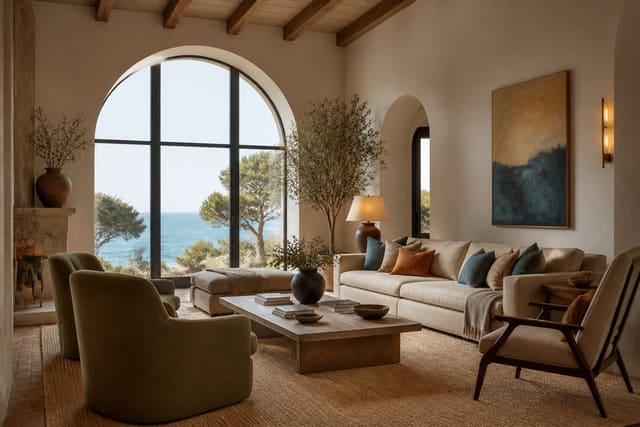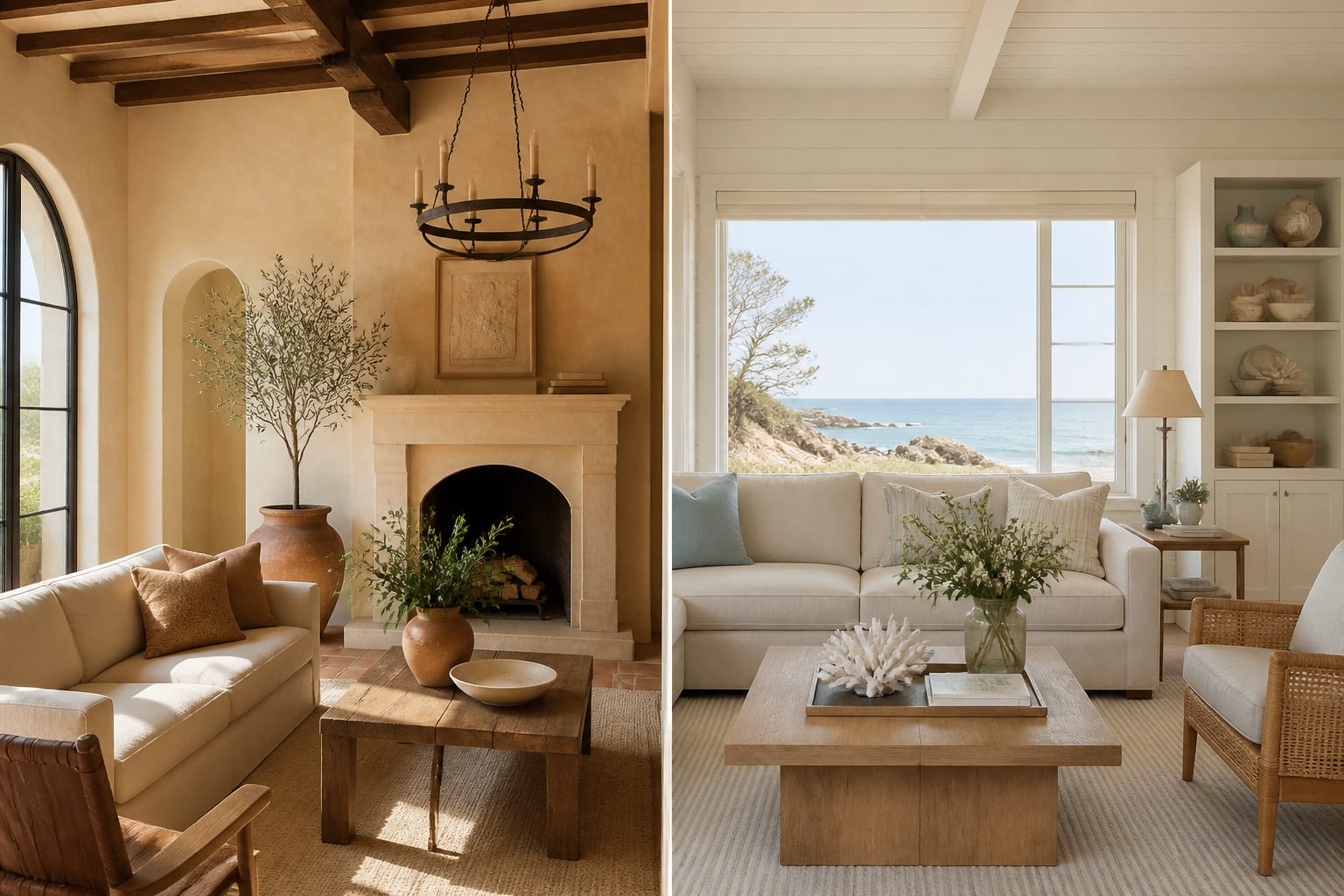
Mediterranean and coastal design get lumped together far too often, yet they create entirely different rooms. Both draw on life near the water and both favor natural materials, but one feels sunbaked and earthy while the other feels breezy and bright. Mediterranean leans into terracotta, plaster, and rich layered warmth pulled from southern Europe. Coastal leans into airy whites, blues, and the relaxed lightness of a beach house. Understanding where they diverge, in color, texture, and mood, makes it far easier to commit to the look that genuinely suits your home and the way you want a space to feel.
Where the Two Styles Come From
Both styles grow out of seaside living, but their roots sit on different shores and that origin shapes everything. Mediterranean design traces back to the warm coasts of Spain, Italy, Greece, and southern France, where thick plaster walls, terracotta roofs, and shaded courtyards evolved to handle intense sun and heat. The result is interiors built around mass, texture, and earthy color, rooms that feel cool, grounded, and rich with history. Coastal design, by contrast, descends largely from American and northern European beach houses, places like New England, the Hamptons, and the British seaside, where the priority was capturing light and ocean breeze. That heritage produced bright, open rooms dressed in white-painted wood, soft blues, and natural fibers meant to evoke sand and surf. So while both celebrate water and outdoor living, Mediterranean answers a hot, sun-drenched climate with sheltering warmth, and coastal answers a cooler, breezier shoreline with lightness and reflection. Recognizing these distinct origins helps explain why the two styles feel so different in practice, even when they share a love of the sea, and it points you toward the one that matches your own setting and instincts.
See also our guide to Mediterranean Color Palette for more on mediterranean vs coastal design.
Color and Materials Compared
The clearest divide between these styles shows up the moment you compare their palettes and surfaces. Mediterranean rooms run warm, built on creamy plaster, terracotta, ochre, olive green, and deep sea blue, with rich wood and wrought iron adding weight. The materials are heavy and tactile: rough stone, hand-thrown ceramic, lime-washed walls, and aged timber that all signal age and craft. Coastal rooms run cool and crisp, leaning on bright whites, sandy beiges, and a whole spectrum of blues from pale sky to deep navy, often punctuated by fresh greens. Its materials feel lighter, think white-painted shiplap, rattan, weathered driftwood, linen, and rope, chosen to bounce light around and keep everything feeling fresh. Where Mediterranean embraces matte, sunbaked finishes that look softly faded, coastal favors clean painted surfaces and breezy textiles. Patterns differ too: Mediterranean reaches for glazed tile and intricate Moorish motifs, while coastal sticks to simple stripes and organic textures. Put a terracotta pot beside a white rope-wrapped lamp and the contrast is immediate. These material choices are the fastest way to tell the styles apart and the easiest lever to pull when you commit to one direction.
For a related angle on mediterranean vs coastal design, read Desert Modern Interior Design.
Mood, Light, and Atmosphere
Beyond color and material, the two styles aim for genuinely different feelings, and that emotional target may matter most when you choose. Mediterranean interiors cultivate warmth, romance, and a sense of timeless permanence. Rooms feel layered, cozy, and slightly shaded, designed to offer cool refuge from a blazing sun, with glowing lanterns and candlelight extending that intimacy into the evening. There is a richness to the atmosphere, as though the space has been lived in and loved for generations. Coastal interiors chase the opposite sensation: lightness, ease, and breezy informality. The goal is to feel as though a sea wind could drift straight through, so rooms stay open, uncluttered, and flooded with reflected daylight. Sheer curtains, pale surfaces, and minimal layering keep everything feeling fresh and relaxed rather than rich and enveloping. One style wraps you in sunbaked comfort; the other lets you exhale in airy calm. Neither is better, but they serve different moods and even different climates, since Mediterranean depth suits hot, bright regions while coastal lightness suits cooler, gray-skied ones. Picture how you want to feel walking in each evening, and the right choice usually becomes obvious.
Pick based on these priorities: - Choose Mediterranean for warm, romantic, history-rich rooms - Choose Coastal for light, airy, vacation-like calm - Choose Mediterranean when strong sun and arches suit it
How to Choose Between Them
Deciding between the two comes down to honest questions about your home, your climate, and your temperament. Look first at your architecture and light: homes with arches, stucco, dark beams, or strong sun often wear Mediterranean style naturally, while bright, breezy rooms with simple lines lean coastal. Consider your climate too, since the sunbaked warmth of Mediterranean suits hot southern regions and the airy freshness of coastal flatters cooler, overcast shorelines. Then weigh the mood you crave at home; if you want rich, cozy, romantic rooms that feel grounded and full of history, Mediterranean delivers, but if you want light, calm, low-maintenance spaces that feel like a permanent vacation, coastal is your answer. Think practically about maintenance and palette preference as well, because some people simply gravitate toward earthy terracotta and others toward crisp blue and white. You can even borrow gently from both, grounding a light coastal base with a few warm Mediterranean textures for a transitional look. Ultimately the styles are not rivals so much as two answers to seaside living, and the better fit is whichever one matches the home you actually have and the life you want inside it.
| Aspect | Mediterranean | Coastal Design | | --- | --- | --- | | Overall mood | Warm, earthy, layered, and romantic | Light, airy, breezy, and relaxed | | Core palette | Terracotta, ochre, olive, deep sea blue | Crisp white, sandy beige, soft blues | | Signature materials | Plaster, stone, wrought iron, aged wood | Painted wood, rattan, driftwood, rope | | Best-suited climate | Hot, sun-drenched southern regions | Cooler, breezy, overcast shorelines |
Bring the look home with Re-Design
Torn between Mediterranean and coastal design for your home? Upload a photo of your room to Re-Design and preview both directions side by side, one warm with terracotta, plaster, and olive accents, the other breezy with white wood, soft blues, and natural fibers. Seeing each style mapped onto your actual space and light makes the difference obvious, so you can commit to the mood that truly fits your room instead of guessing from inspiration photos.
Frequently Asked Questions
What is the core difference between Mediterranean and coastal style?
Mediterranean leans warm and earthy, built around terracotta, plastered walls, dark wood, and wrought iron drawn from southern European villas. Coastal feels lighter and airier, favoring crisp whites, weathered driftwood, pale blues, and breezy linens inspired by beach houses. One evokes sun-baked countryside; the other captures open shoreline. Their textures, woods, and overall temperature set them apart most clearly.
Which style works better for a small space?
Coastal usually suits compact rooms better because its pale palette and reflective whites bounce light and create openness. Mediterranean's deeper earth tones and heavier wood can feel cozy but may shrink tight quarters. If you love the warmer look in a small room, lighten it with sand-toned walls and fewer dark pieces to keep things breathing comfortably.
Can I blend Mediterranean and coastal in one home?
Yes, and the two share enough DNA to mix gracefully. Anchor the room with coastal lightness through white walls and linen, then layer in Mediterranean warmth via terracotta pots, wrought-iron details, and an olive-toned rug. Keep blue as the shared thread that links both. The result reads relaxed and sunny without feeling like two clashing themes competing.
Which style fits my climate or location best?
Match the mood to your surroundings for the most natural fit. Coastal shines near beaches, lakes, or bright open settings where airy light feels honest. Mediterranean suits warmer inland homes, sunny patios, and spaces that crave cozy earthiness year-round. That said, either style can succeed anywhere; choose the one whose temperature and palette make you feel most at home.