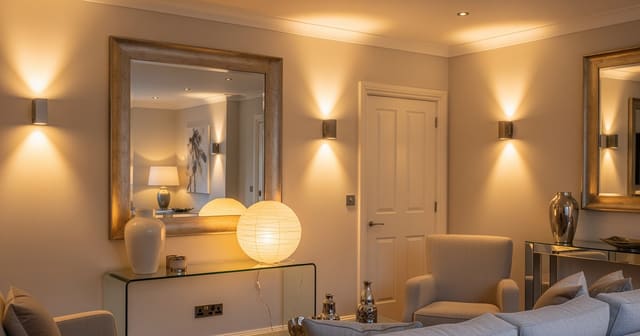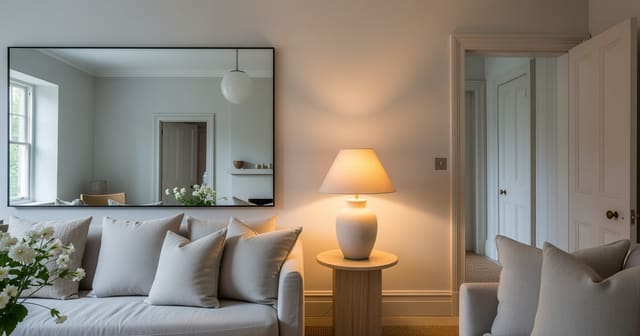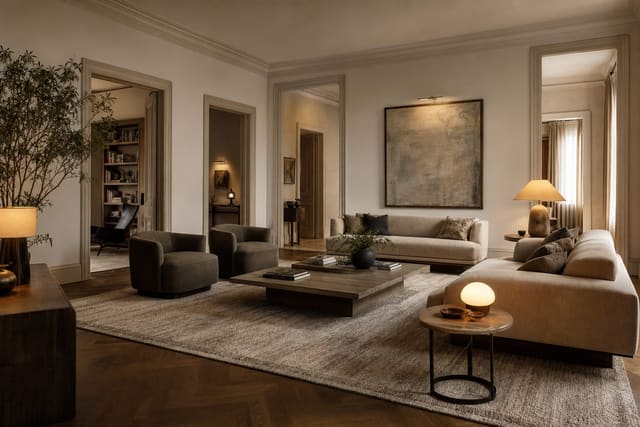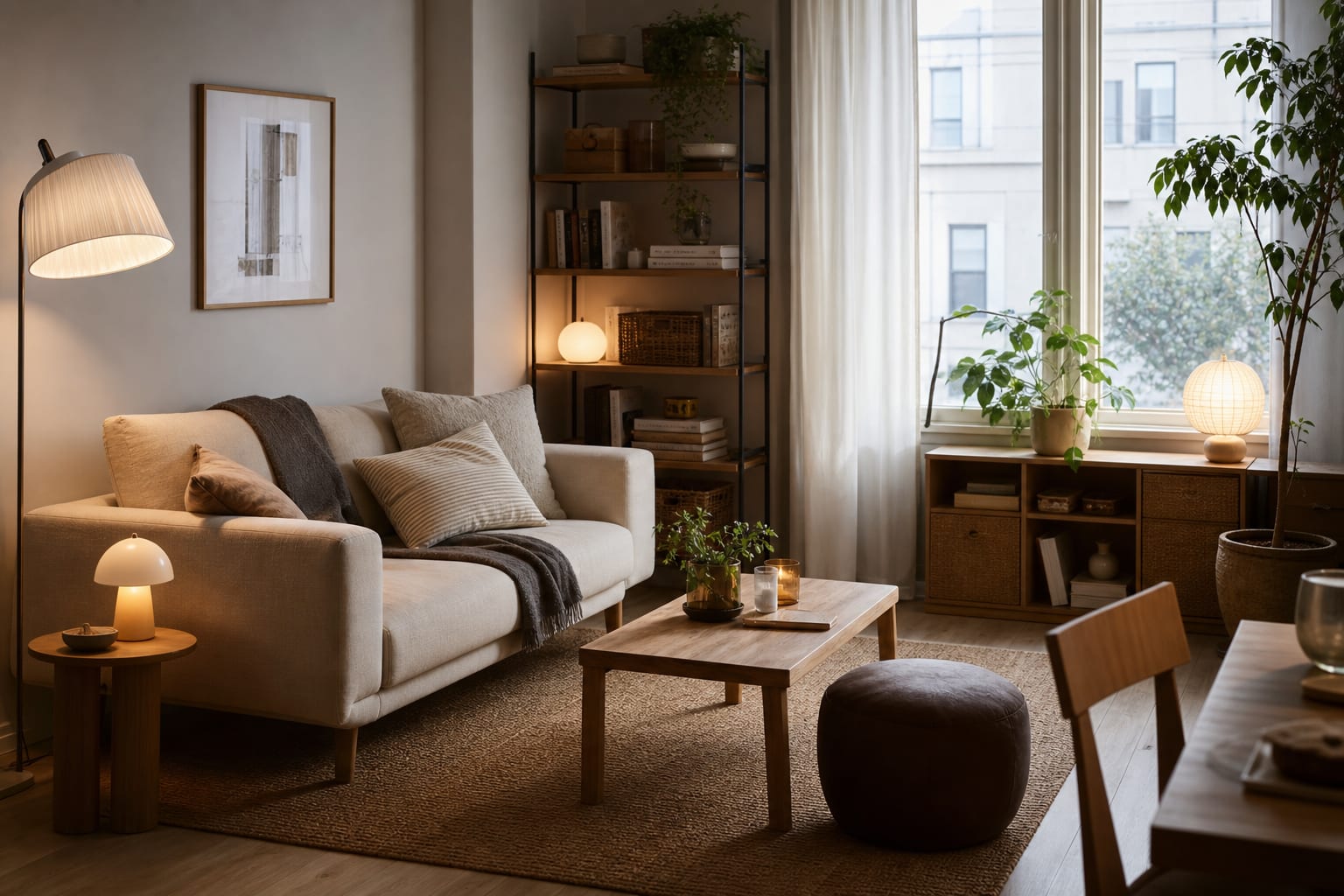
Furnish for short-term rentals over $200 per night, leave existing furniture in long-term mid-market rentals where the premium is under 10%, and rent unfurnished in any market where buyers and renters expect unfurnished by default. Furnishing a rental apartment is a market decision before it is a design decision; the wrong call costs $3,000-$15,000 in furniture that depreciates against rent that never moves. The three classifications below cover almost every realistic landlord scenario and dictate exactly how much to spend.
What furniture should you buy for a rental apartment?
The answer depends on which of three segments the unit lives in. A short-term rental over $200 per night needs a full furnished package: sofa, dining set, beds with mattresses and linens, kitchen for six, office corner, art, and lamps. Total spend lands at $8,000-$25,000, and the package pays back in 4-8 months at 60% nightly occupancy. Skip fake natural light any room techniques at your peril; STR listing photos win or lose on apparent daylight.
A long-term mid-market rental (12-month leases at market rent) earns a 5-15% furnished premium in some markets and 0% in others. A $1,800 unfurnished unit charging 10% more ($180 per month) takes 28-40 months to pay back $5,000-$7,000 of furniture before depreciation or turnover damage. In most cities the spend does not clear; long-term rentals should ship unfurnished where the market allows.
An unfurnished-default market (most US suburban rentals, most European long-term leases) treats included furniture as a liability. The landlord becomes responsible for repair, replacement, and disposal at turnover. Renters often refuse furnished listings because they own their own pieces. The right answer is almost always to leave the unit empty.
The decision matrix: which segment is the unit in?
Classify the unit before spending a dollar. The matrix below predicts which segment a rental falls into based on rent, lease length, and market expectation.
| Segment | Typical rent | Lease length | Furnished premium | Furniture lifespan | Best move |
|---|---|---|---|---|---|
| Short-term rental (STR) | $200-$600 per night | 1-30 nights | N/A; furnished is required | 18-36 months heavy use | Furnish fully; budget replacement |
| Long-term high-end (corporate, executive) | $4,000-$10,000 per month | 3-12 months | 15-30% over unfurnished | 3-5 years | Furnish to corporate standard |
| Long-term mid-market | $1,400-$3,000 per month | 12 months | 5-15% in some markets | 5-8 years | Leave unfurnished if market allows |
| Unfurnished-default (US suburban, most EU long-term) | Varies | 12 months | 0%; often a negative signal | N/A | Leave empty; renters bring their own |
| Transitional housing (insurance, relocation) | $3,500-$8,000 per month | 1-6 months | 20-40% over unfurnished | 3-5 years | Furnish to mid-corporate standard |
The most expensive misclassification is treating a long-term mid-market unit like an STR. The owner buys $10,000 of furniture, charges a $150 per month premium, and writes off $4,000 over four years. The same $10,000 in an STR pays back in months. The second most expensive misclassification is treating an unfurnished-default market like a furnishable one; renters in those markets actively filter out furnished listings.
Preview a furnished vs empty rental on your photo before you order or remove anything.
What to actually buy for each segment
Furniture spend scales with expected lifespan and use intensity. STR pieces are bought to survive 18-36 months of heavy guest use; long-term mid-market pieces are bought to survive 5-8 years on one tenant. Buying the wrong durability class is the second-most-common rental-furnishing mistake.
Use this per-bedroom spend menu by segment, and use mirrors amplify light techniques where the window glass is limited:
- STR over $200 per night: $3,000-$5,000 per bedroom for a queen bed with quality mattress, blackout curtains, nightstand with USB-A and USB-C charging, two 2700K reading lamps, and art that photographs well; plus $3,000-$8,000 for living and kitchen.
- Long-term mid-market furnished (only when premium clears 10%): $1,800-$3,500 per bedroom for a mid-density sofa, flat-weave rug, 30 in. round dining table, blackout curtains, and a working office corner. Skip art; long-term tenants add their own.
- Transitional or corporate: $2,500-$4,500 per bedroom for a unit that needs to feel finished day one without STR-level wear.
- Soft-goods refresh between tenants: $200-$400 per turnover; replace mattresses every 4-6 years and sofas every 5-7 years.
Common rental-furnishing mistakes to avoid
The most expensive mistake is buying decorative pieces that read on a listing photo but break in use. A glass-top coffee table, a cream velvet sofa, a delicate ceramic lamp; each looks great in marketing photos and fails within 6 months of guest use. STR furniture should be specified as if it must survive a hotel housekeeping crew.
The second mistake is skipping personal-property insurance. Standard landlord policies cover the building, not contents. Add a furniture-and-contents rider for the full replacement value ($8,000-$25,000 STR, $5,000-$10,000 long-term). Premium runs 0.5-1% of insured value per year and is fully deductible.
The third mistake is mishandling depreciation. Furniture in a US rental is a 5-7 year capital asset, not a current-year deduction. The schedule changes the effective cost by 15-25% over the asset's life; ask the CPA before treating a $12,000 furniture purchase as a single-year expense.
The fourth mistake is leaving an existing tenant's furniture for the next tenant. Inherited pieces create liability for damage, sanitation, and disposal. Buy and own the furniture, or clear the unit completely before the next listing. Rooms with too many doorways compound the issue because the furniture cannot stay out of every traffic path.
The fifth mistake is photographing the listing before lighting and soft goods are right. A furnished unit shot in cool ceiling light reads worse than an empty unit in warm afternoon sun. Replace every bulb with 2700-3000K LEDs, open every blackout curtain, and shoot in the brightest 2-hour window of the day.
Use AI design to preview a furnished vs empty rental
Landlords routinely over-furnish because empty rooms photograph poorly. Upload one photo of the empty unit from the entry doorway, then test three versions from the same camera angle: empty (the unfurnished listing), mid-market furnished (the long-term play), and full STR-grade furnished (the short-term play).
Be specific. Ask for a 78 in. sectional in performance fabric, a 30 in. round dining table, blackout curtains, a 4 ft by 6 ft flat-weave rug, and a wall-mounted TV at 60 in. for the long-term version. Ask for the same room with a queen platform bed, art at 60 in., and styled coffee table for the STR version. If the STR preview reads crowded, the room is too small for STR conversion. If the empty preview already reads warm and bright, leave it empty.
Frequently Asked Questions
Does furnishing a rental increase rent enough to pay back the spend?
In short-term rentals over $200 per night, yes; the spend pays back in 4-8 months at 60% occupancy. In long-term mid-market rentals, usually no; a 10% furnished premium takes 28-40 months to pay back $5,000-$7,000 in furniture before depreciation and turnover damage. In unfurnished-default markets, the spend never pays back because the included furniture lowers perceived value.
What is the best furniture for a rental?
Durability-first commercial-grade pieces with replaceable covers, performance fabrics, and metal or solid-wood frames. Specific picks: a 78-90 in. sectional in synthetic performance fabric, a queen or king platform bed in solid wood, a 60-72 in. dining table in laminate or sealed solid wood, and lamps with corded UL-rated fixtures. Avoid glass tops, velvet, cream cushions, and any piece with non-replaceable upholstery.
How is rental furniture treated for tax?
Furniture in a US rental property is a 5-year MACRS depreciable asset, not a single-year expense. The depreciation schedule recovers the cost over 5 years (about 20% per year on a straight-line basis with some convention adjustments). Soft goods (linens, towels, small decor) under $200 per item can usually be expensed in the year of purchase under the safe-harbor rules. Confirm with the local CPA before filing.
Do I need separate insurance for a furnished rental?
Yes. Standard landlord policies cover the building only. Add a furniture-and-contents rider for the full replacement value of the furnished package; STR coverage usually requires a commercial short-term-rental policy rather than a standard landlord policy. Annual premium for a furniture rider runs 0.5-1% of insured value; STR commercial policies run 20-50% higher than standard landlord premiums.
Should I leave the existing tenant's furniture for the next tenant?
No. Inherited furniture creates liability for damage, sanitation, and eventual disposal. Either remove all of it before the next listing or buy and own the furniture yourself as the landlord. The middle path of leaving furniture in place creates the worst of both situations: the landlord is liable for pieces that nobody verified the condition of, and the next tenant will assume any damage was already there.
How long does rental furniture actually last?
In a short-term rental at 60% occupancy, expect 18-36 months on soft pieces (sofas, mattresses, throw pillows), 36-60 months on case goods (beds, dressers, dining tables), and 12-18 months on textiles (linens, towels, throws). In a long-term rental, double those numbers. Plan the budget around replacement, not purchase; the lifecycle cost of an STR package is roughly 1.5-2x the initial purchase cost over a 5-year horizon.