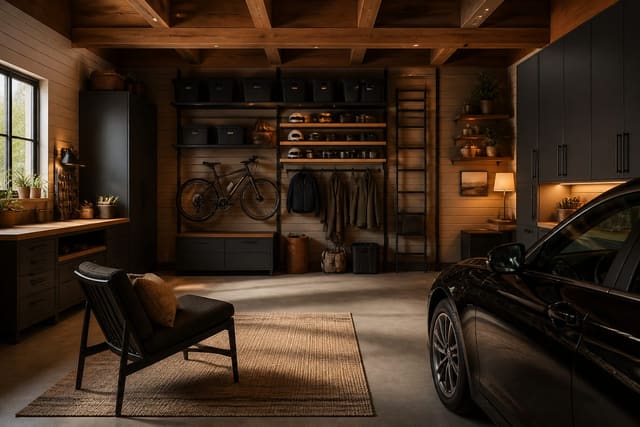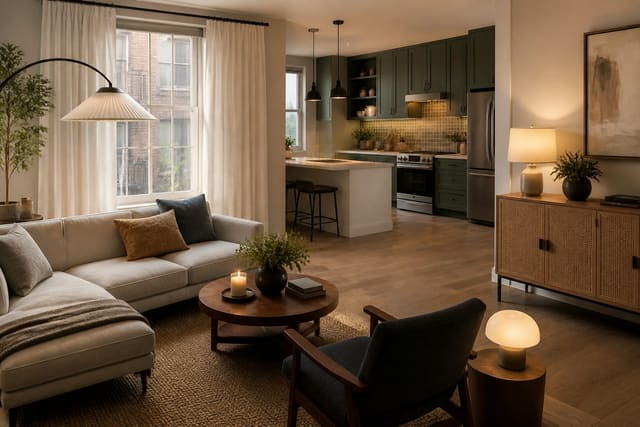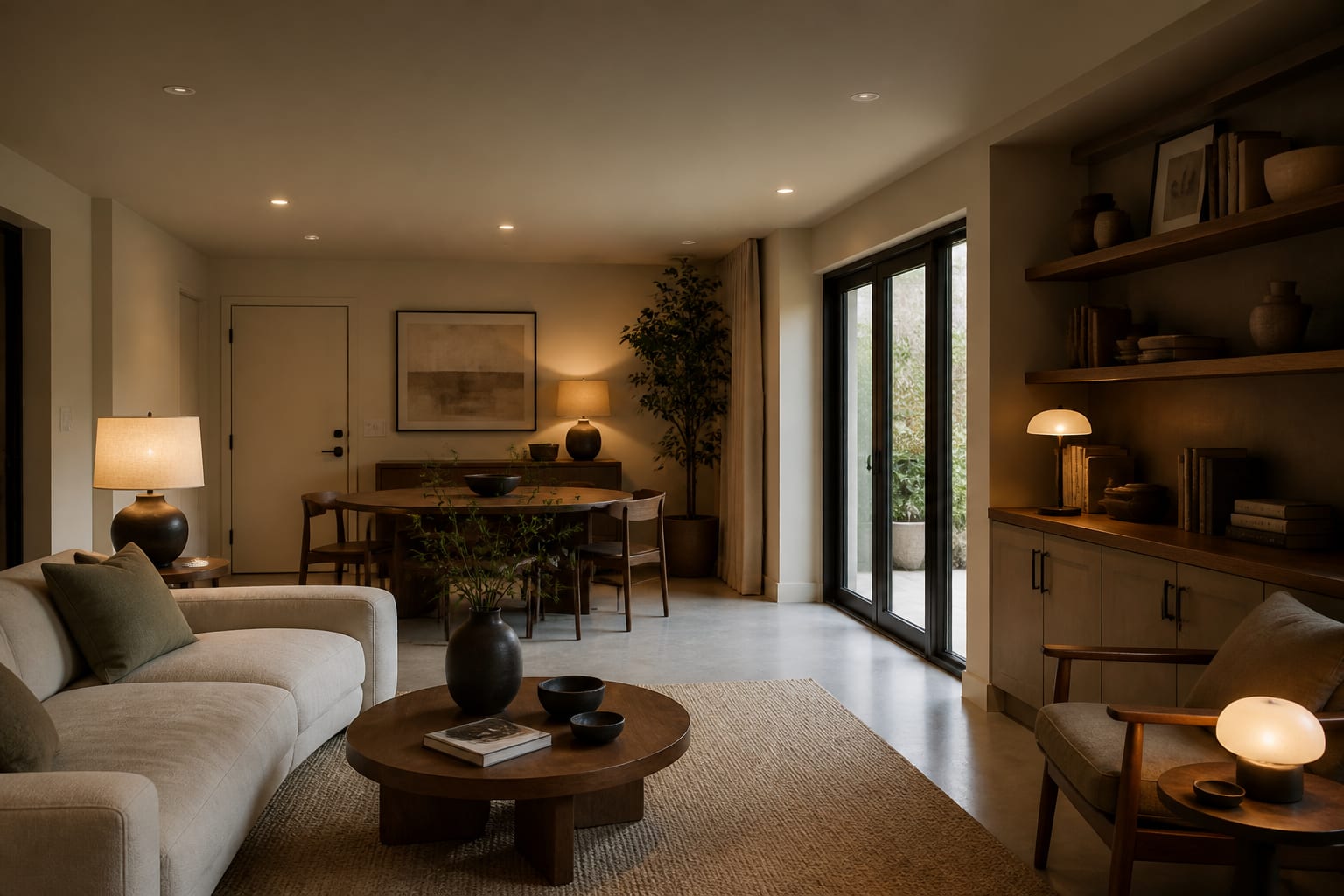
The mistake most homeowners make with a garage conversion is treating it like a finished room when it is really a building-envelope project. A garage was engineered to shelter a car, not a person: the slab slopes toward the door, the studs are rarely insulated, and there is almost no subfloor. The better move is to spend on the envelope first—floor, insulation, heat, and egress—and decorate second. Get that order right and a one-car garage of roughly 240 square feet becomes the cheapest finished square footage you will ever add to your house.
What a garage conversion actually involves
Start with the slab. A garage floor pitches about 1/4 inch per foot toward the door so water drains out, which means a flat finished floor needs a tapered sleeper system or a self-leveling pour before any flooring goes down. That same assembly is where you add a vapor barrier and 1 to 2 inches of rigid foam, because a bare slab will read cold under your feet ten months of the year. Builders typically raise the finished floor 4 to 6 inches in the process, so confirm your ceiling still clears the 7-foot minimum afterward.
Walls and ceiling come next. Garage stud bays are usually empty, so you are insulating to roughly R-13 in the walls and R-30 overhead to bring the room up to the comfort of the rest of the house. Heating and cooling is the line item people forget: a ductless mini-split sized around 12,000 BTU handles a single bay for $3,500 to $5,000 installed and avoids overloading a furnace that was never sized for the extra load. If the conversion will be a sleeping room or a rentable unit, code adds an egress window with a clear opening of at least 5.7 square feet so someone can climb out in a fire.
The last envelope decision is the door itself. You can frame and side over the opening for a seamless wall, or keep the header and install a large fixed window so the room reads intentional rather than like a filled-in garage. The second approach costs more up front but protects resale value, since a buyer who wants parking can convert it back. Either way, plan the wall infill around an exterior outlet and a hose bib, because plumbing and electrical that already terminate at the garage wall are cheaper to extend than to relocate. A licensed electrician should also confirm the existing subpanel can carry a mini-split, lighting, and a kitchenette circuit before you close the walls; a typical conversion adds 30 to 40 amps of load.
Garage conversion ideas worth the permit
Once the envelope is sound, the program is wide open. The strongest conversions match the room to something your floor plan is missing rather than copying a trend:
- A studio ADU with a kitchenette and 3/4 bath, which in many metros rents for $1,200 to $2,000 a month and pays back the build in three to five years.
- A dedicated home office set 20-plus feet from the house's main traffic, the quietest work-from-home setup most properties can offer.
- A guest suite with a Murphy bed that folds flat so the 240 square feet doubles as a hobby room the other 50 weeks of the year.
- A home gym, where the slab is actually an advantage because rubber tile and heavy racks want a ground-level floor.
- A media or game room that benefits from the garage's single exterior wall and easy blackout.
- A teen or in-law suite that keeps a multi-generation household under one roof without a full addition.
If the bay still has to pull double duty, borrow tactics from a smart garage organization plan so tools and seasonal bins tuck into 12 inches of wall depth instead of eating the new floor. People converting only half of a deep two-car bay often pair the living half with a compact garage workshop on the other side, separated by a partition wall.
Common mistakes to avoid
The most expensive mistake is skipping the permit. An unpermitted conversion does not count toward your home's legal square footage at appraisal, can void insurance after a claim, and often has to be torn back to studs before a sale closes. Pull the permit even when it adds 60 to 90 days.
A second common mistake is under-sizing comfort. A single space heater cannot fight an uninsulated slab and 9-foot exterior wall, so the room sits unused half the year. Size the heating and the insulation together. The third anti-pattern is leaving the floor at slab level to save money; the cold and the slope are exactly what make a converted garage feel like a garage. The fourth is removing the door without a structural plan—that header carries load, and cutting it without an engineer's sign-off invites a sag.
See it first in Re-Design
The hardest part of a garage conversion is picturing a finished room where a car used to sit. Before you commit $20,000 to drywall and flooring, upload a phone photo of the bare garage to Re-Design and preview it as a studio, an office, or a guest suite. You can test a warm 2700K lighting scheme against a cooler 4000K one, swap flooring from polished concrete to engineered wood, and see whether keeping a window in the old door opening reads better than a solid wall—all before a single contractor quote. For a rentable unit, the rental-friendly design previews help you choose finishes that photograph well for a listing.
Frequently Asked Questions
Can I convert my garage into a living space? Yes, you can convert your garage into a living space, and in most areas it is one of the most cost-effective ways to add a room. You will need a permit, insulation to roughly R-13 walls and R-30 ceiling, a heat source, an egress window for any sleeping use, and a finished ceiling of at least 7 feet. Plan for $10,000 to $50,000 depending on plumbing and HVAC.
Do I need a permit to convert a garage? Almost always. Converting a garage changes its legal use, so building, electrical, and sometimes plumbing permits apply. Unpermitted work does not count as livable square footage and creates problems at resale.
Will a garage conversion hurt my home value? It depends on your market. In neighborhoods where buyers expect a garage, losing covered parking can offset the added space, so keeping the door header for a future reversal protects you. In dense metros where extra living space or rental income matters more than parking, a permitted conversion usually adds value.