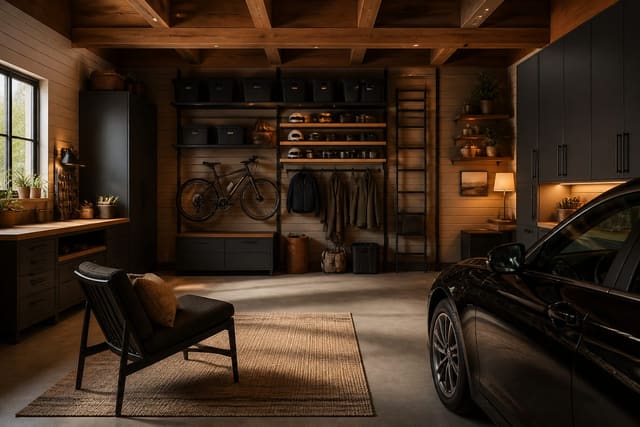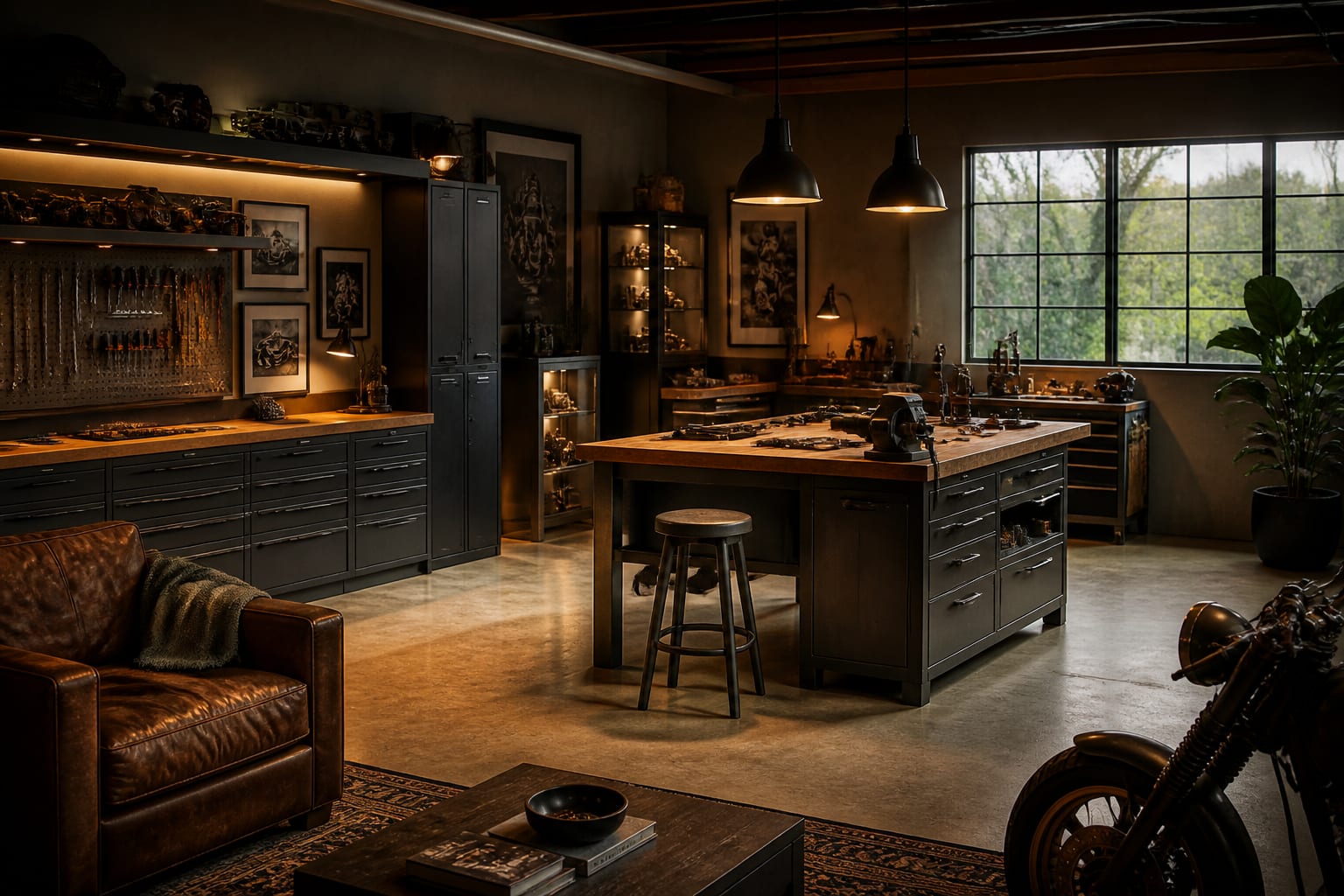
A workshop is not a storage problem dressed up with a workbench. It is a place where you stand for hours, run power tools, and need light precise enough to see a pencil line. The mistake people make is building the bench first and worrying about lighting, outlets, and dust later, which is backward. Comfort and safety come from the boring infrastructure: the right bench height for your body, enough lux to see by, and circuits that will not trip when the table saw spins up. Nail those and the shop becomes a place you actually want to spend a Saturday in.
Build the bench around your body
Everything in a shop orbits the main workbench, so size it for the person using it rather than copying a stock height. Stand with your arms relaxed and measure from the floor to your wrist; that landing point, usually somewhere between 34 and 38 inches, is your ideal bench surface. A surface too low wrecks your back over a long session, while one too tall robs you of leverage. For a general-purpose bench, plan a top 24 to 30 inches deep and at least 5 feet wide, built from a 1.5-inch hardwood or doubled MDF top that shrugs off clamps and mallet blows.
Anchor the bench somewhere it will not creep, ideally against a wall but with access to a corner for clamping long stock. A front vise and a row of bench dogs turn a flat top into a clamping system that holds work steady. Add a lower shelf for clamps and jigs so the floor stays open. If the same bay also handles cars or sports gear, the storage discipline in our garage organization ideas guide keeps the work zone from drowning in unrelated clutter.
Light and power the work, not the room
General garage lighting is built for finding a rake, not for reading a marking gauge, and that gap causes more bad cuts than dull blades do. A working shop wants 750 to 1000 lux at the bench surface, several times the level of a typical living room. Reach it with 5000K daylight LED shop fixtures overhead, then add a focused task light directly over the bench and the drill press so no shadow falls across the cut line. Cool color temperature keeps tired eyes sharp through a long build in a way warm bulbs cannot.
Power deserves the same seriousness. A single 15-amp circuit shared with the house lights will trip the moment a saw and a vac run together, so wire the shop on its own dedicated 20-amp circuits and run a 240-volt line if you own a cabinet saw, welder, or large dust collector. Spread receptacles generously, and route an extension-free supply to the bench. The essentials read like a short list:
- Outlets every 4 feet along the bench wall, mounted at 42 to 44 inches so cords clear the work surface.
- At least two dedicated 20-amp circuits so tools and dust collection run at once.
- A 240-volt outlet sized for your heaviest machine if you run one.
- A ceiling drop or retractable reel above the bench for tools used in the middle of the floor.
- A clearly marked main switch so the whole shop powers down at the end of the day.
Tame dust, noise, and temperature
A shop that chokes you or freezes you is one you stop using, so the environment matters as much as the gear. Wood dust is the quiet hazard, fine enough to hang in the air for hours, so connect each tool to a 2-inch dust port feeding a shop vac or a dedicated collector, and hang a ceiling-mounted air filter rated for the room's volume to catch what escapes. A garage that swings from 40 degrees in winter to 95 in summer benefits from a mini-split or a simple insulated door, which also quiets the bay for the neighbors.
Noise and comfort round out the picture. An anti-fatigue mat at the bench saves your knees and back over a long session, and ear protection rated around 25 decibels of reduction belongs on a hook by the door. Budget realistically: a functional one-car shop with bench, lighting, basic power upgrades, and dust control runs $1,500 to $5,000 depending on how much wiring you hire out. That spend pays back every time the space is genuinely usable instead of a cold concrete box. If the long-term plan is to claim the room entirely, our garage conversion ideas guide weighs that tradeoff.
Common mistakes to avoid
Home shops tend to fail on the same fronts, almost all of them infrastructure rather than tools. Watch for these:
- Building a bench at a generic 36 inches without checking it against your own elbow height first.
- Lighting the shop to general-room levels and squinting at cut lines in 200 lux of shadow.
- Running every tool off one shared circuit, then fighting tripped breakers all afternoon.
- Ignoring dust until the whole bay is coated and the fine particles are already in your lungs.
- Crowding stationary machines so tightly there is no safe 3-foot radius to feed long stock.
- Storing gas cans, finishes, and rags loose instead of in a rated flammables cabinet.
The flammables point is the one that turns a hobby into a hazard. Solvent-soaked rags can self-ignite, so seal them in a metal can and keep gasoline and finishes in a rated cabinet, never beside a water heater or furnace pilot. The same wall-storage thinking that organizes a cluttered bay, covered in our rental-friendly room design guide for renters who cannot drill freely, helps you keep tools off the bench and within reach.
See it first in Re-Design
Laying out a shop on paper rarely shows whether the bench, the saw, and the walking path actually coexist. Upload a photo of your garage to Re-Design and preview workbench placement, overhead lighting, and wall storage on your real walls, so you can see how a 5-foot bench fits beside the door and where the task lights need to land. You can compare a bright daylight-lit scheme against a warmer one, judge whether a stationary saw leaves its safe clearance, and lock in the layout before you cut lumber for the bench or hire an electrician.
Frequently Asked Questions
What is the right workbench height for a garage shop?
There is no universal number; size it to your body. Stand with relaxed arms and measure floor to wrist, which usually lands between 34 and 38 inches, and set the bench top there. A surface too low strains your back over a long session, and one too high steals your leverage. Make the top 24 to 30 inches deep and at least 5 feet wide.
How bright should a workshop be?
Aim for 750 to 1000 lux at the bench, several times brighter than a living room. Use 5000K daylight LED fixtures overhead plus a dedicated task light at the bench and any stationary machine, positioned so no shadow crosses the cut line. The cool color keeps your eyes sharp through a long build better than warm household bulbs.
What electrical setup does a home shop need?
Wire the shop on dedicated 20-amp circuits rather than sharing the house lighting, with outlets every 4 feet at bench height. Add a 240-volt line if you run a cabinet saw, welder, or large dust collector. Running two or more tools at once on a single 15-amp circuit will trip breakers constantly, so plan the power before the tools.
How do I control dust in a garage workshop?
Connect each tool to a 2-inch dust port feeding a shop vac or a dedicated collector, and hang a ceiling air filter sized to the room to catch the fine particles that escape. Wood dust stays airborne for hours and is a real lung hazard, so handle collection at the source from day one rather than sweeping up afterward.