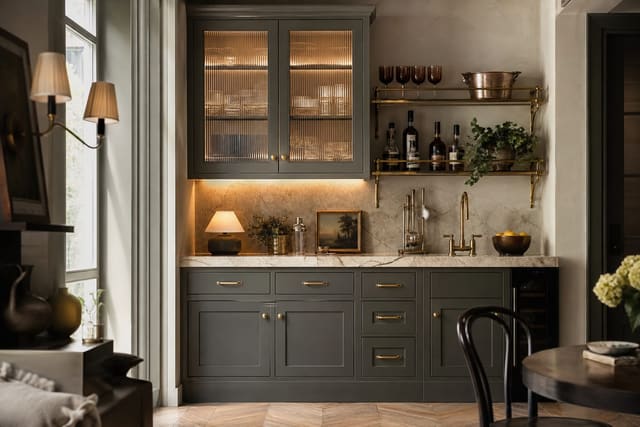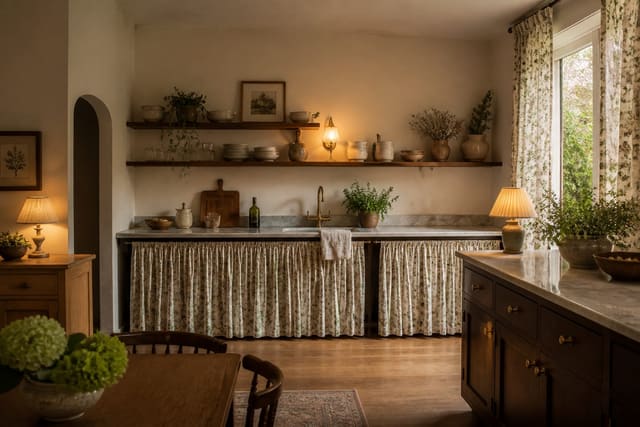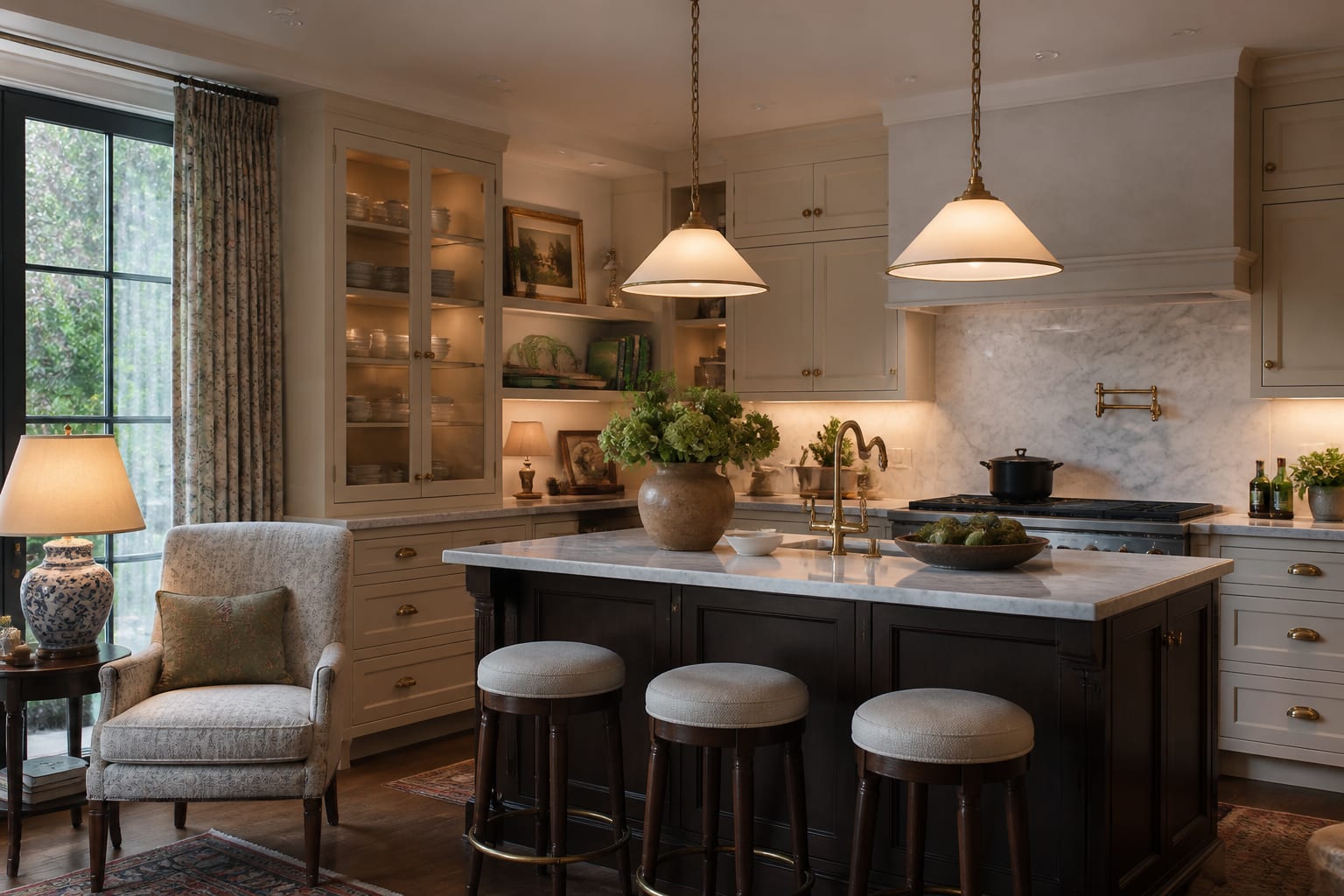
Minimalism told a generation that pattern and sentiment were clutter, and the grandmillennial kitchen is the cheerful rebuttal. Far from a nostalgia costume, grandmillennial kitchen ideas revive chintz, scalloped edges, and grandma's china with enough restraint to feel intentional rather than dated. This style celebrates the heirloom, the handmade, and the unapologetically pretty. The trick is balance: lean too hard and the room becomes a museum, hold back too much and you lose the charm. Done right, it produces a kitchen that feels deeply personal and genuinely warm.
Bring Pattern Back to the Kitchen
Grandmillennial style rejects the idea that a kitchen should be a blank box. Pattern is the heart of the look, whether it arrives through a chintz Roman shade, a block-print wallpaper above the wainscot, or a checkerboard floor that nods to old farmhouse kitchens. These prints bring the warmth that flat painted surfaces simply cannot.
The discipline lies in choosing a coherent palette so the patterns converse instead of clash. Pick two or three colors that repeat across the shade, the wallpaper, and the textiles, and the room reads as composed rather than chaotic. A florals-and-stripes mix works when they share a common hue.
Scale gives you another lever for keeping things lively but legible. Combine a large botanical print with a tiny gingham and a medium ticking stripe, and the eye moves comfortably between them. This layering of pattern at different scales is exactly what makes a grandmillennial kitchen feel collected over years rather than ordered from a single catalog.
For anyone nervous about commitment, start with the most reversible surfaces. A fabric Roman shade, a removable wallpaper above the chair rail, or a patterned runner introduce print without the permanence of tile or paint, so you can test how much pattern your eye actually enjoys living with. If the room feels good, layer in something more lasting later. Beginning soft and building toward bolder choices is the surest way to land on a level of pattern that reads joyful rather than overwhelming in your particular kitchen.
See also our guide to Kitchen Home Bar Design for more on grandmillennial kitchen ideas.
Display Your China and Collected Treasures
In a grandmillennial kitchen, storage doubles as decoration. Glass-front cabinets, open plate racks, and a freestanding hutch let you show off the patterned china, colored glassware, and transferware that minimalism would have hidden away. The point is to celebrate the collection rather than apologize for it.
Grouping objects thoughtfully keeps the display charming instead of cluttered. Stack matching plates, cluster glassware by color, and let a few standout pieces, like a floral tureen or a piece of brown-and-white transferware, anchor each shelf. The eye needs both repetition and a focal point to find the arrangement satisfying rather than busy.
Heirlooms make the room personal in a way no store-bought scheme can replicate. A grandmother's mixing bowls on open shelving, an inherited tea set behind glass, or a wall of vintage botanical prints tells a story that feels earned. Mixing these sentimental pieces with a few new finds keeps the kitchen from becoming a time capsule.
Function should still guide what lands within easy reach. Keep the everyday plates and glasses on the most accessible shelves and save the fragile or purely decorative pieces for the upper display, so the beautiful arrangement does not turn into a daily inconvenience. The best grandmillennial kitchens look gathered yet remain genuinely usable. That blend of old and new, treasured and freshly bought, displayed with a practical eye, is what gives a grandmillennial kitchen its lived-in, deeply welcoming character rather than the feel of a roped-off museum room.
For a related angle on grandmillennial kitchen ideas, read Cottagecore Kitchen Ideas.
Add Soft, Handmade Architectural Details
The architecture of a grandmillennial kitchen leans into softness and craft. Scalloped edges show up on open shelving trim, range hoods, and valances, lending a handmade sweetness that hard modern lines never deliver. A fluted island base or beadboard cabinet fronts add the same gentle texture.
Fabric is a defining and often overlooked tool here. A skirted sink in a pretty ticking stripe hides plumbing while introducing softness at the perfect height, and a ruffled cafe curtain dresses a window with a touch of unmistakable nostalgia. These textile moments separate the look from a purely hard-finished kitchen and make it feel cozier.
Millwork ties the soft details to solid bones. Plate rails, picture-frame wainscot, and a furniture-style hutch give the room the structure that keeps all that pattern and ruffle from floating. Painting the trim a saturated color rather than plain white deepens the effect and feels distinctly grandmillennial.
Details at the smallest scale carry surprising weight in this style. Cup pulls and bin latches in aged brass, a fluted glass cabinet insert, or a length of grosgrain trim along a shade edge each add a note of craft that mass-produced kitchens skip entirely. Sourcing a few of these from salvage yards or vintage shops deepens the sense of a room assembled over time. When the soft furnishings sit against this confident, well-detailed framework, the kitchen feels both charming and properly designed rather than merely decorated with frills.
Ground the Charm So It Reads Intentional
The risk with this style is tipping from charming into chaotic, so a grounded foundation is essential. Anchoring the room with a confident wall color, a substantial island, or a generous run of cabinetry gives the eye somewhere to rest between all the pattern and collected objects.
Editing is the unglamorous skill that makes the whole look succeed. Even a maximalist kitchen needs negative space, so resist filling every shelf and counter to the brim. Curate the displays, rotate seasonal pieces in and out, and let a few surfaces stay clear so the treasures you do show actually get noticed and appreciated.
Finally, let modern function quietly support the nostalgic surface. Contemporary appliances, good task lighting, and practical work zones can hide behind the charming finishes without breaking the spell. Antique brass hardware and vintage-look fixtures keep the period feel, while a well-planned layout makes the kitchen genuinely usable.
Color discipline holds the whole composition together once the function is sorted. Pull your saturated trim color, your pattern hues, and your accent pieces from a single coherent family so the eye reads richness instead of randomness. A room can hold a great deal of pattern and still feel calm when every print shares a common thread of color. That marriage of sentimental style and real-world function is what lifts a grandmillennial kitchen from a pretty set piece into a room a family actually loves to cook and gather in.
- Layer a large botanical print with tiny gingham and a ticking stripe sharing one common hue
- Display patterned china behind glass-front cabinets and cluster colored glassware by shade for charm
- Add a skirted sink in ticking stripe to hide plumbing and soften the room
- Trim open shelving and the range hood with scalloped edges for handmade, nostalgic sweetness
- Paint picture-frame wainscot a saturated color rather than plain white for grandmillennial depth
- Show a grandmother's mixing bowls on open shelves to make the kitchen feel personal
- Hang a ruffled cafe curtain to dress the window with unmistakable vintage softness
- Anchor the pattern with a substantial island so the collected pieces never read as clutter
Bring the look home with Re-Design
Grandmillennial pattern is easy to love and easy to overdo, so previewing helps. With Re-Design you upload a photo of your kitchen and try chintz shades, scalloped trim, a skirted sink, or a saturated wainscot rendered onto your real cabinets and walls. Seeing how the prints and colors balance in your actual room lets you commit to the charming pieces and skip the ones that would push the space into clutter.
Frequently Asked Questions
What exactly is a grandmillennial kitchen?
It is a kitchen that revives traditional decorating elements your grandmother loved, like chintz, scalloped trim, skirted sinks, and displayed china, but edits them with a modern hand. The result feels cozy, collected, and personal rather than dated, blending heirloom charm with current-day function and restraint.
How do I keep a grandmillennial kitchen from looking cluttered?
Anchor the room with a confident wall color and substantial cabinetry, then edit ruthlessly. Choose a coherent two or three color palette, group displays thoughtfully, and leave some surfaces clear. Negative space lets your patterns and treasured pieces stand out instead of competing for attention.
Is grandmillennial style expensive to achieve?
Not necessarily. Much of the charm comes from inherited china, thrifted glassware, and vintage prints you already own or can find affordably. Pattern through wallpaper, fabric shades, and paint costs far less than a full renovation, making the style surprisingly accessible for most budgets.