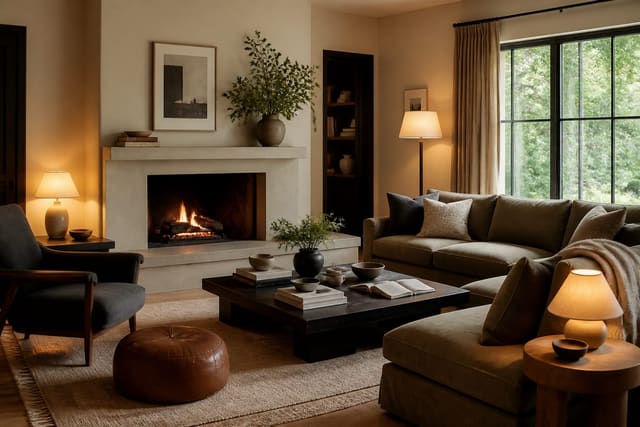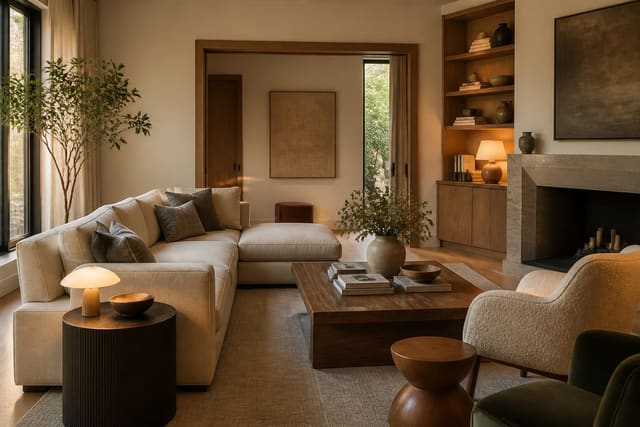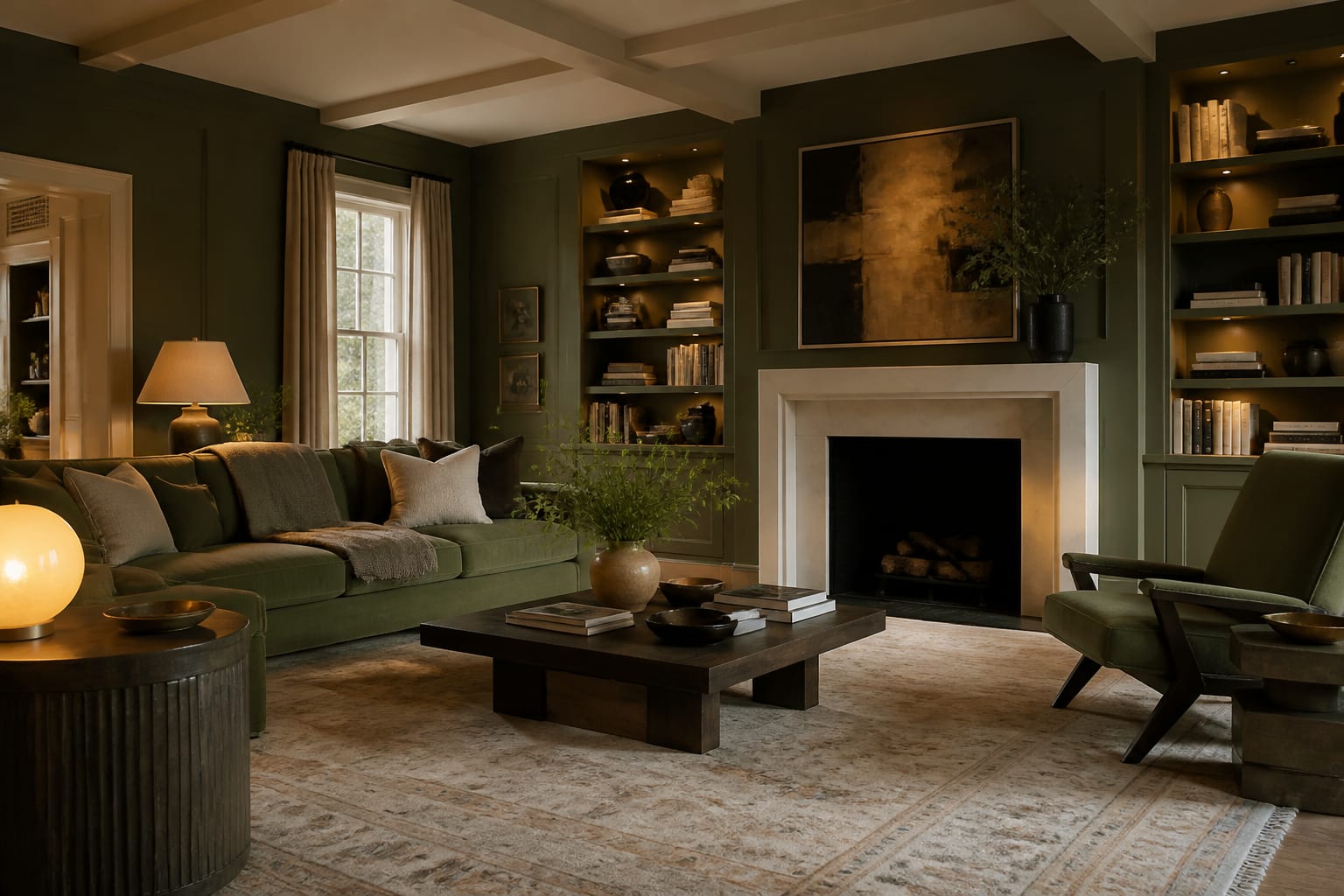
Green is the easiest color to live with and the easiest to get wrong, because the shade that looks restful on a chip can turn institutional or murky on a whole wall. The move that works is to choose your green by depth and undertone first, then decide how much of the room it should occupy. A whisper of sage on the walls behaves nothing like a saturated forest green on a sofa, and each wants different partners in wood, metal, and light. Get the pairing right and green reads as calm and grounded; get it wrong and the same color feels cold or dated.
Which shade of green is right for your room?
Green runs from barely-there sage to near-black forest, and the depth you pick should follow how much light the room gets and how bold you want it. Soft sage, a pale gray-green, is the most forgiving choice for walls in a bright or small room; it reads almost neutral and keeps the space feeling open. Olive and moss sit in the middle, earthy and grounding, and they suit a room with good natural light and warm wood tones. The deepest greens, emerald and forest, are dramatic and best used either as a confident full wall in a light-filled room or as a saturated accent in a sofa or velvet chair.
The other half of the decision is undertone. Yellow-based greens like olive and moss feel warm and organic, pairing naturally with terracotta, brass, and oak. Blue-based greens like emerald and teal feel cooler and more formal, leaning toward jewel-box drama. Test the green the same way you would any color: paint a 2 by 2 foot sample, live with it through a full day, and watch how a north-facing room cools the tone while a south-facing room warms it. The deeper the green, the more dramatically the room's light changes its character. For the broader logic of building a coordinated scheme, our Living Room Color Ideas guide covers how to anchor any feature color.
What colors and materials pair with green?
Green comes alive next to the right partners and falls flat next to the wrong ones. Wood is the most reliable companion: oak and rattan keep an olive or sage room light and airy, while walnut deepens an emerald or forest scheme into something rich and library-like. Because green is already drawn from nature, natural materials reinforce it rather than competing, so jute rugs, linen upholstery, and woven baskets all belong.
Metals set the mood. Brass and aged gold warm green and give it a slightly vintage, collected feel, which is why brass picture frames and a gold-toned floor lamp flatter a sage or olive room so well. Black and bronze sharpen deeper greens into something more modern and graphic. For a second color, green is generous: it pairs with blush and terracotta for warmth, with navy or charcoal for depth, with cream and oatmeal for calm, and with mustard for a bolder, retro energy. Keep most of the room in quiet neutrals and let the green and one warm metal carry the personality, which stops the scheme from tipping into busy. If you are arranging seating to highlight a green feature wall rather than a screen, the layout principles in Living Room Without TV Ideas help you point the room at the color.
How much green should you actually use?
The biggest variable in a green room is dose, and there is a right answer for every comfort level. For a bold, enveloping room, paint all four walls a deep forest or emerald at a flat to eggshell sheen and lean into the drama with warm lighting and brass. For a softer commitment, a single sage or olive accent wall behind the sofa adds color without surrounding you. The lowest-risk path keeps the walls neutral and brings green in through a velvet sofa, a pair of chairs, or layered cushions and plants. Here are concrete ways to work green into a living room:
- Paint all four walls a deep forest green and pair them with walnut shelving and warm brass picture lights.
- Use a single sage accent wall behind the sofa and keep the remaining walls a soft warm white.
- Anchor a neutral room with a saturated emerald velvet sofa as the one bold piece of furniture.
- Layer olive and moss cushions across a linen sofa for a low-commitment dose of grounding color.
- Add a pair of forest-green armchairs flanking a fireplace to frame it with symmetrical color.
- Build a green-and-brass moment with aged-gold frames, a brass lamp, and an olive-painted built-in.
- Fill the room with real plants so the painted greens echo the living foliage and read intentional.
- Run a deep green tone up a fireplace surround or alcove to spotlight one architectural feature.
How do you light and finish a green living room?
Lighting can rescue or ruin a green room, and the variable is color temperature. Warm light at 2700K to 3000K keeps olive and forest looking rich and earthy, while a cool 4000K or higher bulb drains green toward a gray, slightly sickly cast, especially with deeper shades. Put the main fixtures on dimmers and layer lamps at mid-height so the green is lit from several angles rather than flattened by a single overhead source.
Sheen matters as much as color in a green room. A flat to matte finish, around 2 to 5 percent sheen, makes a deep wall color look velvety and hides surface flaws, which is why it suits forest and emerald walls so well; reserve higher sheens for trim. Finish the space with texture so the green never feels like a solid block: a chunky knit throw, a jute rug, and linen curtains hung high and wide all break up the color. Add greenery itself, since live plants tie the painted scheme back to nature and make even a bold green choice feel grounded. Edit the accessories down so the color, the wood, and the metal stay the stars rather than a crowd of competing objects.
See it first in Re-Design
Green is the color most likely to surprise you between the paint chip and the finished wall, so previewing it first saves a costly repaint. Upload a photo of your living room to Re-Design and try a soft sage on the walls, a single forest-green accent wall, or an emerald velvet sofa against your existing wood and light. You can compare a yellow-based olive with a cooler blue-based emerald to see which undertone your room's exposure flatters before you buy a gallon of paint or commit to a statement sofa. Seeing the green in your own space settles the depth-and-dose question that swatches can never answer.
Frequently Asked Questions
What is the best shade of green for a living room?
It depends on your light and how bold you want to go. Soft sage suits walls in bright or small rooms because it reads almost neutral, olive and moss ground a room with warm wood, and emerald or forest work best as a dramatic full wall in a light-filled space or as a saturated accent. Always test a sample through a full day before committing.
What colors go with green in a living room?
Green pairs beautifully with wood tones like oak and walnut, with brass and aged gold for warmth, and with natural fibers like jute and linen. For a second color, try blush or terracotta for warmth, navy or charcoal for depth, cream for calm, or mustard for retro energy. Keep most of the room neutral so the green stays the star.
Does green make a room look smaller?
Not necessarily. Pale sage actually keeps a small room feeling open because it behaves almost like a neutral. Deep forest or emerald will make a room feel cozier and more enclosed, which is an asset in a larger or light-filled space but can shrink a small dim room. Match the green's depth to the room's size and natural light.
What lighting works in a green living room?
Use warm bulbs at 2700K to 3000K so olive and forest stay rich and earthy. Cool bulbs above 4000K drain green toward a gray, sickly cast, especially with deeper shades. Put the fixtures on dimmers and layer lamps at mid-height so the color is lit from several directions rather than flattened by one overhead light.