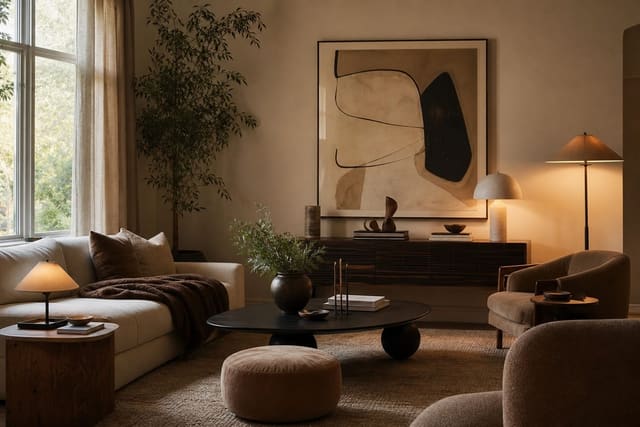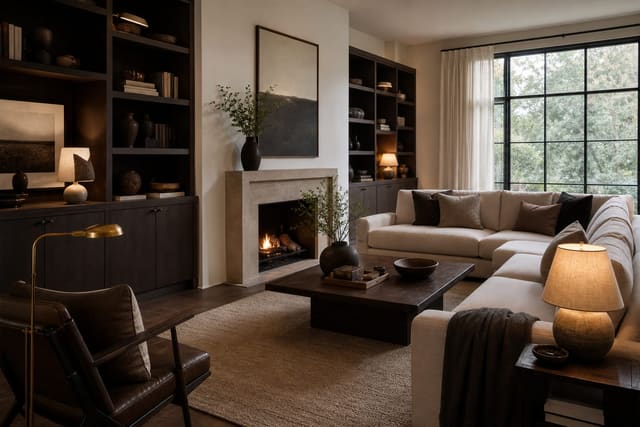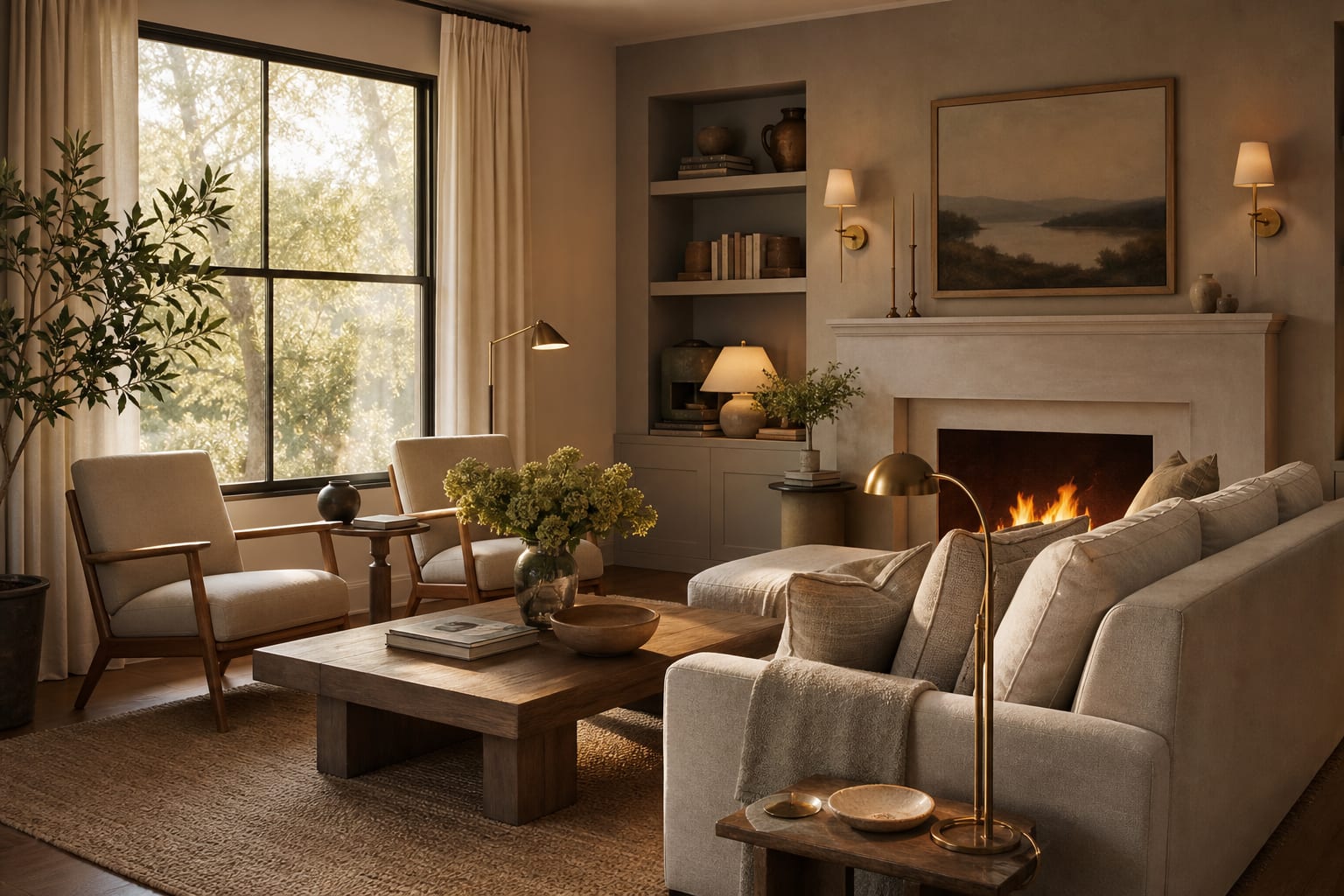
Greige rooms warm up by layering warm-tone wood, brass or aged-bronze metal, and one bold warm textile against the greige base, while switching to 2700K bulbs so the palette stops reading cold. The furniture rarely needs to go; the surrounding materials and light temperature do the work.
What actually makes a greige room feel warm instead of flat
Greige needs contrast in temperature, not a random injection of bright color. Check the greige you own first: hold plain white paper beside the wall, sofa, rug, and curtains in daylight. If it turns pink, green, yellow, or lavender near the paper, pick accents that flatter that bias instead of treating every neutral as interchangeable.
Start with light, not furniture. Use 2700K–3000K bulbs, ideally 90 CRI or higher, so cream, camel, oak, and brass do not go dull. Weak daylight rooms benefit from the same trick used in making fake natural light feel believable: spread warm light at different heights instead of relying on one overhead fixture.
Add one creamy large surface — ivory curtains, a bone wool rug, oatmeal bedding, or a plaster-toned lampshade. It has to be big enough to register; an 8x10-foot rug with a warmer ground works, a single cream vase does not. Then add a non-fabric warm material — oak, walnut, cane, aged brass, terracotta, leather, or seagrass — and repeat it at least three times so the warmth reads as intentional.
Which warm accents should you add first?
Warm accents work best when they touch large visual edges: curtains, rugs, lampshades, art mats, and wood or metal near the main seating.
- Curtains: Choose a tone warmer than the wall but not yellow — cream, flax, or oatmeal. Hang the rod 6–8 inches above the casing, extend it 8–12 inches past each side, and let panels finish about 1/2 inch above the floor.
- Lampshades: A 14–18 inch linen, paper, or pleated shade casts a wider, warmer glow than a small gray shade, which tends to disappear against greige.
- Wood tone: Pick one and commit — pale oak feels fresh, walnut feels rich, acacia or teak feels earthy. Mixing gray-washed, orange pine, espresso, and driftwood in one view reads as confused, not cozy.
- Black accents: Use thin lines — a black rod, 1-inch frame, or slim lamp stem — rather than heavy blocks, which can cool the room unless balanced with wood and warm light.
- Texture: Boucle, slubby linen, ribbed ceramic, jute, wool, cane, and plaster finishes give greige something to cast shadow against.
For very pale rooms, the same logic applies as fixing a cold all-white room: give quiet color enough contrast and glow to feel lived in.
Test this on your own room photo with ReDesign — keep the doorway, windows, main furniture, and lighting visible so the preview solves the room you actually have.
Common mistakes that keep a greige room looking cold
- Buying more greige. A greige pillow on a greige sofa just repeats the problem in a smaller size. Choose cream, camel, olive, tobacco, or clay instead, and repeat it more than once.
- Using cool white bulbs. Cheap cool light turns greige blue or dirty. Swap bulbs before judging paint or fabric.
- Adding one tiny warm accent. A lone brass bowl won't shift the mood. Repeat the note at low, middle, and high levels — tray, pillow, and wall art.
- Using an undersized rug. 8x10 feet is usually the starting point for a living room; at least the front legs of the sofa and chairs should sit on it.
- Doubling a cold wall with a mirror. Reflect a lamp, window, or wood surface instead — a warmer reflection, not more greige, as in using mirrors to amplify light.
How AI design helps you see the warmth before you commit
Seeing warm combinations in your actual room beats guessing from product photos, since a cream rug might work with your sofa or expose the wall as too pink. Upload a straight photo from a doorway or back corner showing the floor, windows, and main furniture — once in daylight, once with your usual lamps on, since greige shifts after sunset.
Run focused previews instead of a total makeover: one with cream textiles and oak, one with camel leather and black details, one with olive and aged brass, one with warmer lighting only. Keep the sofa, rug, and storage pieces fixed unless you plan to replace them.
The best preview points to realistic, testable moves — a pillow cover, a returnable curtain panel, a wood finish sample, or painter's tape marking new art size. If the only good result replaces every major piece, it hasn't actually solved the greige problem.
What should you change this weekend for the biggest shift?
- Fix the light. Replace cool bulbs and add one lamp with a fabric shade where the room falls into shadow.
- Change the largest soft surface. Ivory bedding and a wool throw in a bedroom; curtains or a rug in a living room. Renters can use tension rods, plug-in sconces, and oversized art.
- Repeat one warm note three times. Oak frame, oak tray, woven shade — or camel pillow, leather catchall, and tobacco-toned art. Stop before everything turns brown.
Stand at the entrance and squint. If you see greige, glow, cream, texture, and one earthy anchor, it's working — the furniture never needed replacing, just warmth with a backbone.
Frequently Asked Questions
Why does my greige room feel cold?
Most modern greige paint leans blue or green at the undertone level. Without warm-tone wood, brass, and warm textiles to counter it, the room reads gray rather than warm-neutral, even though the paint chip looked beige in the store.
What wood tone warms a greige room?
White oak with a warm finish, walnut, or honey-toned maple all counter greige walls effectively. Cool gray or heavily weathered wood reinforces the cold reading instead of fixing it, so check the undertone before buying.
Should I add brass to a greige room?
Yes. Brass or aged bronze in lamps, hardware, and frames gives cool greige walls a warm partner, while matte black or polished chrome tends to keep the room feeling cold and clinical.
What textile color warms greige?
Terracotta, rust, mustard, or olive in one or two pieces — a rug, throw, or pillow — gives greige a strong warm anchor. Pure white textiles do the opposite and emphasize the cold undertone.
Can AI preview the warm-up before I buy anything?
Yes. Upload a photo of your greige room and AI can preview wood, brass, and textile additions in place, so you can judge the effect before any purchase or finish swap.
> Try this: Ready to see this on your own room? Open ReDesign and run the preview.
Three transformations to try
1. Greige walls with white oak floor + brass lamp 2. Terracotta rug under greige walls 3. Walnut credenza against greige wall