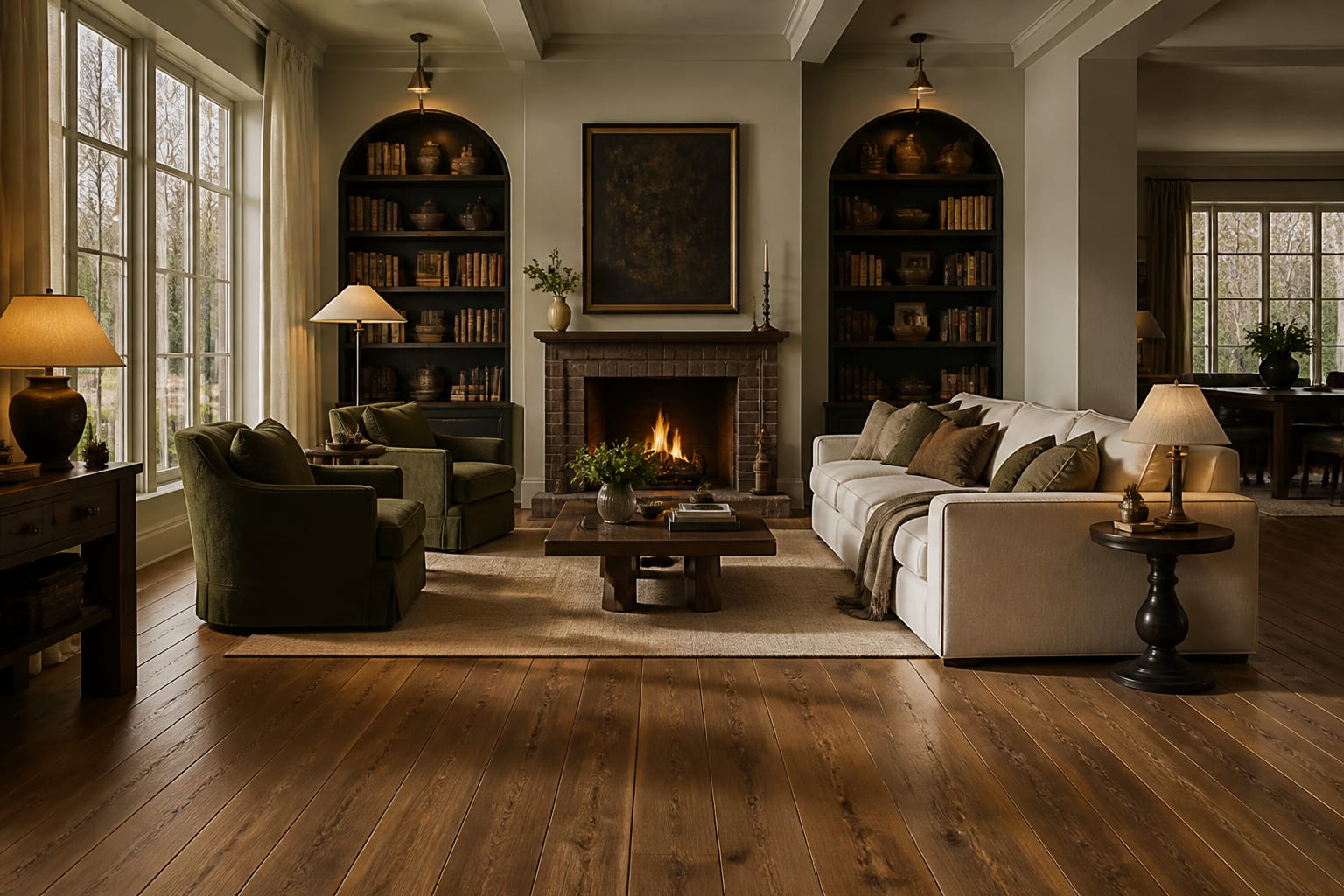
The biggest mistake homeowners make with a floor refinish is choosing a stain off a tiny sample card under the showroom's fluorescent lights. Stain color shifts dramatically with the wood species, the room's daylight, and the wall colors around it, so the swatch that looked rich brown at the store can read flat gray or orange once it covers 200 square feet of your living room. The better move is to test three candidate stains on your actual boards, in your actual light, and live with them for a couple of days before anyone breaks out the sander. Color is the decision you cannot easily undo.
When does a light hardwood stain make sense?
Light floors are having a long moment for good reason. Natural-finish white oak, blonde maple, and pale Scandinavian tones reflect daylight back into the room, which makes a space read larger and airier, an effect worth real money in a 10 by 12 foot bedroom that needs to feel bigger than it is. Light floors also hide the everyday mess best: dust, crumbs, and light-colored pet hair practically disappear against a pale board, so the floor looks clean longer between cleanings.
The trade-off is that very light stains can read cold or washed-out if the species has a strong yellow undertone, which raw pine and some oaks do. A water-based polyurethane topcoat keeps a light floor from ambering over time, while an oil-based finish adds a warm gold cast that some people love and others fight for years. Light floors also show dents and gouges less than dark ones, but they can highlight dark stains from spills if you skip a protective coat. They suit rentals and resale especially well, since a neutral light floor offends almost no buyer. If you are weighing a refinish before listing, our notes on staging a home with AI tools walk through how floor tone affects buyer perception.
Why medium browns are the safest choice
If you want one stain that almost never goes wrong, pick a medium brown. Tones in the range of golden oak, chestnut, and provincial sit in the sweet spot: dark enough to feel grounded and warm, light enough to forgive a surprising amount of wear. A medium floor hides minor scratches and the inevitable dog-nail marks far better than a dark stain, and it does not telegraph every dust bunny the way ebony does.
Medium browns are also the most flexible with wall color. They sit comfortably under cool grays, warm whites, greens, and navy, which means you can repaint every few years without the floor suddenly clashing. The risk to watch is undertone: a medium stain that pulls too red, like some cherry-leaning tones, can look dated and fight a cool-gray wall, while one that pulls too yellow can read brassy. Aim for a balanced brown with only a hint of warmth. For a small apartment where the floor runs continuously through several rooms, a single medium tone keeps the eye moving and the space feeling unified; our guide to designing small spaces covers how continuous flooring stretches a compact footprint.
What to know before going dark
Dark floors, espresso through near-black ebony, deliver the most drama and the most maintenance. A near-black floor under white walls is one of the highest-contrast looks in interior design, and it makes furniture and rugs pop. But dark stains punish you daily: dust, lint, dried footprints, and pet hair all show against the dark surface, so a dark floor genuinely needs sweeping or vacuuming every day or two to look its best. Fine scratches also reveal the raw, lighter wood beneath, so each scuff stands out like a chalk line.
Dark floors absorb light, so they can shrink a room that is already short on windows, which is the opposite of what a 9 by 10 foot space usually needs. They work best in rooms with abundant daylight, high ceilings of 9 feet or more, and a contrasting light wall or rug to keep the space from feeling like a cave. If you love the look but worry about upkeep, a dark walnut with visible grain hides dust slightly better than a flat ebony, because the grain breaks up the surface. Plan on a matte or satin sheen rather than gloss, since a high-gloss dark floor magnifies every smudge and dust mote.
How to match stain to your light and walls
The color a stain becomes depends on three things you cannot change easily: the wood species, the natural light, and the surrounding walls. Red oak, the most common floor species, has a pink undertone that pushes stains warmer, while white oak runs cooler and more neutral. A stain that looks perfect on a maple sample can turn muddy on red oak. That is why the on-floor test is non-negotiable. Have your installer brush three candidate stains onto a 2 by 2 foot patch of the freshly sanded floor and seal a corner of each so you see the true finished color.
View those patches at three times of day: bright morning, flat afternoon, and lamp-lit evening. North-facing rooms get cool blue light that mutes warm stains, while south and west rooms get warm light that intensifies reds and golds. Hold your wall color and a rug sample beside each patch.
Here are the common mistakes to avoid when picking a floor stain: - Choosing color from a tiny sample card instead of testing on your own sanded boards. - Ignoring the wood species undertone, so a stain reads too red on red oak or too yellow on pine. - Going near-black in a low-light room with under 8 feet of ceiling, which makes the space feel like a cave. - Selecting a high-gloss sheen on a dark floor, which magnifies every dust speck and footprint. - Forgetting to view the stain in evening lamplight, when warm bulbs around 2700K shift the color. - Matching the floor too closely to wood furniture, leaving the room flat with no contrast.
See it first in Re-Design
Stain color is the one floor decision you cannot preview from a sample card, so it pays to see the whole room before the sander arrives. Upload a photo of your space to Re-Design and swap the floor between a pale white oak, a warm medium chestnut, and a dramatic ebony to watch how each tone reads against your real walls, furniture, and windows. Because the app shows the full room rather than a 2 by 2 inch chip, you can judge whether a dark floor shrinks the space or whether a light one washes out, and you can test the look against several wall colors in seconds. That kind of side-by-side comparison turns a nerve-wracking, permanent choice into a confident one before you spend $3 to $8 per square foot on refinishing.
Frequently Asked Questions
Which hardwood floor stain hides dirt and scratches best?
Medium browns like provincial and chestnut are the most forgiving, masking minor scratches and dust at the same time. Light natural floors hide dust and pet hair best but show spill stains, while dark espresso and ebony show every speck of dust, footprint, and fine scratch, often needing sweeping every day or two to look clean.
Do dark hardwood floors make a room look smaller?
They can. Dark floors absorb light rather than reflecting it, so in a room with few windows or ceilings under 8 feet they tend to close the space in. They work best where there is abundant daylight, ceilings of 9 feet or more, and light walls or a pale rug for contrast to keep the room from feeling heavy.
How many stain colors should I test before refinishing?
Test at least three. Have your installer brush each candidate onto a 2 by 2 foot patch of the freshly sanded floor and seal a corner so you see the true finished color. View the patches in morning, afternoon, and evening light, since a stain that looks right at noon can turn muddy or orange under warm 2700K bulbs at night.
Why does my floor stain look different from the sample?
Stain color depends on the wood species, the room's light, and the walls around it. Red oak has a pink undertone that pushes stains warmer, while white oak reads cooler, so the same can produces different results on each. A small card under showroom lights also misses how your daylight and wall color will shift the final tone.