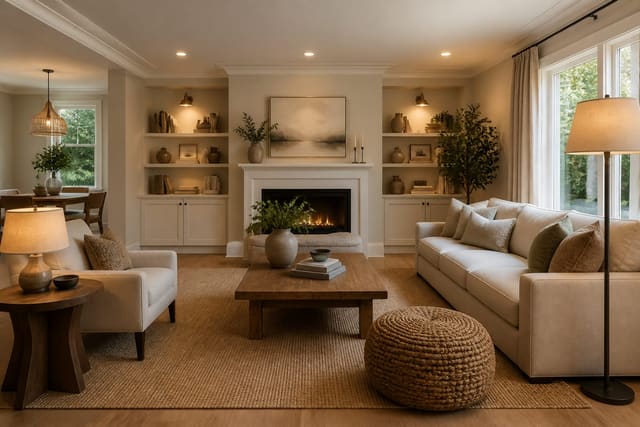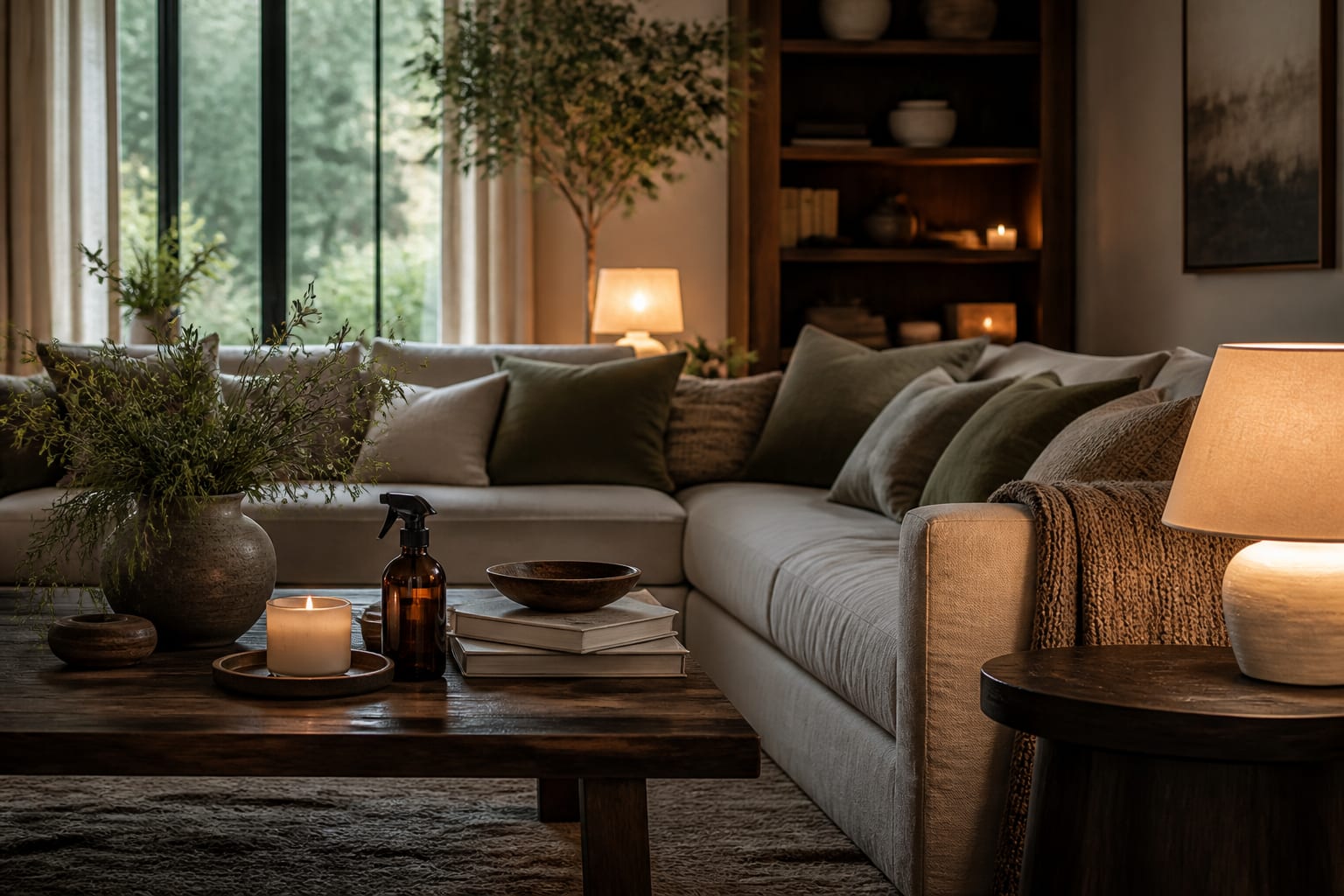
How a room smells is part of how it reads, and most people treat it as an afterthought. You can spend a year sourcing the right sofa and then undo the whole mood with one cloying plug-in by the front door. Fragrance is a finish, and it deserves the same restraint you give paint and lighting.
To use scent as part of interior design, pick one scent family per zone, layer two or three delivery methods at different intensities, and keep the throw subtle enough that a guest notices the room before they ever notice the smell.
Treat scent as a design layer, not an air freshener
A well-scented home works like a well-lit one: you feel it before you can name it. The goal is a low, ambient base that lives under everything, punctuated by stronger moments when you light a candle for dinner or mist linens before guests arrive.
Start with the base layer. A reed diffuser with 6 to 8 reeds throws a steady, low-intensity scent across roughly 150 square feet and lasts 8 to 12 weeks per 100 ml bottle. That is your always-on foundation, the equivalent of ambient lighting. Flip more reeds in to push the throw harder, pull a couple out to dial it down.
On top of that base, a candle is your spotlight — burn it for two to three hours during an active moment, then let it rest and go cold. The candle is where you put the more expensive, more characterful scent, because you only run it when you want to be noticed.
Linen spray is the fastest, cheapest layer of the three. A $20 bottle misted lightly over a bed, sofa, or curtains refreshes a room in seconds and fades within the hour, which makes it the lowest-commitment way to add scent. It is also the layer to reach for right before guests arrive, since it acts instantly while a candle takes 20 to 30 minutes to build a real scent throw. Staging a home to sell or photograph follows the same logic of low-key, broadly appealing finishes — the principles in AI design home staging apply directly to how you scent a room for viewers who decide in seconds.
Map scents to rooms
Scent should follow function. A kitchen wants something that cuts through cooking smells; a bedroom wants something that slows you down at the end of the day.
- Kitchen and entry: citrus, basil, mint, and green fig — bright notes that read as clean.
- Living and dining: woody amber, sandalwood, fig, and tobacco — warm bases that hold a room together.
- Bedroom: lavender, cedar, chamomile, and soft musk — quiet, low-throw scents under 5% fragrance load.
- Bathroom: eucalyptus, sea salt, and vetiver — fresh, slightly mineral notes that wake a small room up.
Keep transitions in mind as you move through the floor plan. If your kitchen runs citrus and your adjoining living room runs woody amber, a fig or sandalwood candle bridges the two because both families share that warm-green note. The nose hates a hard cut from one unrelated scent straight into another.
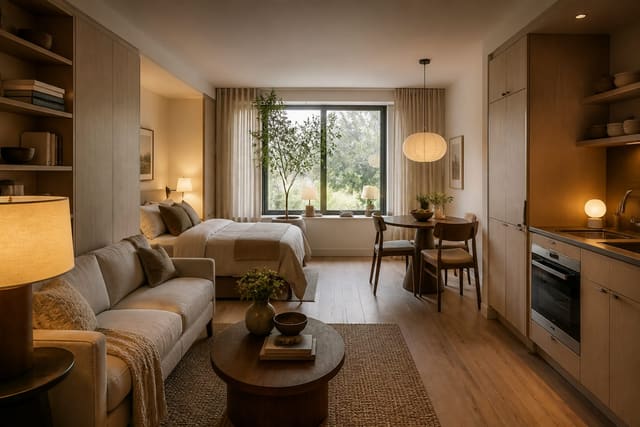
In a compact open-plan layout, you cannot wall off scents the way you can in a house full of doors, so you need them to blend by design. The zoning tricks in AI interior design for small spaces translate neatly to keeping one continuous scent story across a tight footprint — define zones by what you do there, then let related notes flow between them.
Match scent to season and budget
Scent has a calendar, and ignoring it is why a home can smell wrong even when the notes are nice. Heavy gourmand, amber, and spice read cozy in November and oppressive in July; bright citrus and herbaceous greens do the reverse. Rotate two or three core scents through the year rather than running one all twelve months.
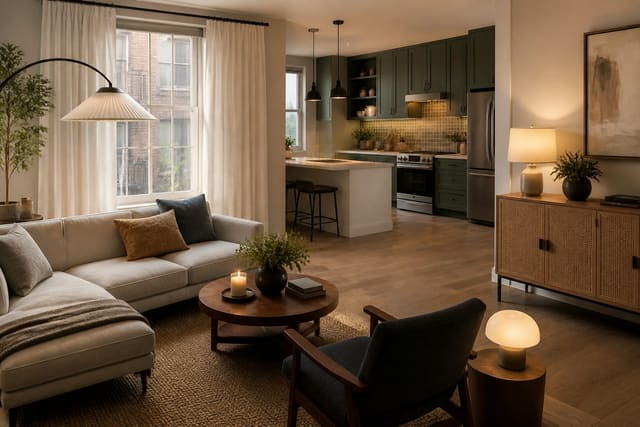
Budget honestly, too. A quality 8 oz candle runs $25 to $45 and burns 40 to 50 hours, which works out to under a dollar an hour for the rooms that matter most. Reserve those for the living and dining spaces where people gather, and use cheaper linen sprays and a basic diffuser for back-of-house rooms. Renters who cannot repaint or renovate get an outsized return here — scent is the one finish you can take with you, and it pairs well with the reversible upgrades in AI room design for a rental apartment.
Mistakes to avoid
Scent goes wrong in predictable ways, and almost all of them come from overdoing it.
- Stacking too many fragrances. Three competing candles plus a plug-in plus a diffuser produces a muddy, headache-grade haze. Cap it at two active sources per room.
- Burning candles wrong. Trim the wick to 1/4 inch and burn long enough — about 1 hour per inch of diameter — to melt the wax fully, or you tunnel the candle and waste two-thirds of it.
- Ignoring fragrance load. Cheap candles often carry under 6% oil; a quality candle runs 8 to 12%, which is why the pricier one actually throws scent across the room instead of just smelling nice up close.
- Forgetting to ventilate. A sealed room concentrates scent until it turns stale; crack a window for ten minutes a day so the layers stay fresh instead of accumulating.
A subtler mistake is letting your own nose lie to you. Olfactory fatigue means you stop registering a scent you live with after a few minutes, so you keep adding more until a guest walks in and reels. Trust a visitor's first reaction over your own, and when in doubt, scale the intensity down rather than up. A home should smell faintly of something pleasant, not announce a fragrance from the doorway. A quick reset between scent changes helps as well: let a room air out fully before switching from a winter amber to a summer citrus, so the two do not muddle into something neither of you chose.
Use AI design to preview the look before you commit
You cannot photograph a smell, but you can plan the visual half of the scent layer — the candle vessels, diffuser bottles, and tray styling that sit out on display. Those objects are part of the room's finish, and they should match it instead of fighting it.
Upload a photo of your shelf, mantel, or nightstand to Re-Design and let the AI design tool show how a clustered set of amber-glass candles or a single sculptural diffuser reads against your existing palette. You can test a matte black vessel against frosted glass and pale ceramic before you spend on a collection that ends up clashing with the room you already built. Get the styling right first, then choose the scent to match the mood the objects are already setting.