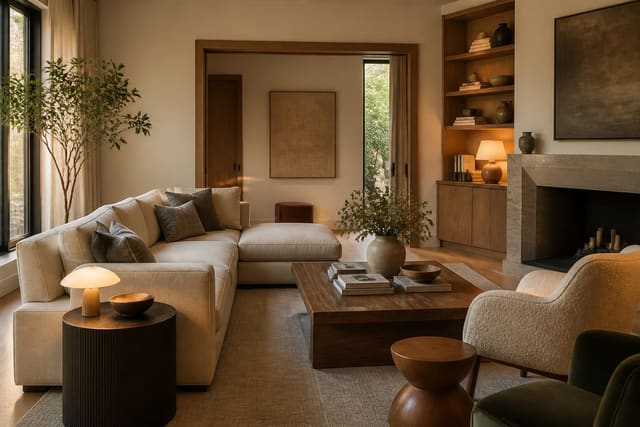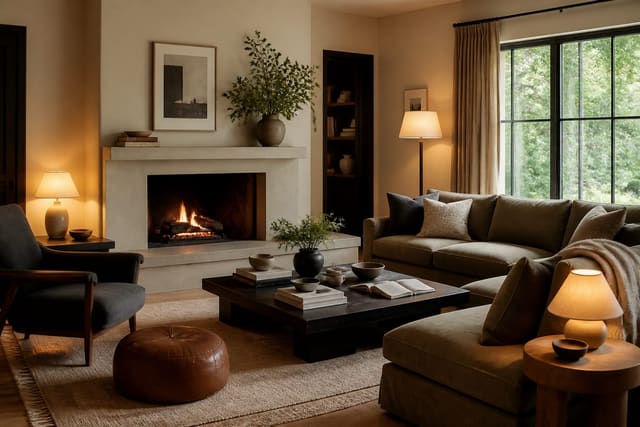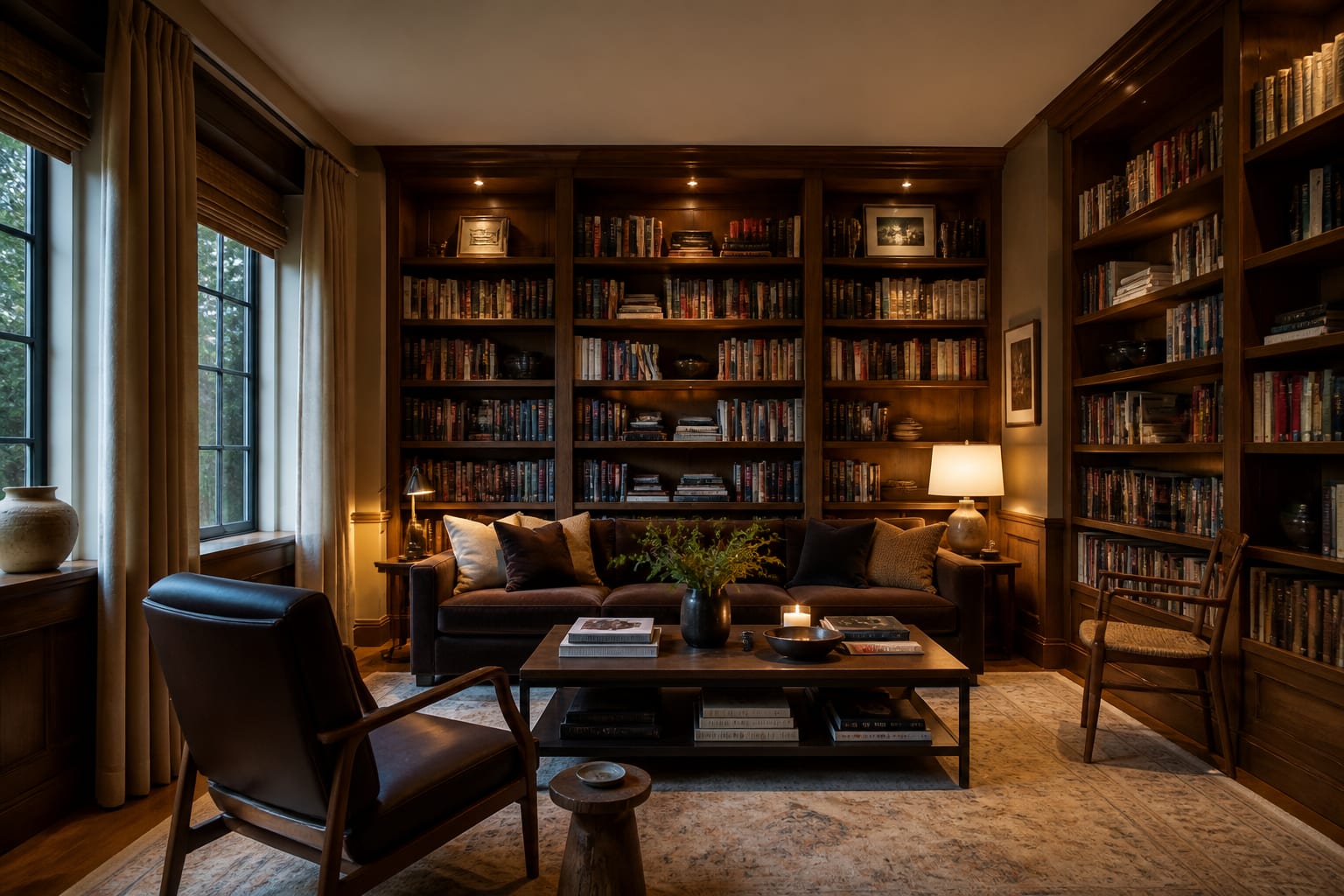
A home library is the rare room where the contents come first and the design serves them. The mistake is buying pretty bookcases and forcing the collection to fit; the better path is sizing shelving to what you actually own and how you read. A library does not require a dedicated wing. A single wall of floor-to-ceiling shelves, a good chair, and the right lamp turn an ordinary room into one. Treat the books as the architecture and the décor as support, and you get a space that pulls you in and keeps you reading for hours.
Shelving sized to your actual collection
Most disappointing home libraries start with bookcases bought before anyone measured the books. Standard ready-made shelving runs about 8 inches deep, which leaves trade paperbacks fine but lets larger hardcovers, art books, and atlases overhang the edge and look messy. Measure your tallest and deepest volumes first; many art and reference books need 11 to 12 inches of depth and 14 to 15 inches of clear height. Adjustable shelves are non-negotiable, because fixed spacing wastes vertical space and forces you to stack books flat. For capacity, built-ins beat freestanding units almost every time: they run floor to ceiling, use the full wall, and can be scribed around baseboards and outlets for a seamless look. A single 8-foot wall of 12-inch-deep built-ins holds several hundred volumes. Plan shelf spans of no more than 30 to 36 inches between supports, or the shelves will sag under the real weight of books over time, which is heavier than people expect at roughly 20 to 25 pounds per running foot of hardcovers. Vary shelf heights deliberately: shorter bays for paperbacks, taller ones for hardcovers and a few face-out display slots. Leave a few open horizontal stretches for stacking current reads and propping objects, since a wall of perfectly uniform spines reads cold. The point is to build the shelving around the collection you have and the one you are growing, not to buy a fixed grid and resent it within a year as the books outgrow it and start migrating to the floor.
See also our guide to Living Room Without Tv Ideas for more on home library ideas.
Reaching the top and using the full wall
Floor-to-ceiling shelving makes the best use of a wall, but it raises an obvious problem: the top two or three feet are out of reach. Solve access deliberately rather than leaving high shelves as dusty decoration. A rolling library ladder on a rail is the classic answer and works beautifully on a long run of shelving, sliding to wherever you need it, though it needs a clear floor and a track mounted into solid blocking. For shorter walls or tighter budgets, a sturdy library stool or a folding step stool tucked at the end of the shelves does the job without the hardware. Reserve the highest shelves for books you reach for rarely, like reference sets or oversized volumes, and keep daily reads at eye and arm level between roughly 30 and 60 inches off the floor. Above standard door height, the shelves still earn their keep holding archived titles and display pieces. Think about the wall as zones: a convenient core within easy reach, a step-stool band above it, and a ladder-only top tier. If the ceiling is high, say 9 or 10 feet, the top zone is large enough that a real ladder pays off; under 8 feet, a stool is plenty. Anchor any tall freestanding bookcase to the wall studs without exception, because a loaded floor-to-ceiling case is genuinely heavy and a tip-over hazard, especially around children. Plan the reaching strategy at the same time as the shelving, not as an afterthought once the books are already up too high to touch.
For a related angle on home library ideas, read Living Room Color Ideas.
Lighting and the reading chair
A library is for reading, and reading demands light placed where your eyes actually work, not just a fixture in the ceiling. Overhead lighting alone casts shadows onto the page and tires the eyes; the heart of any library is a dedicated reading light beside the chair. Use a floor or table lamp with a warm bulb around 2700K to 3000K, bright enough to read comfortably without glare, positioned so light falls over your shoulder onto the page rather than into your eyes. Layer in shelf lighting too: LED strips or small picture lights along the shelves both protect against the gloom of a book-lined wall and let you read spines at night. Keep the ambient layer dimmable so the room shifts from bright browsing to a cozy evening glow. The reading chair itself deserves real thought, since it is where the room is actually used. Choose a deep, supportive armchair or a wingback with good lumbar support that you can sink into for an hour, paired with an ottoman and a side table within arm's reach for a drink, a lamp, and the current stack. Position it near a window for daylight reading but not in direct sun, and angle it toward the shelves or a fireplace if you have one, so the view from the chair is of the collection. A small rug underfoot anchors the spot. Get the chair and its light right and the library becomes a place you genuinely retreat to, rather than a handsome wall of books nobody sits near.
Protecting books and finishing the room
Books are organic and they degrade, so a serious home library treats preservation as part of the design rather than an afterthought. Direct sunlight is the worst enemy, fading spines and yellowing pages within a season, so keep shelves off walls that take strong afternoon sun or filter that light with UV window film and curtains. Humidity is the other threat: damp encourages mold and warping, while bone-dry air makes paper and leather brittle, so aim to hold the room around 35 to 50 percent relative humidity, using a dehumidifier in damp basements or a humidifier in dry winter climates. Keep shelves a couple of inches off exterior walls to allow air circulation and prevent moisture buildup behind them. Avoid packing books so tightly that pulling one tears the neighbors, and store oversized or fragile volumes flat rather than crammed upright. Mix in a few closed cabinets among the open shelving to house valuable first editions, paperwork, and the visual clutter every room collects, which keeps the open shelves looking curated. Finish the room with the supporting layers: a quiet color on any non-shelved wall, a rug that absorbs sound and warms the floor, and a ladder or stool that doubles as a sculptural element. Organize the collection in whatever system you will actually maintain, by subject, by author, or even by color if that brings you joy, since a library you keep ordered is one you keep using. The result is a room that both displays the books beautifully and keeps them readable for decades.
- Build floor-to-ceiling shelves 12 inches deep to fit hardcovers and art books without overhang.
- Add a rolling library ladder on a rail to reach the top two feet of a long shelf run.
- Keep adjustable shelf spans under 36 inches so loaded shelves never sag over time.
- Place a 2700K floor lamp beside the reading chair so light falls over your shoulder.
- Run LED strips along shelves to read spines at night and brighten a book-lined wall.
- Anchor a deep wingback chair with an ottoman and side table within arm's reach.
- Mix in a few closed cabinets to hide clutter and store fragile or oversized volumes.
- Hold the room near 40 percent humidity with a dehumidifier or humidifier to protect bindings.
Bring the look home with Re-Design
A wall of books is hard to plan on paper because scale and proportion matter so much. With Re-Design you upload a photo of the room or wall you want to convert and preview floor-to-ceiling built-ins, a reading-chair corner, a rolling ladder, and warm layered lighting before committing to a carpenter. You can test shelf color against the walls, see where the chair and lamp land, and let Re-Design show the finished library before any shelving is ordered.
Frequently Asked Questions
How deep should home library shelves be?
Measure your books first. Standard 8-inch shelving handles paperbacks and most novels, but larger hardcovers, atlases, and art books need 11 to 12 inches of depth to sit flush without overhanging. Build to your deepest volumes, use adjustable shelves so spacing fits both paperbacks and tall hardcovers, and keep shelf spans under 36 inches to prevent sagging.
How do I protect books in a home library?
Keep shelves out of direct sunlight, which fades spines and yellows pages, and filter strong light with UV film or curtains. Hold relative humidity around 35 to 50 percent using a dehumidifier or humidifier as your climate needs. Leave a gap behind shelves on exterior walls for airflow, and store oversized or fragile volumes flat rather than crammed upright.
Do I need a whole room for a home library?
No. A single wall of floor-to-ceiling shelves, a comfortable reading chair, and a dedicated lamp create a real library in a living room, office, or hallway. Built-ins along one 8-foot wall hold several hundred books. The room only needs the collection treated as the focal point, with a chair and good light placed to use it.