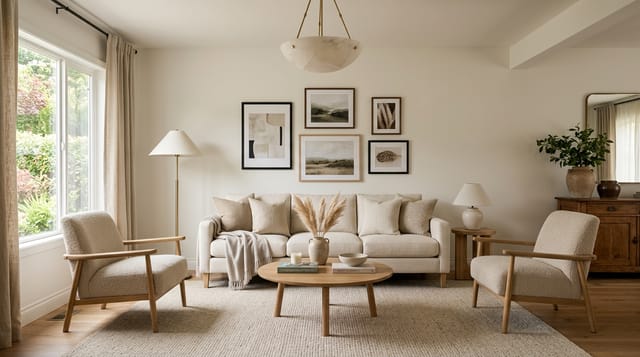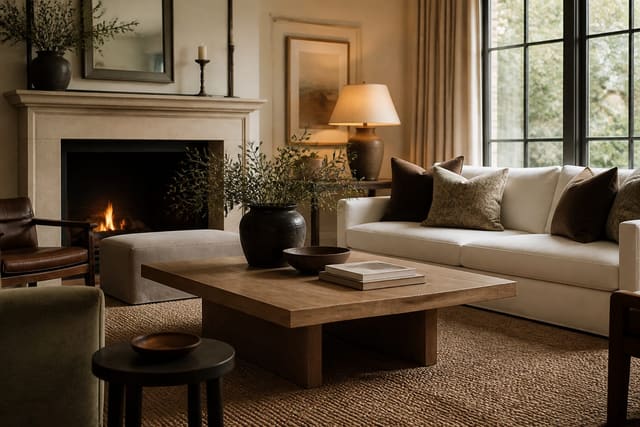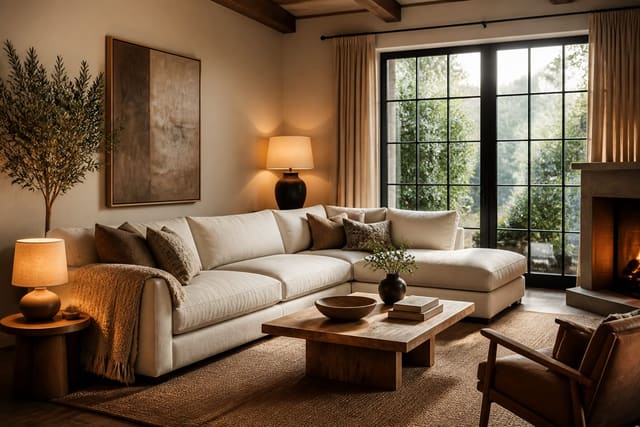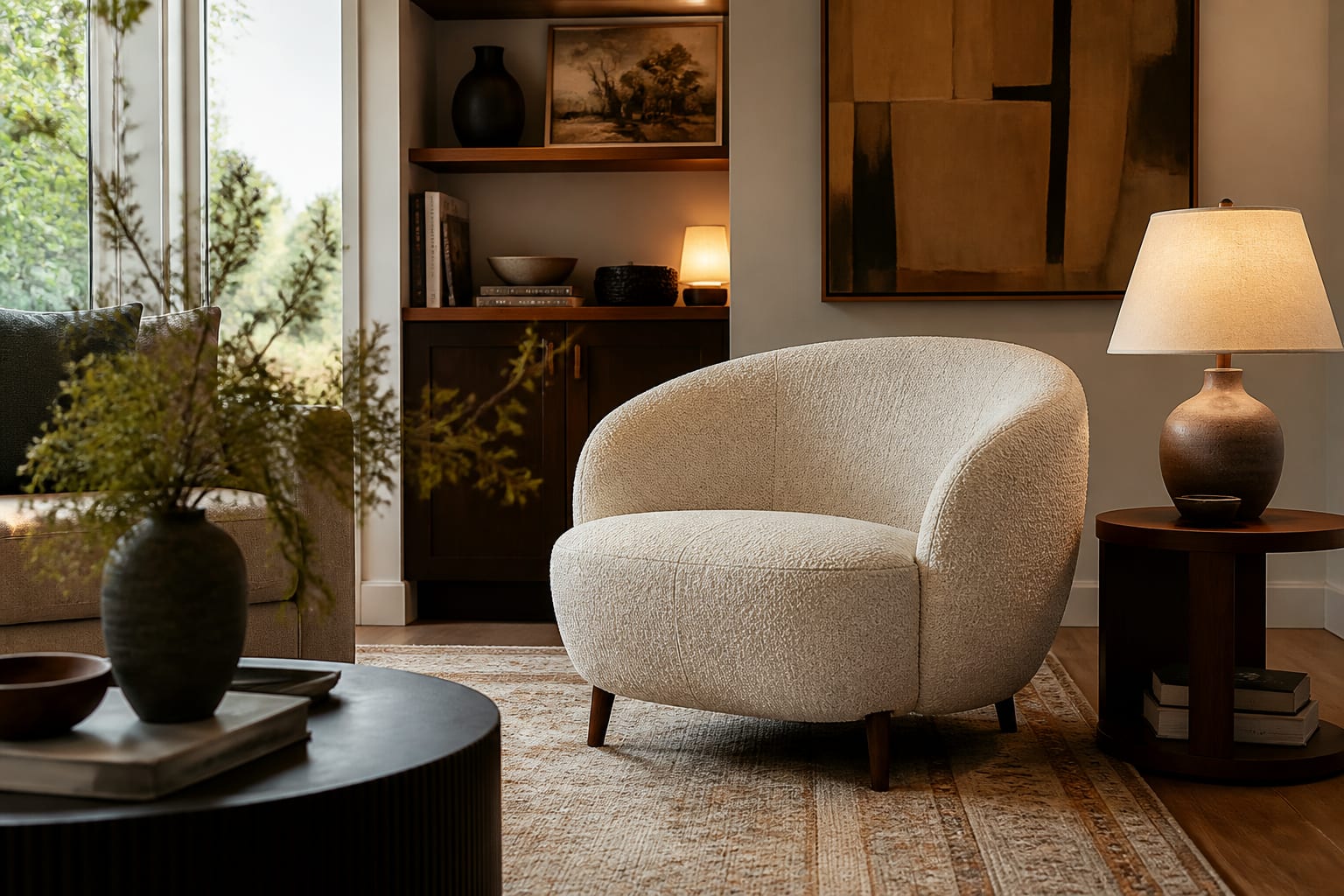
Choose an accent chair by matching its scale to the sofa first and worrying about color second, because a chair that is the wrong size never looks right no matter how pretty the fabric is. The mistake I see most is people falling for a bold chair online, then jamming a chair that is too big or too small into a spot it was never meant to fill. My read is that proportion is 80% of the decision and style is the other 20%. A well-scaled plain chair beats a gorgeous chair that crowds the room.
An accent chair earns its name by adding contrast, but it still has to live in conversation with the sofa, the rug, and the walking paths. Get the dimensions and the placement right and the chair feels intentional. Get them wrong and it reads as clutter. Here are the rules I measure to.
Match the proportion to the sofa
Proportion is the first gate, and it is where most accent-chair regret starts. The seat height of the chair should land within about 2 inches of the sofa's seat height, so when two people sit down their eye lines stay close and the grouping reads as one zone rather than a tall chair looming over a low couch. A 17-inch sofa seat pairs cleanly with a chair seat between 15 and 19 inches.
Width matters just as much. A standard accent chair runs 28 to 32 inches wide, and you want it to fill its spot without choking the walkway. Measure the gap before you shop: if you have a 40-inch nook beside the sofa, a 30-inch chair leaves a comfortable margin, while a 36-inch armchair will feel wedged. Depth follows the same logic, with most accent chairs sitting 30 to 34 inches deep. If you are building a whole seating plan from scratch, the proportion ideas in my living room design ideas guide give you a framework before you pick the chair.
Visual weight is the quieter half of proportion. A chunky club chair next to a slim-armed sofa can throw the balance off even when the measurements match, so pair a heavy sofa with a chair that has some visual mass and a light sofa with an airier frame. Back height plays into this as well: a tall wingback adds vertical weight that a low slipper chair never will, so consider how the chair's silhouette stacks against the sofa back before the tape measure ever comes out. When two seating pieces share a similar visual mass, the eye reads them as a planned pair rather than two strangers sharing a corner.
Place it for flow and conversation
Where the chair sits decides whether it gets used or just collects throw blankets. Leave 30 to 36 inches of clear walking space around it so nobody has to shuffle sideways to pass. Then angle it: turning the chair 30 to 45 degrees toward the sofa, rather than squaring it dead-on, opens up a natural conversation triangle and makes the seating feel hosted rather than lined up against the walls.
Keep the chair close enough to a surface to be useful. A side table within 18 inches of the chair arm gives a place to set a drink without anyone stretching, and the table top should land within a couple of inches of the chair arm height. If the chair anchors a reading corner, a floor lamp behind one shoulder beats an overhead light every time.
Here is the placement sequence I run through:
- Confirm 30 to 36 inches of clearance on the chair's main approach path.
- Angle the chair 30 to 45 degrees toward the sofa for conversation.
- Set a side table within 18 inches of the chair arm.
- Anchor the grouping on a rug large enough for the chair's front legs.
- Check sightlines so the chair does not block a doorway or a window.
If the chair shares space with a coffee table, leave about 18 inches between them, the same gap I recommend in my coffee table ideas for easy reach.
Pick a style that contrasts on purpose
The whole point of an accent chair is contrast, so it should differ from the sofa in at least one clear way: color, material, or silhouette. A linen sofa pairs beautifully with a leather or boucle chair; a neutral sofa can carry a chair in a saturated color. What you want to avoid is a chair that almost matches the sofa, because a near-match reads as a failed set rather than a deliberate accent.
Let one feature lead. If the chair has a bold color, keep the shape simple. If the shape is sculptural, keep the fabric quiet. One or two accent chairs per room is plenty; a third usually tips the space into looking like a furniture showroom.
Common mistakes to avoid
The most common mistake is buying for looks and ignoring scale, so a chair that dazzled online arrives and swallows the corner it was meant to fill. Measure the gap first, every time.
The second mistake is a seat height that fights the sofa, leaving one seat towering over the other and breaking the grouping. Stay within 2 inches. A third is shoving the chair flat against the wall with no angle, which kills any sense of conversation. A fourth is forgetting clearance, so the chair blocks a path and never gets used; hold the 30 to 36 inch rule. The last common mistake is over-accenting, packing three or four statement chairs into one room until nothing stands out. Cap it at one or two and let the rest of the seating stay calm.
Use AI design to test an accent chair before you buy
The hard part of choosing an accent chair is that scale and contrast only reveal themselves once the chair is in the room, and a returned armchair is a genuine hassle. Re-Design removes that gamble. Upload a photo of your living room with the sofa already in frame, and the AI design drops different chair shapes, sizes, and fabrics into the exact spot you are considering.
Because you upload your real space, the preview keeps your true sofa scale, wall color, and floor in view, so you can judge whether a 30-inch boucle chair balances the couch or a leather wingback overwhelms it. Test a bold color against a quiet one, swap a heavy frame for a slim one, and settle the proportion question before you spend a dollar. The same approach helps when you are weighing a sectional sofa and need to see how a chair plays against a larger seating footprint.