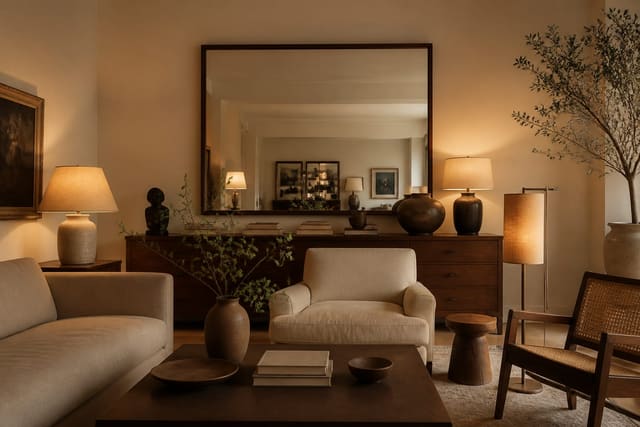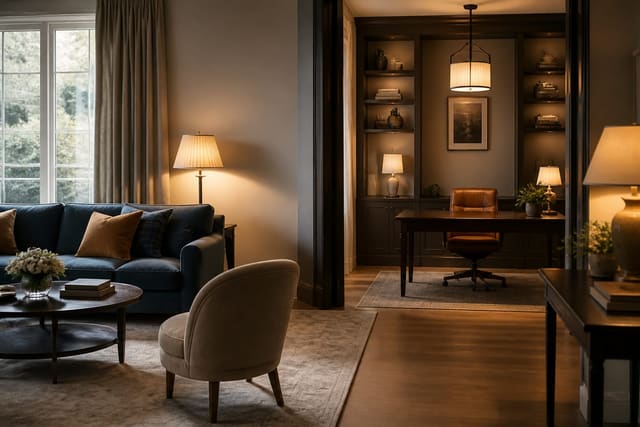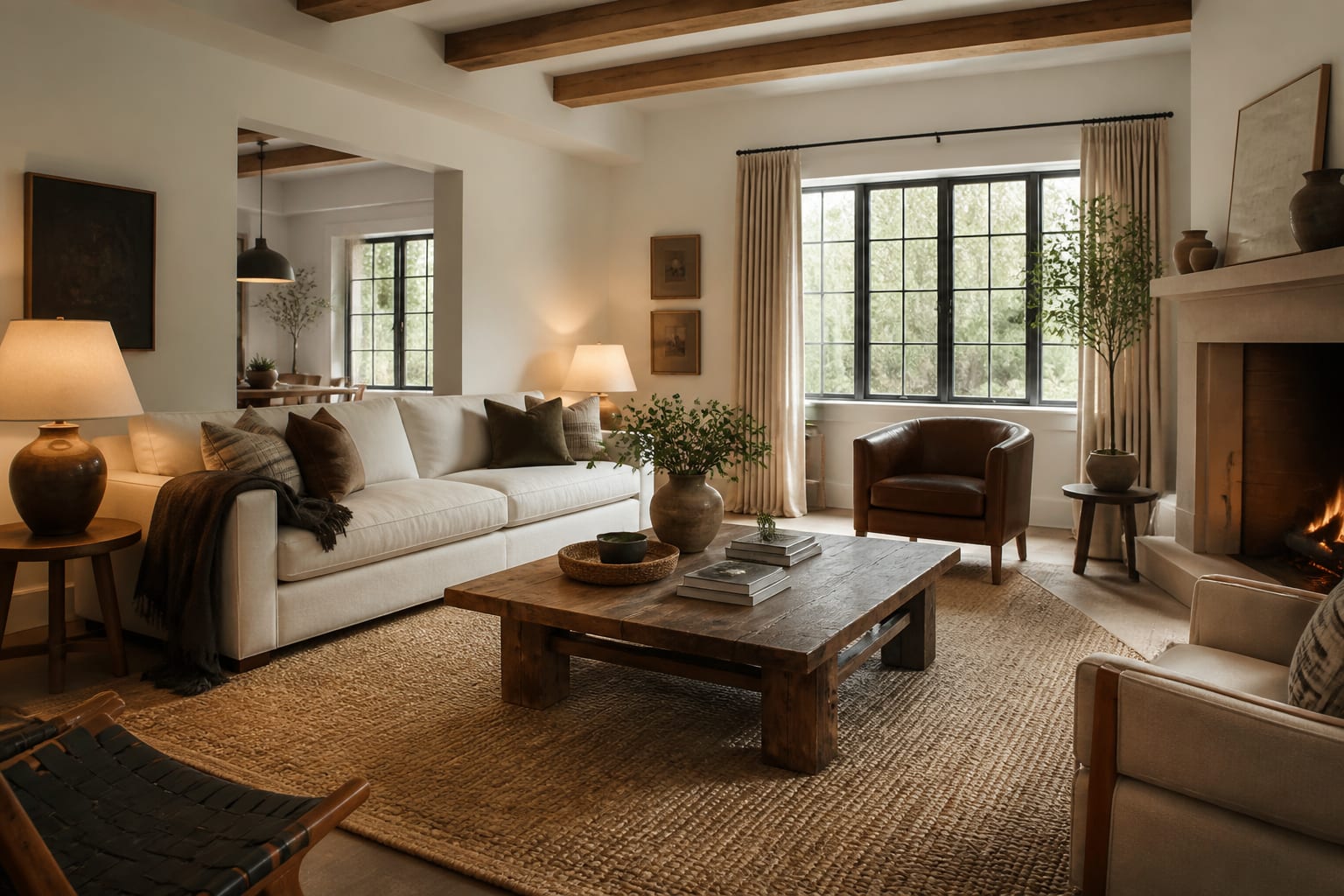
If you take one thing from this: buy the rug a size up from whatever felt right in the store. The most common rug mistake by a mile is going too small, and my read is that an undersized rug makes a room look cheaper and more cramped than no rug at all. A rug that is too small turns into a floating postage stamp that shrinks everything around it.
The right size is not a guess, it is a rule tied to your furniture. In most rooms you want the rug large enough that at least the front legs of the main pieces sit on it, with a consistent border of bare floor framing the edges. Get that border even and the room reads as designed.
The living room: legs on, border even
The living room is where rug size goes wrong most often. There are three valid setups, and you should pick one and commit. The best is all furniture legs on the rug, which usually needs a 9x12 or larger and makes the seating zone feel grounded and generous. The most common is front legs on: the front feet of the sofa and chairs touch the rug while the back legs sit on the floor, which an 8x10 handles in most rooms.
The one to avoid is everything off the rug, where a small rug floats in the middle touching nothing. That is the postage-stamp look that makes the whole room feel undersized. Whichever you pick, hold an 18 to 24 inches border of bare floor around the rug; an even frame of floor is what makes the rug look intentional rather than random. If your room runs dark and you want the rug to add warmth without swallowing light, the surface choices in my dark room solutions guide pair well with this sizing logic.
To turn that into a number you can shop with, measure the wall-to-wall width of the seating zone and subtract about 36 inches total, 18 inches off each side, and that is roughly the widest rug you want. In a 12-foot-wide room that lands you near a 9-foot rug width; in a 14-foot room you have room for a full 12-foot rug. Sizing down from the walls like this is far more reliable than sizing up from the coffee table, which is how most people end up two sizes too small.
The dining room: measure for the chairs, not the table
Dining rugs have one job that overrides everything: the chairs must stay on the rug even when pulled out to sit down. A chair with two legs on the rug and two off catches and tips, and it looks broken. So you size the dining rug to the chairs in their pulled-out position, not to the table footprint.
The rule is simple to apply:
- Measure your table length and width.
- Add 24-30 inches to each side to cover a chair pulled out to sit.
- Round up to the nearest standard rug size.
- For a typical 6-seat rectangular table, that usually lands at a 8x10 rug; an 8-seat table often needs a 9x12.
- Match the rug shape to the table: rectangular for rectangle, round for round.
That 24-30 inch overhang on every side is non-negotiable. Skimp on it and every meal involves someone fighting a chair leg caught on the rug edge.
The bedroom: frame the bed, soften the steps
Bedroom rugs are about where your feet land in the morning, so the rug should extend well past the bed on the three accessible sides. Under a queen or king, a 8x10 or 9x12 placed horizontally lets the rug show 18-24 inches beyond the bed on both sides and at the foot, giving you something soft to step onto.
Slide the rug about two-thirds of the way under the bed, starting just below the nightstands, so the lower two-thirds frames the room and the top sits hidden. You want roughly 24 inches of rug showing past the foot of the bed and at least 18 inches on each side, which is the band of floor your feet actually touch. Skip the small rug shoved at the foot of the bed; it reads as an afterthought. If budget rules out one big rug, two runners on either side of the bed, each about 2.5 by 8 feet, do the job better than one undersized rug. This is the same trade-off between one big gesture and several small ones that comes up in tight dual-purpose room ideas.
For a smaller bedroom under about 11 feet wide, an 8 by 10 rug usually fits with the border intact, while a primary bedroom with walking room on both sides earns the jump to a 9 by 12. The test is the same as everywhere else: stand in the doorway and check that the border of bare floor looks even on the sides you can see.
Common mistakes to avoid
The single most common mistake is buying too small, which is so frequent it is almost the default. When you are between two sizes, the larger one is nearly always right.
A second mistake is the dining rug that strands chair legs off the edge because someone sized it to the table instead of the pulled-out chairs. Add the 24-30 inch overhang. A third is an uneven border, where the rug sits closer to one wall than the others, which makes the whole room look slightly off even if nobody can say why. Center it and keep the 18-24 inch frame consistent. People also pick the wrong shape, dropping a rectangular rug under a round table or vice versa, which leaves awkward empty corners. And a final common mistake is letting the rug run wall to wall like broadloom; an area rug needs that bare-floor border to read as an area rug at all.
Use AI design to size your rug before you order
The maddening thing about rug sizing is that a rolled-up rug in a store tells you nothing, and a 9x12 is expensive and miserable to return. Re-Design lets you test it first. Upload a photo of your room with the furniture in place, and the AI design re-renders it with rugs at different sizes so you can see exactly where the legs land and how wide the border reads before you commit.
Because you upload your real room, the previews account for your actual furniture footprint, your floor color, and the true distances to the walls. Try an 8x10 against a 9x12 under your real sofa, check whether the border looks even, and confirm the chairs would clear the edge in the dining room, all before you pay to ship a rug you might have to send back.