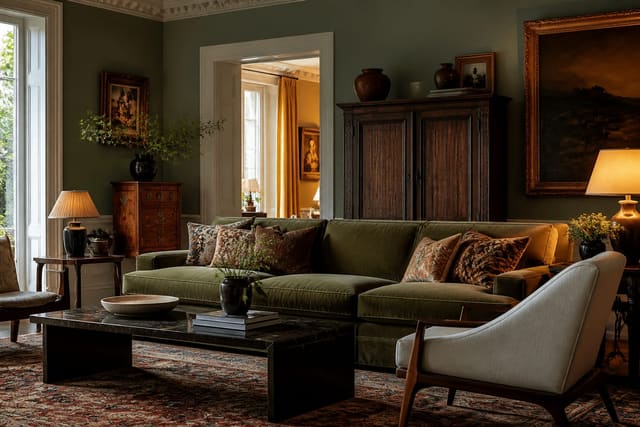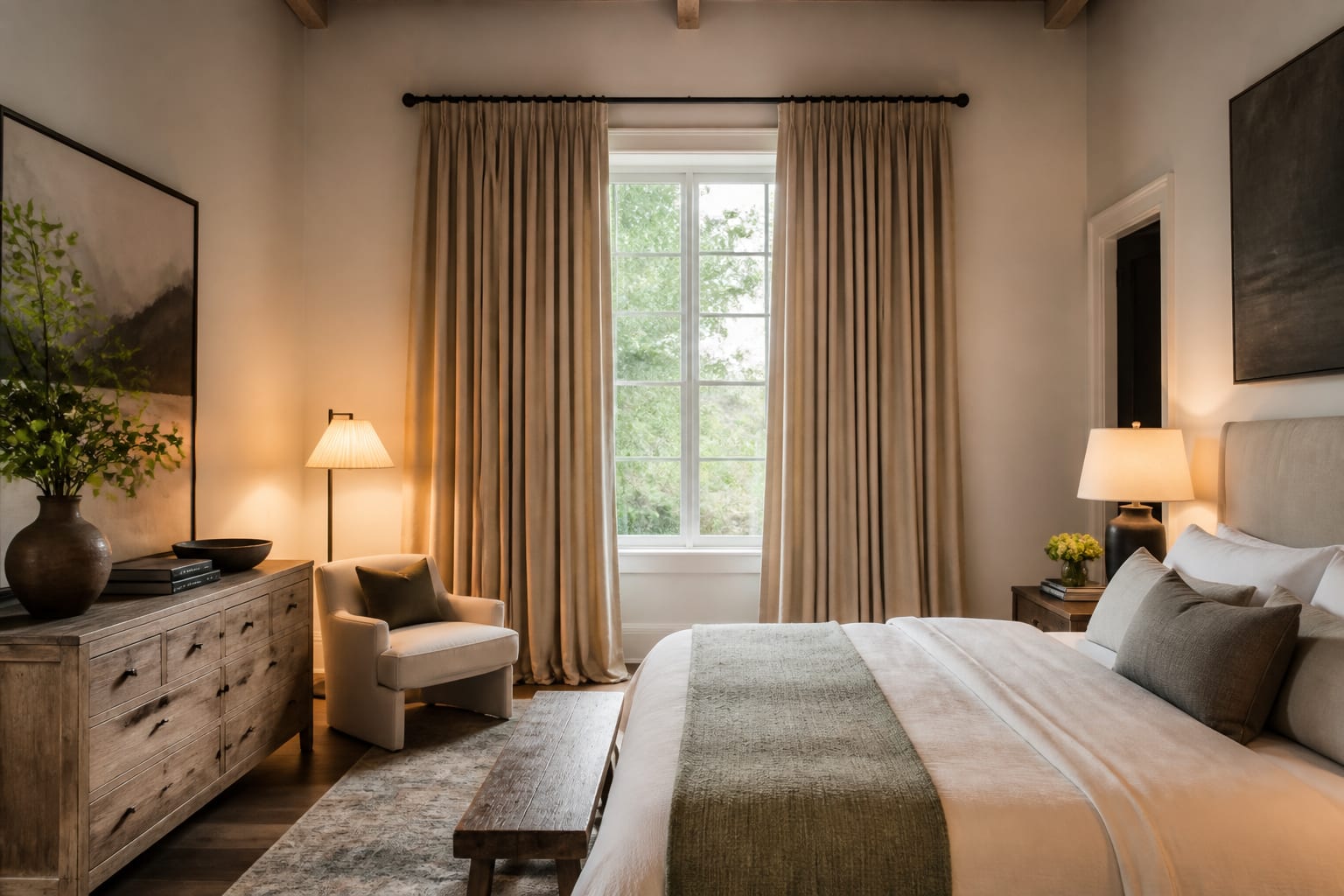
Hang the rod high and wide, then let the panels just kiss the floor, and almost any window looks taller and more expensive than it is. The single most common error I see is a rod mounted right on the window frame with skimpy panels that stop above the sill. My read is that placement matters far more than the fabric you pick, because a $40 panel hung correctly beats a $150 panel hung wrong every time. Get the height and width right and the rest forgives itself.
The two numbers that do the heavy lifting are how high above the window you mount the rod and how far past the frame it extends. Both pull the eye outward and upward, which is exactly the illusion you want. I will walk through the measurements I actually use, then the mistakes that wreck the look.
Get the rod height right first
Rod height is the decision that changes the whole room, so settle it before anything else. The default move is to mount the bracket 4 to 6 inches above the top of the window frame. That small lift draws the eye up and tricks it into reading the window as taller than it measures. If your wall has more than about 12 inches between the frame and the ceiling, push the rod higher and split that gap, landing the bracket roughly two-thirds of the way up toward the crown.
When the gap to the ceiling is tight, under 4 inches or so, just mount the rod 1 to 2 inches below the ceiling line and forget the frame entirely. Ceiling-mounted or near-ceiling rods make even an 8-foot wall feel taller. The one height I avoid is the rod sitting flush on the window frame, because it caps the window at its true size and makes the panels look like an afterthought. If your room already feels low or dim, lifting the rod is one of the cheapest fixes, and it pairs well with the brightness tricks in my dark room solutions guide.
A quick way to test the height before drilling: hold the rod up at your chosen line, step back to the doorway, and check whether your eye travels up the wall or stops at the glass. If it stops, raise the rod another 2 inches and look again.
Get the width and panel length right
Width is the second illusion. Run the rod 8 to 12 inches past each side of the window frame so that when the curtains are open, the panels stack on the wall and barely cover the glass. This makes the window look wider and floods the room with more light during the day. On a 36-inch-wide window, that means a rod spanning roughly 52 to 60 inches end to end.
Fullness comes from buying enough fabric. As a rule, total panel width should be about 2 times the width of the area the rod covers, so the curtains gather into soft folds instead of hanging flat like a bedsheet. Two standard 50-inch panels usually cover a single window with room to spare. Length is the other half: measure from the rod to the floor and buy the next standard drop up, which is 84, 96, or 108 inches, then hem down if needed.
Here is the order I measure and shop in:
- Measure floor-to-rod height after you have chosen the rod line, not before.
- Add 8 to 12 inches per side to the window width to size the rod.
- Pick a panel drop of 84, 96, or 108 inches that lands at or just past the floor.
- Multiply the rod span by 2 to get the total fabric width you need.
- Decide on a hem style: floor-kiss, a 1-inch break, or a small puddle.
How the hem should meet the floor
Where the fabric meets the floor sets the tone. A floor-kiss hem, where the panel just grazes the floor with no gap, reads crisp and tailored and is my default for living rooms. A 1-inch break, where the fabric bends slightly at the bottom, looks relaxed and hides minor measuring errors. A puddle, with 2 to 4 inches of fabric pooling on the floor, leans formal and is harder to keep tidy.
The length to avoid is the high-water hem that floats 2 to 3 inches above the floor. It instantly reads as a mistake, no matter how nice the fabric is. If you are between drops, size up and hem down rather than living with a panel that is too short. Layering a sheer behind a heavier drape also adds depth, and the same layering logic shows up when you mix design styles across a room.
Common mistakes to avoid
The most common mistake is mounting the rod directly on the window frame, which shrinks the window and flattens the whole wall. Lift it 4 to 6 inches and the room changes instantly.
The second mistake is panels that are too narrow, so the curtains stretch tight when closed and never form folds. Buy roughly 2 times the rod width in fabric. A third is the short hem that stops above the floor, which looks unfinished in every room I have seen it in. A fourth is a rod that ends at the window edge, leaving panels stuck covering the glass even when open. Run it 8 to 12 inches wider on each side. The last common mistake is ignoring the ceiling line entirely; in a room with a low or awkward gap above the window, a near-ceiling mount solves problems that fabric choice never will.
Use AI design to test curtain placement before you drill
The frustrating thing about curtains is that you cannot see the effect until the brackets are screwed in and the panels are hung, and by then the holes are in the wall. Re-Design takes that risk out. Upload a photo of your actual window and the AI design re-renders it with the rod raised, widened, and dressed in different panel lengths and colors, so you can judge the proportion before you own a drill bit.
Because you upload your real room, the preview respects your actual ceiling height, wall color, and the light coming through that specific window. Try a near-ceiling mount against a frame-level one, swap a floor-kiss hem for a puddle, and see which version makes the window read tallest, all before you commit to a single screw or a single panel.