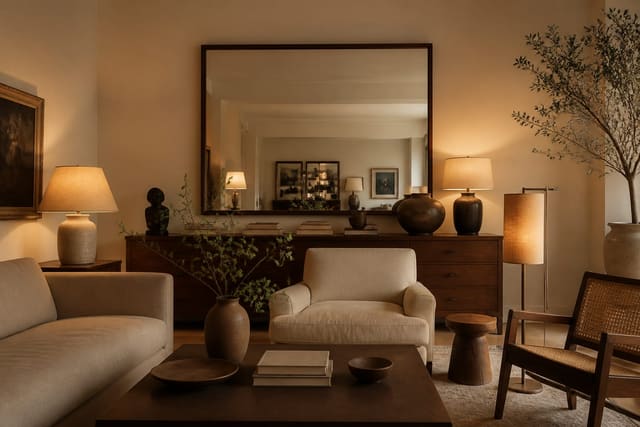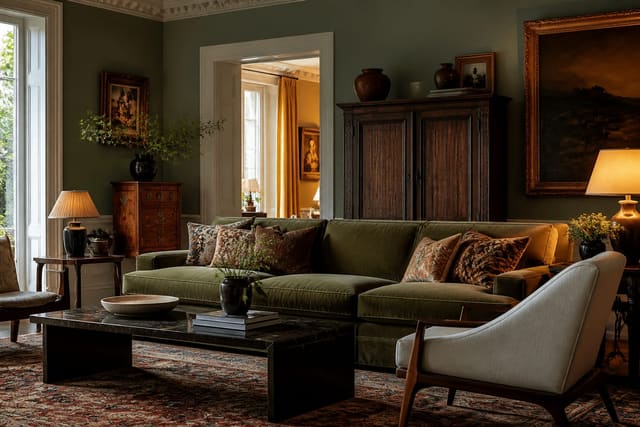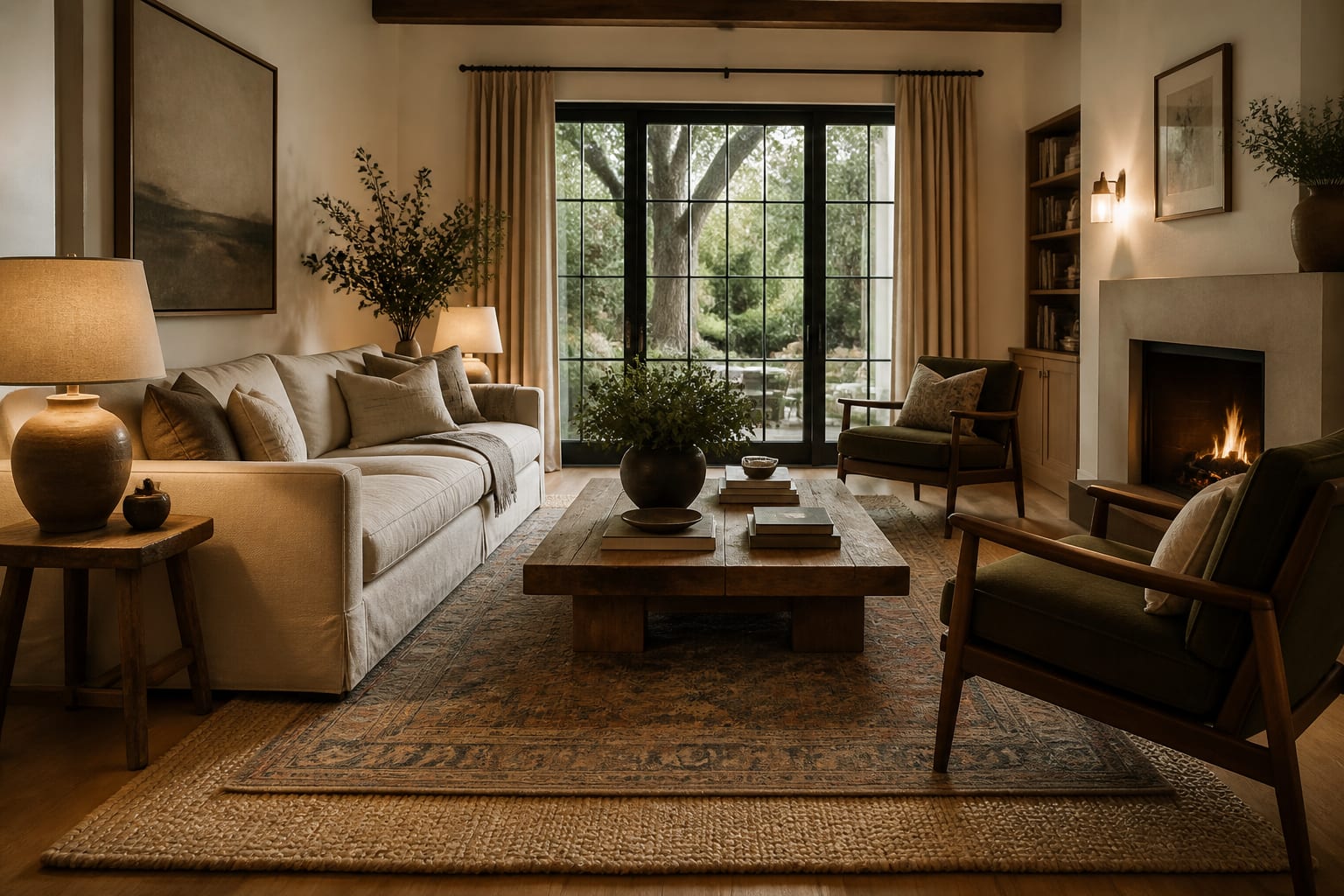
Layering rugs works when you treat the bottom rug as a frame and the top rug as the art. Put a large, plain, low-texture rug down first, then center a smaller, more interesting rug on top, leaving an even border of the base showing all the way around. My take is that layering is the cheapest way to make a room feel collected and warm, because it does in two steps what an expensive oversized rug does in one.
The reason it reads as deliberate, not accidental, is the contrast. The two rugs should clearly differ in size, and ideally in texture or pattern too, so the eye understands you stacked them on purpose rather than just owning two rugs that overlap.
Why layering works at all
Layering rugs solves three problems at once. It makes a small rug you already own look intentional by giving it a frame. It adds warmth and texture to a hard or cold floor without the cost of one huge rug. And it lets you bring in a bold pattern in a manageable dose, because the neutral base keeps the pattern from taking over the room.
The foundational move is the same one good design always leans on, which is contrast with a reason behind it. A jute base and a wool kilim on top differ enough in texture that the stack reads as a choice. Two similar medium-pile rugs in similar colors just look like a mistake nobody fixed. If you are layering to warm up a cool or dim space, the surface and texture logic in my dark room solutions guide explains why low-sheen natural fiber on the bottom reads best.
There is a practical payoff too. A genuinely large rug, say a 9 by 12, can run several hundred dollars in wool, while a flat jute base that size is a fraction of that, often under 200 dollars, and the patterned topper you put on it can be small enough to stay affordable. So layering is not just a styling trick, it is a way to get the footprint of a big rug for closer to the price of a small one.
Pick the base, then the topper
The base rug does the structural work, so it should be large, flat, and quiet. Natural-fiber rugs are ideal here: jute, sisal, and seagrass are affordable in big sizes, have a low profile so the layered look does not get bulky, and bring neutral texture that flatters almost any top rug. Size the base like a normal area rug, large enough that the front legs of your seating land on it.
The top rug is where personality goes. This is the layer that carries pattern, color, or a plush texture you want underfoot. Good toppers to reach for:
- A vintage or Persian-style rug with pattern that hides wear and adds age.
- A wool kilim or flatweave for graphic pattern without much height.
- A sheepskin or shag for pure softness in a reading nook or by a bed.
- A bold geometric for a hit of modern contrast over an organic base.
The top rug should be 2 to 3 feet smaller than the base in each direction, which gives you that even reveal. The same instinct for letting one bold element lead while the rest stays quiet drives my whole approach to mixing design styles.
Get the proportions and the reveal right
The difference between styled layering and a tripping hazard is proportion. The base must be clearly bigger, by at least 2 to 3 feet in each direction, so the border reads as deliberate rather than as one rug almost covering another. Aim for an even 8-12 inch reveal of the base showing on all four sides. Uneven reveal, wide on one side and thin on another, is the fastest way to make the whole thing look careless.
Keep the stack flat and safe. A rug pad between floor and base stops the whole thing sliding, and rug grippers or a thin non-slip pad between the two rugs keeps the top from creeping and curling at the corners, which is both ugly and a stub-your-toe risk. Watch the total height too: a low-pile jute base around a quarter of an inch plus a flatweave topper stays under an inch, but a thick base under a shag can build to 2 inches or more, which catches doors and toes. Two rugs is the sweet spot in nearly every room. A third layer is possible in a large boho space but usually tips into looking like a pile rather than a plan, so I cap most rooms at two.
Orientation matters as much as size. Square up the top rug to the base so the reveal stays even, then align both to the seating zone rather than to the nearest wall. A top rug set at a slight angle can look intentional in a very casual room, but in most spaces a crooked topper just reads as a rug that slid out of place, so I keep the two stacked parallel and check the corners line up before I call it done.
Common mistakes to avoid
The most common mistake is making the two rugs too close in size, so the base barely peeks out and the whole effect looks like one rug shifted off-center rather than a deliberate stack. Keep that 2-3 foot gap.
Another frequent mistake is an uneven reveal, where the border is 12 inches on one side and 3 on another, which instantly reads as sloppy. Center the top rug and measure. A third is skipping texture contrast: two flat, similar rugs stacked together just look redundant. Pair a low-texture base with a higher-texture or patterned top. People also forget the grip, letting the top rug slide and bunch until the corners flip up. And a final common mistake is over-layering, stacking three or four rugs until the floor looks like a laundry pile instead of a designed surface.
Use AI design to preview a layered look before you buy
The tricky part of layering rugs is that you cannot tell whether two rugs work together until they are both on the floor, and a base rug big enough to layer is not cheap to buy on spec. Re-Design lets you test the combination first. Upload a photo of your room and the AI design re-renders it with a neutral base and different top rugs layered on, so you can judge the contrast and the reveal before you order anything.
Because you upload your real space, the previews respect your actual furniture, your floor, and the true size of the seating zone. Try a jute base with a patterned topper, then with a plush one, and see which combination warms the room and reads as intentional, all before you commit to two rugs you would otherwise be guessing at.