A mantelpiece is the one shelf in your home that everyone looks at when they walk in, which is exactly why most of them end up looking like a junk drawer turned sideways. My read is that a mantel fails not because you own bad objects but because you treat it as storage instead of a tiny stage. Five framed photos, a candle, a vacation magnet, and a stray remote do not make a vignette; they make visual noise at eye level, and your guests feel the chaos before they can name it.
The fix is almost never buying more decor. It is editing down, anchoring the arrangement, and spacing the few pieces you keep so the eye glides across the ledge instead of snagging on a pileup. Below is the exact approach I use, with real measurements, so you can reset a mantel in a single afternoon and have it still look intentional a month later when life has tried to bury it again.
Start with one anchor, not a collection
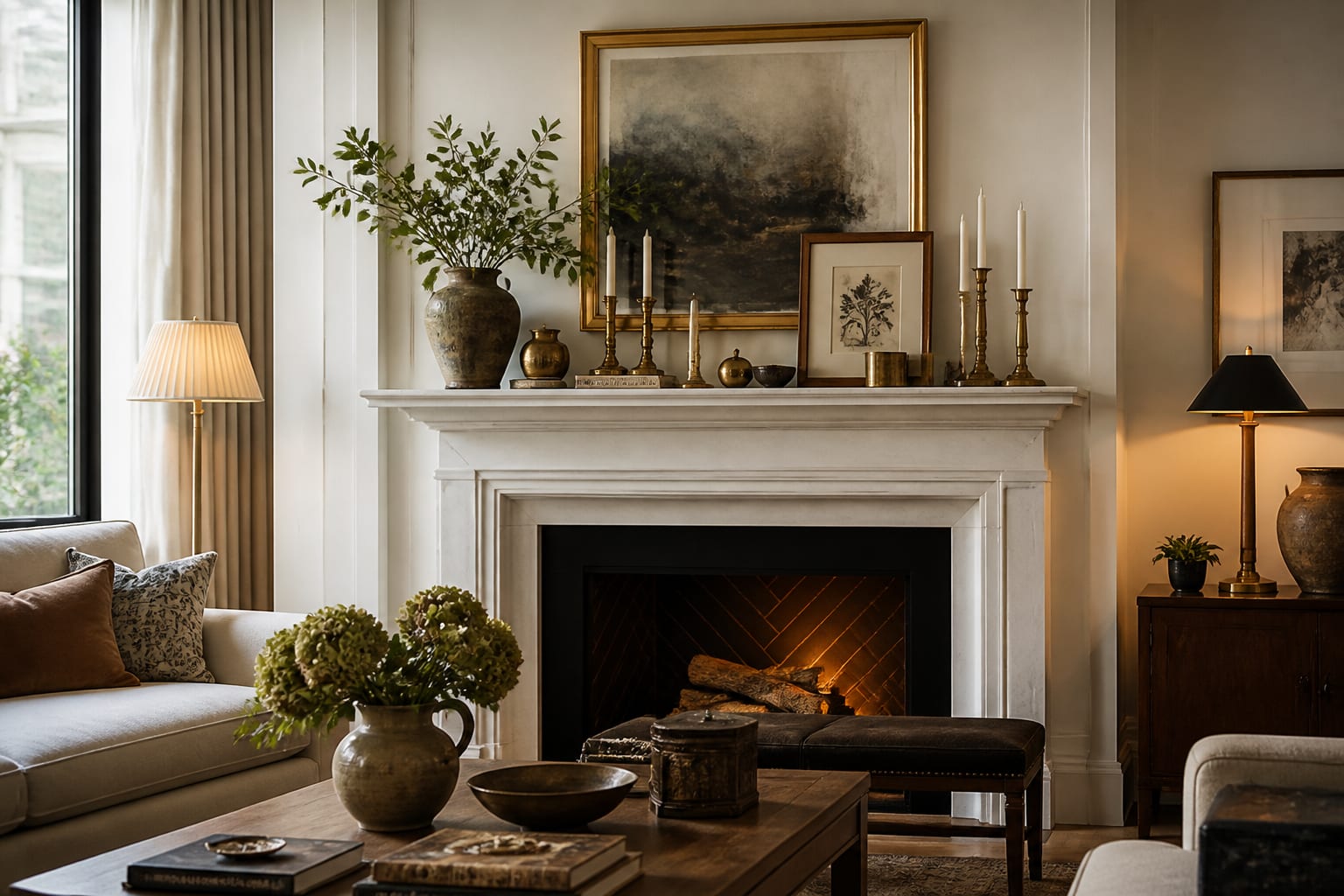
Every mantel needs a single dominant element that sets the scale for everything else. I almost always reach for a mirror or a large piece of art, either leaned or hung, because vertical mass at the center pulls the eye up and makes a low fireplace feel taller and more deliberate. A good anchor measures about 1.5 to 2 times the height of the mantel shelf itself; on a standard 4 to 5 foot wide mantel that usually lands a frame in the 24 to 36 inch range.
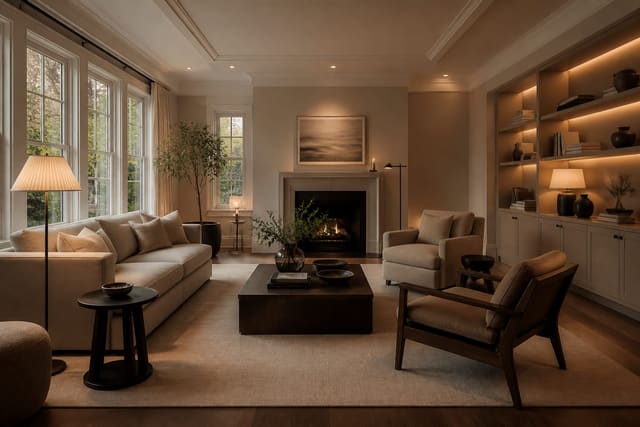
Lean the anchor against the wall rather than hanging it dead center whenever the shelf is deep enough, ideally 5 inches or more. Leaning reads as casual and confident, and it lets you tuck smaller objects partly in front so the layers overlap and gain depth. If you do hang it, keep the bottom edge 4 to 8 inches above the shelf so a mid-layer object can sit underneath without crowding the frame. The same focal-point logic governs the whole room, and it pairs naturally with the broader living room layout ideas that decide where your seating points before you ever touch the mantel.
Layer in threes and vary every height
Flat arrangements die on sight. The trick is depth in two directions at once: front to back and top to bottom. Build a back layer, a mid layer, and a front layer, with nothing sitting at the same height as its immediate neighbor. Once the anchor is set, work outward in odd-numbered groupings, because odd clusters keep the eye moving while even ones lock it into a static, dull pair.
When you choose the supporting cast, look for contrast across three dimensions in every grouping:
- Height: pair a 12 inch object with a 6 inch one and a near-flat piece, never three items of the same size.
- Texture: combine something matte like a ceramic vase, something reflective like brass or glass, and something organic like a branch or a stack of linen-bound books.
- Visual weight: set a dense solid object next to an airy open one so the cluster never feels too heavy on one end or too thin on the other.
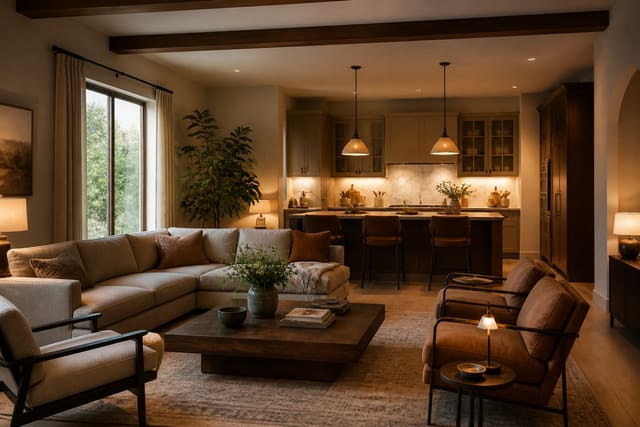
That deliberate variety is what separates a curated ledge from a row of stuff. If your mantel lives in a connected great room, the materials you layer here should echo finishes you used elsewhere, the way good open plan living kitchen ideas repeat a few hero materials to tie distinct zones into one coherent space.
Balance, asymmetry, and breathing room
Symmetry is the easy mode that almost always looks stiff. Matched candlesticks flanking a centered clock reads like a hotel lobby check-in desk, polite and forgettable. I prefer asymmetric balance, where a tall anchor sitting on one third of the mantel is counterweighted by a denser low cluster on the opposite third, with the visual mass roughly equal even though the objects are nothing alike.
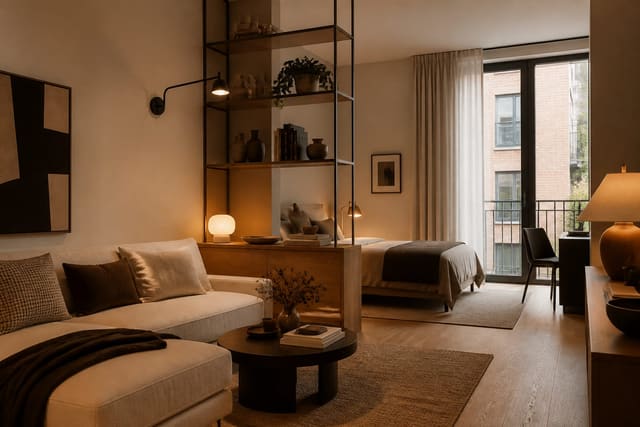
The most underused tool here is plain empty space. Aim for at least 4 to 6 inches of bare ledge between groupings, and keep the outer 3 to 4 inches near each end relatively clear so objects never look like they are about to slide off the edge. A mantel that sits around 70 percent occupied looks styled; one that creeps past 90 percent looks like an overstuffed windowsill. In a tight footprint where every surface earns its keep, this restraint matters even more, and it is the same discipline you would apply working through studio apartment living ideas, where one cluttered ledge can throw off the balance of the entire room.
Common mistakes to avoid
The most common mistake is hanging the mirror or art too high, leaving a dead gap of bare wall floating above the mantel. The bottom of the piece should sit 4 to 8 inches above the shelf, not drift toward the ceiling. The second is lining objects up in a single straight row at one uniform height, which flattens the whole composition into a timeline rather than a scene with depth.
Another frequent error is ignoring scale entirely: a scatter of tiny 3 to 4 inch trinkets on a 5 foot mantel simply vanishes from across the room. Buy or borrow one genuinely large object instead of ten small ones. Watch your clearances too, because crowding combustibles against the firebox is both a styling and a safety mistake; maintain 5 to 12 inches of clearance above an active firebox and never set anything over the flue opening. Last, resist seasonal overload, where the mantel quietly becomes a shrine to whatever holiday is nearest with no edit on the way back out.
Use AI design to preview how to style a mantelpiece before you commit
The hardest part of mantel styling is judging scale and color in your head, which is exactly where Re-Design earns its keep. You upload a straight-on photo of your fireplace and ask the AI design to test a leaning 30 inch mirror against three brass candlesticks, or swap a busy floral painting for a single oversized abstract, without buying, hanging, or returning a thing. Seeing those height ratios rendered against your real wall color beats holding objects up and squinting every time.
I lean on it to settle the arguments I would otherwise have with myself at the store: matte ceramic versus polished brass, leaned art versus hung, warm walnut tones versus cool stone. Upload one photo, generate a handful of mantel variations side by side, and you walk in knowing the exact size and finish that works instead of gambling on the shelf and returning half of it the following week.