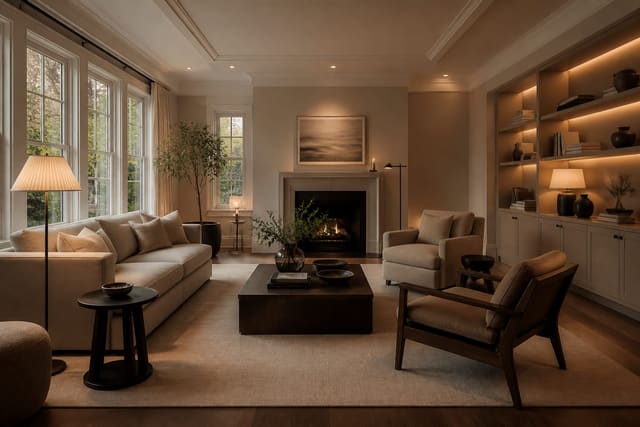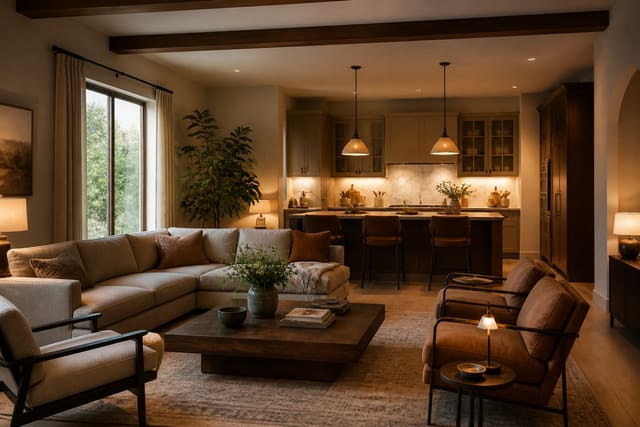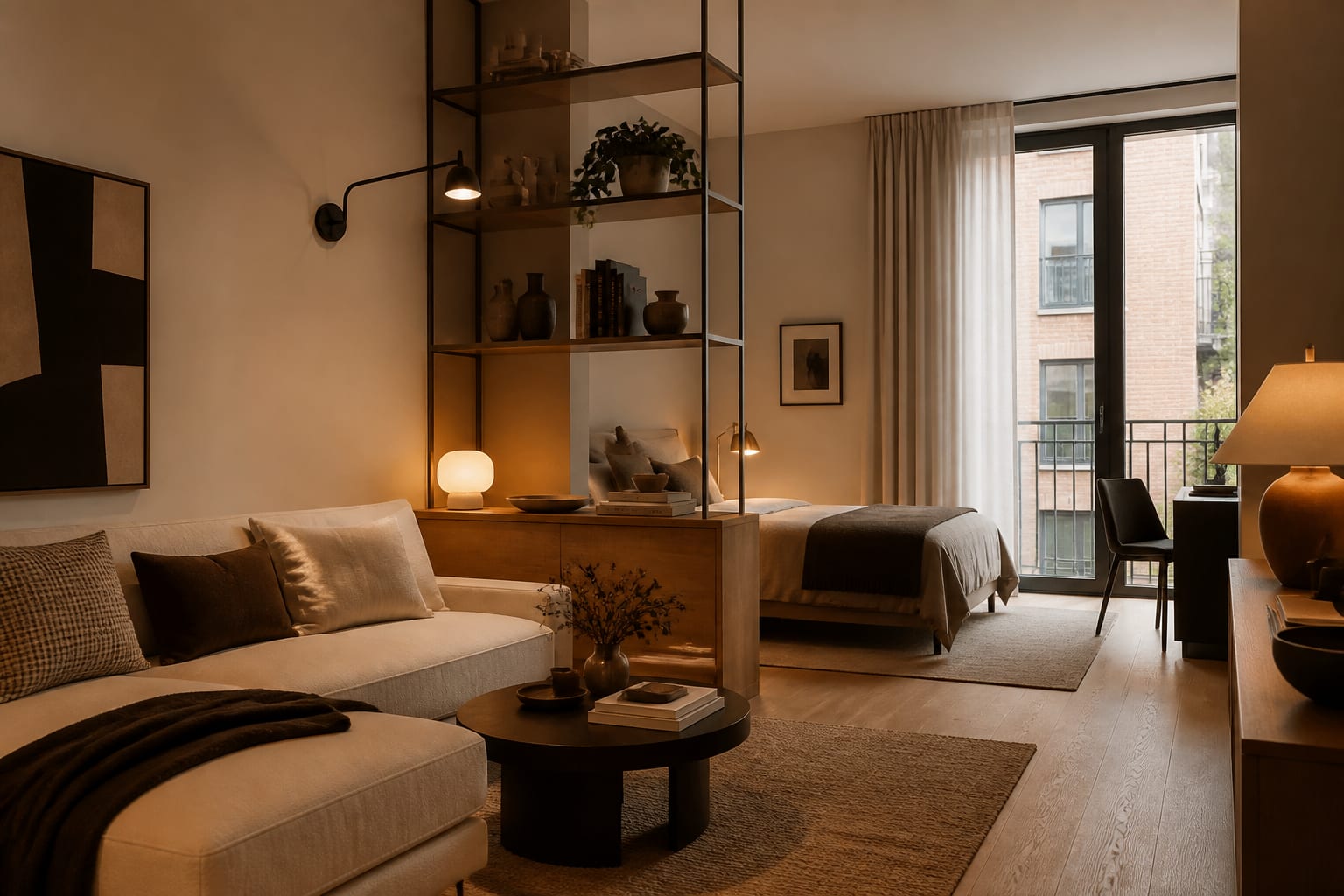
A studio apartment lives far better when you treat it as several small rooms rather than one open box, and the living zone deserves its own clear identity. The trick is to define that lounge area with a rug, a divider, or the back of a sofa so it does not bleed into the bed and kitchen. Multifunctional furniture earns every inch, while clear walking paths keep the whole space from feeling like an obstacle course. With a few deliberate moves you can carve out a real living room inside a studio without ever building a wall.
How do you create a living room in a studio?
The core move is to assign each function its own zone and mark the boundaries clearly, because a studio with no defined areas feels like a cluttered single room. Start with the living zone: choose a wall or corner away from the bed, place the sofa there, and lay a rug beneath the seating to claim that footprint visually. The rug is the most affordable and immediate divider you have, telling the eye that this patch of floor is the lounge.
Orient the seating toward a focal point such as the television, a window, or the sofa itself in a conversation arrangement, and keep the bed out of that sightline where possible. Use the back of the sofa or a low console as a soft boundary between the living and sleeping zones. Even in a 400-square-foot studio, this approach makes the living area feel like a deliberate room rather than leftover space. The aim is a lounge you actively choose to sit in, separate from the spot where you sleep, so the apartment supports both relaxing and resting.
See also our guide to Living Room Layout Ideas for more on studio apartment living room ideas.
What furniture works in a studio living area?
Multifunctional furniture is non-negotiable in a studio, since every piece has to justify its footprint. A sofa bed is the headline player, serving as living-room seating by day and a guest or primary bed by night, which can free up enough floor for an actual lounge zone. Nesting tables expand to serve drinks or work surface when needed and tuck away to nothing when they are not, keeping the floor open.
Storage ottomans double as coffee tables, footrests, and hidden bins, while a console table behind the sofa can hold a lamp, mail, and double as a narrow desk. Choose pieces with legs and an open base, since visible floor underneath makes a small studio read as larger and less crowded. Wall-mounted shelves and a tall, narrow bookcase grab vertical storage that a low footprint cannot. Skip the oversized sectional that swallows the room; a compact sofa under 80 inches plus a chair gives flexible seating without choking the limited floor space a studio offers.
For a related angle on studio apartment living room ideas, read Open Plan Living Kitchen Ideas.
How do you divide a studio without walls?
Dividers create the feeling of separate rooms while preserving the light and air that make a studio livable. An open shelving unit or a freestanding bookcase placed perpendicular to a wall splits the lounge from the sleeping area while still letting light pass through its shelves. A slatted wood screen or a folding panel offers more visual privacy for the bed when guests are over, and folds away when you want the space open.
A curtain hung from a ceiling track is the most flexible divider of all, drawing closed to hide the bed and opening to restore the full room. Sheer or light fabric keeps the studio from feeling boxed in. Furniture itself divides space too: the floated sofa, a tall plant, or a console all signal a boundary without a solid wall. Whatever you choose, keep dividers under the ceiling height or open in construction so the studio never feels chopped into dark, cramped cells. The goal is suggestion of separation, not total enclosure that steals light from the whole apartment.
How do you keep traffic flowing in a studio?
With several zones crammed into one room, clear circulation is what keeps a studio from feeling like an obstacle course. Plan the main walking paths first and keep them a consistent 30 to 36 inches wide so you can move from the door to the bed, kitchen, and bathroom without squeezing past furniture. Minor paths can shrink to 24 inches, but the primary routes need the full width to feel comfortable.
Arrange furniture so the paths run along logical lines rather than zigzagging around stray pieces. Pull the sofa and bed to the perimeter where it makes sense, leaving the center open for movement, and avoid placing anything that forces you to turn sideways on a daily route. Leave 14 to 18 inches between the sofa and the coffee table for legroom, and keep at least 36 inches in front of the kitchen for opening appliances. Thinking through these clearances before you place furniture stops the most common studio frustration, the maze of furniture that makes a small home feel even smaller and harder to live in.
Here are the common mistakes to avoid: - Skipping a rug under the seating, so the living zone blends into the bed and kitchen with no boundary. - Using a solid floor-to-ceiling divider that blocks all the light and makes the studio feel like dark cells. - Filling the space with an oversized sectional that swallows the floor and leaves no room for other zones. - Pushing every piece to the walls so the center reads as empty while paths still feel cramped and awkward. - Letting main walking paths drop below 30 inches so you turn sideways to cross your own apartment daily. - Choosing bulky closed-base furniture that hides the floor and makes a small studio look more crowded.
Bring the look home with Re-Design
Carving zones out of a studio is hard to visualize when the bed, sofa, and kitchen all share one room. Upload a photo of your studio to Re-Design and try anchoring a living zone with a rug, floating the sofa, or adding an open bookcase divider to see how the separation reads. You can re-design the same space with a sofa bed and nesting tables to judge whether the layout keeps your 30- to 36-inch paths clear. It lets you test divider and furniture ideas before you buy a single piece for the tight footprint.
Frequently Asked Questions
How do I make a living room area in a studio apartment?
Choose a corner or wall away from the bed, place your sofa there, and lay a rug under the seating to claim that footprint as the lounge. Orient the seating toward a focal point and use the back of the sofa or a low console as a soft boundary. The rug is your cheapest, fastest tool for separating the living zone from the rest of the studio.
What furniture is best for a studio apartment?
Lean on multifunctional pieces: a sofa bed for day-and-night use, nesting tables that expand and tuck away, and a storage ottoman that works as a coffee table and hidden bin. Choose items with legs and open bases so visible floor makes the studio feel larger. Skip oversized sectionals in favor of a compact sofa under 80 inches plus a chair.
How can I divide a studio apartment without building walls?
Use an open bookcase or shelving unit perpendicular to a wall, a slatted folding screen, or a ceiling-track curtain to suggest separate rooms while letting light through. A floated sofa, a tall plant, or a console also marks a boundary. Keep dividers open or below ceiling height so the studio never feels chopped into dark, cramped cells.
How much clearance do I need for walkways in a studio?
Keep main walking paths a consistent 30 to 36 inches wide so you can move between the door, bed, kitchen, and bathroom without squeezing past furniture. Minor paths can drop to 24 inches. Leave 14 to 18 inches between the sofa and coffee table for legroom, and 36 inches in front of the kitchen so appliances open freely.