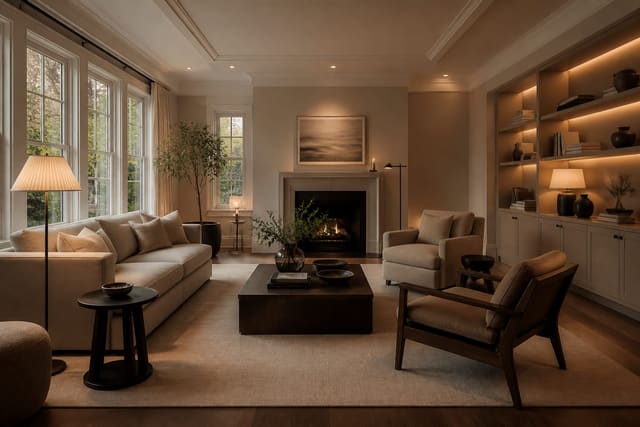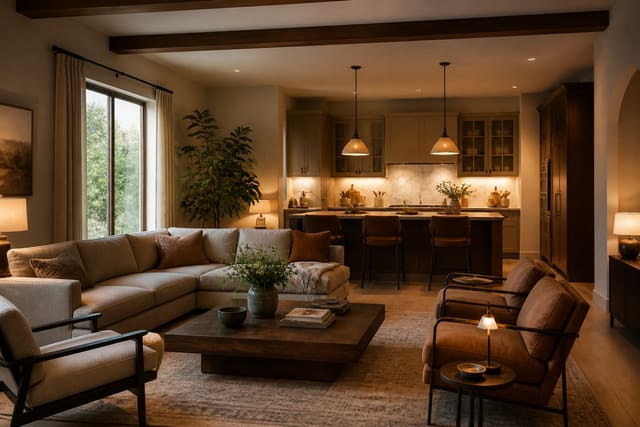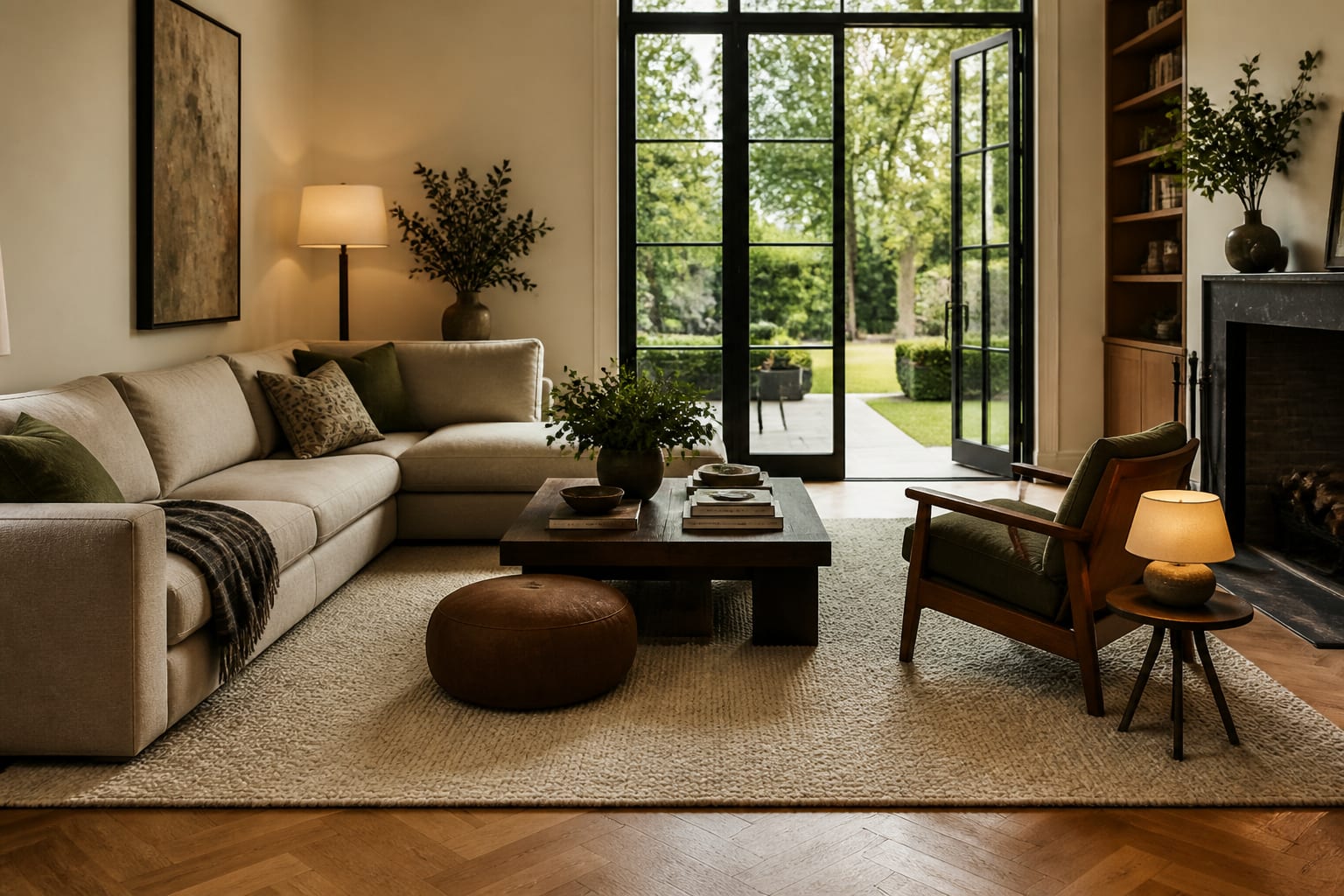
The single most common rug mistake is buying one that is too small, which leaves furniture stranded and the room feeling disjointed. A living room rug should anchor the entire seating group, not float like a postage stamp under the coffee table. Getting the size right comes down to a few measurable rules: catch the front legs of every seat, leave a consistent border of bare floor around the edge, and match the pile and material to how hard the room gets used. Nail those and the rug pulls the whole room together; miss them and even an expensive rug looks like an afterthought.
What size rug do I need for my living room?
Rug size follows the seating group, not the room dimensions, though the two are related. For a standard living room with a three-seat sofa and a pair of chairs, an 8-by-10 rug is the workhorse size, large enough to hold the front legs of all the seating with the coffee table fully on top. Larger rooms with sectionals or multiple seating areas usually need a 9-by-12 or bigger so the arrangement does not spill off the edges.
Measure the seating group, then add at least 6 to 8 inches beyond the outermost furniture legs on each side so the rug visibly extends past the arrangement. The rug should also leave a margin of exposed floor around its perimeter; aim for 8 to 18 inches of bare floor between the rug and the walls, keeping that border roughly even on all sides. A too-small rug is the most frequent error, so when you are between two sizes, size up. The larger rug almost always makes the room feel more generous and finished.
See also our guide to Living Room Layout Ideas for more on living room rug ideas.
How should furniture sit on a living room rug?
There are three accepted ways to relate furniture to a rug, and the best one depends on rug size. The most luxurious is all legs on, where every piece of seating sits completely on a large rug with room to spare; this needs a 9-by-12 or larger in most rooms. The most common and most forgiving is front legs on, where the front legs of the sofa and chairs rest on the rug while the back legs sit on the floor.
The front-legs-on approach ties the seating group together into a single island even with a moderately sized rug, which is why it works so well with the popular 8-by-10. The third option, all legs off, keeps the rug entirely under the coffee table with all furniture on bare floor; reserve this for very small rugs or tight rooms, since it can leave the seating looking disconnected. Whichever you choose, apply it consistently so the rug looks intentional. The cardinal rule is to avoid the half-hearted look of only the coffee table touching a rug that is clearly meant to do more.
For a related angle on living room rug ideas, read Open Plan Living Kitchen Ideas.
How do you layer rugs in a living room?
Layering rugs adds depth, texture, and warmth, and it solves the practical problem of an expensive rug being too small for the room. The technique is to start with a large, neutral, flat base, most often a natural-fiber rug like jute or sisal in a 9-by-12, then center a smaller decorative rug on top under the seating. The base extends the floor coverage while the top rug delivers the color and pattern.
For the layering to look deliberate rather than accidental, let 10 to 16 inches of the base rug show around the smaller top rug, keeping that reveal even on all sides. Contrast helps: pair a low, smooth jute base with a softer wool or patterned top rug so the two layers read as distinct. Texture-on-texture works well, but avoid two busy patterns fighting for attention. A rug pad between the layers stops the top rug from sliding and adds cushion underfoot. Layering also lets you refresh a room seasonally by swapping only the smaller, cheaper top rug rather than the whole floor.
What pile height and material last in a living room?
Pile height is the depth of the rug fibers, and it directly affects durability and cleaning in a busy living room. Low-pile rugs, under a quarter inch, and flat weaves resist crushing, vacuum easily, and let chairs slide, which makes them ideal for high-traffic family rooms. Medium pile around a quarter to half an inch balances comfort and durability. Deep shag over three-quarters of an inch feels plush underfoot but mats down in walkways and traps crumbs and pet hair.
Material matters as much as pile. Wool is the gold standard for living rooms because it is naturally durable, resilient, and somewhat stain-resistant, though it costs more. Synthetics like polypropylene shrug off spills and sunlight at a lower price, making them the smart pick for homes with kids and pets. Natural fibers like jute and sisal bring great texture and work beautifully as layering bases, but they stain easily and are rough underfoot, so keep them out of spill-prone spots. Match the fiber to your traffic and tolerance for upkeep and the rug will last for years.
Here are the common mistakes to avoid: - Buying a rug too small so only the coffee table sits on it and the seating floats off the edges. - Leaving an uneven or nonexistent floor border instead of a consistent 8 to 18 inches around the rug. - Putting only the coffee table on the rug while every sofa and chair sits entirely on bare floor. - Choosing deep shag for a high-traffic living room where it mats down and traps crumbs and pet hair. - Layering two busy patterns that compete instead of pairing a textured base with one decorative top rug. - Skipping a rug pad, so the rug slides, curls at the corners, and offers no cushion underfoot.
Bring the look home with Re-Design
Rug sizing is hard to picture from a product listing, and returning an 8-by-10 that turned out too small is a hassle. Upload a photo of your living room to Re-Design and try different rug sizes, colors, and pile styles right under your actual sofa and chairs. You can re-design the room with an 8-by-10 versus a 9-by-12 to see exactly how the front-legs-on rule and the floor border play out against your furniture. It lets you confirm the scale and pattern before you commit, so the rug you order anchors the room the way you intended.
Frequently Asked Questions
Is an 8x10 or 9x12 rug better for a living room?
An 8-by-10 fits most medium living rooms with a sofa and two chairs, holding the front legs of all seating. Step up to a 9-by-12 for larger rooms or sectionals where you want every piece partly or fully on the rug. When you are torn between the two sizes, choose the larger one, since a too-small rug is the most common regret.
Should all furniture legs be on the rug?
Not necessarily. The front-legs-on approach, where only the front legs of the sofa and chairs rest on the rug, is the most common and forgiving, and it ties the seating into one island. All-legs-on looks most luxurious but needs a 9-by-12 or larger. Avoid having only the coffee table on the rug, which leaves the seating looking disconnected.
How much floor should show around a living room rug?
Leave a consistent 8 to 18 inches of bare floor between the rug edge and the walls, keeping that border roughly even on all sides. This frame of exposed floor makes the rug look intentional and the room feel grounded. A rug that runs nearly wall to wall reads like wall-to-wall carpet, while too narrow a border looks accidental.
What rug material is best for high traffic?
Wool is the most durable natural choice and resists crushing and stains reasonably well, though it costs more. Polypropylene and other synthetics handle spills, sunlight, and heavy traffic at a lower price, which suits homes with kids and pets. Pair durability with a low pile under a quarter inch so the rug vacuums easily and does not mat down in walkways.