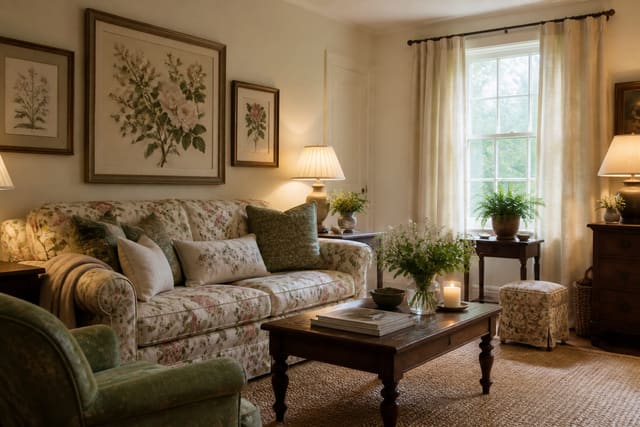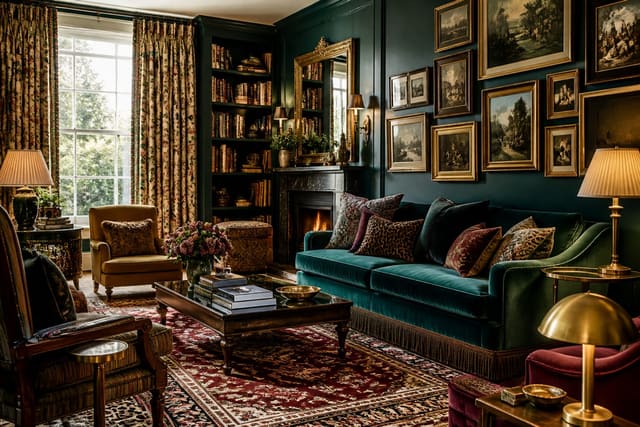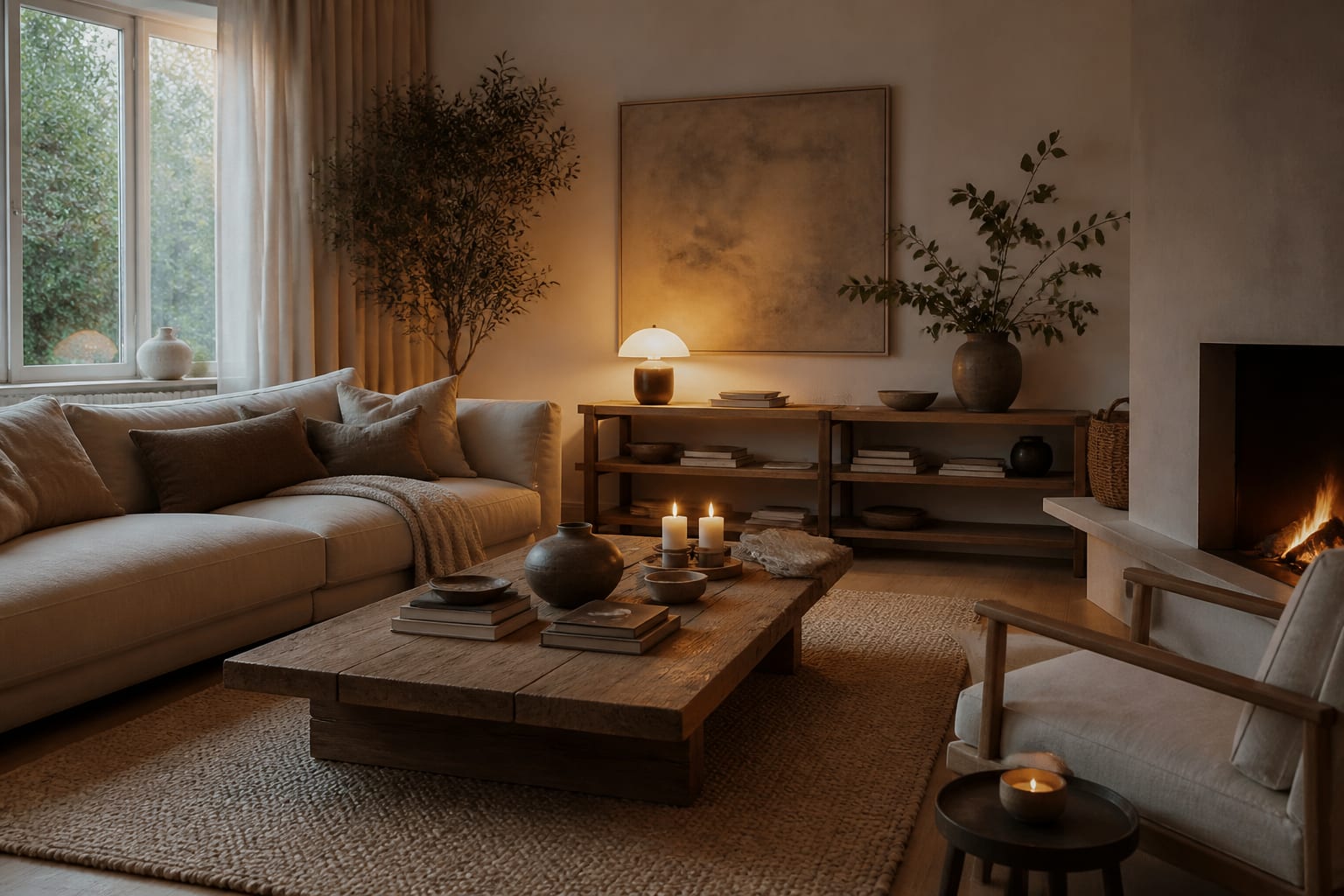
A hygge living room earns its warmth through texture and soft light, not clutter or trend-chasing. The strongest rooms keep the palette quiet and let chunky knits, candle glow, and pale wood do the emotional work. Start with one deep, comfortable seat you genuinely want to sink into, then build layers of wool and linen around it. Keep overhead lighting low and lamps plentiful. Hygge rewards restraint, so choose fewer pieces, make each one tactile, and design every corner for slow, unhurried evenings.
Build Warmth With Layered Natural Textures
Texture carries the whole hygge living room idea, so treat fabric as the foundation rather than an afterthought. Begin with a sofa upholstered in soft boucle, brushed cotton, or natural linen, then pile on contrasting layers that invite touch. A chunky merino throw draped over one arm, two or three linen cushions in slightly different weaves, and a sheepskin tossed across the seat give the eye somewhere soft to land. The goal is a room that looks like it has already been enjoyed, never staged. Vary the scale of your textures deliberately. Pair a coarse knit blanket with a smooth wool cushion and a nubby jute rug underfoot so each material reads distinctly. A rug roughly nine by twelve feet anchors the seating group and keeps cold floors from undercutting the mood. Add a smaller sheepskin or flatweave layered on top near the chair where bare feet rest most. Stick to a tight palette of cream, oatmeal, soft grey, and warm taupe so the layering reads as calm rather than busy. Natural wood surfaces complete the warmth, so let a light oak coffee table or a worn pine side table show its grain. Wood and wool together create the quiet, lived-in glow that defines hygge. Avoid anything glossy or cold to the touch, since hard reflective surfaces break the spell instantly. Velvet and corduroy also belong here, adding depth in a cushion or an ottoman without straying from the muted palette. Drape a folded blanket over the back of every seat so warmth is always within reach. When you layer thoughtfully, the room feels enveloping the moment someone walks in, and every seat offers a reason to stay a while longer than planned.
See also our guide to Cottagecore Living Room Ideas for more on hygge living room ideas.
Light the Room for Soft, Cozy Evenings
Lighting separates a true hygge living room from a merely tidy one, and the rule is simple: many small warm sources beat one bright overhead fixture. Switch off the ceiling light most evenings and rely instead on table lamps, floor lamps, and candles placed at different heights around the room. Aim for at least three or four pools of light so the space glows in gentle layers rather than flattening under a single beam. Choose bulbs in the warm range, around two thousand seven hundred kelvin, to mimic candlelight and keep skin tones soft. Candles are non-negotiable for hygge, and grouping them amplifies the effect. Cluster three pillar candles of varying heights on a wooden tray, then repeat smaller groupings on the mantel and windowsill. Real flames add flicker and faint warmth that no bulb replicates, though battery candles work safely near children or pets. Position a reading lamp beside your favorite chair so the corner becomes a destination after dark. Dimmers help enormously, letting you drop the brightness as the evening winds down. Place lamps low, near seated eye level, so light falls on faces and laps rather than the ceiling. Paper lantern shades and linen drum shades diffuse the glow beautifully and suit the muted Scandinavian palette. A string of warm fairy lights along a shelf or window adds a faint sparkle on the darkest evenings. Avoid cool white or blue-toned light entirely, since it reads clinical and undoes every cozy choice you have made. Bounce a little light upward with one floor lamp aimed at the ceiling to soften shadows without flattening the room. When the lighting is right, the space feels like an invitation to slow down, and the warm glow does as much as any blanket to make the room feel safe and snug.
For a related angle on hygge living room ideas, read Maximalist Living Room Ideas.
Keep the Palette Quiet and Grounded
A restrained palette gives the hygge living room its sense of calm, so resist the urge to introduce bold color. Build the room on warm neutrals: soft white walls, oatmeal upholstery, putty and mushroom tones, with the occasional muted sage or dusty blue as a quiet accent. These colors recede rather than demand attention, which is exactly what a restful room needs. When everything sits within a narrow tonal range, the texture and light you have layered become the stars. Walls in a warm off-white or pale greige reflect lamplight gently and feel softer than stark brilliant white, which can edge toward cold. If you want a little more depth, a single wall in a muted clay or smoky taupe adds intimacy without breaking the calm. Keep trim and ceilings close in tone to the walls so the architecture stays quiet. Wood tones do most of the heavy lifting for warmth, so favor light oak, ash, and pine over dark espresso finishes that can feel heavy in a Scandinavian space. Bring color in through nature instead of paint. A few stems of eucalyptus, a bowl of pinecones, or a small potted fern introduce living green without disrupting the muted scheme. Cushions and throws can carry the faintest hint of color, but keep saturation low so the eye stays relaxed. Natural fiber rugs and unbleached linen curtains reinforce the gentle scheme. The discipline pays off in mood, since a quiet palette makes the room feel larger, lighter, and more soothing. Tie the scheme together by repeating one or two warm tones across cushions, rug, and walls so nothing feels accidental. Every cozy detail you add lands harder against this gentle backdrop, and the whole space settles into the unhurried calm that hygge is built to deliver.
Design Corners for Slow, Comfortable Moments
Hygge is as much about how you use a room as how it looks, so design specific corners that invite you to linger. The centerpiece of any hygge living room is a single seat so comfortable it becomes your default: a deep armchair, a window-side daybed, or a generous reading nook tucked beside a bookshelf. Make that spot complete on its own with a throw, a side table for a warm drink, and a lamp within easy reach. When one corner does everything, the room earns the slow evenings it promises. Think about what you actually do in the room and build for it. A nook for reading needs good light and a footstool; a spot for board games needs a low table at the right height and floor cushions nearby. Position seating to face each other rather than just the television, so conversation feels natural and the room encourages company. A coffee table within arm's reach of the sofa keeps mugs, books, and candles close, reinforcing the sense that you can settle in and stay. Bring in personal, tactile objects that reward slowing down: a basket of well-loved blankets, a small stack of books you return to, a ceramic mug you reach for nightly. These details make the room feel inhabited rather than decorated. Keep surfaces mostly clear so the few objects you display feel intentional and calm. A soft area rug underfoot defines the seating zone and signals a place to settle rather than pass through. The aim is a space where doing nothing feels luxurious, where curling up with tea and a blanket is the obvious choice. When every corner offers comfort, the living room becomes the place everyone gravitates toward when the day winds down.
- Drape a chunky merino throw over one sofa arm for instant warmth.
- Cluster three pillar candles of varying heights on a wooden serving tray.
- Add a deep armchair with a footstool beside a warm reading lamp.
- Layer a sheepskin over a jute rug where bare feet rest.
- Swap cool bulbs for warm two thousand seven hundred kelvin lighting.
- Display eucalyptus stems in a simple ceramic vase for muted green.
- Keep a basket of folded wool blankets within reach of seating.
Bring the look home with Re-Design
Want to see how a hygge living room could look in your own space before buying a single cushion? Upload a photo of your current room to Re-Design and preview warm neutral palettes, layered textures, and soft lamp-lit corners generated for your exact layout. Test pale oak furniture against your walls, try a sheepskin-draped armchair, or compare a sage accent wall with a muted greige one. Seeing the cozy, candle-warm result on your real room makes it far easier to commit to the changes that matter most.
Frequently Asked Questions
What colors work best for a hygge living room?
Warm neutrals carry hygge best: soft white, oatmeal, putty, mushroom, and warm greige. Add quiet accents like muted sage or dusty blue, and bring green in through plants. Keep saturation low so texture and lamplight stay the focus throughout the room.
How do I make my living room feel cozy without clutter?
Choose fewer pieces and make each one tactile and warm. Layer a couple of wool throws and linen cushions, keep surfaces mostly clear, and rely on lamps and candles rather than overhead light. Cozy comes from texture and soft glow, not from filling every shelf.
What lighting creates a hygge atmosphere?
Use several small warm light sources instead of one bright ceiling fixture. Place table and floor lamps around the room, add clustered candles at varying heights, and choose bulbs near two thousand seven hundred kelvin. Dimmers let you lower brightness as the evening winds down.