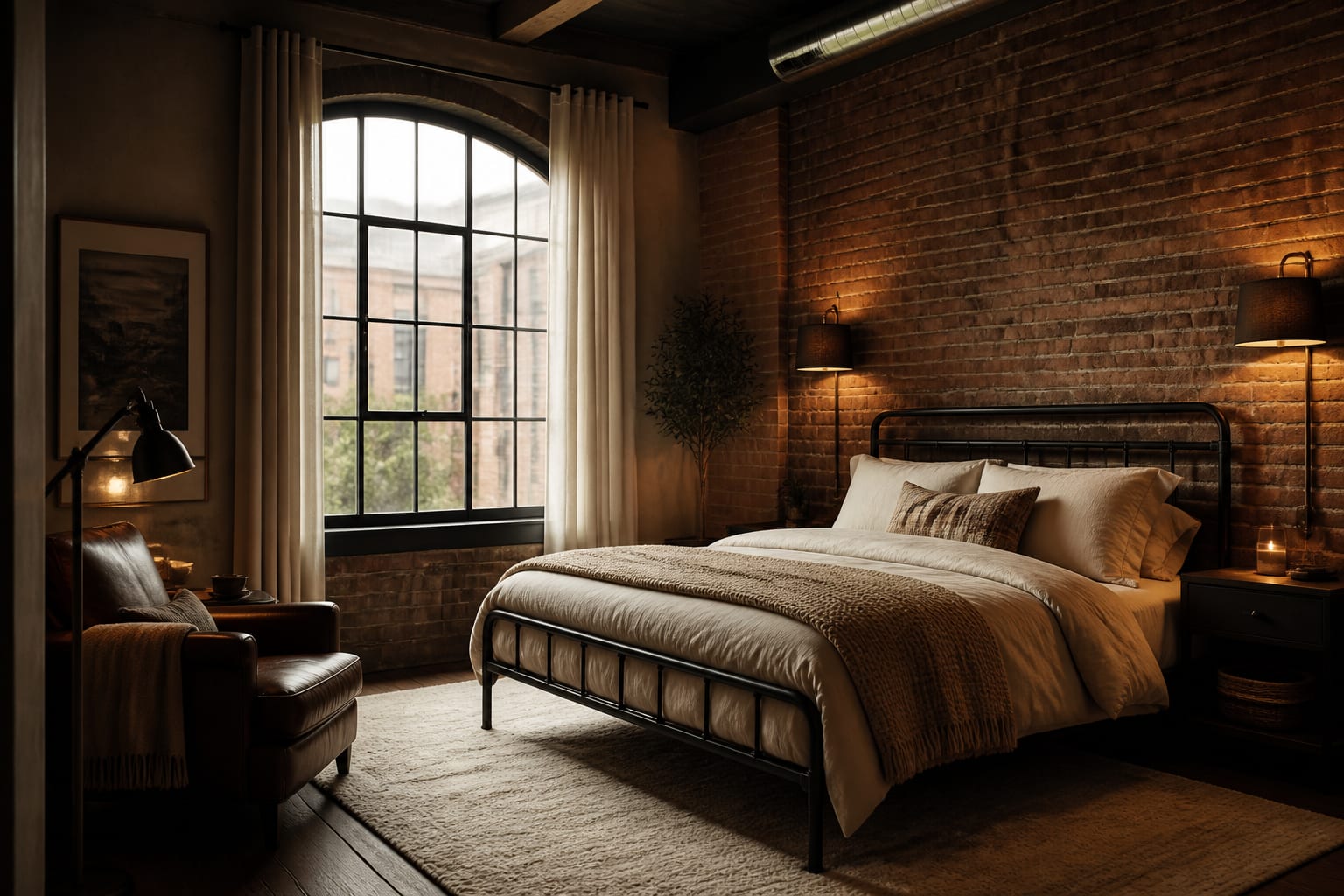
The best industrial bedroom ideas pair raw materials, exposed brick, black metal, concrete, reclaimed wood, with warm lighting, layered bedding, and a soft rug. That contrast is what keeps the room from feeling like an unfinished loft and makes it read as a raw texture bedroom built for actual sleep.
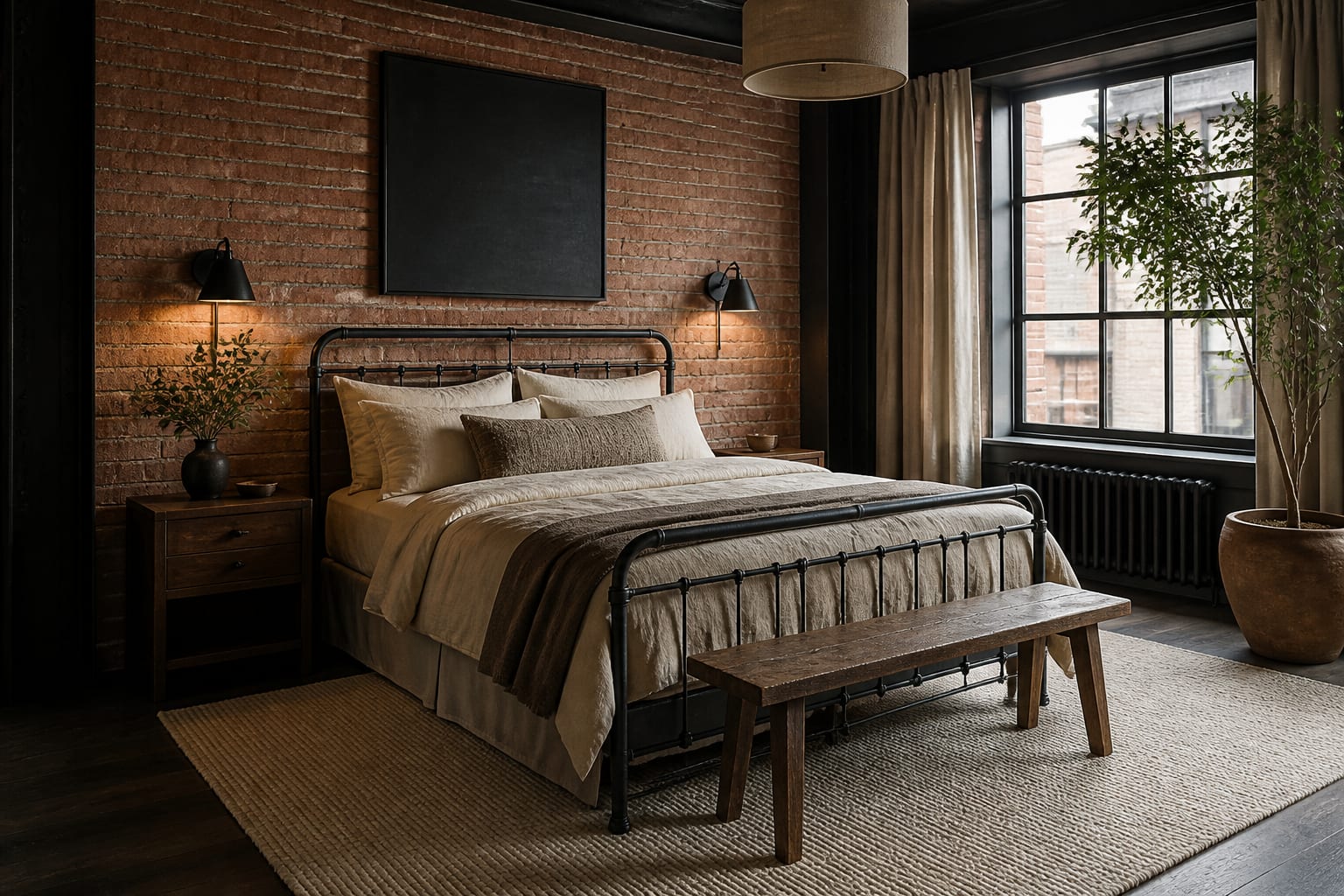
What makes an industrial bedroom feel cozy instead of cold?
An industrial bedroom feels cozy when raw structure is balanced by warmth, scale, and touchable materials. If the first thing you notice is a black metal frame under a bare bulb, the room reads severe. If you notice linen bedding against brick, a wool rug underfoot, and a shaded lamp glowing near the pillow, it reads intentional.
Start with the bed wall since it sets the mood from the doorway. Let exposed brick act as the headboard backdrop, but keep the actual headboard upholstered, leather, wood, or simple black metal at 48 in–60 in tall so it holds the wall without hiding the texture. In small rooms, apply the same scale discipline used in a small master bedroom that feels luxurious: fewer, heavier gestures beat scattered accents.
Color should be dark enough to feel urban but warm enough for sleep. Charcoal, tobacco, mushroom, rust, olive, bone, walnut, and faded denim outperform blue-gray walls with chrome everywhere. Industrial style tolerates shadow; it cannot survive coldness in every direction.
Which industrial bedroom ideas make raw materials feel restful?
Pick five or six moves suited to your architecture rather than forcing warehouse details into a plain builder bedroom.
- Upholstered or leather headboard against brick: 48 in–60 in tall, at least mattress-width, so the bed gets a soft vertical plane.
- Three visible bedding textures: cotton sheets, a linen duvet, and a wool or quilted coverlet folded across the lower third.
- Low-pile rug under the bed: extend it 18 in–24 in beyond each side so bare feet land on fabric, not concrete or tile.
- Weighted nightstands: wood, metal, stone, or leather-wrapped pieces around 24 in–30 in high hold their own beside brick and steel.
- Shaded bedside lighting: sconces at 60 in–66 in from the floor or table lamps 24 in–28 in tall flatter the bed wall better than a bare bulb.
- Black metal repeated three times: a curtain rod, sconce arm, bed frame, or picture frame reads as designed, not random pipe decor.
- One reclaimed wood piece: a bench, floating shelf, dresser, or side table adds grain and warmth.
- A quiet chair-and-lamp zone, space permitting: borrow proportions from a bedroom sitting area design and keep at least 30 in of walkway clear.
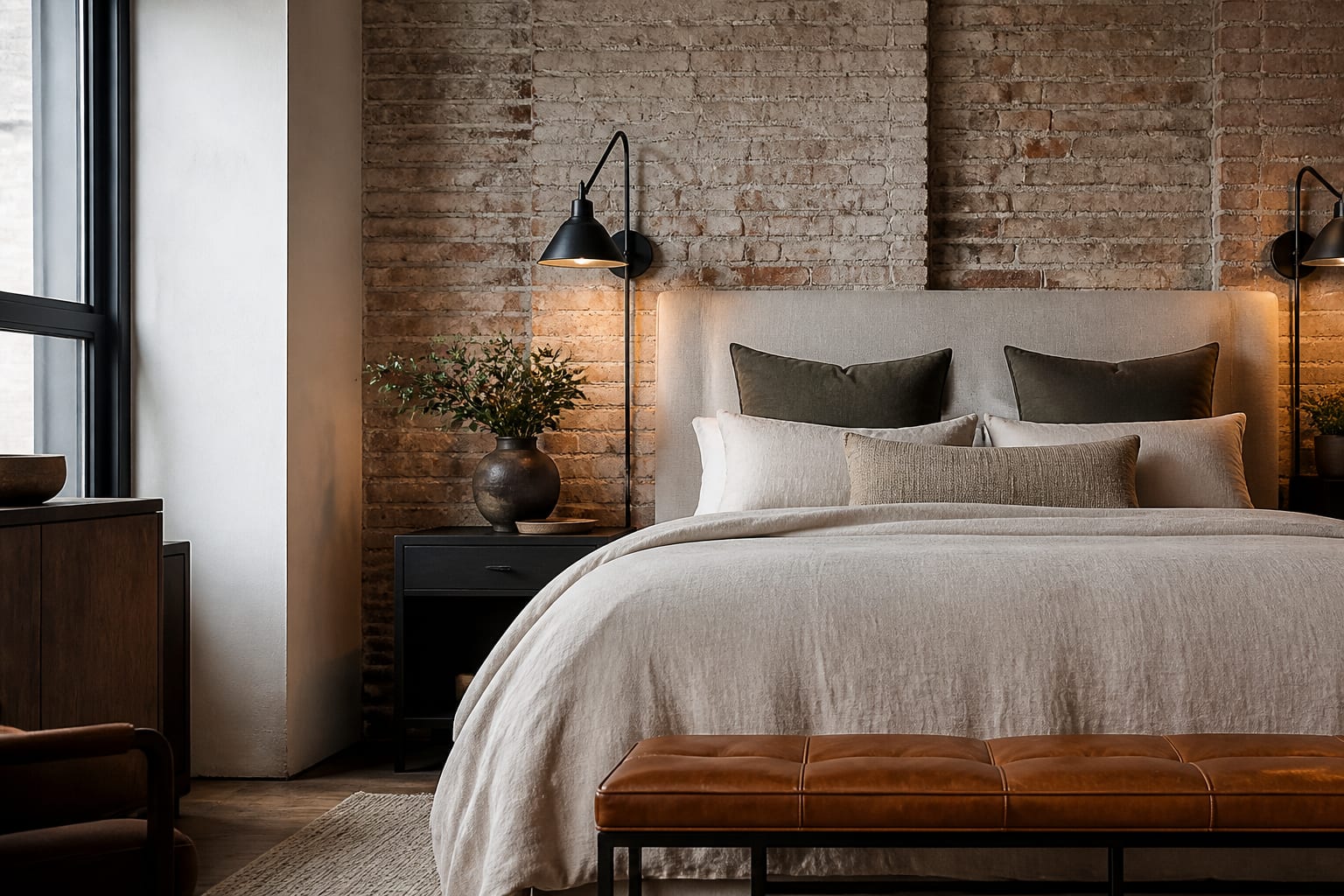
How should brick, metal, wood, and bedding work together?
Brick should carry texture, metal should draw the line, wood should add warmth, and bedding should make the room livable. When all four try to be equally loud, the room starts to feel like a themed bar with pillows.
If the room has real brick, do less: one large piece of art or mirror (30 in x 40 in or 36 in x 48 in) over the bed beats a wall peppered with small frames. Fake brick panels need more restrained surrounding finishes since the surface can't carry the whole design alone.
Metal needs thinness in a bedroom, a slim canopy, iron bed, or steel lamp works; thick pipe shelving near the pillow feels heavy and dusty. Wood belongs where hands touch the room: drawer fronts, bench legs, a tray, or side table. Bedding should be the softest note, especially with concrete, dark floors, or exposed ductwork nearby.
What are common industrial bedroom mistakes?
- Too much black shrinks the room visually; keep it to lines and anchors, then add tobacco, rust, warm white, walnut, or brass for depth.
- Undersized bedside lamps leave the bed wall dim; use lamps 24 in–28 in tall or sconces with fabric, metal, or glass shades that light the pillow.
- A bare floor makes the room echo; add a wool, cotton, or low-pile rug large enough to show on both sides of the bed.
- Brick treated as a gallery wall creates noise; use larger, quieter art with 2 in–3 in spacing if grouping frames.
- Loft furniture in a low-ceiling room looks squat; under 8 ft ceilings, choose lower beds, slimmer shelving, and curtains hung 6 in–10 in above the casing.
A raw texture bedroom still needs ordinary comfort: a charging spot, a drawer for clutter, reachable lighting, and enough softness that winter mornings don't feel punishing.
How can you preview an industrial bedroom before buying?
Dark metal, brick, leather, and wood shift a room's mood fast, so test full directions before ordering a black bed frame, dark paint, or an oversized rug. Upload a photo of your bedroom to Re-Design and try one version led by exposed brick, one with a softer upholstered bed against plaster-look walls, and one where the mood comes mainly from lighting, leather, and wood.
Keep your real windows, ceiling height, floor color, and bed size visible so the preview reflects the room you actually have, this matters most in rentals and new builds without natural loft bones. For a smaller comfort zone, test a lamp, chair, and side table combination first; the same layered-comfort logic behind a reading corner for kids works here with leather, wool, black metal, and warm wood instead.
What finishing details make the bedroom feel personal?
Add objects with real weight and texture: a ceramic lamp, black-and-white photograph, wool throw, leather valet tray, old books, or one plant with a strong silhouette. Keep bedside surfaces edited to a lamp, book, water glass, and one object, chargers and skincare belong in a drawer.
Hang standalone art around 57 in–60 in on center, or keep art above the bed within 6 in–8 in of the headboard. The room is finished when you can name the strongest material in three seconds and still want to climb under the covers.
Frequently Asked Questions
How do I make an industrial bedroom feel warm instead of cold?
Balance every hard surface with a soft one: linen or cotton bedding, a wool rug, and lamps around 2200K–2700K instead of bare bulbs. Add one reclaimed wood piece and keep black metal limited to a few repeated lines like the bed frame and curtain rod.
Is exposed brick good for a bedroom?
Yes, exposed brick works well as a headboard backdrop because it adds texture without extra furniture. Pair it with a simpler upholstered or leather headboard, larger single art pieces, and softer bedding so the wall stays the focal point rather than competing with clutter.
What colors pair best with industrial bedroom decor?
Charcoal, tobacco, rust, olive, mushroom, bone, and walnut pair better than cool blue-gray tones with chrome accents. These warmer neutrals keep the raw materials, brick, concrete, and steel, from reading as sterile or overly cold at night.
How much metal is too much in an industrial bedroom?
Metal works best as a repeated accent rather than the dominant material. Limit it to three touch points, such as the bed frame, a sconce arm, and a curtain rod, especially in bedrooms under 12 ft x 14 ft, so the room doesn't feel like a workshop.
Can a small bedroom still use industrial style?
Yes, but choose fewer, larger gestures instead of many small industrial accents. A slim metal bed, one reclaimed wood piece, and a tall headboard read as intentional in a small room, while scattered pipe shelving and tiny objects make it feel cluttered.