A great industrial dining room is built around one honest, heavy table and lit like a factory floor that learned to relax. The mistake people make is buying a matching set, which kills the collected, assembled-over-years quality the style depends on. Instead, anchor the room with a thick reclaimed wood table, then surround it with metal chairs that need not all match, hang oversized pendants low over the surface, and let a brick or concrete wall do the heavy lifting behind it. The result should feel sturdy and a little raw, but warm enough to linger over a long dinner. The ideas below cover the table, the seating, the lighting, and the materials that hold the scene together.
Anchor the Room With a Reclaimed Wood Table
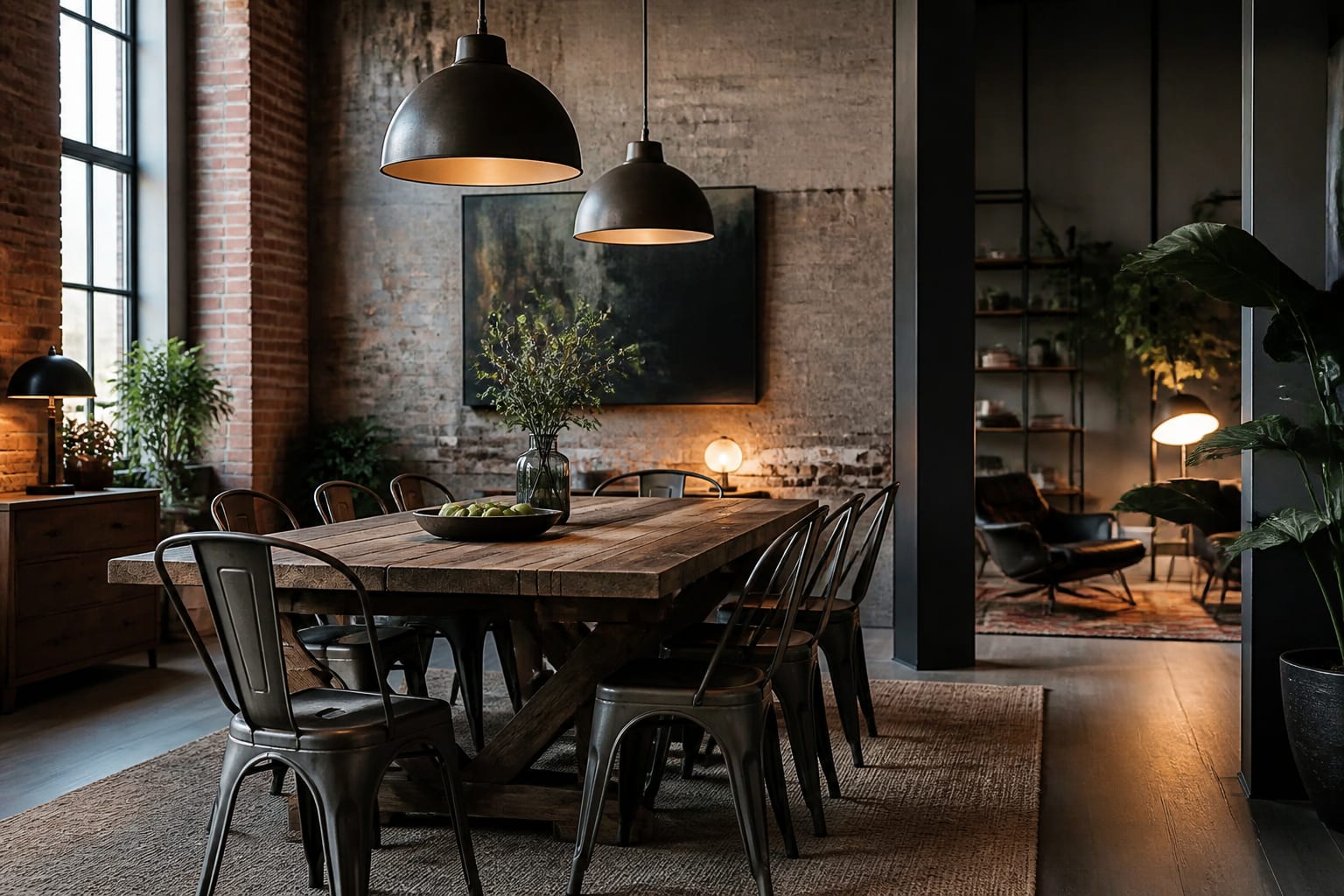
The table is the heart of an industrial dining room, so it deserves the largest share of your budget and attention. The defining piece is a substantial slab of reclaimed timber, often paired with a black steel base in a trestle, hairpin, or boxy frame, which marries the warmth of aged wood to the cool precision of metal. Reclaimed oak, elm, or scaffold board carries knots, saw marks, and old nail holes that no new timber can replicate, and that visible history is exactly what gives the style its soul. A thick top, around four to five centimeters, looks suitably heavy and sturdy against a chunky metal frame.
Scale and proportion keep the table from dominating or disappearing in the room. Allow roughly sixty centimeters of width per diner so people are not crowded, and leave at least a meter of clearance around the table so chairs pull out and people pass behind comfortably. A rectangular table suits the linear, architectural feel of the style better than a round one in most rooms, though a round version can soften a square space. If you are building or commissioning the piece, a steel base with a raw lacquer or blackened finish ages well and resists the knocks a dining table inevitably takes.
Finish is where you control how rugged the table reads. A hard wax oil keeps the grain matte, tactile, and open, which suits the honest material story, while a thin sealing coat protects against spills without adding plasticky shine. Embrace minor imperfections rather than sanding them out, since the dings and color variation are part of the appeal. If you prefer something more refined, a smoother planed top with softened edges still works, as long as it keeps the heft and the metal base that signal the industrial intent. The table sets the tone, and everything else in the room should defer to it.
See also our guide to Small Dining Room Under 100 Sqft for more on industrial dining room ideas.
Choose Metal Chairs and Leather Seating
Seating is where you balance the hardness of the table with comfort and a touch of warmth, and a little deliberate mismatch goes a long way. Classic industrial chairs lean on bent steel, the Tolix-style metal cafe chair being the obvious reference, in raw, gunmetal, or matte black finishes that echo the table base. Stacking these around a reclaimed top is the fastest way to land the look, but an all-metal lineup can feel hard underneath and visually monotonous if you are not careful. Introducing variety in seat material is what keeps the arrangement from reading like a canteen.
Leather is the warming material of choice, and it ages beautifully in a dining setting. A pair of tan or cognac leather chairs at the head and foot, or a run of leather-seated stools along a bench side, softens the metal and adds a rich, lived-in patina over years of use. Worn or distressed leather suits the style even better than pristine hide, since scuffs and creases reinforce the collected, hard-working character. Wood-seated metal chairs split the difference nicely, offering the metal frame the look wants with a warmer, more forgiving surface to actually sit on.
Mixing seating types is encouraged rather than avoided in industrial dining rooms. A long reclaimed bench down one side paired with individual metal chairs on the other reads relaxed and informal, and it lets you seat extra people when needed. You can even combine two or three chair styles as long as they share a material thread, such as a common black metal frame or a repeated leather tone, so the mix looks intentional rather than accidental. Aim for a seat height around forty-five centimeters against a standard seventy-five-centimeter table so diners sit comfortably, and the eclectic mix will feel gathered, generous, and entirely on-theme.
For a related angle on industrial dining room ideas, read Narrow Dining Room Galley.
Light It With Factory Pendants Hung Low
Lighting defines the atmosphere of an industrial dining room more than almost any other element, and oversized factory-style pendants are the signature choice. Enamel dome shades, caged bulbs, metal cage pendants, and reclaimed warehouse fixtures all suit the look, ideally in black, aged brass, or weathered metal that ties back to the chairs and table base. Hanging a single large pendant or a row of two or three over the center of the table creates a focused pool of light that makes the surface the clear heart of the room. The fixtures should feel substantial, since dainty lighting undercuts the deliberate heft of everything below.
Height is the detail people get wrong most often, so hang pendants with intention. The bottom of a dining pendant generally sits about seventy to ninety centimeters above the tabletop, low enough to feel intimate and to light faces warmly, but high enough that it does not block sightlines across the table. Over a long table, space a row of pendants evenly and center the run on the table rather than the room, since the table is what they are meant to illuminate. A dimmer is well worth wiring in, letting you drop from bright task light for meals to a low, moody glow for lingering afterward.
Bulb choice and layering finish the scheme. Warm Edison-style filament bulbs around 2400K to 2700K cast the amber light that flatters wood, leather, and brick, and their visible filaments suit the exposed-fixture aesthetic. Avoid cool white bulbs, which turn the room clinical and flatten all that careful material warmth. Add a secondary layer with a floor lamp in a nearby corner or a couple of wall sconces so the room is not lit by the pendants alone. That layered, warm light is what carries an industrial dining room from a stark daytime space into somewhere people genuinely want to gather after dark.
Ground It With Brick, Concrete, and Leather Accents
The backdrop and accents are what convince the eye that an industrial dining room belongs in a converted warehouse rather than a standard house. Exposed brick is the most evocative wall treatment, its warm russet tone and handmade texture flattering the metal and timber while adding instant age. Where genuine brick is not available, brick-slip cladding or a convincing concrete-effect microcement wall achieves a similar mood. Keep the treatment to one feature wall, usually the one the table sits against, so it frames the dining scene without making the whole room feel like a basement.
Concrete and raw metal extend that hard-wearing material story across the rest of the space. A concrete-look floor, a polished screed, or large concrete-effect tiles ground the room and stand up to the traffic a dining area sees. Open metal shelving on the walls, a steel-framed sideboard, or a wheeled trolley in raw or black metal add useful storage while reinforcing the factory references. Exposed services, such as visible ductwork or black conduit run deliberately along a wall, lean further into the aesthetic if your ceiling height allows and the look appeals to you.
- Anchor the room with a thick reclaimed timber top on a black steel base.
- Surround it with Tolix-style metal chairs in raw or matte black.
- Add tan leather chairs at the head and foot for warmth and patina.
- Run a long reclaimed bench down one side for relaxed extra seating.
- Hang a row of factory dome pendants seventy to ninety centimeters above the top.
- Wire the pendants to a dimmer for bright meals and moody evenings.
- Back the table with an exposed brick or concrete-effect feature wall.
- Style open metal shelving with glass bottles, foliage, and a vintage clock.
Bring the look home with Re-Design
Judging whether a heavy reclaimed table and a row of factory pendants suit your room is hard from a catalog. Upload a photo of your dining room to Re-Design, choose an industrial style, and preview how a steel-based timber table, metal and leather chairs, low pendants, and a brick wall reshape the area. You can test pendant heights, chair mixes, and warm versus cool lighting in seconds, making scale easy to judge before anything ships. Preview the finished scene in your real room first, then buy the table, seating, and lights with confidence.
Frequently Asked Questions
How low should pendant lights hang over a dining table?
Aim for the bottom of the pendant to sit about seventy to ninety centimeters above the tabletop. That range lights faces warmly and feels intimate while keeping sightlines clear across the table. Over a long table, space a row of fixtures evenly and center the run on the table rather than the room, and wire them to a dimmer for flexibility.
Do industrial dining chairs need to match?
No, and a little mismatch suits the style. Industrial dining rooms read better when seating is mixed, such as metal chairs along one side and a reclaimed bench on the other, or leather chairs at the ends. Keep a shared thread like a common black frame or repeated leather tone so the combination looks intentional rather than accidental and disjointed.
What table works best for an industrial dining room?
A thick reclaimed timber top on a black steel base is the defining piece. Aim for a top around four to five centimeters thick so it looks suitably heavy against a chunky metal frame. Allow sixty centimeters of width per diner and a meter of clearance around the table, and finish the wood with hard wax oil to keep the grain matte and tactile.