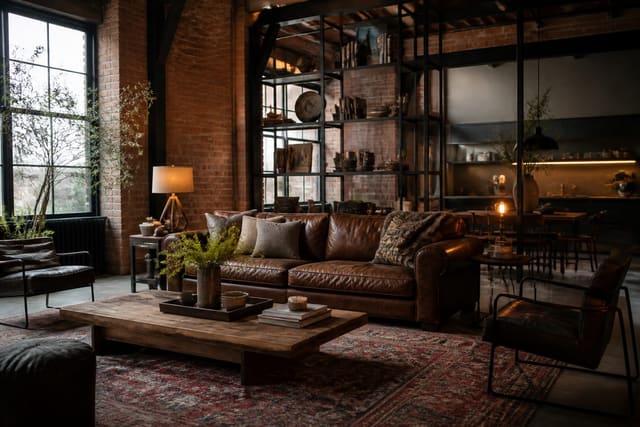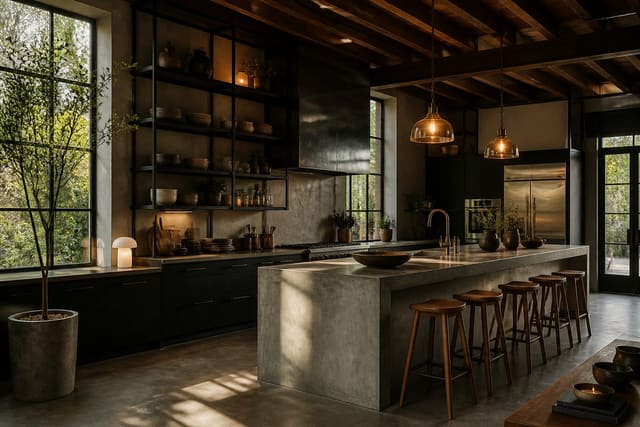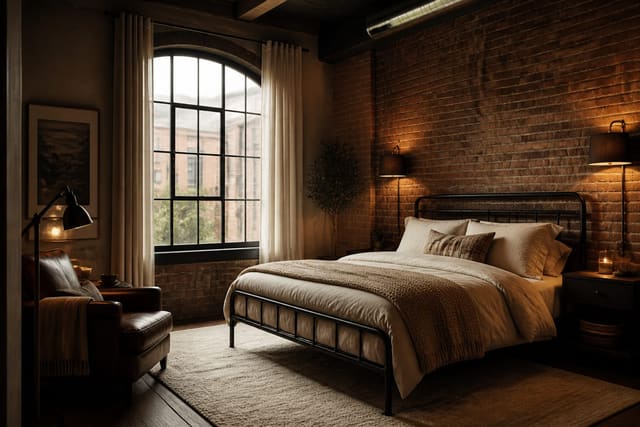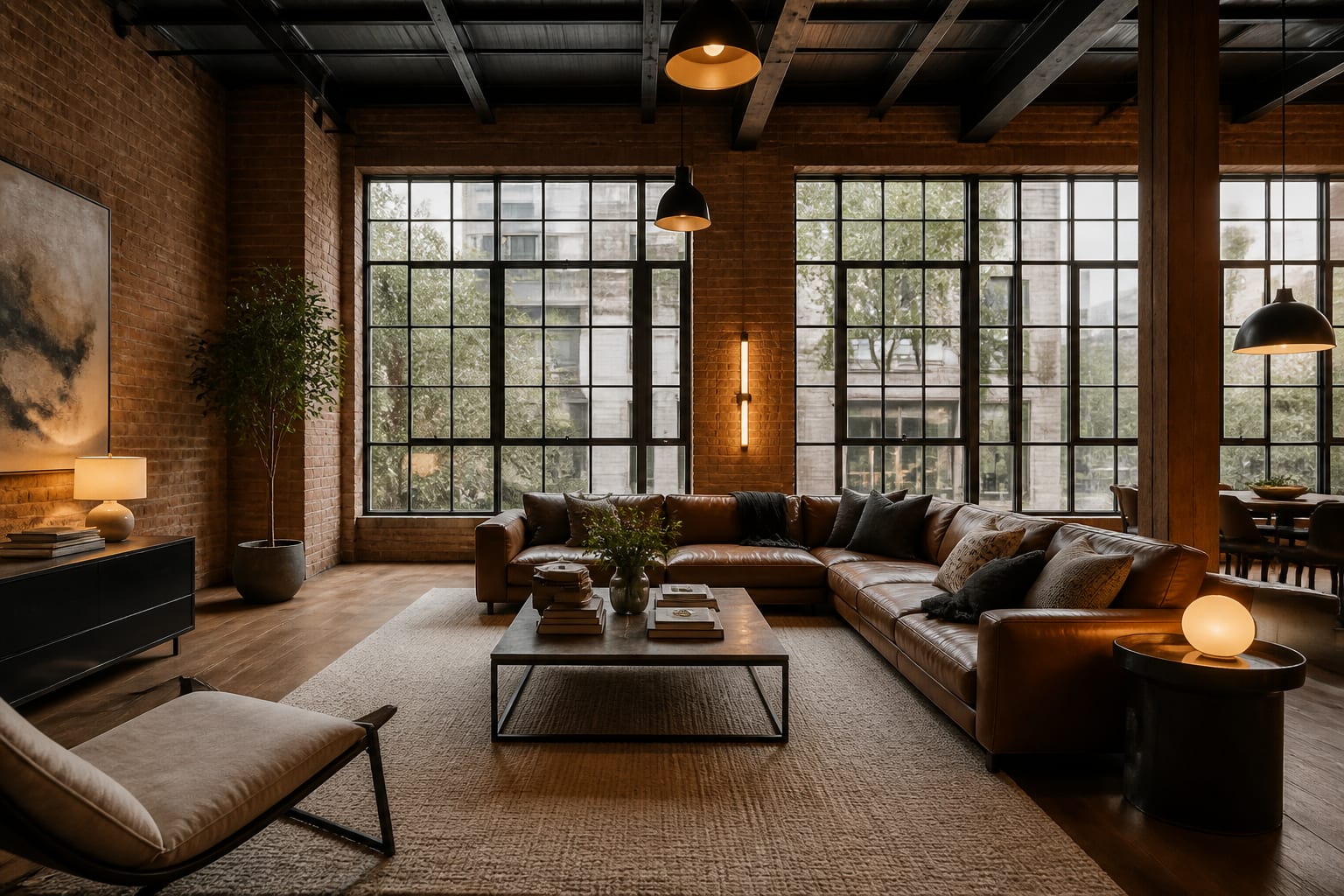
Decorate an industrial loft by zoning the open plan, sizing furniture for the ceiling height, repeating brick, steel, wood, and leather with restraint, and adding warm light so the volume feels intentional instead of empty. The goal: a space that still feels raw but finally feels like a home.
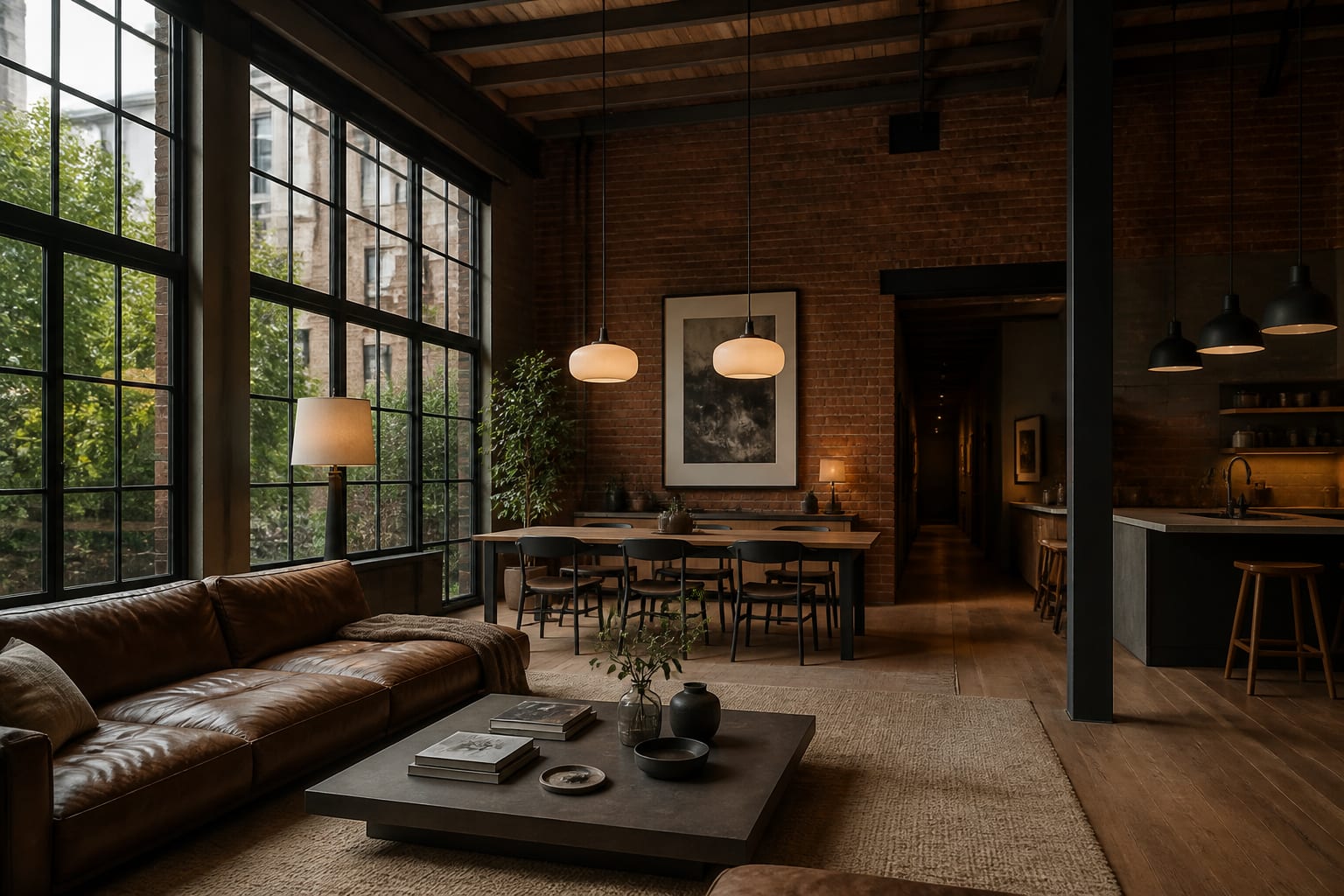
What makes a loft feel designed instead of just open?
A designed loft has hierarchy: one clear social zone, one eating or working zone, and enough vertical weight to make the ceiling feel like an asset. The worst lofts aren't too empty, they're too evenly filled, so nothing catches the eye.
Start by naming the dominant view: often the tallest window wall, the brick run behind the sofa, or the island facing the living area. Give that view the largest pieces: a proper sofa, a rug big enough to gather the seating, and lighting that drops into the room rather than clinging to the ceiling.
Scale isn't optional here. A 7 ft sofa can look nervous under 14 ft ceilings, while an 8 ft–10 ft sofa or long console gives the architecture something to answer. For the living zone, industrial living room ideas covers mixing leather, brick, and black metal without a themed-bar effect.
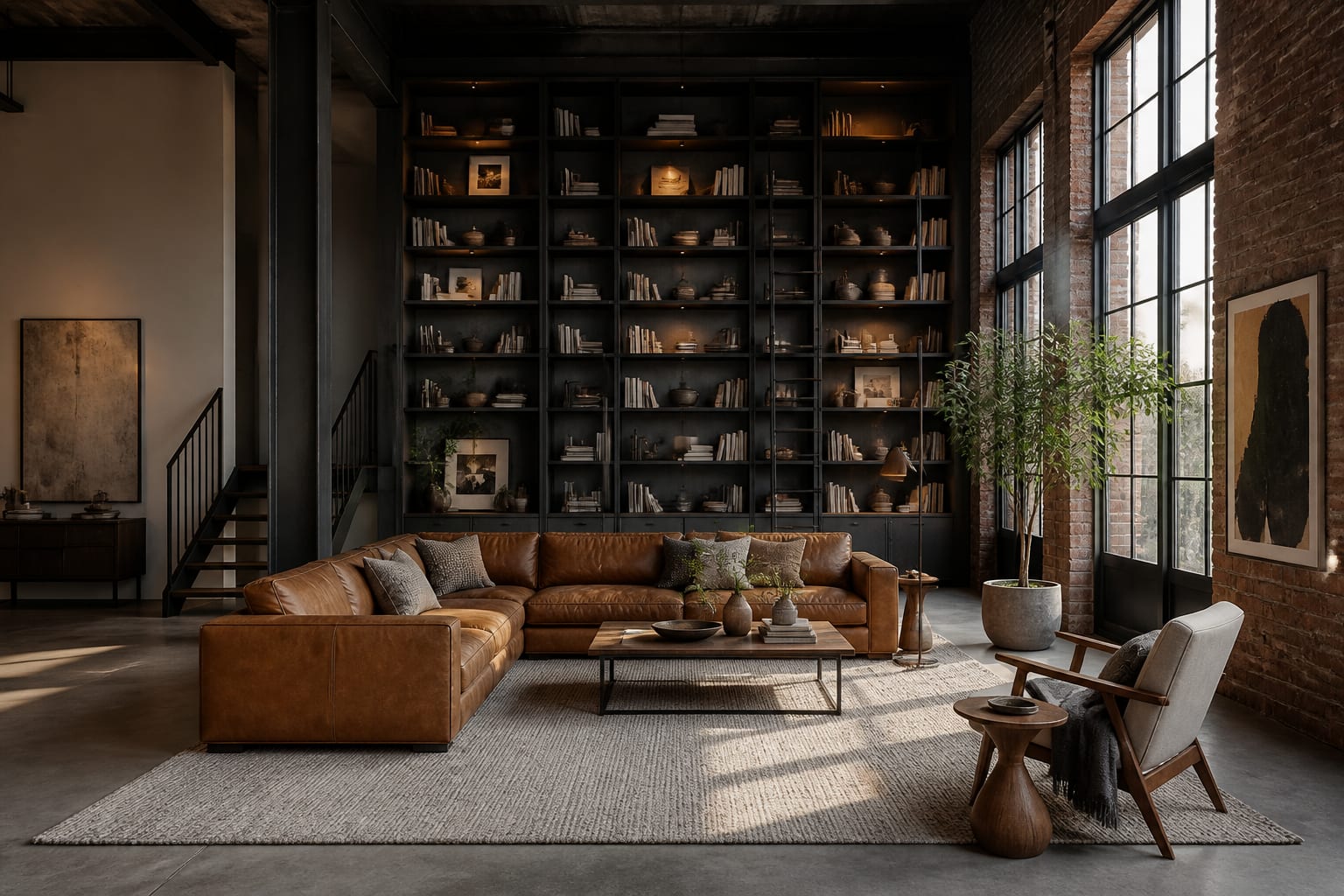
Which industrial loft design ideas actually solve the scale problem?
Good loft ideas work at architectural scale, not accessory scale. Pick five or six before buying another small side table.
- Float the living area on a large rug (9 ft x 12 ft or bigger) that reaches under every major seat's front legs.
- Hang dining pendants 30 in–36 in above the tabletop, and drop living room fixtures low enough to create a human zone under a high ceiling.
- Use open shelving as a vertical wall, 72 in–96 in tall, to divide seating from a work zone while still letting light through.
- Repeat black metal in structural lines only, on windows, shelving, and table bases, so the loft reads as a home, not a set.
- Add full-length curtains or shades even on beautiful windows to cut echo and glare.
- Choose a dining table with real length, often 72 in–96 in, so it doesn't look stranded between kitchen and living zone.
- Bring wood to every touchpoint, dining table, stools, desk, bed frame, shelves, so grain offsets the steel and concrete.
- Use one oversized artwork or mirror (roughly 36 in x 48 in) on a tall wall instead of scattered small frames.
How do the kitchen, bedroom, and living areas connect without blending?
A loft should feel continuous, not smeared together. Repeat the palette, but give each zone a distinct job: kitchen crisp and functional, living area tactile, bedroom protected.
In the kitchen, open shelves need 10 in–14 in depth, pendants should light the island or table, and counters need at least 24 in of clear prep space. If the kitchen carries much of the material story, see industrial kitchen design ideas before adding another metal shelf.
The bedroom needs more screening than expected. A low platform bed can look exposed under a tall ceiling, so add a tall headboard, bookcase divider, or slatted screen. Keep 30 in of circulation around the bed and a rug extending 18 in–24 in beyond each side; industrial bedroom ideas covers this balance well.
Color is the connective thread: warm black, tobacco leather, walnut, rust, mushroom, bone, charcoal, olive, and aged brass. Don't let each zone introduce a new accent color, open plans can't tolerate a random palette.
What mistakes make an industrial loft feel awkward?
Most loft mistakes are scale mistakes, not taste mistakes, and they distract from how the space is actually used.
- Normal apartment lighting makes a tall ceiling feel emptier; use larger shades and longer drops for glow at seating, table, and wall height.
- Pushing everything to the perimeter turns the plan into a dance floor; float the sofa and let the dining table anchor the middle.
- Only hard finishes make a loft echo; add wool rugs, curtains, upholstery, and a padded headboard to absorb sound.
- Too much black flattens the room after dark; keep black for lines and anchors, then add cognac, rust, or brass where people sit.
- Ignoring the entry sightline creates a confusing first read; make sure it shows the main seating group or a strong light fixture, not a desk's back.
Renters should stay disciplined: freestanding shelves, plug-in sconces, tension curtains, and large rugs still carry industrial weight without permanent installation.
How can you preview your industrial loft before committing?
Loft mistakes are expensive because the biggest choices, sofa scale, table length, shelving height, bed placement, are also the heaviest to undo. A photo preview lets you test decisions before delivery day decides the layout for you.
Use Re-Design with a straight-on photo from the main entry or the spot where you see the whole loft. Test one version centered on the windows, one with shelving dividing the bedroom, and one where the dining table bridges kitchen and sofa. Keep the real ceiling height, windows, columns, and door swings visible so the preview reflects the space you actually have.
This matters most when one feature dominates: brick can overwhelm everything, concrete floors can shrink furniture visually, and black-framed windows can make pale pieces look delicate. The preview shows which single move gives the loft structure without crowding the plan.
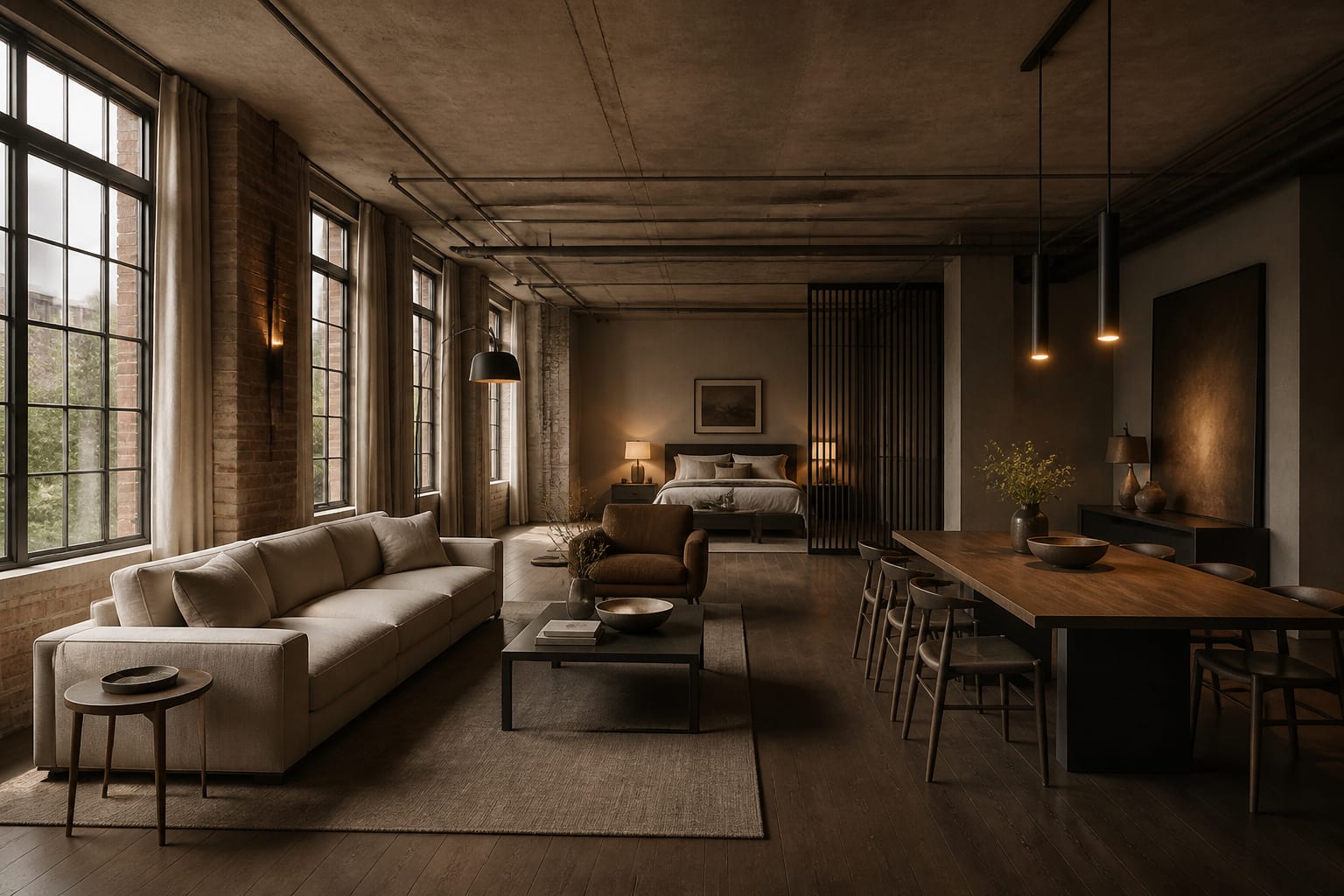
What finishing details make a loft feel personal?
The final layer should make the loft feel lived in, not staged. Add objects with weight and use: large books, ceramic vessels, a leather tray, framed photography, plants with strong silhouettes, and one lamp where someone actually reads.
Keep surfaces edited, open plans expose everything. A coffee table can hold a tray, two books, and one object; shelves should mix books and ceramics with enough open space that the structure still reads.
Hang standalone art around 57 in–60 in on center for human scale, but let oversized pieces climb higher against a tall brick wall or stair volume. The loft is finished when the strongest material is obvious, the zones are easy to read, and the room still looks comfortable after the lights come on.
Frequently Asked Questions
How big should a rug be in an industrial loft living room?
Use a rug large enough that every major seat's front legs sit on it, typically 9 ft x 12 ft or larger under an 8 ft–10 ft sofa. Smaller rugs float in the open plan and make the seating area look disconnected from the rest of the loft.
How do you stop a loft from echoing?
Add soft surfaces: wool rugs, lined full-length curtains, upholstered seating, fabric lampshades, and a padded headboard. These absorb sound without hiding the brick, concrete, or steel that define the industrial look.
How low should pendant lighting hang in a loft?
Hang dining pendants 30 in–36 in above the tabletop and drop larger living room fixtures low enough to create a human-scale zone beneath the high ceiling, rather than letting light stay near the rafters.
What furniture size works for high ceilings?
An 8 ft–10 ft sofa, a 72 in–96 in dining table, and 72 in–96 in tall shelving units give a 12 ft–16 ft ceiling enough visual weight. Smaller, apartment-scaled furniture tends to look stranded in the volume.
Can renters do industrial loft design without drilling into brick?
Yes. Freestanding shelving, plug-in wall sconces, tension curtain rods, and large area rugs all add industrial-scale structure and warmth without permanent installation, which matters most in rented brick or concrete lofts.