Industrial and modern interior design get lumped together because both reject fussy ornament, but they pursue that goal from opposite directions. Industrial celebrates raw, exposed materials and the honest marks of age, while modern chases clean lines, smooth surfaces, and uncluttered calm. One wants you to see the bones of the building; the other wants those bones quietly resolved. Choosing between them comes down to the mood you want and the home you already have, since a loft with exposed brick leans one way and a bright new-build leans the other. This guide breaks down how the two styles diverge across materials, palette, lighting, and atmosphere, then offers a practical way to choose your direction.
Where the Two Styles Come From
Understanding the roots of each style explains why they look so different on the wall. Industrial design grew directly out of converted factories, warehouses, and mills, especially as artists began living in disused urban buildings and chose to keep the existing brick, steel, and concrete rather than cover it up. That origin baked a particular honesty into the style: exposed structure, visible services, and salvaged materials are celebrated rather than concealed, and signs of age and wear are treated as character. The aesthetic essentially asks you to read the building's history straight off its surfaces.
Modern interior design traces a different lineage, rooted in the early twentieth-century modernist movement and its belief that form should follow function. Designers stripped away ornament in favor of clean geometry, honest but refined materials, and open, light-filled space. The emphasis fell on simplicity, efficiency, and a sense of calm order, with every element earning its place through usefulness as much as looks. Where industrial revels in the unfinished, modern resolves everything into something deliberate, smooth, and quietly precise.
Those origins still drive the practical choices in each style today. Industrial rooms keep ductwork, pipes, and brick on show, lean on reclaimed and weathered pieces, and accept a degree of roughness as part of the appeal. Modern rooms tuck services away, favor built-in storage and seamless cabinetry, and prize an absence of visual noise. Neither is more correct than the other; they simply answer different questions about how a home should feel. Recognizing which instinct you respond to, the rugged and storied or the serene and resolved, is the first real step toward choosing between them with any confidence.
See also our guide to Redesign App VS Competitors for more on industrial vs modern interior design.
Materials, Palette, and Texture Compared
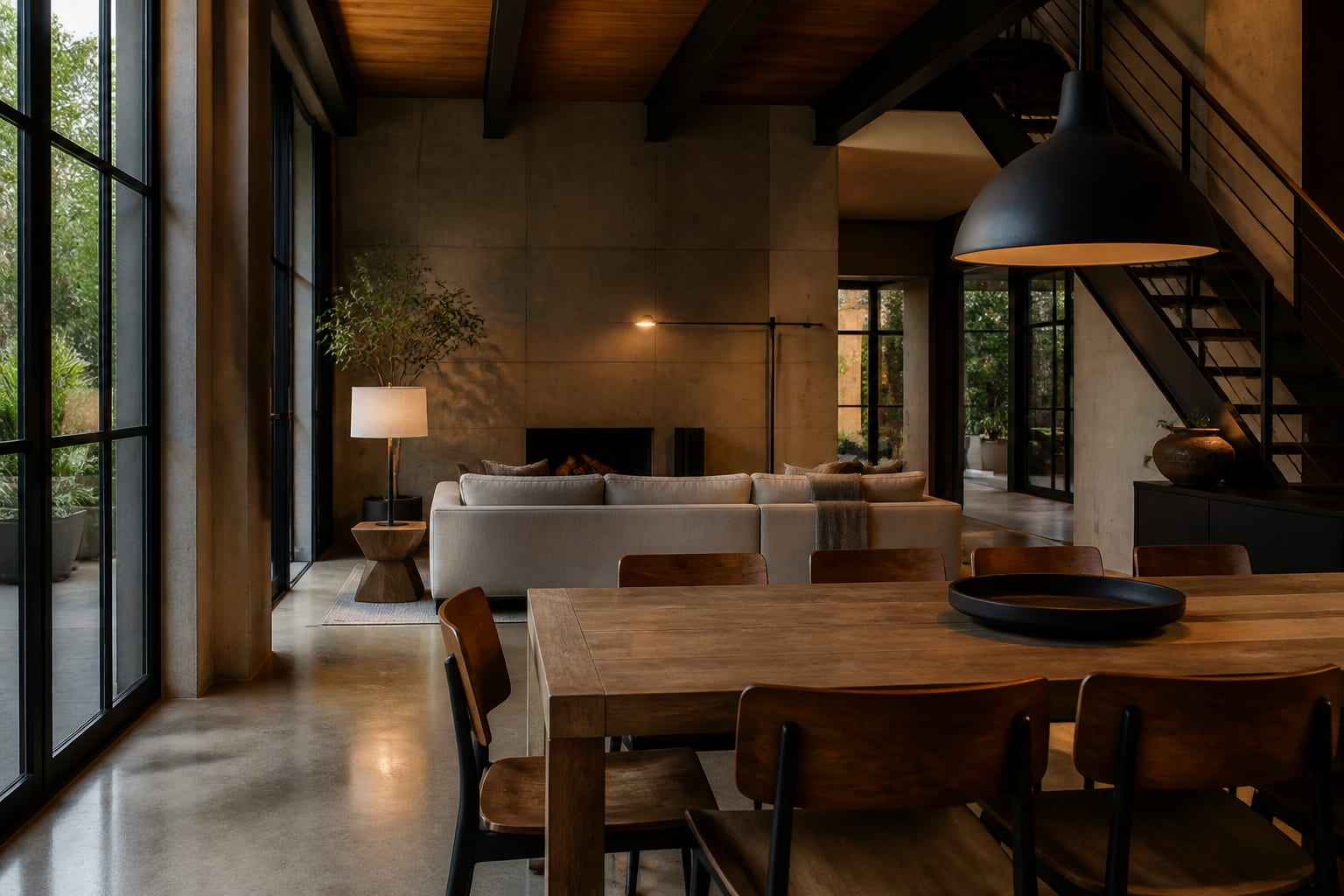
Materials are the clearest fault line between the two styles, and they shape everything else. Industrial interiors lean hard on raw, unfinished surfaces: exposed brick, poured or polished concrete, weathered steel, reclaimed timber, and aged leather. The textures are deliberately tactile and imperfect, with grain, patina, and surface variation treated as the point rather than a flaw. Modern interiors favor smoother, more refined materials by contrast, such as engineered timber, lacquered or matte cabinetry, glass, stone with a honed finish, and metals used in clean slim profiles rather than chunky raw form.
Palette follows directly from those material choices. Industrial schemes sit in a warm but moody range of greys, charcoal, rust, brown, and black, drawn largely from the natural color of brick, concrete, metal, and leather rather than from paint. The overall effect leans darker and earthier. Modern palettes tend to be lighter and cleaner, built on whites, soft greys, and neutrals, often with a single bold accent color used sparingly for contrast. Modern rooms generally feel brighter and more open, while industrial rooms feel enclosed, grounded, and a touch cocooning.
Texture and finish seal the difference. In an industrial room, contrast comes from playing rough against rough or rough against worn: matte concrete beside knotted wood beside scuffed leather, all sharing an honest, unpolished quality. Modern rooms create interest through restraint and sheen instead, setting a matte wall against a glossy surface or a smooth stone against fine-grained wood, with far less tolerance for visible wear. If you are drawn to surfaces that show their history and age into something richer, industrial fits; if you prefer surfaces that stay crisp, clean, and resolved, modern is the more natural home for your taste.
For a related angle on industrial vs modern interior design, read French Country VS Farmhouse Style.
Lighting, Furniture, and Mood Compared
Lighting tells you almost instantly which style a room belongs to. Industrial spaces favor exposed bulbs, caged and cage-free filament fixtures, oversized factory pendants, and metal task lamps, usually casting a warm amber glow that deepens the moody palette. The fixtures themselves are meant to be seen and read as mechanical objects. Modern spaces, by contrast, lean toward recessed downlights, slim linear fixtures, concealed strip lighting, and sculptural statement pieces, often with a cleaner, brighter quality and the source frequently hidden so only the effect shows.
Furniture carries the same divide. Industrial pieces are heavy, sturdy, and frankly constructed, think steel-framed tables, leather club chairs, riveted metal storage, and reclaimed wood with visible joinery, often looking salvaged or repurposed. Modern furniture emphasizes clean silhouettes, low profiles, and smooth uninterrupted surfaces, with legs and frames kept slim and detailing minimal. An industrial room is comfortable looking assembled from disparate finds, whereas a modern room aims for a more curated, cohesive set of intentional, paired-back pieces.
Mood is ultimately where the choice gets personal. Industrial interiors feel warm, lived-in, grounded, and a little raw, with a creative, urban, slightly masculine edge that suits people who like character and patina. Modern interiors feel calm, airy, ordered, and serene, appealing to people who find clarity and uncluttered space genuinely restful. Think about how you want a room to make you feel when you walk in at the end of the day. If you want to be wrapped in texture and story, industrial delivers it; if you want to exhale into clean, quiet space, modern is the better fit. Both can be beautiful, so the right answer is simply the mood you actually want to live inside.
Pick based on these priorities: - Pick industrial if you want raw texture, patina, and a moody, lived-in urban atmosphere. - Pick modern if you want light, calm, minimal space with smooth resolved surfaces. - Choose the style your building already leans toward rather than fighting its existing bones.
How to Choose or Blend the Two
Choosing between the styles starts with the home you already own, because working with the building is far easier than fighting it. A converted loft, a warehouse apartment, or a period property with high ceilings, exposed brick, and big steel windows practically wants an industrial treatment, since the bones are already there. A bright modern apartment or a new-build with smooth plastered walls, lower ceilings, and clean lines leans naturally toward modern, where you are enhancing the existing character rather than manufacturing a rugged look from scratch. Reading what your space already offers saves money and avoids a forced result.
Lifestyle and maintenance should factor into the decision too. Industrial finishes like raw concrete, unlacquered metal, and aged leather are forgiving of marks and wear, which suits busy households and people who like materials that improve with age. Modern interiors with their pale palettes, smooth surfaces, and minimal clutter look stunning but demand more discipline to keep crisp, since scuffs and mess show readily against clean white and reward tidy habits. Be honest about how you actually live before committing to one or the other.
| Aspect | Industrial | Modern Interior Design | | --- | --- | --- | | Signature materials | Exposed brick, concrete, weathered steel, reclaimed wood, aged leather | Engineered wood, glass, honed stone, lacquered cabinetry, slim metal | | Color palette | Moody greys, charcoal, rust, brown, and black drawn from raw materials | Light whites, soft greys, and neutrals with one sparing bold accent | | Lighting | Exposed Edison bulbs, caged fixtures, and oversized factory pendants | Recessed downlights, slim linear fixtures, and hidden strip lighting | | Furniture | Heavy, salvaged, frankly built steel and reclaimed-wood pieces | Clean low silhouettes, slim frames, and smooth uninterrupted surfaces | | Overall mood | Warm, grounded, lived-in, and a little raw with urban character | Calm, airy, ordered, and serene with uncluttered minimal space | | Ideal home | Converted loft, warehouse, or period building with exposed structure | Bright new-build or apartment with smooth walls and clean lines |
Bring the look home with Re-Design
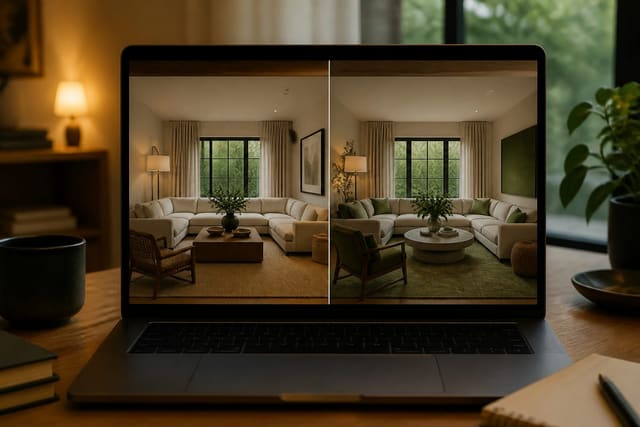
Deciding between industrial and modern is far easier when you can see each one in your actual room rather than imagining it. Upload a photo of your space to Re-Design, then preview an industrial treatment with brick, concrete, and factory pendants against a modern version with clean lines, pale tones, and slim lighting. Comparing both directions side by side in your own room makes the right mood obvious, and you can even test a blended scheme that keeps a modern base with a few raw accents. Preview the look first, then buy furniture and finishes knowing exactly which style fits.
Frequently Asked Questions
What is the main difference between industrial and modern design?
Industrial design showcases raw, exposed materials like brick, concrete, and steel, celebrating age and visible structure for a moody, lived-in feel. Modern design hides those bones behind smooth, refined surfaces, favoring clean lines, light palettes, and uncluttered calm. One wants you to read the building's history; the other resolves everything into something quiet and precise.
Can you mix industrial and modern styles in one room?
Yes, and the blend is often the most liveable choice. Keep a clean modern base with smooth walls, simple cabinetry, and an open layout, then add a few industrial accents such as a steel-framed table, a concrete light fixture, or one exposed brick wall. That mix gives you modern calm with industrial warmth and tends to age gracefully.
Which style is easier to maintain day to day?
Industrial finishes are generally more forgiving. Raw concrete, unlacquered metal, and aged leather hide marks and improve with wear, suiting busy households. Modern interiors with pale palettes and smooth surfaces look stunning but show scuffs and clutter readily, demanding tidier habits to stay crisp. Be honest about how you live before committing to either direction.