To start learning interior design for your home, work one room at a time in this order: measure the space, set a budget, choose one anchor piece, plan your lighting, then layer in color and texture. I think the reason beginners freeze is that they try to decide everything at once, when design is really a sequence of small commitments. The honest answer is that you do not need talent or a degree; you need a plan and the patience to live with one finished room before touching the next.
Most of the paralysis comes from Pinterest overload, where a thousand finished rooms hide the boring decisions that built them. Nobody pins the tape measure or the budget spreadsheet, so beginners assume the magic is in the styling when it is actually in the sequence. Strip the inspiration away and decorating becomes a checklist you can follow on a normal budget.
Begin with the room nobody photographs
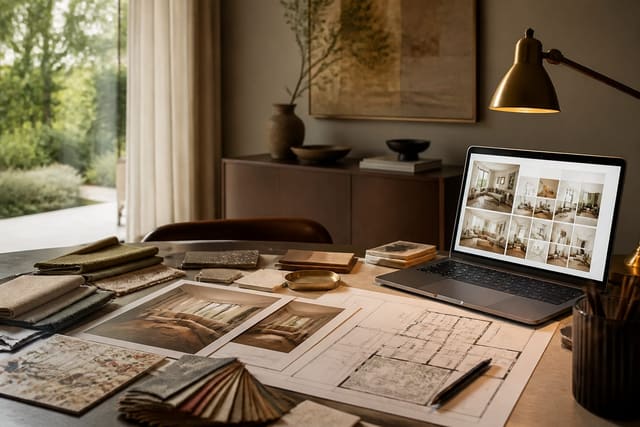
The first real step is measurement, not mood boards. Pull a tape measure and record wall lengths, ceiling height, window sills, and the swing of every door. Note where outlets and vents sit, because a beautiful console blocking the only floor outlet becomes a daily annoyance you cannot unsee. I sketch a simple plan at quarter-inch-to-the-foot scale on graph paper so I can test whether a 96-inch sofa still leaves the 30 to 36 inches of walkway a room needs to feel passable rather than packed.
Then set a number before you fall in love with anything. A first living room refresh runs anywhere from $1,500 for paint, a rug, and styling up to $6,000 once a real sofa is involved, and naming that range early stops you from blowing the whole budget on a $4,000 sectional in week one. Budgets also force priorities, which is the entire skill beginners are missing. If you want to understand how design advice even reaches you these days, it is worth reading how AI search cites interior design sources, because that quietly shapes which tips and trends you keep being shown.
Choose your anchor, then build outward
Every room needs one hero piece that everything else answers to. In a living room it is usually the sofa; in a bedroom, the bed and headboard; in a dining room, the table. Pick it first, commit to its size and color, and let it set the budget ceiling at around 40 to 50% of your total. Once the anchor is locked, the rest of the choices get dramatically easier, because they are now in service of something concrete instead of floating in a sea of options.
When you shop for that anchor and the supporting cast, weigh these factors:
- Scale against your own measurements, not the showroom, where everything looks smaller under 20-foot ceilings.
- A neutral on the biggest piece, so you can swap a $40 throw pillow instead of a $2,000 sofa when tastes shift.
- Real durability, like performance fabric rated for 50,000-plus double rubs if you have kids or pets.
Beginners often worry their taste is simply wrong. It usually is not; it is just untested, and a few good decisions build the confidence the rest of the room rides on. Tools that show you a room before you buy take much of that fear away, and it helps to know how accurate AI room visualization actually is before you trust a render over your own gut.
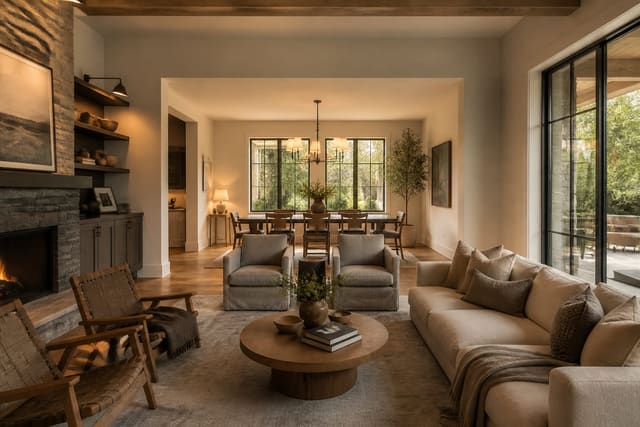
Build the supporting cast around the anchor in widening circles. After the sofa comes the rug, which should be large enough that the front legs of every seat sit on it, then the coffee table at roughly 16 to 18 inches of clearance from the sofa edge, then side tables that land within a couple of inches of your armrest height. Lighting and art come after the furniture is placed, never before, because you cannot hang a picture at the right height until you know what sits beneath it. Working outward like this keeps every purchase in proportion to the last one and stops the room from becoming a collection of good pieces that do not talk to each other.
Layer light and color last
Lighting is the single biggest lever beginners ignore. One ceiling fixture flattens a room; three layers shape it. Aim for ambient light overhead, task light where you read or work, and a low accent like a table lamp, all kept in the same 2700K to 3000K warm range so the room reads consistent instead of patchy. Put the main sources on dimmers if you can, because the same room at 100% and at 40% genuinely feels like two different homes, one for daytime work and one for evening calm.
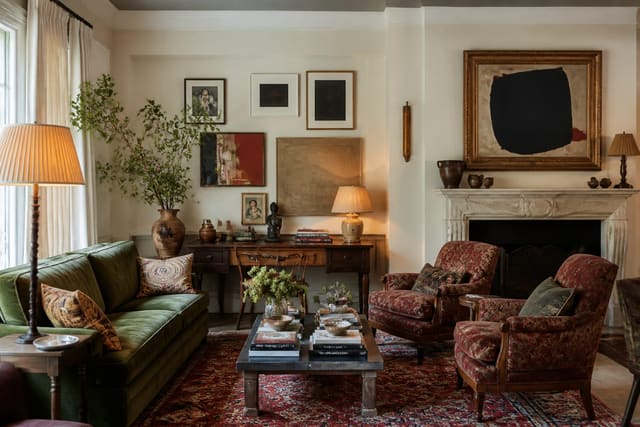
Color comes near the end, once you know your anchor and your light. The 60-30-10 rule keeps it simple: 60% a dominant neutral on walls and large furniture, 30% a secondary in upholstery or curtains, and 10% an accent in pillows and art. Test paint on the actual wall in your actual light, since the same swatch shifts dramatically between a north-facing room and a sunny south one. Buy a sample pot, paint a 2-foot square, and watch it across a full day before you commit a single gallon, because the chip that looked like a soft greige at the store can turn cold and blue by 4 p.m. in the wrong room. If you love mixing eras and influences, an eclectic interior design approach gives beginners permission to combine pieces, as long as one repeated color or finish ties the whole collection together.
Common mistakes to avoid
The common mistakes to avoid at the start are almost always about pace and scale. Buying everything in one weekend locks in decisions you have not actually lived with; I tell beginners to leave a room 80% done for a month and notice what annoys them before finishing it. Rugs are the classic scale error: a 5-by-7 floating in the middle shrinks a room, while an 8-by-10 that tucks at least the front legs of the furniture grounds the whole arrangement.
Hanging art too high is the next trap, with the center pulled up to a reliable 60 to 66 inches above the floor instead of the ceiling-height drift most people default to. Buying matchy furniture sets removes all the contrast that makes a room interesting, and chasing trends means redecorating in two short years. Spend on the anchor and the lighting, save on the swappable accents, and you sidestep the most expensive beginner mistake of all, which is paying premium prices for exactly the pieces you will tire of first.
Use AI design to preview your first room before you commit
The scariest part of starting is spending real money on choices you cannot picture, and that is exactly the gap Re-Design closes for a nervous beginner. Upload a photo of the room you want to tackle, and the AI re-renders it in different styles, colors, and furniture arrangements, so you can audition a whole direction before a single delivery truck ever shows up at your door.
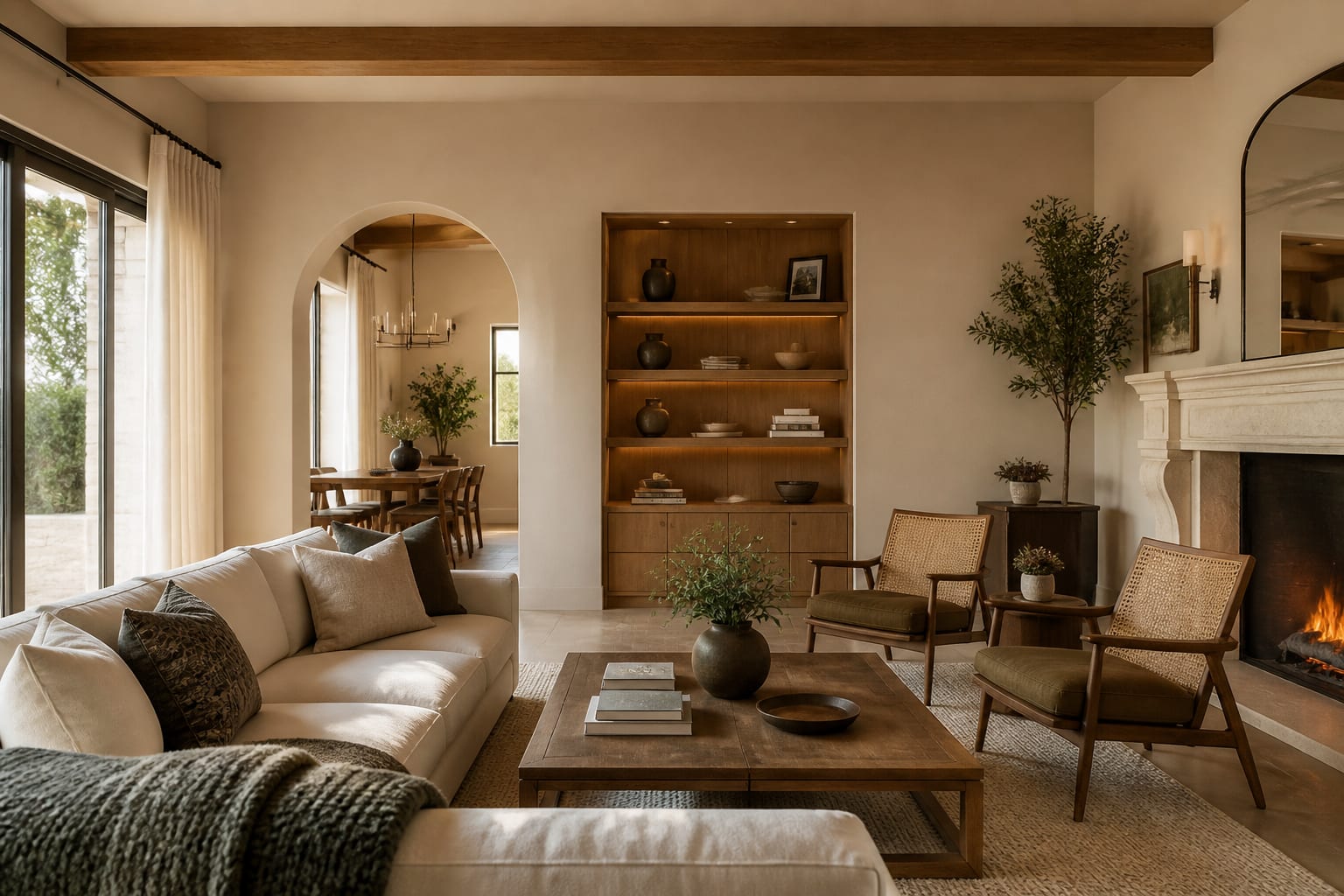
What makes this so useful for first-timers is that it removes the guesswork from scale and color at the same time. Upload your empty living room and see whether a deep green sofa or a warm oatmeal one suits your light, test a dark accent wall against a soft neutral, and confirm a large rug actually fits the floor before you order it. Letting AI design walk you through those options turns an intimidating blank room into a short series of clear, low-risk decisions you can make with real confidence instead of a sinking feeling.